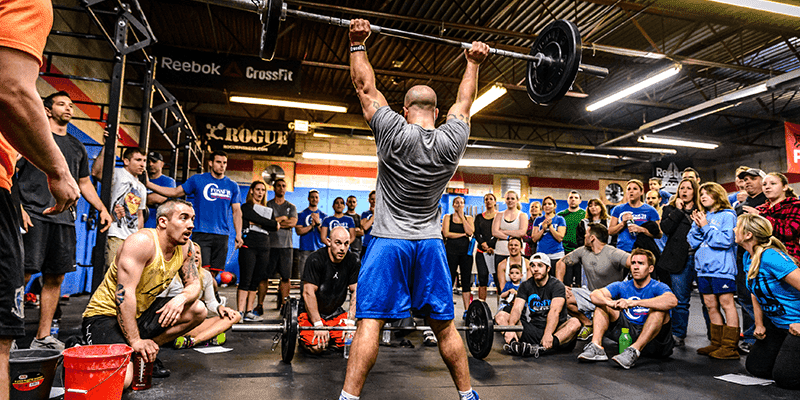
Get ready for the 2025 CrossFit Open!
1. Develop a Structured Training Plan
A well-structured training plan is the foundation of success in the CrossFit Open. To perform at your best, your programme should prioritise strength, conditioning, and skill work specific to the demands of CrossFit.


Periodisation for Peak Performance Periodisation is essential for optimising performance and minimising the risk of overtraining. A study by Harries et al. (2015) found that periodised training leads to greater improvements in strength and endurance compared to non-periodised methods. Your training should incorporate progressive overload, deload weeks, and peaking strategies leading up to the Open.
Energy System Development CrossFit demands proficiency in all three energy systems: phosphagen (short bursts of power), glycolytic (moderate-duration high-intensity efforts), and oxidative (sustained aerobic efforts). A study by Egan and Zierath (2013) highlights how different training intensities influence mitochondrial adaptations, reinforcing the need for mixed modal conditioning in CrossFit.
Skill-Specific Work To excel in the Open, focus on refining high-skill movements such as double-unders, bar muscle-ups, and handstand push-ups. Research by Shea et al. (2011) suggests that frequent, short-duration skill practice enhances motor learning and neuromuscular coordination.
2. Dial in Your Nutrition and Recovery
Optimising nutrition and recovery is crucial for sustaining high performance throughout the CrossFit Open.
Macronutrient Balancing A study by Helms et al. (2014) found that a diet rich in protein (1.6-2.2g per kg of body weight) supports muscle repair and growth, while adequate carbohydrate intake fuels high-intensity efforts. Fat intake should also be sufficient to support hormonal function.

Hydration and Electrolyte Balance Proper hydration is essential for optimal muscle function and cognitive performance. Casa et al. (2010) found that dehydration as little as 2% of body weight can significantly impair physical performance and cognitive function. Electrolytes, particularly sodium, play a critical role in fluid balance and neuromuscular activity.
Prioritising Sleep A meta-analysis by Fullagar et al. (2015) concluded that sleep deprivation negatively affects reaction time, endurance, and strength. Aim for 7-9 hours of quality sleep per night and optimise sleep hygiene by minimising blue light exposure before bed.
3. Enhance Your Mobility and Movement Efficiency
Mobility restrictions can lead to inefficiency, energy leaks, and increased injury risk.
Daily Mobility Work A study by Konrad et al. (2017) suggests that dynamic stretching and myofascial release improve range of motion without negatively affecting power output. Prioritise hip, ankle, and thoracic mobility to improve squatting, overhead stability, and gymnastic movements.
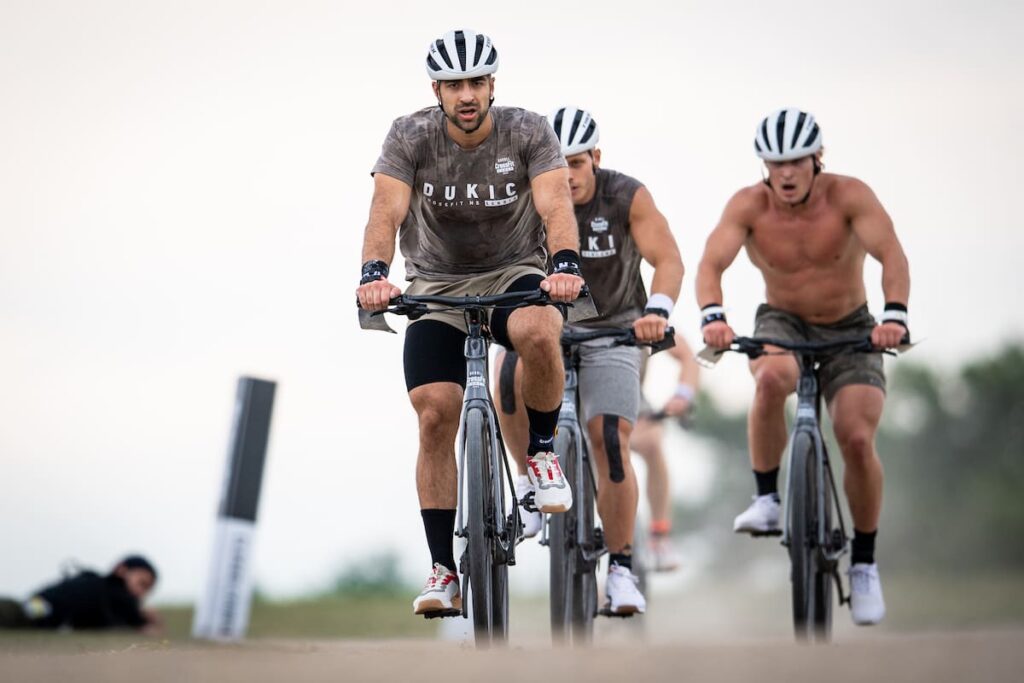
Breathing and Bracing Mechanics Efficient breathing and core bracing enhance stability and endurance. Research by Kilding et al. (2010) demonstrated that respiratory muscle training can improve exercise performance by increasing oxygen uptake efficiency. Practising diaphragmatic breathing and intra-abdominal bracing can enhance movement economy and power output.
4. Build Mental Toughness and Competition Readiness
The CrossFit Open is as much a mental challenge as a physical one.
Developing a Growth Mindset A study by Dweck (2006) suggests that athletes with a growth mindset—who embrace challenges and persist despite failures—perform better in competitive settings. Approaching workouts with a mindset focused on learning and improvement fosters resilience.
Simulating Competition Environments Rehearsing Open-style workouts under competition conditions helps acclimatise to the pressure. A study by Oudejans et al. (2011) found that athletes who practised under simulated competition conditions performed better under real pressure.
Breath Control for Performance and Stress Management Breath control techniques, such as box breathing, have been shown to reduce anxiety and improve focus (Paul et al., 2012). Implementing controlled breathing between movements can help maintain composure and sustain effort throughout workouts.
5. Strategise for Each Workout and Adapt on the Fly
Success in the CrossFit Open requires a strategic approach to each workout.
Pacing and Energy Management A study by Abbiss and Laursen (2008) emphasises the importance of pacing strategies in endurance-based sports. Understanding when to push hard and when to conserve energy is crucial for maximising scores.
Breaking Up Reps Efficiently Studies on fatigue management (Sanchez-Medina & Gonzalez-Badillo, 2011) show that athletes who implement pre-planned rep schemes can sustain higher power output across a workout compared to those who go unbroken until failure.
Analysing Leaderboard Trends Understanding movement patterns and scoring trends from previous Opens can provide insight into what to expect. Reviewing workouts from previous years and identifying weaknesses allows for targeted preparation.
Key Takeaways Table
| Key Point | Summary |
|---|---|
| Develop a Structured Training Plan | Use periodisation, target energy systems, and refine skills |
| Dial in Nutrition and Recovery | Prioritise macronutrient balance, hydration, and sleep |
| Enhance Mobility and Movement Efficiency | Focus on daily mobility drills and breathing techniques |
| Build Mental Toughness | Train in competitive conditions and practice mindset strategies |
| Strategise for Workouts | Implement pacing, rep schemes, and analyse past trends |
Bibliography
- Abbiss, C.R., & Laursen, P.B. (2008). ‘Describing and Understanding Pacing Strategies During Athletic Competition’, Sports Medicine, 38(3), pp. 239-252.
- Casa, D.J., et al. (2010). ‘National Athletic Trainers’ Association Position Statement: Fluid Replacement for Athletes’, Journal of Athletic Training, 45(2), pp. 135-157.
- Dweck, C.S. (2006). Mindset: The New Psychology of Success. New York: Random House.
- Egan, B., & Zierath, J.R. (2013). ‘Exercise Metabolism and the Molecular Regulation of Skeletal Muscle Adaptation’, Cell Metabolism, 17(2), pp. 162-184.
- Fullagar, H.H., et al. (2015). ‘Sleep and Athletic Performance: The Effects of Sleep Loss on Exercise Performance, and Physiological and Cognitive Responses to Exercise’, Sports Medicine, 45(2), pp. 161-186.
- Harries, S.K., et al. (2015). ‘Effects of Different Periodization Models on Strength and Power Adaptations’, Journal of Strength and Conditioning Research, 29(3), pp. 730-741.
- Helms, E.R., et al. (2014). ‘Evidence-Based Recommendations for Natural Bodybuilding Contest Preparation: Nutrition and Supplementation’, Journal of the International Society of Sports Nutrition, 11(1), p. 20.
- Kilding, A.E., et al. (2010). ‘Exercise-Induced Respiratory Muscle Fatigue: Implications for Performance’, Journal of Sports Sciences, 28(8), pp. 773-782.
- Konrad, A., et al. (2017). ‘Effects of Myofascial Release and Dynamic Stretching on Range of Motion and Muscular Performance: A Review of Literature’, Journal of Sports Science & Medicine, 16(4), pp. 493-501.
- Oudejans, R.R., et al. (2011). ‘Anxiety and Performance: Perceptual-Motor Behaviour in High Pressure Situations’, Psychology of Sport and Exercise, 12(3), pp. 333-339.
- Paul, M., et al. (2012). ‘Influence of Breathing Techniques on Stress Response’, Journal of Alternative and Complementary Medicine, 18(7), pp. 632-638.
- Sanchez-Medina, L., & Gonzalez-Badillo, J.J. (2011). ‘Velocity Loss as an Indicator of Neuromuscular Fatigue During Resistance Training’, Medicine & Science in Sports & Exercise, 43(9), pp. 1725-1734.
- Shea, C.H., et al. (2011). ‘Motor Learning Principles and the Superiority of Whole Training in Volleyball’, Journal of Motor Behavior, 43(1), pp. 1-13.