Building muscle efficiently requires the right combination of resistance training, progressive overload, and scientifically validated exercises. Some movements activate more muscle fibres, induce greater mechanical tension, and promote hypertrophy more effectively than others. This article explores the top 10 exercises that have been proven to stimulate rapid muscle growth, backed by scientific research.
1. Barbell Squat
The barbell squat is one of the most effective lower-body exercises, engaging the quadriceps, hamstrings, glutes, and core. Research indicates that squats produce superior muscle activation compared to leg presses, making them more effective for hypertrophy (Escamilla et al., 2001). Additionally, squats trigger a significant hormonal response, increasing testosterone and growth hormone levels, both of which play a key role in muscle growth (Kraemer et al., 1990).


2. Deadlift
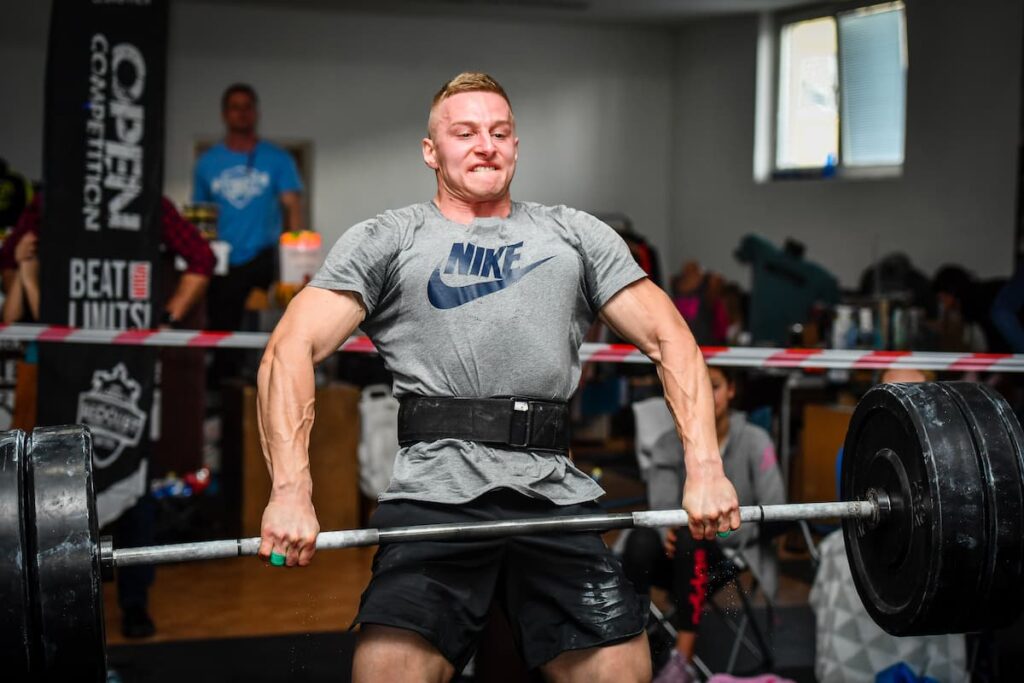
The deadlift recruits multiple major muscle groups, including the posterior chain, core, and grip muscles. A study by Swinton et al. (2011) found that the deadlift engages over 70% of the body’s musculature, making it an optimal choice for overall muscle development. The high mechanical load associated with deadlifts also enhances neuromuscular efficiency, leading to faster strength gains.
3. Bench Press
The bench press is the gold standard for upper-body pushing movements, targeting the pectoralis major, anterior deltoids, and triceps. Research by Barnett et al. (1995) showed that the flat barbell bench press generates greater chest activation compared to machine-based pressing movements. Additionally, the barbell bench press allows for progressive overload, a critical factor in hypertrophy.
4. Pull-Ups
Pull-ups effectively target the latissimus dorsi, biceps, and upper back muscles. Studies show that pull-ups produce higher lat activation than lat pulldowns due to greater neuromuscular involvement and core engagement (Lusk et al., 2010). This makes pull-ups one of the most effective exercises for back and upper-body development.
5. Overhead Press
The overhead press is a compound movement that targets the deltoids, triceps, and upper chest. A study by Saeterbakken & Fimland (2013) found that standing barbell presses generate higher core activation compared to seated variations, making them more effective for overall upper-body strength and muscle development.
6. Barbell Row
Barbell rows engage the lats, traps, rear delts, and biceps while also stabilising the core. According to research by Lehman et al. (2004), barbell rows activate more back musculature than seated rows, making them superior for hypertrophy. The ability to load the movement heavily enhances strength gains and muscle thickness.
7. Bulgarian Split Squat
Unilateral lower-body movements like the Bulgarian split squat increase muscular imbalances and improve overall leg development. A study by Speirs et al. (2016) showed that unilateral training enhances muscle activation and strength more effectively than bilateral exercises alone, making it an essential addition for leg hypertrophy.
8. Hip Thrust
The hip thrust is a glute-dominant exercise that has been shown to elicit greater glute activation than traditional squats (Contreras et al., 2015). Given the importance of glute strength in overall athletic performance, the hip thrust is essential for developing lower-body musculature and power.
9. Dips
Dips are a compound exercise that primarily targets the chest, shoulders, and triceps. Research by Stasinaki et al. (2018) demonstrated that dips activate the pectoral muscles to a greater degree than push-ups, making them a superior bodyweight movement for upper-body mass development.
10. Romanian Deadlift
The Romanian deadlift specifically targets the hamstrings, glutes, and lower back. Research has shown that it produces high levels of hamstring activation, which is crucial for posterior chain development (McAllister et al., 2014). The controlled eccentric phase of the movement enhances hypertrophy through increased time under tension.
Conclusion
These ten exercises are scientifically proven to maximise muscle activation and promote hypertrophy. Incorporating them into a structured training programme, with a focus on progressive overload and proper recovery, will lead to optimal muscle growth.
Key Takeaways Table
| Exercise | Primary Muscles Targeted | Scientific Benefit |
|---|---|---|
| Barbell Squat | Quadriceps, Glutes, Hamstrings, Core | High muscle activation and hormonal response |
| Deadlift | Posterior Chain, Core, Grip | Engages over 70% of musculature |
| Bench Press | Chest, Shoulders, Triceps | Superior chest activation |
| Pull-Ups | Lats, Biceps, Upper Back | Greater lat engagement than pulldowns |
| Overhead Press | Shoulders, Triceps, Upper Chest | High core activation |
| Barbell Row | Lats, Traps, Rear Delts, Biceps | Superior back muscle activation |
| Bulgarian Split Squat | Quads, Glutes, Hamstrings | Enhances muscular balance |
| Hip Thrust | Glutes, Hamstrings | Greater glute activation than squats |
| Dips | Chest, Shoulders, Triceps | Higher pectoral activation than push-ups |
| Romanian Deadlift | Hamstrings, Glutes, Lower Back | High levels of hamstring activation |
Bibliography
Barnett, C., Kippers, V. and Turner, P. (1995). Effects of Variations of the Bench Press Exercise on the EMG Activity of Five Shoulder Muscles. Journal of Strength and Conditioning Research, 9(4), pp. 222-227.
Contreras, B., Cronin, J., Schoenfeld, B., Nates, R. and McMaster, D. (2015). The Biomechanics of the Hip Thrust Exercise. Journal of Applied Biomechanics, 31(3), pp. 182-189.
Escamilla, R.F., Fleisig, G.S., Zheng, N., Barrentine, S.W., Wilk, K.E. and Andrews, J.R. (2001). Effects of Technique Variations on Knee Biomechanics During the Squat and Leg Press. Medicine & Science in Sports & Exercise, 33(9), pp. 1552-1566.
Kraemer, W.J., Gordon, S.E., Fleck, S.J., Marchitelli, L.J., Mello, R., Dziados, J.E., Friedl, K., Harman, E., Maresh, C. and Frykman, P. (1990). Endogenous Anabolic Hormonal and Growth Factor Responses to Heavy Resistance Exercise in Males and Females. International Journal of Sports Medicine, 11(2), pp. 105-112.
Lehman, G.J., Buchan, D.D., Lundy, A., Myers, N. and Nalborczyk, A. (2004). Variations in Muscle Activation Levels During Traditional Latissimus Dorsi Weight Training Exercises. Dynamic Medicine, 3(1), p. 4.
Lusk, S.J., Hale, B.D., Russell, D.M. and Luke, M.D. (2010). Electromyographic Analysis of Traditional and Suspension Pull-Ups. Journal of Strength and Conditioning Research, 24(12), pp. 3394-3400.
McAllister, M.J., Hammond, K.G., Schilling, B.K., Ferreria, L.C. and Weiss, L.W. (2014). Muscle Activation During Various Hamstring Exercises. Journal of Strength and Conditioning Research, 28(6), pp. 1573-1580.
Saeterbakken, A.H. and Fimland, M.S. (2013). Muscle Activation of Upper Limb Muscles in Heavy Resistance Exercises: Effect of Loading and Repetitions. Journal of Strength and Conditioning Research, 27(4), pp. 1096-1100.
Swinton, P.A., Lloyd, R., Keogh, J.W.L., Agouris, I. and Stewart, A.D. (2011). A Biomechanical Analysis of Deadlift Variants. Journal of Strength and Conditioning Research, 25(7), pp. 2000-2009.