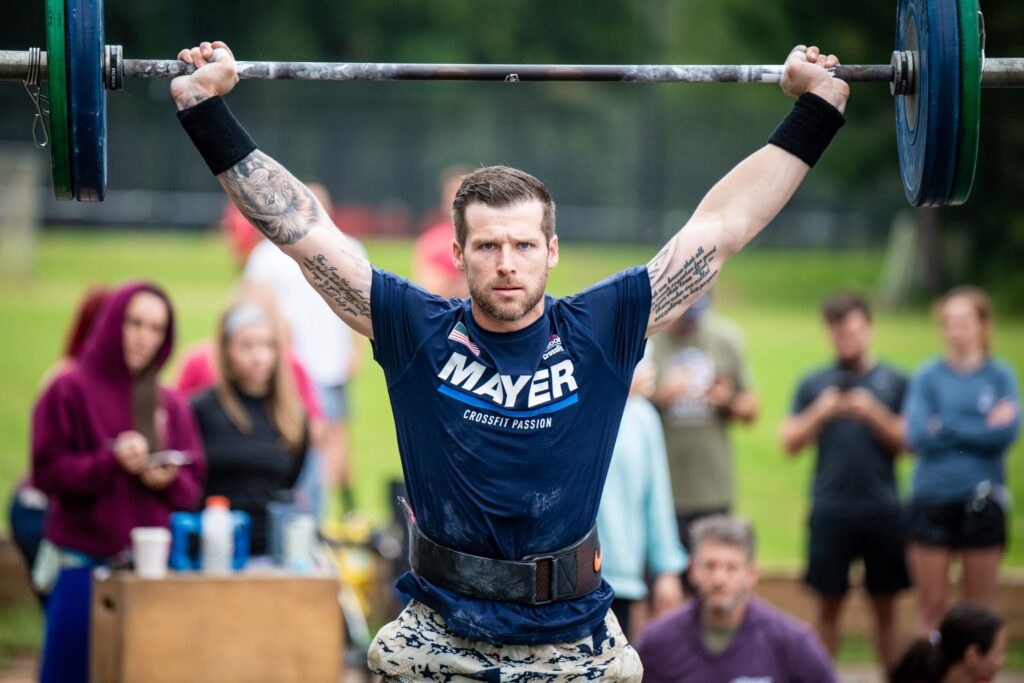
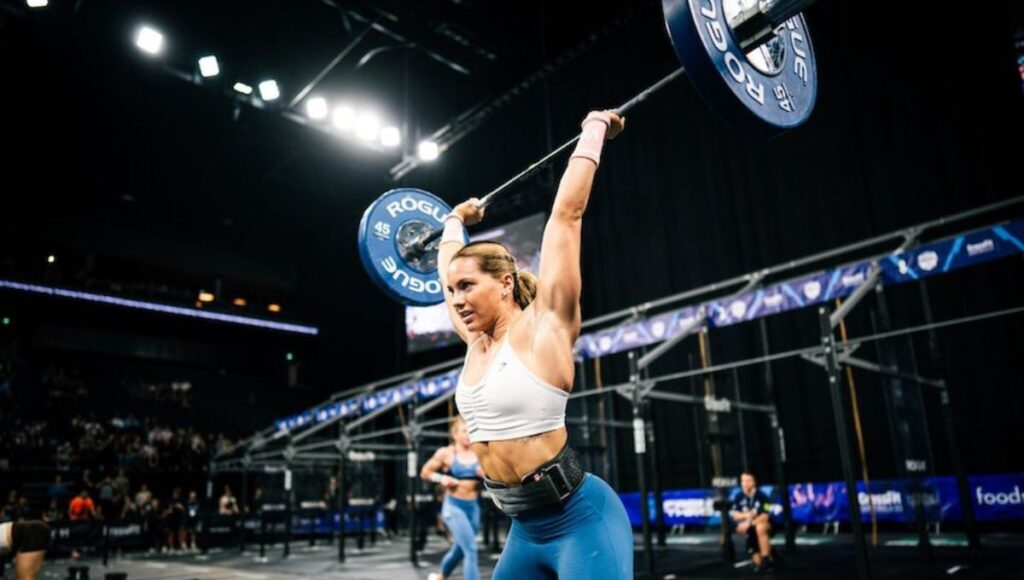
As men move past their 30s, maintaining muscle mass and strength becomes increasingly crucial. Testosterone levels begin to decline, recovery times lengthen, and improper training can lead to injury rather than progress.
Barbell training remains one of the most effective ways to counteract these challenges by promoting hypertrophy, enhancing neuromuscular efficiency, and maintaining bone density. This article examines three of the best barbell exercises for rapid muscle gains, focusing on their physiological impact and supported by scientific evidence.


1. The Barbell Squat: The Foundation of Lower Body Strength and Growth
The barbell squat is one of the most fundamental exercises for building lower body strength and overall muscular development. This compound movement primarily targets the quadriceps, hamstrings, glutes, and lower back, while also engaging the core and stabiliser muscles.
Why It’s Effective
The barbell squat maximises mechanical tension and metabolic stress—two key drivers of hypertrophy (Schoenfeld, 2010). Additionally, heavy squatting elicits a substantial hormonal response, increasing testosterone and growth hormone levels, which contribute to muscle growth (Kraemer & Ratamess, 2005). Research indicates that squatting activates nearly 200 muscles, making it one of the most efficient exercises for overall strength and hypertrophy (Escamilla et al., 2001).
Squatting for Men Over 30
As men age, joint health and mobility must be prioritised. Performing squats with proper depth (hips below parallel) optimises muscle recruitment without excessive strain on the knees (Hartmann et al., 2013). Studies also show that squat variations such as the high-bar squat can reduce spinal load compared to low-bar squats while still maximising muscle activation (Comfort et al., 2012).
2. The Barbell Deadlift: The King of Posterior Chain Development
The deadlift is an unparalleled exercise for developing the posterior chain, which includes the hamstrings, glutes, lower back, and traps. It also enhances grip strength and core stability, essential for functional strength.
Why It’s Effective
A study by Swinton et al. (2011) found that the deadlift recruits more motor units than nearly any other resistance exercise. By lifting heavy loads, individuals stimulate maximal muscle fibre recruitment, increasing both muscular size and neuromuscular efficiency. The deadlift also improves bone mineral density, which is vital as men age (Taaffe et al., 1997).
Deadlifting for Men Over 30
Older lifters should pay close attention to technique to mitigate the risk of lower back injury. The Romanian deadlift or trap-bar deadlift can be viable alternatives for reducing spinal stress while still targeting the posterior chain (Camara et al., 2016). Proper bracing and progressive overload are crucial to ensuring long-term strength gains without excessive strain on the lower back.
3. The Barbell Bench Press: Upper Body Mass and Strength Builder
The bench press remains one of the most effective exercises for increasing upper body muscle mass, particularly in the chest, shoulders, and triceps. It is a staple movement in strength training programs due to its ability to overload the pectoral muscles progressively.
Why It’s Effective
Electromyographic (EMG) studies show that the barbell bench press elicits high muscle activation in the pectoralis major, anterior deltoid, and triceps brachii (Schoenfeld et al., 2014). Additionally, pressing heavier loads stimulates Type II muscle fibres, which are most responsible for hypertrophy (Haff & Triplett, 2015). A study by Saeterbakken et al. (2011) also found that varying grip width can help target different regions of the chest for more comprehensive development.
Bench Pressing for Men Over 30
As men age, shoulder mobility becomes a limiting factor in the bench press. Using a moderate grip width reduces strain on the rotator cuff while still maximising chest activation (Lehman, 2005). Incline and decline bench press variations can also help mitigate shoulder stress while targeting different areas of the chest.
Conclusion
For men over 30 looking to maximise muscle growth, these three barbell exercises provide the best combination of efficiency, muscle recruitment, and progressive overload. The squat builds a strong foundation, the deadlift enhances posterior chain development, and the bench press drives upper body growth.
By implementing these movements with proper form and programming, lifters can continue to see significant strength and hypertrophy gains well into their 30s, 40s, and beyond.
Key Takeaways
| Exercise | Benefits | Considerations for Men Over 30 |
|---|---|---|
| Barbell Squat | Maximises lower body hypertrophy, increases testosterone and growth hormone, engages core stabilisation | Focus on depth and mobility to reduce knee strain |
| Barbell Deadlift | Targets the posterior chain, enhances grip strength and neuromuscular recruitment | Consider trap-bar or Romanian deadlifts to reduce spinal stress |
| Barbell Bench Press | Develops upper body strength, maximises chest, shoulder, and triceps hypertrophy | Use moderate grip width and incline variations for shoulder health |
Bibliography
- Camara, K.D., Coburn, J.W., Dunnick, D.D., Brown, L.E., Galpin, A.J., & Costa, P.B. (2016). An examination of muscle activation and power characteristics while performing the deadlift exercise with straight and hexagonal barbells. Journal of Strength and Conditioning Research, 30(5), 1183-1188.
- Comfort, P., Jones, P.A., & McMahon, J.J. (2012). A comparison of kinematic and kinetic variables during the high-bar and low-bar back squat. Journal of Strength and Conditioning Research, 26(7), 1805-1816.
- Escamilla, R.F., Francisco, A.C., Fleisig, G.S., Barrentine, S.W., Welch, C.M., Kayes, A.V., Speer, K.P., & Andrews, J.R. (2001). A three-dimensional biomechanical analysis of sumo and conventional style deadlifts. Medicine and Science in Sports and Exercise, 33(8), 1346-1353.
- Haff, G.G., & Triplett, N.T. (2015). Essentials of Strength Training and Conditioning. 4th edn. Human Kinetics.
- Hartmann, H., Wirth, K., & Klusemann, M. (2013). Analysis of the load on the knee joint and vertebral column with changes in squatting depth and weight load. Sports Medicine, 43(10), 993-1008.
- Kraemer, W.J., & Ratamess, N.A. (2005). Hormonal responses and adaptations to resistance exercise and training. Sports Medicine, 35(4), 339-361.
- Lehman, G.J. (2005). The influence of grip width and forearm pronation/supination on upper-body myoelectric activity during the flat bench press. Journal of Strength and Conditioning Research, 19(3), 587-591.
- Saeterbakken, A.H., van den Tillaar, R., & Fimland, M.S. (2011). A comparison of muscle activity and 1-RM strength in free-weight bench press and machine bench press. Journal of Strength and Conditioning Research, 25(2), 333-338.
- Schoenfeld, B.J. (2010). The mechanisms of muscle hypertrophy and their application to resistance training. Journal of Strength and Conditioning Research, 24(10), 2857-2872.
- Schoenfeld, B.J., Ogborn, D., & Krieger, J.W. (2014). Effect of grip width on muscle activation in the bench press exercise. Journal of Strength and Conditioning Research, 28(7), 1829-1833.
- Swinton, P.A., Lloyd, R., Keogh, J.W., Agouris, I., & Stewart, A.D. (2011). A biomechanical analysis of straight and hexagonal barbell deadlifts using submaximal loads. Journal of Strength and Conditioning Research, 25(7), 2000-2009.
- Taaffe, D.R., Pruitt, L., Reim, J., Butcher, M., & Marcus, R. (1997). Effect of detraining on the functional performance of previously trained elderly women. Journal of Gerontology, 52(5), M259-M264.