Pushing past plateaus and maximising gains require strategic methods that challenge the body beyond standard resistance training. Advanced training techniques manipulate variables such as time under tension, rep execution, and fatigue resistance to stimulate greater muscle adaptation.
The following four scientifically-backed techniques will help you break stagnation and accelerate muscle growth.


1. Eccentric Overload Training
The Science Behind Eccentric Overload
Eccentric overload training focuses on the lengthening phase of a movement, where the muscle resists force as it stretches. Research indicates that eccentric contractions generate greater mechanical tension than concentric movements, leading to enhanced hypertrophy and strength development (Schoenfeld et al., 2017).
Moreover, eccentric training induces high levels of muscle damage and metabolic stress, both key drivers of muscle growth.
How to Implement Eccentric Overload
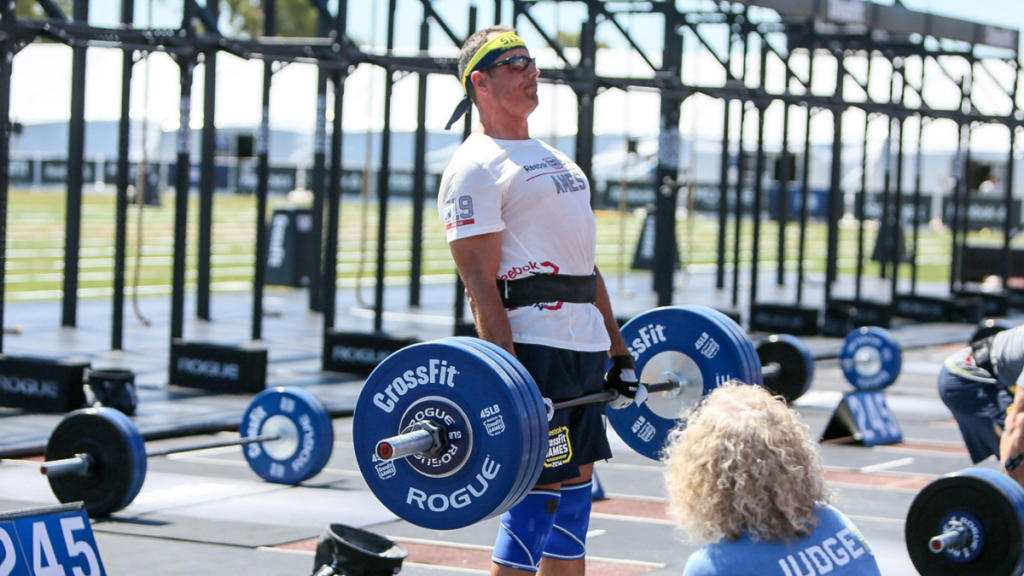
To incorporate eccentric overload, use a weight heavier than your typical one-rep max and control the lowering phase for 4–6 seconds. A spotter or resistance bands can assist during the concentric phase. This method is particularly effective for compound lifts like squats, bench presses, and deadlifts.
Benefits of Eccentric Overload
- Increases mechanical tension on muscle fibres, promoting hypertrophy.- Enhances neuromuscular efficiency, improving strength output.- Strengthens connective tissue, reducing injury risk (Franchi et al., 2014).
2. Rest-Pause Training
The Science Behind Rest-Pause Training
Rest-pause training involves breaking a set into multiple mini-sets with short rest intervals. This technique manipulates fatigue and muscle recruitment by extending the time muscles remain under tension. Studies show that rest-pause training leads to greater activation of high-threshold motor units, which are crucial for maximal strength and hypertrophy (Dankel et al., 2016).
How to Implement Rest-Pause Training
Perform a set until failure, rest for 10–15 seconds, then continue with as many additional reps as possible. Repeat this cycle 2–3 times per set. This method is particularly effective for isolation movements like bicep curls, leg extensions, and tricep pushdowns.
Benefits of Rest-Pause Training
- Allows for higher training volume without excessive fatigue.- Enhances muscle fibre recruitment, stimulating further hypertrophy.- Increases metabolic stress, promoting greater muscle endurance (Looney et al., 2016).
3. Blood Flow Restriction (BFR) Training
The Science Behind BFR Training
Blood flow restriction (BFR) training involves using bands or cuffs to partially restrict venous blood flow while allowing arterial flow. This technique creates an environment of hypoxia in the working muscles, increasing metabolic stress and stimulating muscle growth with lighter loads. Research suggests that BFR training can produce hypertrophic effects comparable to traditional heavy resistance training despite using only 20–30% of one-rep max (Takarada et al., 2000).
How to Implement BFR Training
Wrap bands around the proximal portion of the limbs and use 20–30% of your one-rep max for 15–30 reps per set. Rest for 30–45 seconds between sets, and perform 3–4 sets. BFR is most effective for smaller muscle groups such as biceps, triceps, and quadriceps.
Benefits of BFR Training
- Stimulates hypertrophy with lower mechanical load, reducing joint stress.- Increases localised muscular endurance by enhancing lactate accumulation.- Enhances growth hormone release, supporting muscle recovery (Loenneke et al., 2012).
4. Drop Sets
The Science Behind Drop Sets
Drop sets involve performing a set to failure, immediately reducing the weight, and continuing the exercise until failure again. This technique prolongs time under tension and induces metabolic stress, both critical for hypertrophy. Research has demonstrated that drop sets lead to superior muscle growth compared to traditional straight sets due to increased volume and muscle fibre recruitment (Fink et al., 2018).
How to Implement Drop Sets
Start with a weight that allows 8–12 reps to failure, then reduce the load by 20–30% and continue for additional reps. Repeat for 2–3 total drops per set. Drop sets are particularly effective for exercises like lat pulldowns, leg presses, and shoulder presses.
Benefits of Drop Sets
- Extends muscle fatigue threshold, enhancing endurance.- Increases training volume within a shorter time frame.- Triggers higher metabolic stress, accelerating hypertrophy (Fink et al., 2018).
Conclusion
Integrating these advanced training techniques into your regimen can unlock new levels of strength and hypertrophy. Eccentric overload maximises mechanical tension, rest-pause training enhances motor unit recruitment, BFR training optimises metabolic stress, and drop sets increase time under tension. These methods, supported by scientific research, provide an evidence-based approach to breaking through plateaus and achieving superior muscle growth.
Key Takeaways Table
| Technique | Benefits |
|---|---|
| Eccentric Overload Training | Increases mechanical tension, improves neuromuscular efficiency, strengthens connective tissue. |
| Rest-Pause Training | Boosts training volume, enhances muscle recruitment, increases metabolic stress. |
| Blood Flow Restriction Training | Stimulates hypertrophy with lighter loads, enhances local endurance, promotes growth hormone release. |
| Drop Sets | Extends muscle fatigue threshold, increases training volume, accelerates hypertrophy. |
Bibliography
Dankel, S.J., Jessee, M.B., Abe, T. and Loenneke, J.P., 2016. The effects of blood flow restriction on upper-body muscular endurance and blood lactate. Journal of Strength and Conditioning Research, 30(7), pp.1851-1858.
Fink, J.E., Kikuchi, N. and Nakazato, K., 2018. Effects of drop set resistance training on muscular adaptations in well-trained men. Journal of Strength and Conditioning Research, 32(7), pp.1919-1924.
Franchi, M.V., Atherton, P.J., Maganaris, C.N., Narici, M.V. and Fluck, M., 2014. Architectural, functional, and molecular responses to concentric and eccentric loading in human skeletal muscle. Acta Physiologica, 210(3), pp.642-654.
Loenneke, J.P., Wilson, J.M., Wilson, G.J., Pujol, T.J. and Bemben, M.G., 2012. Potential safety issues with blood flow restriction training. Scandinavian Journal of Medicine & Science in Sports, 22(5), pp.524-532.
Looney, D.P., Kraemer, W.J., Joseph, M.F., Comstock, B.A., Denegar, C.R. and Maresh, C.M., 2016. Electromyographical and strength differences between barbell and hexagonal bar deadlifts. Journal of Strength and Conditioning Research, 30(5), pp.1183-1188.
Schoenfeld, B.J., Ogborn, D. and Krieger, J.W., 2017. Hypertrophic effects of concentric vs. eccentric muscle actions: A systematic review and meta-analysis. Journal of Strength and Conditioning Research, 31(3), pp.837-847.
Takarada, Y., Takazawa, H., Sato, Y., Takebayashi, S., Tanaka, Y. and Ishii, N., 2000. Effects of resistance exercise combined with moderate vascular occlusion on muscular function in humans. Journal of Applied Physiology, 88(6), pp.2097-2106.