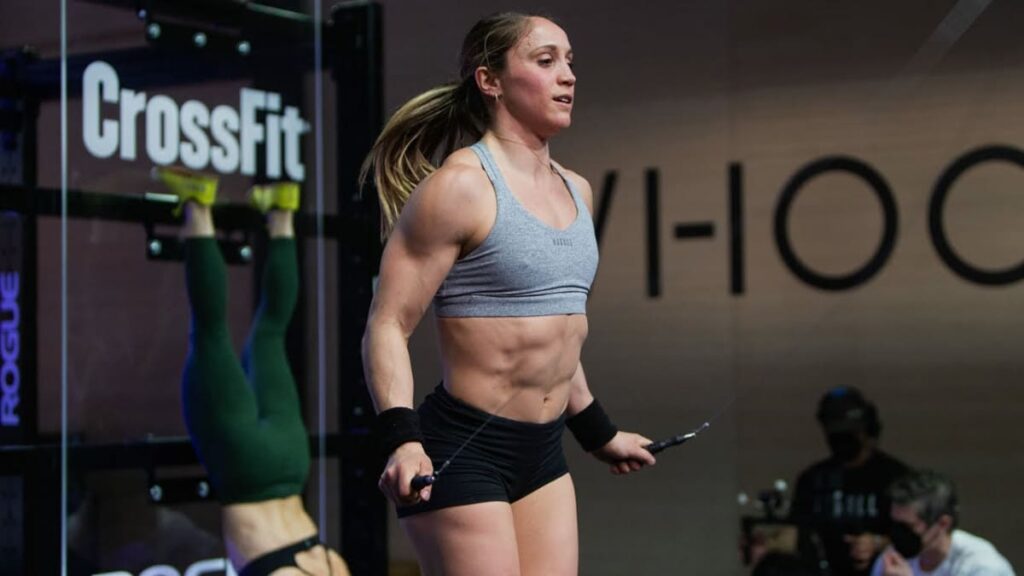
CrossFit Open Workout 25.3, the final text for the Open this year, has now been revealed.
CrossFit Open Workout 25.3
For time:


- 5 Wall Walks
- 50-Calorie Row
- 5 Wall Walks
- 25 Deadlifts (weight 1)
- 5 Wall Walks
- 25 Cleans (weight 2)
- 5 Wall Walks
- 25 Snatches (weight 3)
- 5 Wall Walks
- 50-Calorie Row
Time cap: 20 minutes
Prescribed Weights:
- Men: 155 lb (70 kg), 85 lb (38 kg), 65 lb (29 kg)
- Women: 225 lb (102 kg), 135 lb (61 kg), 95 lb (43 kg)
How to Scale CrossFit Open Workout 25.3
For time:
5 wall walks
50-calorie row
5 wall walks
25 deadlifts
5 wall walks
25 cleans
5 wall walks
25 snatches
5 wall walks
50-calorie row
Time cap: 20 minutes
♀ Scaled wall walks | 85, 65, 45 lb (38, 29, 20 kg)
♂ Scaled wall walks | 135, 95, 65 lb (61, 43, 29 kg)
Age 14 – 15
For time:
5 wall walks
50-calorie row
5 wall walks
25 deadlifts
5 wall walks
25 cleans
5 wall walks
25 snatches
5 wall walks
50-calorie row
Time cap: 20 minutes
♀ Scaled wall walks | 75, 55, 35 lb (34, 25, 15 kg)
♂ Scaled wall walks | 95, 65, 45 lb (43, 29, 20 kg)
Age 16 – 17
For time:
5 wall walks
50-calorie row
5 wall walks
25 deadlifts
5 wall walks
25 cleans
5 wall walks
25 snatches
5 wall walks
50-calorie row
Time cap: 20 minutes
♀ Scaled wall walks | 85, 65, 45 lb (38, 29, 20 kg)
♂ Scaled wall walks | 135, 95, 65 lb (61, 43, 29 kg)
Age 35 – 39
For time:
5 wall walks
50-calorie row
5 wall walks
25 deadlifts
5 wall walks
25 cleans
5 wall walks
25 snatches
5 wall walks
50-calorie row
Time cap: 20 minutes
♀ Scaled wall walks | 85, 65, 45 lb (38, 29, 20 kg)
♂ Scaled wall walks | 135, 95, 65 lb (61, 43, 29 kg)
Age 40 – 44
For time:
5 wall walks
50-calorie row
5 wall walks
25 deadlifts
5 wall walks
25 cleans
5 wall walks
25 snatches
5 wall walks
50-calorie row
Time cap: 20 minutes
♀ Scaled wall walks | 85, 65, 45 lb (38, 29, 20 kg)
♂ Scaled wall walks | 135, 95, 65 lb (61, 43, 29 kg)
Age 45 – 49
For time:
5 wall walks
50-calorie row
5 wall walks
25 deadlifts
5 wall walks
25 cleans
5 wall walks
25 snatches
5 wall walks
50-calorie row
Time cap: 20 minutes
♀ Scaled wall walks | 85, 65, 45 lb (38, 29, 20 kg)
♂ Scaled wall walks | 135, 95, 65 lb (61, 43, 29 kg)
Age 50 – 54
For time:
5 wall walks
50-calorie row
5 wall walks
25 deadlifts
5 wall walks
25 cleans
5 wall walks
25 snatches
5 wall walks
50-calorie row
Time cap: 20 minutes
♀ Scaled wall walks | 85, 65, 45 lb (38, 29, 20 kg)
♂ Scaled wall walks | 135, 95, 65 lb (61, 43, 29 kg)
Age 55 – 59
For time:
5 wall walks
50-calorie row
5 wall walks
25 deadlifts
5 wall walks
25 cleans
5 wall walks
25 snatches
5 wall walks
50-calorie row
Time cap: 20 minutes
♀ Scaled wall walks | 75, 55, 35 lb (34, 25, 15 kg)
♂ Scaled wall walks | 95, 65, 45 lb (43, 29, 20 kg)
60 – 64
5 wall walks
50-calorie row
5 wall walks
25 deadlifts
5 wall walks
25 cleans
5 wall walks
25 snatches
5 wall walks
50-calorie row
Time cap: 20 minutes
♀ Scaled wall walks | 75, 55, 35 lb (34, 25, 15 kg)
♂ Scaled wall walks | 95, 65, 45 lb (43, 29, 20 kg)
Age 65 – 69
For time:
5 wall walks
50-calorie row
5 wall walks
25 deadlifts
5 wall walks
25 cleans
5 wall walks
25 snatches
5 wall walks
50-calorie row
Time cap: 20 minutes
♀ Scaled wall walks | 75, 55, 35 lb (34, 25, 15 kg)
♂ Scaled wall walks | 95, 65, 45 lb (43, 29, 20 kg)
Age 70+
For time:
5 wall walks
50-calorie row
5 wall walks
25 deadlifts
5 wall walks
25 cleans
5 wall walks
25 snatches
5 wall walks
50-calorie row
Time cap: 20 minutes
♀ Scaled wall walks | 75, 55, 35 lb (34, 25, 15 kg)
♂ Scaled wall walks | 95, 65, 45 lb (43, 29, 20 kg)
Scaling is a fundamental principle in CrossFit that allows athletes of all fitness levels to participate in workouts while ensuring safety, effectiveness, and continuous progress. Whether you’re a beginner, an intermediate athlete, or even an advanced CrossFitter facing limitations, scaling helps maintain the intended intensity of a workout while modifying movements to match an individual’s capacity.
What is Scaling in CrossFit?
Scaling refers to modifying a workout’s movements, reps, weight, or time domains to align with an individual’s current fitness level. Instead of performing a workout exactly as prescribed (Rx), athletes adjust variables to ensure they can complete the workout safely and efficiently.
For example:
- Scaling load: Using lighter weights in barbell movements like the snatch or deadlift.
- Scaling reps: Doing fewer reps than prescribed to maintain intensity.
- Scaling movement: Replacing a difficult movement with a modified version (e.g., push-ups instead of handstand push-ups).
- Scaling time: Reducing the workout duration to prevent over-exhaustion.
Benefits of Scaling in CrossFit
1. Prevents Injury and Enhances Safety
One of the biggest benefits of scaling is injury prevention. Many CrossFit workouts involve high-intensity functional movements that can be technically challenging. Performing complex exercises, such as Olympic lifts or gymnastics movements, without proper strength or mobility can lead to injury. By scaling:
- Athletes reduce excessive strain on muscles and joints.
- The risk of compensation injuries (e.g., bad form due to fatigue) is minimised.
- It allows for better movement mechanics, ensuring long-term progress.
Example: Instead of attempting a heavy clean and jerk with poor form, an athlete may scale by using a lighter barbell or a kettlebell swing to maintain power output.
2. Maintains Intended Stimulus of the Workout
Every CrossFit workout is programmed with a specific stimulus—whether it’s endurance, strength, or metabolic conditioning. If an athlete goes too heavy or too slow, they may miss the intended effect.
Example: A workout like “Fran” (21-15-9 of thrusters and pull-ups) is meant to be a short, high-intensity sprint. If an athlete struggles with heavy thrusters or strict pull-ups, they may take too long, losing the intended metabolic impact. Scaling to lighter thrusters and jumping pull-ups allows them to keep the intensity high while maintaining the workout’s purpose.
3. Builds Proper Technique and Strength Progression
Scaling provides an opportunity for skill development without bad habits. Mastering a scaled version of a movement allows athletes to build strength, coordination, and muscle memory before progressing to the full version.
Example: Before learning a muscle-up, an athlete might practice:
- Ring rows → Jumping pull-ups → Strict pull-ups → Banded muscle-ups → Full muscle-ups
Scaling this way ensures that the athlete progresses gradually rather than struggling with a movement they aren’t ready for.
4. Increases Workout Enjoyment and Confidence
Struggling through workouts beyond one’s ability can be frustrating and discouraging. Scaling allows athletes to perform at their level, making workouts more enjoyable while still challenging.
- Athletes feel a sense of accomplishment rather than failure.
- Builds consistency, keeping people coming back to train.
- Creates positive reinforcement—instead of dreading workouts, they become motivating.
Example: Someone who can’t do double-unders may substitute single-unders instead of stopping mid-workout in frustration.
5. Improves Long-Term Progression
Scaling isn’t about making workouts easier—it’s about ensuring steady improvement. Athletes who scale appropriately see greater long-term progress than those who push beyond their limits too soon.
Example: A new lifter who scales a heavy deadlift to a kettlebell deadlift will gradually build strength and technique, eventually moving up to a barbell deadlift safely.
6. Allows Recovery and Adaptation
Even experienced athletes use scaling when dealing with fatigue, injuries, or recovery periods. Adjusting intensity ensures that they can train consistently without setbacks.
- Helps prevent overtraining and burnout.
- Allows injured athletes to modify workouts while still staying active.
- Supports periodisation—not every session should be maximal effort.
Example: An athlete recovering from a shoulder injury may swap barbell snatches for dumbbell snatches, reducing strain while maintaining movement patterns.
7. Promotes Inclusivity and Community
CrossFit is built on a community-first approach, and scaling helps everyone—from beginners to elite athletes—train together in the same workout.
- Allows all skill levels to participate.
- Encourages a supportive gym culture.
- Prevents people from feeling left out due to physical limitations.
Example: A beginner scaling box jumps to step-ups can still push themselves alongside an elite athlete doing high box jumps.
Scaling is a powerful tool in CrossFit that ensures safety, effectiveness, and continued progression for all athletes. It allows workouts to be challenging yet achievable, preserving the intensity and purpose of each session. Whether you’re new to CrossFit or a seasoned athlete, scaling smartly leads to better performance, fewer injuries, and a stronger, more confident approach to training.