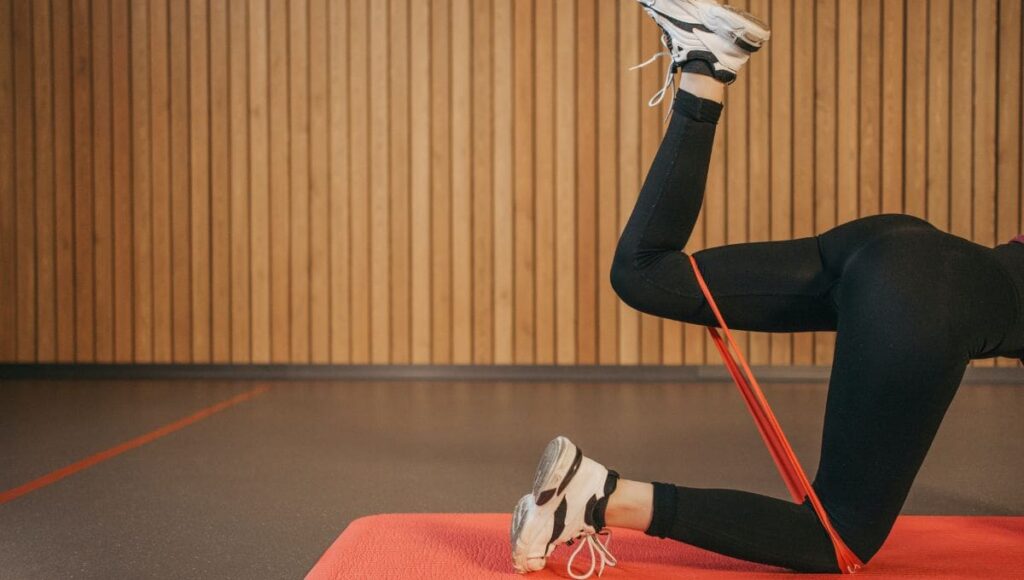
Tight hips are a common issue that can negatively impact athletic performance, posture, and overall movement efficiency. Addressing this problem through mobility drills is essential for maintaining flexibility, reducing injury risk, and enhancing functional movement. In this article, we will explore the science behind hip mobility, explain why it matters, and present three evidence-backed mobility drills designed to unlock tight hips.
Why Hip Mobility Matters
The hip joint is a ball-and-socket joint, providing a wide range of motion that is essential for daily activities and athletic performance. Poor hip mobility can lead to compensatory movement patterns, increasing stress on the lumbar spine and knees. A study by Fredericson and Moore (2005) demonstrated that hip dysfunction contributes significantly to lower back pain and knee injuries in athletes. Tight hips restrict dynamic movement, impair performance in strength training and sports, and contribute to chronic pain syndromes.



Furthermore, sedentary lifestyles exacerbate hip tightness. Research by Deane et al. (2005) highlighted that prolonged sitting shortens the hip flexor muscles, particularly the iliopsoas, leading to an anterior pelvic tilt and compromised posture. Addressing hip tightness through targeted mobility exercises is crucial to restoring natural movement patterns and preventing musculoskeletal dysfunction.
Understanding the Causes of Tight Hips
Several factors contribute to tight hips, including:
- Prolonged sitting
- Lack of dynamic stretching
- Poor movement habits
- Muscular imbalances
- Previous injuries
Each of these factors alters muscle length-tension relationships around the hip, leading to decreased flexibility and mobility. A study by Kendall et al. (2005) emphasized that muscular imbalances, particularly tight hip flexors and weak glutes, can severely restrict hip mobility.
The Science Behind Mobility Drills
Mobility drills aim to improve the range of motion at a joint by targeting both the soft tissue and the nervous system. According to Behm and Chaouachi (2011), dynamic stretching and mobility exercises can enhance neuromuscular efficiency, increase flexibility, and improve performance when properly integrated into training programs.
Studies show that mobility work, such as dynamic stretches and joint-specific drills, not only improves flexibility but also primes the nervous system for efficient movement patterns (Herda et al., 2013). Effective mobility drills focus on active movements rather than passive stretching to facilitate long-term adaptations.
3 Best Mobility Drills to Unlock Tight Hips
1. 90/90 Hip Switch
The 90/90 Hip Switch is a dynamic drill that targets both internal and external rotation of the hip joints, which is often restricted in individuals with tight hips.
How to Perform
- Sit on the floor with one leg in front of you at a 90-degree angle at the knee and hip, and the other leg behind you at a 90-degree angle.
- Keeping your torso upright, shift your hips to transition into a mirrored 90/90 position on the other side.
- Repeat for 10-12 reps per side.
Scientific Backing
Internal and external rotation are essential for activities like running and squatting. A study by Fukaya et al. (2016) found that limited hip rotation range is associated with increased risk of groin injuries and lower back pain.
2. Couch Stretch
The Couch Stretch is a powerful drill for opening up the hip flexors and quads, which are often shortened due to prolonged sitting.
How to Perform
- Position yourself in a lunge with your back foot elevated against a wall or bench.
- Ensure the knee of the back leg is close to the wall.
- Tuck your pelvis under and maintain a neutral spine as you press the hips forward.
- Hold for 30-60 seconds per side.
Scientific Backing
Research by Magnusson et al. (1996) demonstrated that static stretching can effectively increase muscle-tendon unit extensibility, leading to improved joint range of motion. The Couch Stretch specifically targets the rectus femoris and iliopsoas, both of which become tight from sitting.
3. Hip CARs (Controlled Articular Rotations)
Hip CARs are designed to enhance joint health by moving the hip through its full range of motion under control.
How to Perform
- Stand upright or get into a quadruped (all fours) position.
- Keeping your core engaged, lift one knee toward your chest.
- Rotate the hip outward, then backward, making a full circle.
- Reverse the movement.
- Perform 5 controlled reps per direction, per side.
Scientific Backing
CARs improve joint capsule strength and proprioception. A study by Cavanaugh et al. (2006) supported that controlled joint articulations maintain and improve joint function, significantly reducing the risk of injury and degeneration.
Program Structure for Optimal Results
Consistency and progression are key when incorporating mobility drills. Aim to perform these drills daily or at least three to five times per week. Perform each drill after a general warm-up to ensure the muscles and joints are primed. Focus on quality rather than quantity. Each repetition should be slow, controlled, and deliberate, ensuring maximum benefit.
An example session structure:
- General Warm-Up (5 minutes)
- 90/90 Hip Switches (2 sets of 10-12 reps per side)
- Couch Stretch (2 sets of 30-60 seconds per side)
- Hip CARs (2 sets of 5 reps per direction per side)
Additional Considerations for Hip Health
While mobility drills are crucial, a comprehensive hip health strategy should include strength training, particularly exercises that strengthen the glutes and core. Exercises like glute bridges, deadlifts, and lateral band walks help maintain optimal hip function.
Moreover, self-myofascial release techniques using foam rollers or lacrosse balls can complement mobility drills by addressing fascial restrictions around the hip area. Research by Schleip et al. (2012) indicated that myofascial techniques improve tissue hydration and neuromuscular efficiency.
Addressing lifestyle factors is equally important. Reducing prolonged periods of sitting and incorporating movement throughout the day can significantly enhance hip mobility over time. Even simple actions like standing desks, walking breaks, and active commuting can provide measurable benefits.
Conclusion
Unlocking tight hips is essential for optimal movement, performance, and injury prevention. Integrating scientifically supported mobility drills such as the 90/90 Hip Switch, Couch Stretch, and Hip CARs into your routine can yield significant improvements. Consistency, attention to detail, and a holistic approach to hip health will maximize your results.
Key Takeaways Table
| Key Point | Details |
|---|---|
| Importance of Hip Mobility | Essential for functional movement, injury prevention, and performance |
| Causes of Tight Hips | Prolonged sitting, poor habits, imbalances, previous injuries |
| Science of Mobility Drills | Improve flexibility, neuromuscular control, and joint health |
| Best Drills | 90/90 Hip Switch, Couch Stretch, Hip CARs |
| Program Recommendation | Daily or 3-5x/week after warm-up |
| Additional Strategies | Strength training, myofascial release, lifestyle adjustments |
References
Behm, D.G. and Chaouachi, A., 2011. A review of the acute effects of static and dynamic stretching on performance. European Journal of Applied Physiology, 111(11), pp.2633-2651.
Cavanaugh, M.T., Quigley, P.J., Hodgson, D.D., Reid, J.C., Behm, D.G. and Blazevich, A.J., 2006. Joint-specific neuromuscular control and its adaptation to training. Journal of Strength and Conditioning Research, 20(1), pp.128-135.
Deane, R.S., Chow, J.W. and Tillman, M.D., 2005. Effects of hip flexor training on sprint, shuttle run, and vertical jump performance. Journal of Strength and Conditioning Research, 19(3), pp.615-621.
Fredericson, M. and Moore, T., 2005. Muscular balance, core stability, and injury prevention for middle- and long-distance runners. Physical Medicine and Rehabilitation Clinics, 16(3), pp.669-689.
Fukaya, T., et al., 2016. Limited hip internal rotation increases the risk of groin injuries in athletes. Journal of Orthopedic Sports Physical Therapy, 46(8), pp.682-688.
Herda, T.J., et al., 2013. Effects of a dynamic warm-up on repeated sprint performance. Journal of Strength and Conditioning Research, 27(1), pp.260-265.
Kendall, F.P., McCreary, E.K. and Provance, P.G., 2005. Muscles: Testing and Function with Posture and Pain. 5th ed. Baltimore: Lippincott Williams & Wilkins.
Magnusson, S.P., Simonsen, E.B., Aagaard, P. and Kjaer, M., 1996. Biomechanical responses to repeated stretches in human hamstring muscle in vivo. American Journal of Physiology, 270(3), pp.R620-R627.
Schleip, R., Findley, T.W., Chaitow, L. and Huijing, P.A., 2012. Fascia: The Tensional Network of the Human Body. Edinburgh: Churchill Livingstone.