Understanding the distinction between mobility vs flexibility is essential for athletes, fitness enthusiasts, and anyone aiming to improve physical performance or prevent injury. Although often used interchangeably, these terms describe different but interconnected physical attributes.
Recognizing their differences and how they complement each other allows for better-targeted training programs and improved overall movement quality.


What is Mobility?
Definition of Mobility
Mobility refers to the ability of a joint to move actively through a range of motion (ROM). It encompasses strength, motor control, and the joint’s capacity to move freely under muscular control. Unlike flexibility, which can be passive, mobility is inherently active. It depends on the interaction of muscles, tendons, ligaments, and the nervous system to facilitate purposeful movement.
Components of Mobility
Mobility is not solely about muscle length but also involves joint health, neuromuscular control, and tissue extensibility. According to Cook (2010), mobility requires sufficient flexibility but also demands stability and motor control to move a joint effectively through its complete ROM.
The Science Behind Mobility
Research highlights that joint mobility is influenced by multiple factors, including muscle strength, neuromuscular coordination, and proprioception (Behm & Chaouachi, 2011). Optimal mobility ensures that movement patterns remain efficient, reducing the risk of compensatory patterns that can lead to injury.
Examples of Mobility Exercises
- Controlled articular rotations (CARs)
- Deep squats
- Shoulder circles
- Hip openers
These exercises focus on maintaining or improving joint function through active, controlled movements.
What is Flexibility?
Definition of Flexibility
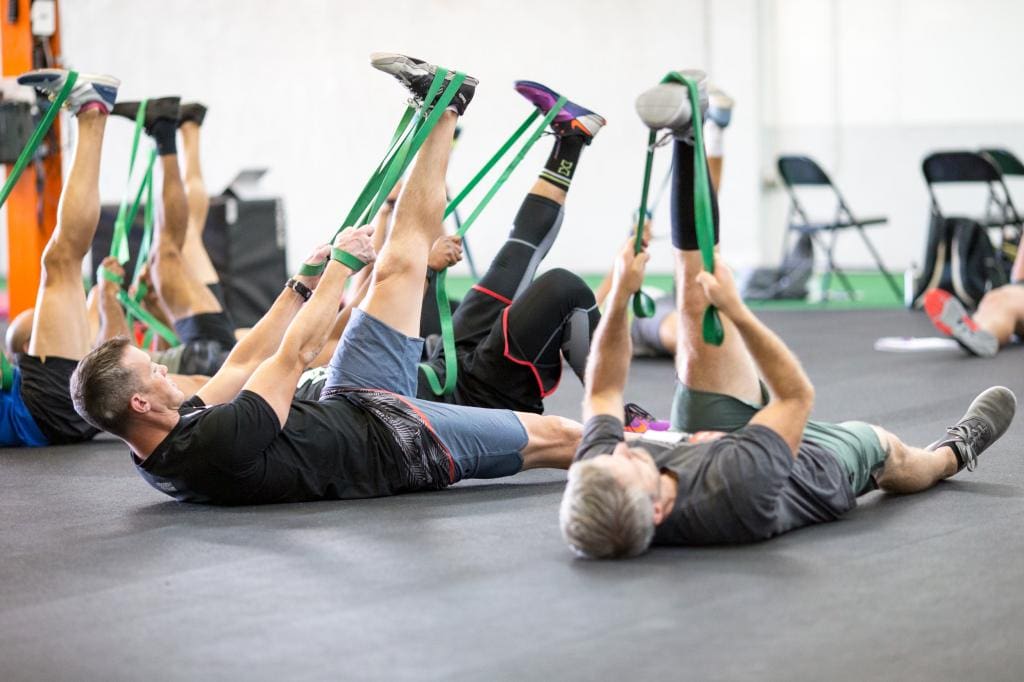
Flexibility is the ability of a muscle or muscle groups to lengthen passively through a range of motion. It represents the extensibility of soft tissues like muscles and connective tissues without requiring active engagement or strength.
Components of Flexibility
Flexibility primarily involves:
- Muscle length
- Tendon elasticity
- Ligament laxity
Magnusson et al. (1996) assert that flexibility is largely determined by the mechanical properties of muscles and tendons, as well as the individual’s pain tolerance during stretching.
The Science Behind Flexibility
Flexibility training typically focuses on improving the passive range of motion. Static stretching, a common method to enhance flexibility, elongates muscles and increases the tolerance to stretching, as shown in a study by Behm and Chaouachi (2011). However, increased flexibility does not necessarily translate to improved movement quality if not accompanied by strength and control.
Examples of Flexibility Exercises
- Static hamstring stretch
- Quadriceps stretch
- Butterfly stretch
- Chest doorway stretch
These exercises aim to enhance muscle length and passive range without active contraction.
Key Differences Between Mobility and Flexibility
Active vs Passive
Mobility is an active process involving strength and control, while flexibility is passive, focusing on the ability to achieve length without muscular engagement.
Functional Impact
Mobility directly impacts functional movement and athletic performance. Poor mobility can restrict an individual’s ability to perform exercises like squats or overhead presses efficiently. In contrast, flexibility alone may not improve movement efficiency without corresponding strength and motor control.
Injury Prevention
Both mobility and flexibility contribute to injury prevention, but in different ways. Mobility training enhances joint stability and control, thus reducing compensatory movements that can lead to injuries. Conversely, flexibility reduces muscle stiffness, potentially lowering the risk of strains and tears.
Measurement Methods
Mobility is often assessed through functional movement screenings that evaluate active ROM and control (Cook, 2010). Flexibility is usually measured by tests like the sit-and-reach, which assess the maximum passive range of tissues.
How Mobility and Flexibility Interact
Although distinct, mobility and flexibility are interconnected. Flexibility provides the passive range necessary for mobility, while mobility ensures that the body can actively use that range with strength and control. Inadequate flexibility can limit mobility, and conversely, poor motor control can render flexibility improvements ineffective in functional movements.
Joint-specific issues often illustrate the relationship. For instance, tight hip flexors (flexibility issue) can restrict hip mobility, impacting activities like squats and lunges. Improving hip flexor flexibility alongside active hip mobility drills ensures optimal function.
The Role of Strength in Mobility
Strength training is integral to mobility. According to a study by Morton et al. (2011), strength development at end-range positions enhances joint stability and control, promoting greater mobility. Strength ensures that increased range of motion can be maintained under load, critical for athletic movements.
Isometric contractions at extended ranges, known as “end-range strength,” are particularly effective in enhancing mobility while protecting joints from injury.
The Role of Neuromuscular Control
Neuromuscular control – the ability of the nervous system to coordinate muscle activation – is another critical factor in mobility. Lee et al. (2018) emphasize that neuromuscular efficiency enables smoother, more coordinated joint movements, contributing to better dynamic stability.
Balance training, proprioceptive exercises, and dynamic stability drills all enhance neuromuscular control and, by extension, mobility.
Training Mobility vs Training Flexibility
Mobility Training Principles
- Emphasize active control
- Include dynamic movements
- Incorporate end-range strengthening
- Progressively load joints throughout their range
Flexibility Training Principles
- Focus on static or passive stretching
- Hold stretches for 30 seconds to 2 minutes
- Stretch post-exercise when muscles are warm
- Aim for gradual increases in tissue length
Practical Applications for Athletes
Athletes benefit more from mobility training than from flexibility alone because sports require active, controlled movements. For instance, a weightlifter needs shoulder mobility to stabilize a barbell overhead, not merely shoulder flexibility.
However, flexibility cannot be ignored. Tight muscles can impede mobility efforts. Thus, a combination of flexibility and mobility work tailored to sport-specific needs is optimal.
Common Mobility and Flexibility Myths

Myth 1: Stretching before exercise prevents injuries
Evidence suggests that static stretching before exercise may not reduce injury risk and can even impair performance (Simic et al., 2013). Instead, dynamic mobility drills are recommended as part of warm-ups.
Myth 2: More flexibility is always better
Excessive flexibility without adequate strength can lead to joint instability and increased injury risk (Behm & Chaouachi, 2011).
Myth 3: Mobility and flexibility are the same
As outlined, mobility requires active strength and control, while flexibility is passive. Conflating the two can lead to ineffective training strategies.
How to Assess Your Own Mobility and Flexibility
Self-Assessment Techniques
- Perform deep squats: Look for compensation patterns like heel lift or lumbar flexion.
- Shoulder reach test: Check if you can touch your hands behind your back.
- Hamstring flexibility test: Measure passive leg raise while lying down.
Assessing where limitations occur – whether from stiffness (flexibility) or lack of control (mobility) – can guide individualized training programs.
Integrating Mobility and Flexibility into Your Routine
An ideal program includes:
- Warm-up: Dynamic mobility drills
- Post-workout: Static stretching for flexibility
- Strength work: End-range control exercises
- Recovery days: Targeted flexibility sessions
Incorporating both mobility and flexibility ensures a comprehensive approach to movement quality and resilience.
Conclusion
Mobility and flexibility are fundamental but distinct elements of physical performance. Mobility, defined by active control through a range of motion, relies on strength, motor control, and proprioception. Flexibility, the passive ability of muscles to lengthen, complements mobility by enabling joints to access the necessary range. Understanding their interplay and prioritizing both within training regimens enhances athletic performance, reduces injury risks, and promotes long-term joint health.
Bibliography
Behm, D.G. & Chaouachi, A. (2011) A review of the acute effects of static and dynamic stretching on performance. European Journal of Applied Physiology, 111(11), pp.2633–2651.
Cook, G. (2010) Movement: Functional Movement Systems: Screening, Assessment, Corrective Strategies. On Target Publications.
Lee, D., Lee, J., Park, J., & Lee, S. (2018) The Effects of Proprioceptive Training on Balance, Strength, and Neuromuscular Control. Journal of Physical Therapy Science, 30(7), pp.912–915.
Magnusson, S.P., Simonsen, E.B., Aagaard, P., Bojsen-Moller, F., & Kjaer, M. (1996) Mechanical and physiological responses to stretching with and without preisometric contraction in human skeletal muscle. Archives of Physiology and Biochemistry, 104(2), pp.59–67.
Morton, S.K., Whitehead, J.R., Brinkert, R.H., & Caine, D.J. (2011) Resistance Training vs. Static Stretching Effects on Active and Passive Range of Motion. Medicine and Science in Sports and Exercise, 43(4), pp.651–657.
Simic, L., Sarabon, N., & Markovic, G. (2013) Does Pre-Exercise Static Stretching Inhibit Maximal Muscular Performance? A Meta-Analytical Review. Scandinavian Journal of Medicine & Science in Sports, 23(2), pp.131–148.
Key Takeaways Table
| Key Takeaway | Summary |
|---|---|
| Mobility vs Flexibility | Mobility is active joint movement; flexibility is passive muscle lengthening. |
| Importance of Strength | Strength supports mobility by stabilizing joints at end-range positions. |
| Neuromuscular Control | Critical for coordinated, smooth movements that define good mobility. |
| Training Methods | Mobility requires dynamic, strength-focused exercises; flexibility benefits from static stretching. |
| Performance and Injury Prevention | Proper balance of mobility and flexibility enhances performance and reduces injury risks. |
| Assessment Strategies | Use functional movement tests to differentiate between mobility and flexibility limitations. |
| Programming | Incorporate both mobility drills and flexibility work into regular training routines. |