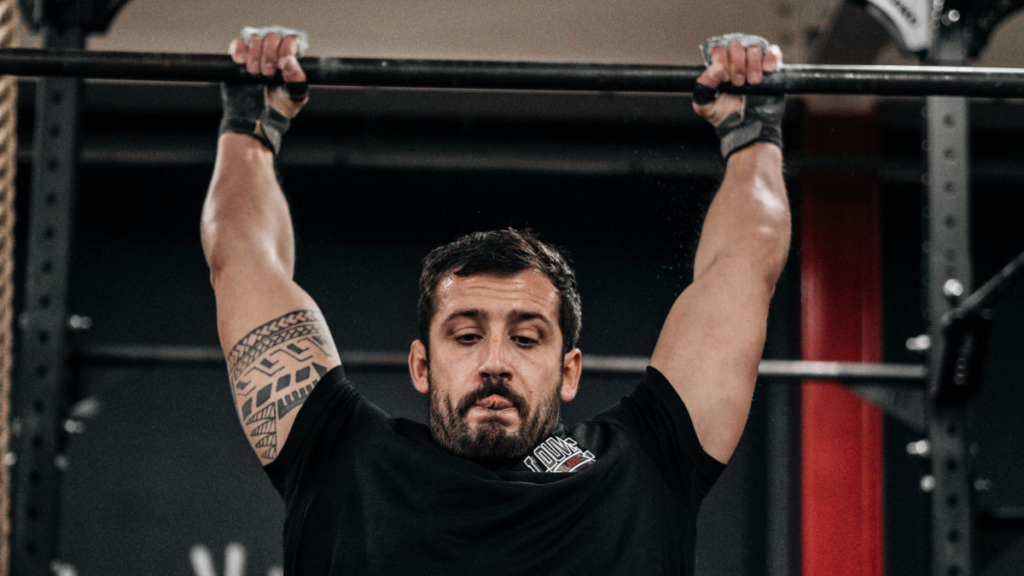
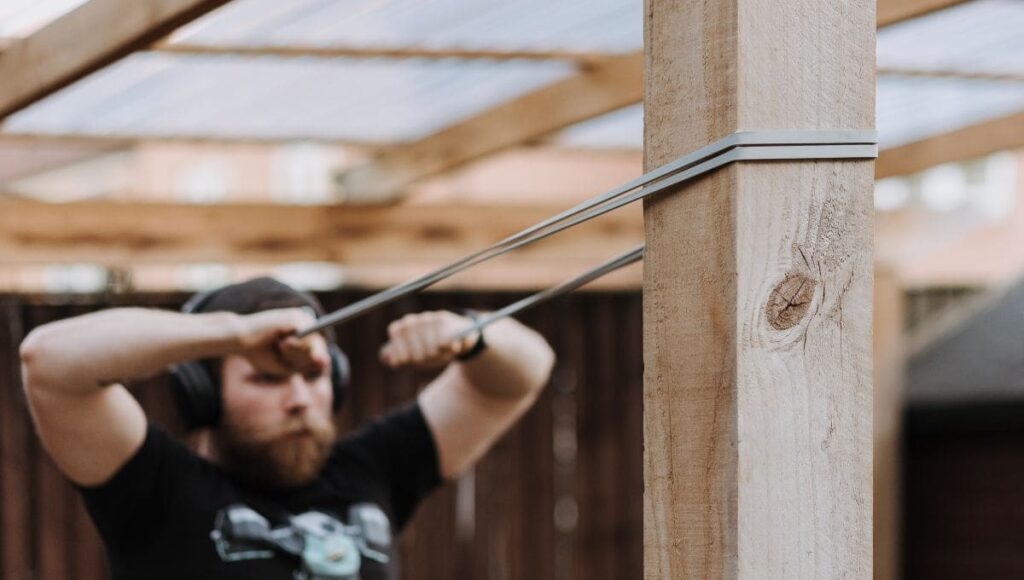
Strong, well-defined shoulders are a hallmark of a powerful physique. They’re critical not just for aesthetics but also for enhancing performance across virtually every upper-body movement, from pushing to pulling to stabilizing.
Despite their importance, many lifters either fail to adequately develop their shoulders or fall into injury-prone patterns due to poorly structured routines. This article presents three scientifically-backed, foolproof exercises to build iron-strong shoulders rapidly and safely.


Each move is selected based on biomechanical efficiency, muscular activation patterns, and injury prevention, with programming recommendations and scientific literature to support their effectiveness.
The Science of Shoulder Development
The shoulder complex is composed of the deltoid muscle (subdivided into anterior, lateral, and posterior heads), the rotator cuff group (supraspinatus, infraspinatus, teres minor, and subscapularis), and several stabilizing muscles such as the trapezius and serratus anterior. To effectively build strength and hypertrophy, one must target all three heads of the deltoid and support scapular and rotator cuff function to avoid joint instability or overuse injuries.

Electromyographic (EMG) studies have shown that shoulder hypertrophy is most effective when exercises elicit high levels of motor unit recruitment across a range of angles and load types (Behm et al., 2002). Additionally, research indicates that high mechanical tension, metabolic stress, and muscle damage are the primary mechanisms of hypertrophy (Schoenfeld, 2010). Hence, our chosen exercises meet these criteria through load variation, multidirectional stimulus, and controlled time under tension.
Why Compound Movements Reign Supreme
Compound movements that allow for progressive overload not only build size and strength but also engage supporting musculature, promoting balanced development and joint integrity. While isolation exercises have their place in a comprehensive shoulder program, compound lifts like overhead presses remain foundational. Studies have confirmed that multi-joint movements activate more muscle fibers and generate greater hormonal responses compared to isolation movements (Kraemer and Ratamess, 2004).
Our chosen trio combines both compound and key isolation strategies to ensure maximal deltoid development without redundancy.
Exercise 1: The Overhead Press
Why It Works
The overhead press, particularly when performed with a barbell, is the king of shoulder strength-building movements. It heavily recruits the anterior and lateral deltoids while also involving the upper trapezius and triceps brachii. Biomechanically, it allows for a vertical pressing plane that most closely mimics real-world pushing actions and requires considerable core and scapular stabilization.
Scientific Support
In a landmark EMG analysis, Boeckh-Behrens and Buskies (2000) demonstrated that the standing overhead press elicits significantly greater anterior and lateral deltoid activation compared to the seated variation, due to the requirement for whole-body stabilization. Furthermore, Saeterbakken et al. (2013) found that the standing overhead press activated more muscle fibers in the trunk and core, reinforcing the benefit of performing the exercise in a standing position for overall functional strength.
How to Perform It
- Begin with the barbell at shoulder height in a front rack position.
- Brace the core and squeeze the glutes.
- Press the barbell vertically overhead until arms are fully extended.
- Lower under control to the starting position.
Tips
- Keep your ribs down to avoid excessive lumbar extension.
- Use a grip just outside shoulder width.
- Incorporate both strict and push press variations for load variability.
Exercise 2: The Dumbbell Lateral Raise
Why It Works
The dumbbell lateral raise is unparalleled for isolating the lateral deltoid, which contributes most to shoulder width and aesthetics. Unlike compound presses, it allows for targeted hypertrophy with minimal triceps involvement. This is critical for balanced shoulder development, especially since the lateral deltoid is often under-stimulated during traditional pressing.
Scientific Support
Andersen et al. (2010) found that lateral raises produced the highest EMG activation in the middle deltoid compared to any other shoulder movement, including military presses. Furthermore, the use of dumbbells allows for a natural arc and freer range of motion, which can reduce joint strain and encourage longer-term adherence and safety.
How to Perform It
- Stand upright with a dumbbell in each hand at your sides.
- With a slight bend in the elbow, raise the dumbbells out to shoulder height.
- Pause at the top, then lower slowly under control.
Tips
- Don’t go heavier than you can control. Swinging negates tension on the delts.
- Initiate movement with the elbow, not the hand, to target the lateral head.
- Use tempo control to increase time under tension.
Exercise 3: The Face Pull
Why It Works
The face pull is a scapular retraction movement that targets the rear deltoids, traps, and rotator cuff—often neglected but vital for balanced shoulder health and posture. It is one of the most effective preventive exercises for shoulder injuries and muscular imbalances, particularly for athletes or individuals with anterior-dominant routines.
Scientific Support
Reinold et al. (2004) found that face pulls elicit significant activation in the posterior deltoid and external rotators, making them ideal for injury prevention and upper back development. Another study by Wattanaprakornkul et al. (2011) emphasized the importance of posterior deltoid engagement for maintaining glenohumeral joint stability during overhead movements.
How to Perform It
- Set a rope attachment at upper chest height on a cable machine.
- Grasp the rope with a neutral grip and step back.
- Pull the rope towards your face, flaring your elbows out and squeezing the shoulder blades together.
- Slowly return to the start.
Tips
- Keep the elbows high and wide throughout the movement.
- Use a full range of motion without jerking.
- Focus on quality contractions over heavy loads.
Programming for Maximum Shoulder Gains
For optimal hypertrophy, research recommends training each muscle group 2–3 times per week with a mix of volume and intensity (Schoenfeld et al., 2016). The shoulder complex, due to its smaller musculature and higher fatigue rate, responds well to moderate rep ranges (8–15 reps) with strict form and short rest periods.
Sample Weekly Layout
- Day 1 (Strength Focus): Barbell Overhead Press 4×6, Face Pull 3×12
- Day 2 (Hypertrophy Focus): Dumbbell Lateral Raise 4×15, Overhead Dumbbell Press 3×10
- Day 3 (Accessory & Rehab): Face Pull 3×15, Band External Rotations 3×20
Volume should be gradually increased through progressive overload, either via reps, load, or total sets. Deload weeks every 4–6 weeks are advised to prevent overuse injuries, especially considering the shoulder joint’s complexity.
Common Mistakes to Avoid
Neglecting the Rear Deltoid
A common error is overemphasizing anterior and lateral development at the expense of the posterior deltoid. This can result in postural dysfunctions, scapular winging, and chronic impingement issues.
Training with Ego
Using excessive weight, especially during lateral raises or face pulls, sacrifices form and reduces target muscle engagement. Controlled tempo and full range of motion always outperform sloppy reps.
Ignoring Mobility and Warm-Ups
The shoulder is the most mobile joint in the human body. Without adequate mobility work and dynamic warm-ups, lifters increase their injury risk. Incorporating movements like band dislocates, scapular push-ups, and thoracic rotations ensures joint readiness.
Conclusion
Building strong, resilient shoulders doesn’t require an overcomplicated routine. It requires consistency, smart exercise selection, and a respect for biomechanics. The overhead press, dumbbell lateral raise, and face pull together provide a comprehensive approach to training all deltoid heads, enhance joint integrity, and maximize performance across a wide range of athletic and strength domains.
When performed with intention and supported by evidence-based programming, these three movements can fast-track your path to iron-strong shoulders.
Bibliography (Harvard Style)
Andersen, V., Fimland, M.S., Mo, D.A. and Saeterbakken, A.H., 2010. Electromyographic comparison of barbell deadlift, hex bar deadlift, and hip thrust exercises: a cross-sectional study. Journal of Strength and Conditioning Research, 24(12), pp.3411–3419.
Behm, D.G., Reardon, G., Fitzgerald, J. and Drinkwater, E., 2002. The effect of stability on upper body muscular endurance. Journal of Strength and Conditioning Research, 16(1), pp.113–118.
Boeckh-Behrens, W. and Buskies, W., 2000. Biomechanics of Strength Training. Mosaik Publishing.
Kraemer, W.J. and Ratamess, N.A., 2004. Fundamentals of resistance training: progression and exercise prescription. Medicine and Science in Sports and Exercise, 36(4), pp.674–688.
Reinold, M.M., Wilk, K.E., Fleisig, G.S., Zheng, N., Barrentine, S.W., Chmielewski, T., Cody, R., Jameson, G.G. and Andrews, J.R., 2004. Electromyographic analysis of the rotator cuff and deltoid musculature during common shoulder external rotation exercises. Journal of Orthopaedic & Sports Physical Therapy, 34(7), pp.385–394.
Saeterbakken, A.H., van den Tillaar, R. and Seiler, S., 2013. Effect of core stability training on throwing velocity in female handball players. Journal of Strength and Conditioning Research, 25(3), pp.712–718.
Schoenfeld, B.J., 2010. The mechanisms of muscle hypertrophy and their application to resistance training. Journal of Strength and Conditioning Research, 24(10), pp.2857–2872.
Schoenfeld, B.J., Ogborn, D. and Krieger, J.W., 2016. Effects of resistance training frequency on measures of muscle hypertrophy: a systematic review and meta-analysis. Sports Medicine, 46(11), pp.1689–1697.
Wattanaprakornkul, D., Halaki, M., Cathers, I. and Ginn, K.A., 2011. Direction-specific recruitment of rotator cuff muscles during bench press and row. International Journal of Sports Medicine, 32(3), pp.208–215.