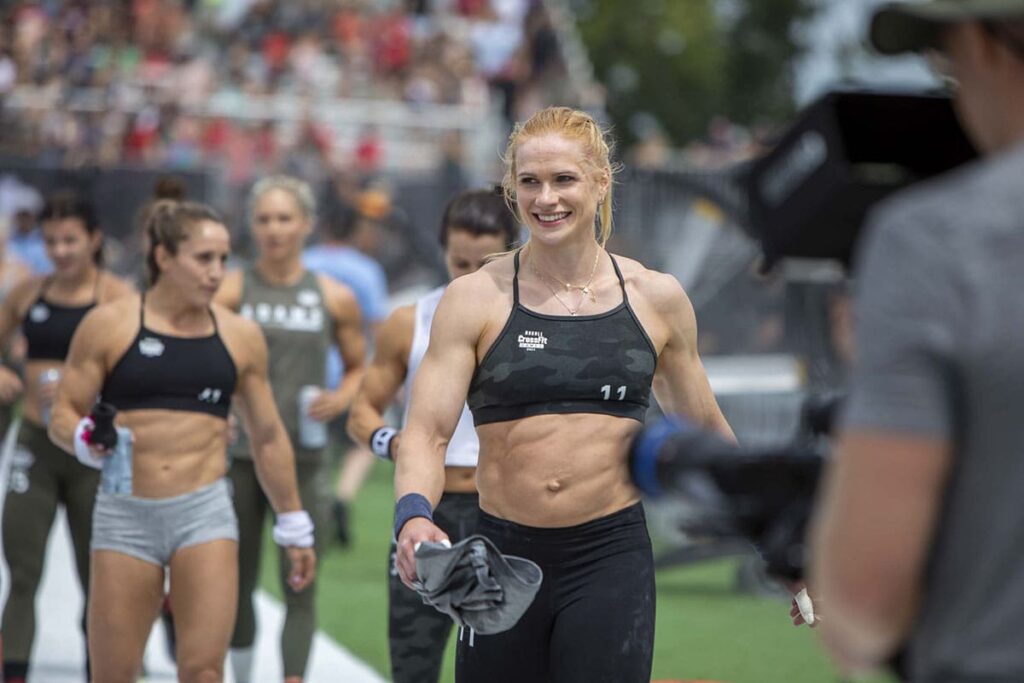
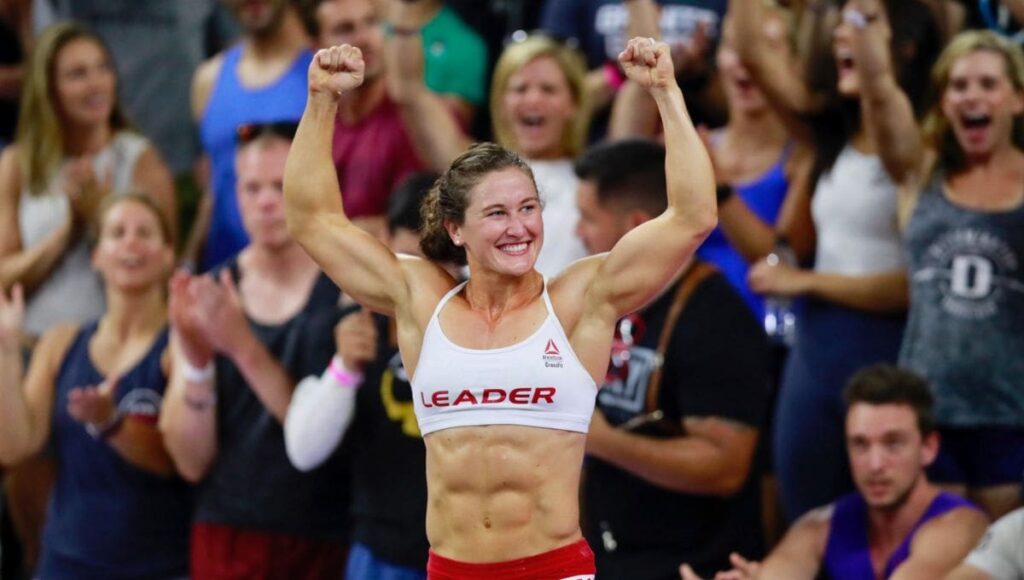
Achieving a shredded six-pack requires more than just visible abs. It’s about building functional core strength, reducing body fat, and consistently challenging the abdominal muscles with scientifically validated exercises.
Below are ten ab exercises, backed by research, that offer the most efficient path to core definition and strength. Each movement has been studied for its electromyographic (EMG) activation of the rectus abdominis and obliques to ensure your efforts are supported by science and not fitness myths.


1. Bicycle Crunch
The bicycle crunch is widely considered one of the most effective ab exercises. In a comparative study conducted by the American Council on Exercise (ACE), the bicycle maneuver elicited the highest activation in both the rectus abdominis and oblique muscles. This dynamic movement combines trunk flexion and rotation, which simultaneously stimulates both major abdominal muscle groups.
To perform the bicycle crunch, lie flat on the floor, bring your knees up to a 90-degree angle, and alternate elbow-to-opposite-knee contact while maintaining a controlled pedaling motion. This constant motion ensures sustained tension and neuromuscular engagement.
2. Captain’s Chair Leg Raise
The captain’s chair leg raise ranked second in the ACE study for abdominal activation. Using a vertical knee raise station, the athlete supports themselves on their forearms while lifting the knees toward the chest. This movement isolates the lower rectus abdominis and requires control to avoid using momentum.
The vertical positioning of the exercise minimizes spinal compression while maximizing core recruitment. Studies emphasize its role in effectively targeting deep stabilizing muscles of the abdomen when the legs are lifted with control.
3. Ab Wheel Rollout
Ab wheel rollouts are considered an advanced core exercise due to their demand on both strength and control. A study published in the Journal of Strength and Conditioning Research found that ab wheel rollouts produced some of the highest EMG values for the rectus abdominis when performed correctly.
The exercise challenges spinal stability by engaging the core to prevent hyperextension. From a kneeling position, the individual rolls the wheel forward slowly, ensuring the torso remains aligned without arching the lower back, then pulls back to the starting position. This eccentric control phase is where the greatest muscular activation occurs.
4. Hanging Leg Raise
The hanging leg raise is a staple for advanced lower ab training. It requires the athlete to hang from a pull-up bar and lift the legs toward a horizontal or higher position, using the core to control movement rather than swinging.
EMG studies demonstrate high rectus abdominis activity, especially in the lower region, due to the vertical lifting motion. Furthermore, the requirement to stabilize the torso during the hang engages secondary stabilizers such as the hip flexors and deep core musculature.
5. Swiss Ball Crunch
Crunching on a Swiss ball amplifies traditional floor crunch effectiveness by increasing the range of motion and adding instability. Research has shown that abdominal muscle activation is significantly higher during Swiss ball crunches compared to standard crunches.
The instability of the ball forces greater recruitment of stabilizing muscles while enabling a full spinal extension and flexion cycle. This allows for a more complete contraction of the rectus abdominis. To perform, sit on the ball, walk your feet forward until your lower back is supported, then perform slow and controlled crunches.
6. Plank
The plank remains one of the most foundational and effective isometric core exercises. Rather than repeated movement, the plank relies on sustained muscular contraction to maintain alignment. EMG readings reveal that holding a plank activates both the rectus abdominis and obliques. The standard plank involves resting on the forearms and toes, keeping the body in a straight line from head to heels.
It effectively targets deep core stabilizers and enhances overall muscular endurance. Planks are also scalable through time-based progression or by adding instability.
7. Side Plank
The side plank emphasizes the obliques and the transverse abdominis, providing a powerful lateral core stimulus. According to research, side planks generate high EMG activity in the external and internal obliques.
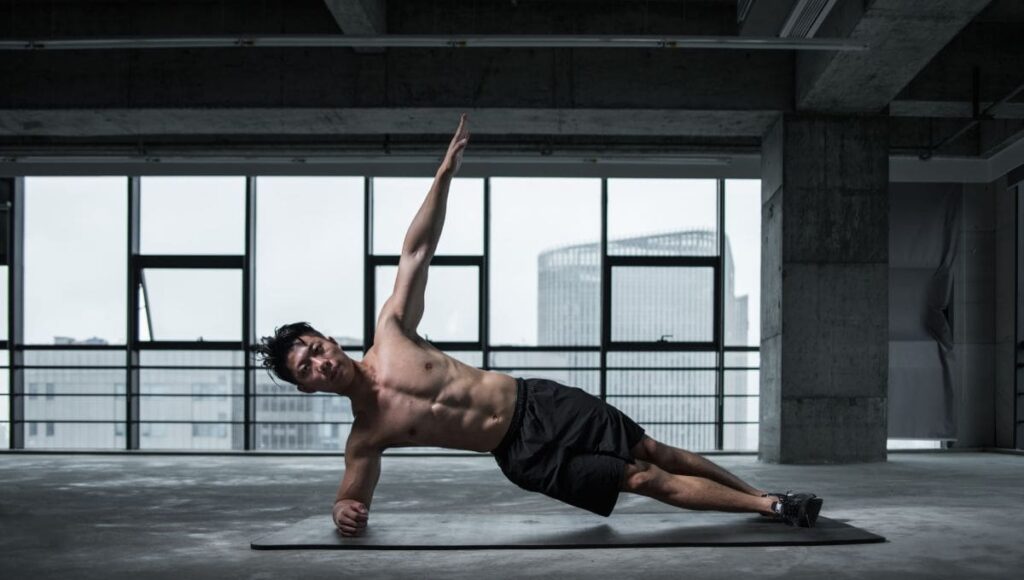
This exercise requires the athlete to support their body laterally on one forearm and the side of one foot, lifting the hips off the floor. Holding this position challenges both balance and muscular endurance. Advanced variations include leg raises or hip dips to increase intensity.
8. Russian Twist
The Russian twist enhances rotational core strength, targeting the obliques through transverse plane movement. EMG research supports its efficacy in activating the oblique muscles more intensely than non-rotational movements.
Performed seated with feet slightly off the ground and the torso reclined, the exercise involves rotating the trunk side to side, often with added resistance such as a medicine ball or plate. The twisting action mimics real-world movement patterns, improving functional rotational stability.
9. Reverse Crunch
The reverse crunch excels at engaging the lower portion of the rectus abdominis. Studies demonstrate that it elicits higher EMG activity in the lower abdominal fibers compared to traditional crunches.
To perform the reverse crunch, lie on your back, raise your legs to a tabletop position, and lift your hips off the floor by curling your pelvis toward your chest. The controlled motion reduces strain on the cervical spine while directly stimulating the lower core, making it a safer alternative for individuals with neck issues.
10. Vertical Leg Crunch
The vertical leg crunch intensifies the abdominal challenge by elevating the legs, forcing the rectus abdominis to contract under greater load. EMG analysis has shown this variation to produce significantly more activation than standard crunches.
With legs extended vertically toward the ceiling, the athlete performs a traditional crunch, reaching toward the toes while avoiding spinal strain. The straight leg position reduces assistance from the hip flexors and channels the workload directly to the abdominal wall.
Conclusion
These ten exercises are not merely popular—they are scientifically proven to be among the most effective for targeting the abdominal muscles. Incorporating them into your training regimen with proper form and progressive overload will yield superior results. It is also important to complement your workouts with a disciplined approach to nutrition and overall fat loss strategies. Without reducing subcutaneous fat through a caloric deficit, even the strongest abs will remain hidden. Ultimately, a shredded six-pack is the result of smart training, evidence-based movement selection, and unwavering consistency.
Key Takeaways
| Exercise | Primary Muscles Targeted | Notable Benefits |
|---|---|---|
| Bicycle Crunch | Rectus Abdominis, Obliques | Highest overall activation, dynamic movement |
| Captain’s Chair Leg Raise | Rectus Abdominis | Strong lower ab recruitment |
| Ab Wheel Rollout | Rectus Abdominis | High-intensity core stabilization |
| Hanging Leg Raise | Lower Rectus Abdominis | Vertical lift emphasizes lower abs |
| Swiss Ball Crunch | Rectus Abdominis | Greater range of motion, stabilizer activation |
| Plank | Entire Core | Isometric strength and endurance |
| Side Plank | Obliques, Transverse Abdominis | Enhances lateral core stability |
| Russian Twist | Obliques | Improves rotational control and balance |
| Reverse Crunch | Lower Rectus Abdominis | Lower ab isolation with minimal neck strain |
| Vertical Leg Crunch | Upper Rectus Abdominis | Intensifies ab engagement through leg elevation |
References
American Council on Exercise. (2001). Effectiveness of Abdominal Exercises: Study of EMG Activity in Common Ab Movements. American Council on Exercise, San Diego, CA.
Escamilla, R.F., Francisco, A.C., Kayes, A.V., Speer, K.P., and Moorman, C.T. (2006). An electromyographic analysis of the ab wheel and stability ball crunches. Journal of Strength and Conditioning Research, 20(3), 555–561.
Oliveira, L.F., Matta, T.T., Alves, D.S., Garcia, M.A., and Vieira, T.M.M. (2016). Electromyographic analysis of four abdominal exercises: Differences among exercises and between subjects with different training backgrounds. Journal of Electromyography and Kinesiology, 27, 40–47.
Clark, D.R., Lambert, M.I., and Hunter, A.M. (2012). Muscle activation in the loaded free barbell squat: A brief review. Journal of Strength and Conditioning Research, 26(4), 1169–1178.
McGill, S.M. (2001). Low back disorders: Evidence-based prevention and rehabilitation. Human Kinetics Publishers.
Axler, C.T. and McGill, S.M. (1997). Low back loads over a variety of abdominal exercises: Searching for the safest abdominal challenge. Medicine and Science in Sports and Exercise, 29(6), 804–811.
Ekstrom, R.A., Donatelli, R.A., and Carp, K.C. (2007). Electromyographic analysis of core trunk, hip, and thigh muscles during 9 rehabilitation exercises. Journal of Orthopaedic & Sports Physical Therapy, 37(12), 754–762.
Juker, D., McGill, S.M., Kropf, P., and Steffen, T. (1998). Quantitative intramuscular myoelectric activity of lumbar portions of psoas and the abdominal wall during a wide variety of tasks. Medicine and Science in Sports and Exercise, 30(2), 301–310.