For decades, protein intake has been at the forefront of discussions surrounding muscle growth, athletic performance, and physical development.
While there is broad agreement that protein is critical for building muscle, the exact amount necessary to maximize hypertrophy remains debated. This article dives into the science of protein consumption for muscle gain, cutting through the myths and misconceptions to deliver evidence-based recommendations.


The Role of Protein in Muscle Growth
Muscle Protein Synthesis vs. Breakdown
Muscle growth occurs when the rate of muscle protein synthesis (MPS) exceeds muscle protein breakdown (MPB). Dietary protein provides amino acids that act as the building blocks for muscle tissue. Resistance training stimulates MPS, and the presence of dietary protein, particularly leucine-rich sources, enhances this effect.
The Anabolic Window Myth
Older models suggested a narrow “anabolic window” post-exercise during which protein intake was critical. While nutrient timing can play a role, more recent research suggests the total daily intake of protein is far more influential on muscle gains than immediate post-workout consumption (Schoenfeld et al., 2013).
How Much Protein Do You Actually Need?
RDA vs. Optimal Intake
The Recommended Dietary Allowance (RDA) for protein is 0.8 grams per kilogram of body weight per day for sedentary individuals. However, this figure is designed to prevent deficiency, not to optimize body composition or performance. For active individuals, particularly those seeking to gain muscle mass, higher intake is necessary.
Research-Based Recommendations
A comprehensive meta-analysis by Morton et al. (2018) found that protein intakes of approximately 1.6 grams per kilogram of body weight per day optimize muscle growth in resistance-trained individuals. Intakes beyond 2.2 grams/kg/day showed no further benefits for most people. That said, certain populations, such as athletes in caloric deficits or bodybuilders during cutting phases, may benefit from higher intakes up to 2.4 grams/kg/day (Helms et al., 2014).
Protein Intake per Meal
Recent studies indicate that muscle protein synthesis can be maximized with protein doses of 20-40 grams per meal depending on the individual’s body mass (Moore et al., 2009). This translates to approximately 0.25 to 0.40 grams/kg/meal, distributed evenly over 3-6 meals per day (Areta et al., 2013).
Individual Variables That Influence Protein Needs
Training Status
Novice lifters tend to experience more rapid gains in muscle mass and therefore may benefit from slightly higher protein intakes during the initial phases of training. However, experienced lifters might need more precision in timing and quality rather than quantity (Phillips & Van Loon, 2011).
Energy Balance
When in a caloric surplus, protein requirements may be slightly reduced due to the anabolic effect of excess energy. In contrast, during energy restriction, such as during cutting phases or athletic weight-class preparation, higher protein intakes help preserve lean mass (Pasiakos et al., 2013).
Age
Older adults experience anabolic resistance, a blunted response to protein intake. To counter this, elderly individuals should aim for the higher end of the protein spectrum and focus on high-leucine sources (Moore et al., 2015).
Quality and Source of Protein
Complete vs. Incomplete Proteins
Complete proteins contain all nine essential amino acids in adequate quantities. Animal-based proteins (meat, dairy, eggs) are typically complete, whereas many plant-based proteins (e.g., rice, legumes) are incomplete. However, combining various plant sources throughout the day can result in a complete amino acid profile.
Leucine: The Trigger Amino Acid
Leucine plays a unique role in stimulating MPS. Research shows that around 2-3 grams of leucine per meal are necessary to maximally stimulate muscle building pathways (Norton & Layman, 2006). Whey protein is particularly high in leucine, making it a favored choice for post-workout consumption.
Plant-Based Considerations
While plant-based diets can support muscle gain, they often require higher total protein intakes due to lower digestibility and amino acid availability. Supplementation with isolated plant proteins (e.g., soy, pea, rice) or combining multiple sources can help overcome this limitation (Messina et al., 2004).
Timing and Distribution
Protein Distribution Throughout the Day
Distributing protein intake evenly across meals stimulates MPS more effectively than skewed patterns with most intake at dinner (Areta et al., 2013). Aiming for 4-6 protein-rich meals or snacks per day ensures frequent anabolic signaling.
Pre-Sleep Protein
Consuming 30-40 grams of slow-digesting protein, such as casein, before bed has been shown to enhance overnight MPS and improve recovery, particularly in resistance-trained individuals (Res et al., 2012).
Protein Overconsumption: Is More Always Better?
Myth of Kidney Damage
The claim that high protein intake damages the kidneys in healthy individuals is not supported by evidence. Studies show that high-protein diets do not impair renal function in healthy people (Poortmans & Dellalieux, 2000). However, individuals with pre-existing kidney disease should consult with healthcare providers.
Excess Protein and Body Composition
When protein intake exceeds needs, excess amino acids are either oxidized for energy or converted to other compounds. While high protein intake is less likely to be stored as fat compared to carbohydrates or fats, it does not automatically translate into greater muscle gain (Antonio et al., 2014).
Practical Guidelines
Step 1: Calculate Your Protein Needs
A practical target for muscle gain is 1.6 to 2.2 grams of protein per kilogram of body weight per day. For a 75 kg individual, this equals 120 to 165 grams per day.
Step 2: Distribute Intake Evenly
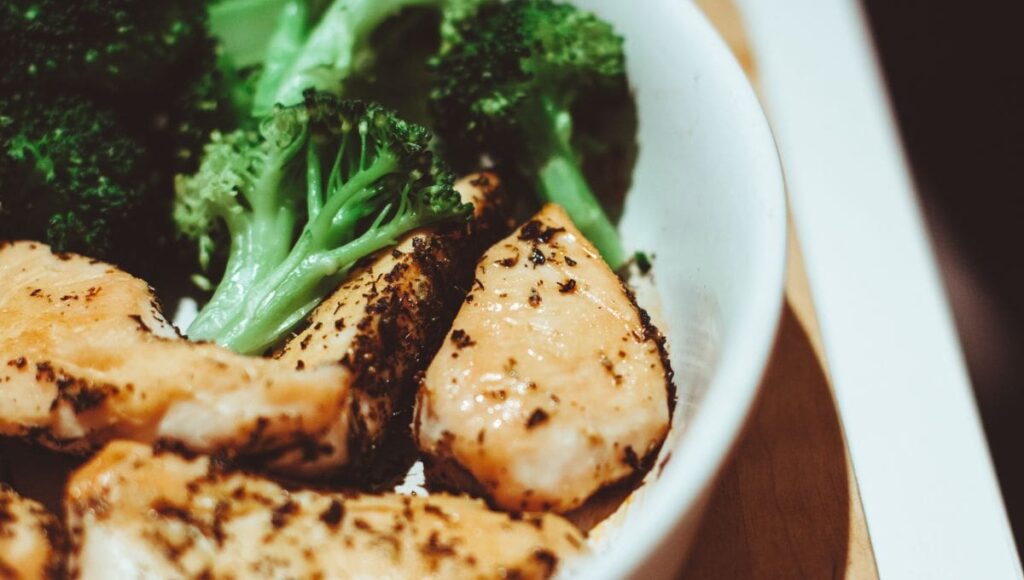
Divide your daily total across 4-6 meals/snacks, aiming for 20-40 grams per meal. Include high-leucine foods like whey, eggs, chicken, or soy.
Step 3: Consider Your Goals and Context
Athletes in a cutting phase should aim for the higher end of the range, potentially 2.2-2.4 g/kg/day. During bulking, slightly lower intake within the optimal range suffices if overall calories are sufficient.
Step 4: Evaluate Your Diet
Ensure protein sources are high quality and diverse, especially if on a plant-based diet. Consider supplementation if needed for convenience or specific amino acid profiles.
Step 5: Monitor Progress
Track changes in strength, muscle mass, and body composition. Adjust protein intake if muscle gains plateau despite training and adequate calories.
Bibliography
Antonio, J., Ellerbroek, A., Silver, T., Vargas, L. and Peacock, C. A. (2014). ‘A high protein diet has no harmful effects: a one-year crossover study in resistance-trained males’, Journal of Nutrition and Metabolism, 2014, Article ID 908539.
Areta, J. L., Burke, L. M., Ross, M. L., Camera, D. M., West, D. W. D., Broad, E. M., Jeacocke, N. A., Moore, D. R., Stellingwerff, T. and Phillips, S. M. (2013). ‘Timing and distribution of protein ingestion during prolonged recovery from resistance exercise alters myofibrillar protein synthesis’, Journal of Physiology, 591(9), pp. 2319–2331.
Helms, E. R., Aragon, A. A. and Fitschen, P. J. (2014). ‘Evidence-based recommendations for natural bodybuilding contest preparation: nutrition and supplementation’, Journal of the International Society of Sports Nutrition, 11(1), p. 20.
Messina, M., Mangels, A. R. and Messina, V. (2004). The Dietitian’s Guide to Vegetarian Diets: Issues and Applications. 2nd ed. Jones & Bartlett Learning.
Moore, D. R., Robinson, M. J., Fry, J. L., Tang, J. E., Glover, E. I., Wilkinson, S. B., Prior, T., Tarnopolsky, M. A. and Phillips, S. M. (2009). ‘Ingested protein dose response of muscle and albumin protein synthesis after resistance exercise in young men’, American Journal of Clinical Nutrition, 89(1), pp. 161–168.
Moore, D. R., Churchward-Venne, T. A., Witard, O., Breen, L., Burd, N. A., Tipton, K. D. and Phillips, S. M. (2015). ‘Protein ingestion to stimulate myofibrillar protein synthesis requires greater relative protein intakes in healthy older versus younger men’, Journals of Gerontology Series A: Biological Sciences and Medical Sciences, 70(1), pp. 57–62.
Morton, R. W., Murphy, K. T., McKellar, S. R., Schoenfeld, B. J., Henselmans, M., Helms, E., Aragon, A. A., Devries, M. C., Banfield, L., Krieger, J. W. and Phillips, S. M. (2018). ‘A systematic review, meta-analysis and meta-regression of the effect of protein supplementation on resistance training-induced gains in muscle mass and strength in healthy adults’, British Journal of Sports Medicine, 52(6), pp. 376–384.
Norton, L. E. and Layman, D. K. (2006). ‘Leucine regulates translation initiation of protein synthesis in skeletal muscle after exercise’, Journal of Nutrition, 136(2), pp. 533S–537S.
Pasiakos, S. M., McLellan, T. M. and Lieberman, H. R. (2013). ‘The effects of protein supplements on muscle mass, strength, and aerobic and anaerobic power in healthy adults: a systematic review’, Sports Medicine, 43(5), pp. 467–487.
Phillips, S. M. and Van Loon, L. J. C. (2011). ‘Dietary protein for athletes: from requirements to metabolic advantage’, Applied Physiology, Nutrition, and Metabolism, 36(5), pp. 647–657.
Poortmans, J. R. and Dellalieux, O. (2000). ‘Do regular high protein diets have potential health risks on kidney function in athletes?’, International Journal of Sport Nutrition and Exercise Metabolism, 10(1), pp. 28–38.
Res, P. T., Groen, B., Pennings, B., Beelen, M., Wallis, G. A., Gijsen, A. P., Senden, J. M. and van Loon, L. J. C. (2012). ‘Protein ingestion before sleep improves postexercise overnight recovery’, Medicine and Science in Sports and Exercise, 44(8), pp. 1560–1569.
Schoenfeld, B. J., Aragon, A. A. and Krieger, J. W. (2013). ‘The effect of protein timing on muscle strength and hypertrophy: a meta-analysis’, Journal of the International Society of Sports Nutrition, 10(1), p. 53.
Key Takeaways
| Topic | Summary |
|---|---|
| Optimal Daily Protein Intake | 1.6-2.2 grams/kg of body weight per day for muscle gain. |
| Per Meal Dose | Aim for 20-40 grams per meal or 0.25-0.4 g/kg/meal. |
| Distribution | Spread protein intake evenly across 4-6 meals. |
| Training Influence | Beginners may benefit from higher intakes; advanced lifters need strategic timing and quality. |
| Energy Balance | Higher protein needed during calorie restriction to preserve muscle mass. |
| Plant-Based Diets | May require more protein or supplementation due to lower digestibility. |
| Leucine Importance | Aim for 2-3 g leucine per meal to maximize MPS. |
| Pre-Sleep Protein | 30-40 g of slow-digesting protein like casein may enhance overnight recovery. |
| Kidney Health | No evidence of harm from high protein diets in healthy individuals. |