Tea is more than just a soothing beverage. For centuries, it has been consumed for its potential health benefits, ranging from mental alertness to disease prevention.
As scientific understanding of phytochemicals and bioactive compounds has advanced, numerous studies have validated traditional claims, showing that different types of tea offer a host of fitness and wellness benefits. Whether you’re aiming to shed fat, improve recovery, or boost immunity, there’s a tea that aligns with your goals.


1. Green Tea: The Fat-Burning Powerhouse

What Makes Green Tea Effective?
Green tea, derived from the Camellia sinensis plant, is rich in catechins—especially epigallocatechin gallate (EGCG). These polyphenols act as potent antioxidants, influencing metabolism and fat oxidation.
A meta-analysis in the International Journal of Obesity (Hursel et al., 2009) found that green tea catechins significantly increased energy expenditure and fat oxidation. The combination of caffeine and EGCG appears to work synergistically to enhance thermogenesis and fat utilization during exercise.
Fitness Benefits
Green tea is ideal for athletes and fitness enthusiasts looking to lose fat while maintaining performance. Studies suggest that consuming green tea extract before exercise may lead to higher fat oxidation rates (Venables et al., 2008).
How to Use It
Drink 2-3 cups of brewed green tea daily or use a standardized extract containing at least 250 mg of EGCG. For best results, consume it 30-60 minutes before workouts.
2. Black Tea: Gut Health and Endurance Support

Polyphenols Beyond Catechins
Black tea undergoes full oxidation, which transforms catechins into theaflavins and thearubigins. These complex polyphenols offer a range of benefits, particularly for gut health and endurance.
A study published in Microbiome (Henning et al., 2018) found that black tea polyphenols alter gut microbiota composition, increasing populations of beneficial bacteria that influence body weight and inflammation.
Fitness Benefits
Black tea may aid endurance athletes by improving gut microbiota diversity, which can positively affect nutrient absorption, immune response, and inflammation control. Additionally, the caffeine content supports aerobic performance by increasing alertness and reducing perceived exertion (Ganio et al., 2009).
How to Use It
Incorporate 1-2 cups of black tea into your pre-workout routine, or drink it with meals to support digestion and nutrient uptake.
3. Matcha: Focus and Recovery in One Cup
Concentrated Benefits
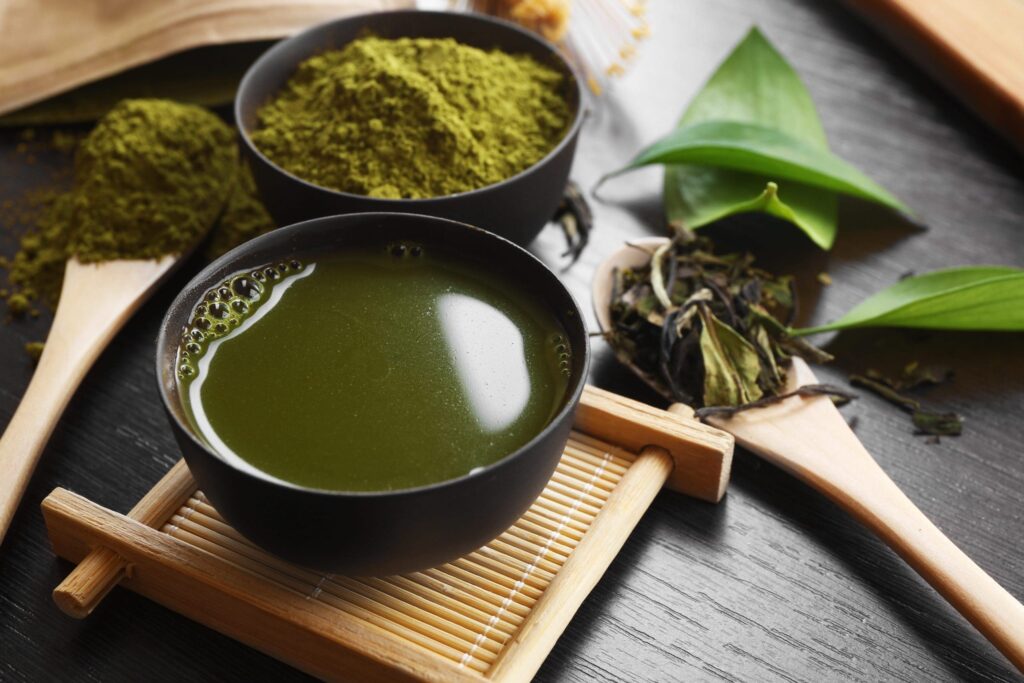
Matcha is a form of powdered green tea made from shade-grown leaves, resulting in higher concentrations of L-theanine, EGCG, and caffeine. Unlike regular green tea, you consume the entire leaf when drinking matcha, providing a more potent dose of its active compounds.
Research in Nutrients (Dietz and Dekker, 2017) indicates that L-theanine increases alpha brain wave activity, promoting calm alertness and reducing stress without sedation.
Fitness Benefits
Matcha supports mental clarity during workouts and enhances post-exercise recovery by combating oxidative stress. Its high antioxidant load helps reduce muscle soreness and inflammation, critical for high-frequency training regimens.
How to Use It
Mix 1-2 teaspoons of ceremonial-grade matcha with hot (not boiling) water for a pre-workout energy boost or post-workout recovery drink.
4. Oolong Tea: Metabolic Support and Muscle Preservation
The Middle Ground Tea
Oolong tea is partially oxidized, placing it between green and black tea in terms of flavor and composition. It retains catechins while also developing theaflavins, offering a balanced polyphenol profile.
A clinical study in the Chinese Journal of Integrative Medicine (He et al., 2009) showed that regular oolong tea consumption significantly decreased body fat over a 6-week period, particularly in overweight individuals.
Fitness Benefits
Oolong tea supports weight management by promoting lipid metabolism and enhancing energy expenditure. Additionally, its moderate caffeine content helps preserve lean muscle mass during calorie deficits.
How to Use It
Drink oolong tea between meals to control appetite and increase metabolic rate. Aim for 2-3 cups per day for consistent effects.
5. White Tea: Immune Boost and Cellular Protection
Subtle but Powerful
White tea is the least processed of all teas, retaining high levels of catechins and antioxidants. It’s harvested from young leaves and buds, offering a delicate flavor profile and potent bioactive content.

A study in Food Chemistry (Lin et al., 2005) demonstrated that white tea extract has significant anti-inflammatory and antimicrobial properties, making it valuable for immune health.
Fitness Benefits
White tea may support immune function, critical for consistent training performance. It also provides cellular protection against oxidative damage, promoting faster recovery and reducing the risk of chronic inflammation.
How to Use It
Enjoy white tea during recovery phases or during illness to support the immune system. Use high-quality loose leaf tea and steep at lower temperatures to preserve its delicate compounds.
Bibliography
Dietz, C. and Dekker, M. (2017). Effect of green tea phytochemicals on mood and cognition. Nutrients, 9(5), p.502.
Ganio, M.S., Armstrong, L.E., Casa, D.J., McDermott, B.P., Lee, E.C., Yamamoto, L.M. and Marzano, S., (2009). Evidence-based approach to lingering hydration and endurance performance: impact of caffeine. International Journal of Sport Nutrition and Exercise Metabolism, 19(3), pp.222-239.
He, Y., Wu, Q., Liu, H., and Liang, H. (2009). Effects of oolong tea on body fat and lipid profile in obese individuals. Chinese Journal of Integrative Medicine, 15(1), pp.34-38.
Henning, S.M., Yang, J., Hsu, M., Lee, R.P., Grojean, E.M., Ly, A., Hsu, N., Thames, G., Heber, D., and Li, Z. (2018). Decaffeinated green and black tea polyphenols decrease weight gain and alter microbiome populations in high fat-fed mice. Microbiome, 6(1), p.1.
Hursel, R., Westerterp-Plantenga, M.S. (2009). Thermogenic ingredients and body weight regulation. International Journal of Obesity, 33(4), pp.446-454.
Lin, Y.L., Tsai, S.H., Lin-Shiau, S.Y., Ho, C.T., and Lin, J.K. (2005). Theaflavin-3,3′-digallate and catechins in black tea suppress inflammatory responses in rats. Food Chemistry, 90(1-2), pp.149-157.
Venables, M.C., Hulston, C.J., Cox, H.R. and Jeukendrup, A.E. (2008). Green tea extract ingestion, fat oxidation, and glucose tolerance in healthy humans. American Journal of Clinical Nutrition, 87(3), pp.778-784.