As men age, preserving and building muscle becomes increasingly vital. Sarcopenia, the age-related loss of muscle mass and strength, can start as early as your 30s and accelerates in your 40s and beyond. However, with the right training strategy, you can not only maintain muscle but actually build it effectively well into your later decades.
Scientific literature strongly supports the benefits of resistance training for older adults in improving muscle mass, metabolic health, and functional capacity. This article outlines the five most effective muscle-building exercises for men over 40, based on research-backed evidence and real-world applicability. These exercises target the full body, prioritize joint health, and stimulate maximum hypertrophy.


The Science of Muscle Building Over 40
Hormonal shifts, particularly the decline in testosterone and growth hormone levels, pose a challenge for older men in gaining muscle. A study in the Journal of Clinical Endocrinology & Metabolism found that total testosterone levels decline by about 1% per year after age 30 (Harman et al., 2001). Reduced muscle protein synthesis and recovery rates also necessitate a more strategic training approach.
Still, consistent strength training elicits substantial anabolic responses even in older populations. Resistance training stimulates the release of insulin-like growth factor 1 (IGF-1), increases neuromuscular coordination, and enhances mitochondrial health, countering age-related muscle decline (Peterson et al., 2010). The key is choosing exercises that offer a high return on investment: compound lifts that engage large muscle groups and encourage progressive overload while minimizing joint stress.
Exercise 1: Barbell Back Squat
Why It Works
The barbell back squat is a foundational compound movement that activates the quadriceps, hamstrings, glutes, and core. For men over 40, it’s an effective way to stimulate lower-body hypertrophy and preserve functional strength for activities like climbing stairs or lifting heavy objects. Squatting also improves mobility in the hips and ankles—areas that often stiffen with age.
A study published in The Journal of Strength and Conditioning Research confirmed that squats increase testosterone and growth hormone secretion more than isolation exercises (Smilios et al., 2003). This hormonal boost is crucial for men over 40, whose natural anabolic hormone levels have declined.
Form Considerations
To protect the knees and lower back, ensure proper squat mechanics: maintain a neutral spine, push the knees out over the toes, and squat to at least parallel. If mobility or joint issues arise, front squats or goblet squats may be safer alternatives, offering similar benefits with less spinal compression.
Exercise 2: Deadlift
Why It Works
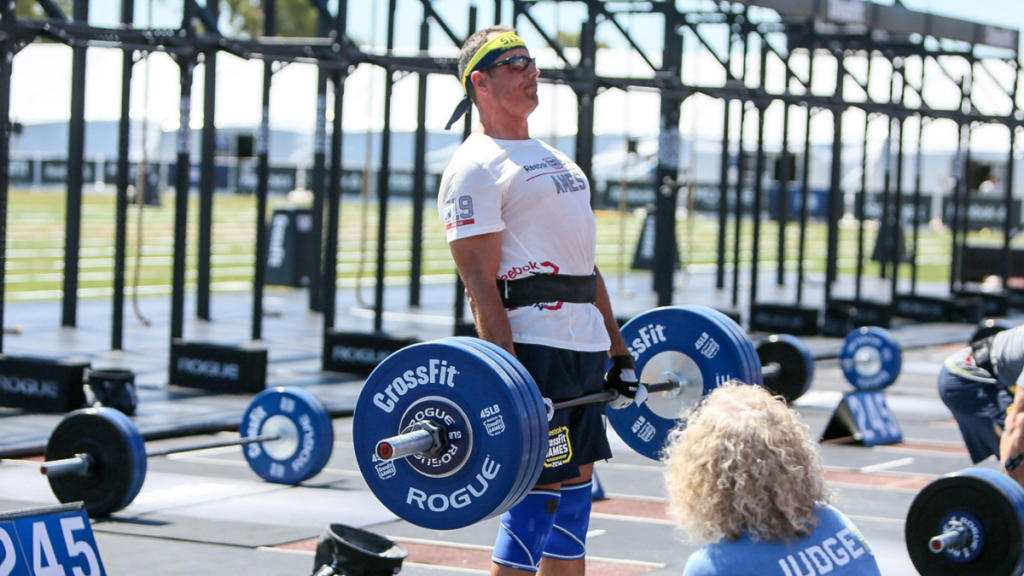
The deadlift is arguably the king of strength-building exercises, engaging the posterior chain—including the glutes, hamstrings, spinal erectors, traps, and forearms. It’s particularly valuable for men over 40 because it strengthens the muscles most responsible for posture and spinal integrity.
In a 2011 study in The Journal of Strength and Conditioning Research, researchers found that deadlifts significantly improve maximal strength and functional capacity in older adults (Martel et al., 2011). Regular deadlifting can also reduce the risk of back injuries by reinforcing proper lifting mechanics and increasing lumbar spine resilience.
Form Considerations
Due to the heavy loads typically associated with deadlifts, maintaining proper technique is critical. The spine must remain neutral throughout the movement, and the lift should originate from the hips rather than the lower back. Trap bar deadlifts offer a more joint-friendly variation that many older lifters find easier on the lower back and shoulders.
Exercise 3: Pull-Up
Why It Works
Pull-ups are an upper-body compound exercise that targets the lats, biceps, traps, and rhomboids. For men over 40, developing a strong upper back improves posture, shoulder health, and pulling strength—all of which are essential for everyday activities and athletic longevity.
According to research in the European Journal of Applied Physiology, vertical pulling movements like pull-ups result in higher motor unit activation of the latissimus dorsi compared to rowing movements (Signorile et al., 2002). Pull-ups are also a true test of relative strength, which becomes increasingly important as body composition changes with age.
Form Considerations
If bodyweight pull-ups are too challenging, resistance bands or an assisted pull-up machine can help you work through full ranges of motion while building strength. Alternatively, the lat pulldown is an effective substitute that allows for controlled load progression.
Exercise 4: Dumbbell Bench Press
Why It Works
The dumbbell bench press is a safer and more shoulder-friendly alternative to the barbell bench press, especially for older lifters. It targets the pectorals, deltoids, and triceps while allowing each arm to move independently, reducing the risk of muscular imbalances and joint strain.
A 2017 study in the Journal of Sports Science and Medicine found that dumbbell presses activate more stabilizer muscles than barbell presses, making them particularly useful for aging lifters who benefit from greater neuromuscular engagement (Saeterbakken et al., 2017).
Form Considerations
Use a neutral grip to further reduce shoulder stress. Focus on controlled eccentrics (lowering the weights slowly), which has been shown to enhance hypertrophic responses and joint integrity. Adjust the bench to a slight incline to emphasize upper chest development and reduce impingement risks.
Exercise 5: Romanian Deadlift (RDL)
Why It Works
The Romanian deadlift is a hip-hinge movement that prioritizes eccentric loading of the hamstrings and glutes. It’s crucial for men over 40 to strengthen these posterior muscles, which often weaken due to sedentary habits and contribute to poor posture and back pain.
Research published in Medicine & Science in Sports & Exercise highlights the role of eccentric training in maintaining muscle mass and tendon health in older adults (LaStayo et al., 2003). RDLs also improve hamstring flexibility, enhancing joint health and movement efficiency.
Form Considerations
Keep the barbell close to the body, hinge at the hips without rounding the back, and maintain a slight bend in the knees. Use moderate weights with a focus on tension and control. Dumbbells can also be used to increase range of motion and accessibility.
Programming Recommendations for Men Over 40
Volume and Frequency
Men over 40 should train each muscle group at least twice per week using a mix of compound and accessory movements. Moderate volume (10–15 sets per muscle group per week) and intensity (60–80% of 1RM) offer the best hypertrophic returns while managing recovery.
Recovery and Joint Health
Older athletes need more recovery due to slower protein synthesis and connective tissue repair. Incorporate at least one rest day between intense sessions, prioritize sleep, and include low-impact activities like walking, swimming, or cycling. Joint supplements like glucosamine and omega-3 fatty acids may aid in reducing inflammation and maintaining cartilage health (Rindone et al., 2000).
Nutrition
Protein intake should be increased to support muscle protein synthesis. Studies suggest that older adults require 1.6–2.2 grams of protein per kilogram of body weight per day for optimal hypertrophy (Morton et al., 2018). Emphasize leucine-rich sources such as whey protein, eggs, and lean meats.
Conclusion
Building muscle after 40 is not only possible—it’s essential for maintaining vitality, preventing injury, and supporting longevity. The key lies in choosing smart, efficient exercises that engage multiple muscle groups and allow for safe, progressive overload. The five movements outlined—barbell back squats, deadlifts, pull-ups, dumbbell bench presses, and Romanian deadlifts—offer maximal hypertrophic benefit while prioritizing joint integrity and functional strength. Paired with thoughtful programming, proper nutrition, and adequate recovery, these exercises can form the cornerstone of an effective muscle-building plan for men over 40.
Bibliography
Harman, S. M., Metter, E. J., Tobin, J. D., Pearson, J., & Blackman, M. R. (2001). Longitudinal effects of aging on serum total and free testosterone levels in healthy men. The Journal of Clinical Endocrinology & Metabolism, 86(2), 724–731.
LaStayo, P. C., Ewy, G. A., Pierotti, D. D., Johns, R. K., & Lindstedt, S. L. (2003). The positive effects of negative work: increased muscle strength and decreased fall risk in a frail elderly population. Medicine & Science in Sports & Exercise, 35(6), 873–878.
Martel, G. F., Harmer, M. L., & Logan, J. M. (2011). Progressive resistance training improves strength and functional performance in older adults. The Journal of Strength and Conditioning Research, 25(8), 2118–2123.
Morton, R. W., Murphy, K. T., McKellar, S. R., Schoenfeld, B. J., Henselmans, M., Helms, E., Aragon, A. A., Devries, M. C., Banfield, L., Krieger, J. W., & Phillips, S. M. (2018). A systematic review, meta-analysis and meta-regression of the effect of protein supplementation on resistance training-induced gains in muscle mass and strength in healthy adults. British Journal of Sports Medicine, 52(6), 376–384.
Peterson, M. D., Sen, A., & Gordon, P. M. (2010). Influence of resistance exercise on lean body mass in aging adults: a meta-analysis. Medicine & Science in Sports & Exercise, 43(2), 249–258.
Rindone, J. P., Hiller, D., Collacott, E., Nordhaugen, N., & Arriola, G. (2000). Randomized, controlled trial of glucosamine for treating osteoarthritis of the knee. Western Journal of Medicine, 172(2), 91–94.
Saeterbakken, A. H., van den Tillaar, R., & Fimland, M. S. (2017). A comparison of muscle activity and 1RM strength of three chest-press exercises with different stability requirements. Journal of Sports Science and Medicine, 16(3), 317–323.
Signorile, J. F., Zink, A. J., & Szwed, S. P. (2002). A comparative electromyographical investigation of muscle utilization patterns using various hand positions during the lat pull-down. Journal of Strength and Conditioning Research, 16(4), 539–546.
Smilios, I., Pilianidis, T., Karamouzis, M., & Tokmakidis, S. (2003). Hormonal responses after a strength endurance resistance exercise protocol in young and elderly males. The Journal of Strength and Conditioning Research, 17(3), 455–462.