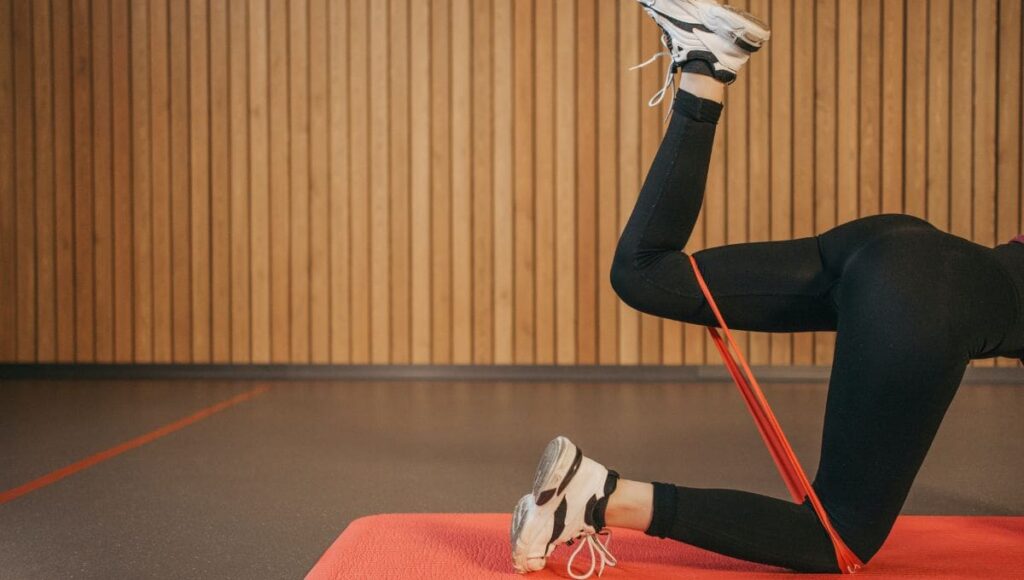
In the pursuit of muscular development, intense training is only one side of the coin. The often-underestimated other half is recovery—a physiological reset that allows for muscle repair, adaptation, and ultimately growth.
Active recovery, in particular, plays a crucial role in optimizing this process. Unlike passive rest, active recovery involves low-intensity movements that promote circulation, reduce muscle soreness, and facilitate neuromuscular restoration.


This article explores three evidence-backed active recovery techniques that can significantly enhance muscle development: low-intensity aerobic exercise, mobility work, and massage therapy.
The Science of Muscle Recovery and Growth
Muscle growth, or hypertrophy, occurs through a complex cascade of biological processes, primarily triggered by resistance training. During training, muscle fibers experience microtrauma. Recovery mechanisms are activated to repair these fibers, resulting in hypertrophy. Protein synthesis, hormone regulation, inflammation resolution, and cellular remodeling all play critical roles. Without adequate recovery, muscles remain in a catabolic state, increasing the risk of overtraining and stalling gains.

Active recovery optimizes the recovery window by enhancing blood flow, removing metabolic byproducts such as lactate, and reducing delayed-onset muscle soreness (DOMS). Additionally, it aids parasympathetic nervous system activation, which promotes relaxation and healing.
Technique 1: Low-Intensity Aerobic Exercise
Physiological Rationale
Engaging in low-intensity aerobic exercise—such as cycling, walking, or swimming—within 24 to 48 hours after intense strength training has been shown to enhance muscle recovery. These exercises increase circulation without imposing significant stress on the musculoskeletal system. The elevated blood flow expedites the removal of metabolic waste and delivers oxygen and nutrients to muscle tissues, accelerating tissue repair.

A study by Ahmaidi et al. (1996) demonstrated that light cycling performed after intense exercise significantly reduced lactate concentration and improved recovery markers compared to passive rest. Similarly, Connolly et al. (2003) found that low-intensity activity reduced muscle soreness and improved muscle function in the days following eccentric exercise.
Implementation Guidelines
Low-intensity aerobic sessions should be performed at 30–50% of maximum heart rate and last between 20 to 40 minutes. The activity must not induce fatigue. Walking at a brisk pace, swimming at a relaxed stroke, or using a stationary bike at minimal resistance are all suitable options. These sessions can be incorporated on rest days or following heavy training to kickstart the recovery process.
Technique 2: Mobility and Movement Work

Joint Integrity and Muscle Balance
Mobility work encompasses a range of controlled movements aimed at improving the range of motion (ROM), neuromuscular control, and joint stability. Post-training, muscles often experience tightness and fascial restriction, potentially leading to movement compensations and increased injury risk. Active mobility work can counteract these issues, enhance movement quality, and create a more favorable environment for hypertrophy.
A study by Page (2012) noted that joint restrictions and poor movement patterns contribute to mechanical inefficiencies and overuse injuries. Enhancing mobility, particularly in the hips, shoulders, and thoracic spine, improves biomechanical efficiency during lifts, allowing for better muscle recruitment and reduced injury risk.
Hormonal and Neurological Impacts
Mobility drills also have implications for the nervous system. Dynamic stretches and mobility circuits stimulate mechanoreceptors, aiding proprioception and movement coordination. Moreover, research by Behm and Chaouachi (2011) found that dynamic mobility exercises performed during active recovery could improve flexibility without compromising muscle performance, unlike static stretching, which may transiently reduce power output.
Practical Mobility Routines
An effective mobility routine should last 15 to 25 minutes and focus on the joints and muscle groups heavily taxed during training. Key exercises might include hip openers (e.g., 90/90 transitions), shoulder CARs (controlled articular rotations), thoracic extensions, and dynamic hamstring flows. Movement quality and control are essential; drills should be deliberate and executed with mindful breathing to promote parasympathetic activity.
Technique 3: Massage Therapy and Myofascial Release
Mechanotransduction and Circulatory Benefits
Massage therapy, whether manual or via self-myofascial release (SMR), is a potent recovery tool. Its effects are mediated through mechanotransduction—where pressure stimulates cellular responses in muscle and connective tissue. This enhances interstitial fluid exchange, reduces fascial stiffness, and promotes lymphatic drainage.
Weerapong et al. (2005) reviewed multiple studies highlighting the physiological responses to massage, including reduced muscle stiffness, improved blood flow, and decreased inflammation. Further, a randomized controlled trial by Zainuddin et al. (2005) found that post-exercise massage significantly reduced DOMS and improved strength recovery in the days following eccentric exercise.
Foam Rolling and Self-Myofascial Release
SMR via foam rolling mimics some of the effects of massage therapy and offers a more accessible daily solution. Studies by MacDonald et al. (2013) and Pearcey et al. (2015) confirmed that foam rolling post-exercise can decrease muscle soreness and improve muscle performance in subsequent sessions. These benefits are believed to stem from increased arterial perfusion and reduced tissue adhesions.
Application Protocols
Manual massage should ideally be performed by a licensed therapist and can last 30 to 60 minutes, focusing on major muscle groups such as the quadriceps, hamstrings, glutes, back, and shoulders. For foam rolling, athletes should spend 30 to 90 seconds per muscle group using slow, controlled movements, avoiding bony areas. Foam rolling should feel uncomfortable but not painful, indicating effective pressure without inducing muscle guarding.
Integrated Approach to Active Recovery
Synergistic Effects
While each technique offers standalone benefits, combining them strategically enhances overall recovery outcomes. For instance, an athlete might engage in low-intensity cycling in the morning, perform a targeted mobility circuit in the afternoon, and use foam rolling in the evening. This multidimensional approach targets multiple systems—cardiovascular, neuromuscular, fascial, and hormonal—maximizing regenerative processes.
Periodization and Recovery Windows
The timing and frequency of active recovery sessions should be aligned with training intensity and volume. On high-load training days, 5–10 minutes of mobility work post-session can aid acute recovery. On rest days, longer aerobic and mobility sessions can serve as active regeneration. Massage therapy or foam rolling is particularly useful after eccentric-heavy training (e.g., deadlifts or Olympic lifts) and before sleep to facilitate muscle relaxation.
Common Misconceptions About Recovery
One prevalent myth is that complete rest is superior for recovery. While it is true that passive rest is essential in certain contexts (e.g., acute injury), chronic reliance on inactivity slows metabolic processes and delays recovery. Moreover, another misconception is that active recovery negates muscle gains by consuming energy needed for growth. However, when appropriately dosed, active recovery supports muscle development by promoting systemic readiness for future training.
Considerations for Different Populations
The application of active recovery must be tailored to the individual’s training age, recovery capacity, and goals. Novices may require less frequent recovery interventions, while advanced athletes dealing with greater training loads benefit from more structured recovery practices. Older athletes, who experience slower tissue turnover and hormonal shifts, especially gain from active techniques that maintain mobility and circulation.
Final Thoughts
Active recovery is not a luxury—it is an essential component of a complete hypertrophy program. Integrating low-intensity aerobic exercise, mobility work, and massage therapy can significantly enhance muscle growth by improving circulation, reducing soreness, and optimizing movement. These techniques, backed by scientific evidence, help build a resilient, well-functioning body primed for progressive overload and consistent performance.
References
Ahmaidi, S., Granier, P., Taoutaou, Z., Mercier, J., Dubouchaud, H. and Préfaut, C. (1996). Effects of active recovery on plasma lactate and anaerobic power following repeated intensive exercise. Medicine & Science in Sports & Exercise, 28(4), pp.450–456.
Behm, D.G. and Chaouachi, A. (2011). A review of the acute effects of static and dynamic stretching on performance. European Journal of Applied Physiology, 111(11), pp.2633–2651.
Connolly, D.A., Sayers, S.P. and McHugh, M.P. (2003). Treatment and prevention of delayed onset muscle soreness. Journal of Strength and Conditioning Research, 17(1), pp.197–208.
MacDonald, G.Z., Penney, M.D.H., Mullaley, M.E., Cuconato, A.L., Drake, C.D.J., Behm, D.G. and Button, D.C. (2013). An acute bout of self-myofascial release increases range of motion without a subsequent decrease in muscle activation or force. Journal of Strength and Conditioning Research, 27(3), pp.812–821.
Page, P. (2012). Current concepts in muscle stretching for exercise and rehabilitation. International Journal of Sports Physical Therapy, 7(1), pp.109–119.
Pearcey, G.E.P., Bradbury-Squires, D.J., Kawamoto, J.E., Drinkwater, E.J., Behm, D.G. and Button, D.C. (2015). Foam rolling for delayed-onset muscle soreness and recovery of dynamic performance measures. Journal of Athletic Training, 50(1), pp.5–13.
Weerapong, P., Hume, P.A. and Kolt, G.S. (2005). The mechanisms of massage and effects on performance, muscle recovery and injury prevention. Sports Medicine, 35(3), pp.235–256.
Zainuddin, Z., Newton, M., Sacco, P. and Nosaka, K. (2005). Effects of massage on delayed-onset muscle soreness, swelling, and recovery of muscle function. Journal of Athletic Training, 40(3), pp.174–180.