A strong core is more than a six-pack aesthetic. It stabilizes the body, supports functional movement, and reduces injury risk. Yet, for many, time constraints make gym visits unrealistic.
Fortunately, core strength can be built effectively at home with minimal time and zero equipment. This article breaks down five of the most efficient home core exercises, backed by scientific evidence and practical reasoning.


Why Core Training Matters
The core encompasses muscles beyond just the abdominals. It includes the rectus abdominis, transverse abdominis, internal and external obliques, erector spinae, multifidus, diaphragm, pelvic floor, and hip muscles. These muscle groups work in concert to stabilize the spine, maintain posture, and facilitate movement across all planes.
A 2013 study in the Journal of Strength and Conditioning Research emphasized that core strength enhances both athletic performance and daily functional tasks (Hibbs et al., 2013). Additionally, core endurance has been linked to lower incidences of lower back pain (McGill, 2001), a condition that affects approximately 80% of adults at some point (Andersson, 1999).
Criteria for Inclusion
The five exercises selected for this list meet the following standards:
- Require no equipment
- Can be performed in small spaces
- Activate multiple core muscle groups
- Backed by empirical evidence
- Time-efficient (each can be performed in under 5 minutes)
1. Plank
Why It Works
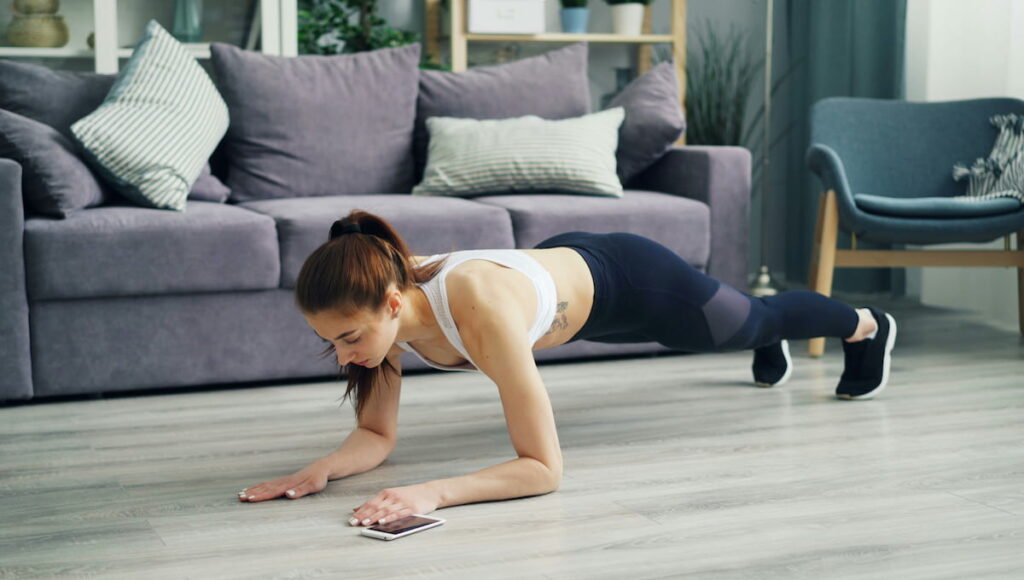
The plank is a fundamental isometric exercise that activates the entire core musculature. Its simplicity belies its effectiveness. Electromyography (EMG) analysis reveals that the plank generates significant activation in the rectus abdominis, transverse abdominis, and external obliques (Ekstrom et al., 2007).
How to Perform
Start in a forearm position with elbows under shoulders and feet hip-width apart. Engage the core, glutes, and quadriceps. Avoid letting the hips sag or pike. Maintain a neutral neck. Hold the position for 20-60 seconds, depending on your ability, and repeat for 3 sets.
Science-Backed Benefit
Compared to traditional sit-ups, the plank imposes less spinal load while engaging a broader range of stabilizers (McGill, 2001).
2. Dead Bug
Why It Works
The dead bug promotes core stability while the limbs move independently. This reflects real-life movement patterns, making it highly functional. It especially targets the transverse abdominis and rectus abdominis.
How to Perform
Lie on your back with arms extended toward the ceiling and knees bent at 90 degrees. Press your lower back into the floor. Slowly extend your right arm and left leg toward the ground while keeping the back flat. Return and switch sides. Perform 3 sets of 8-12 reps per side.
Science-Backed Benefit
A 2018 study in the Journal of Physical Therapy Science found the dead bug effective in improving lumbo-pelvic stability and motor control (Jeong et al., 2018).
3. Side Plank
Why It Works
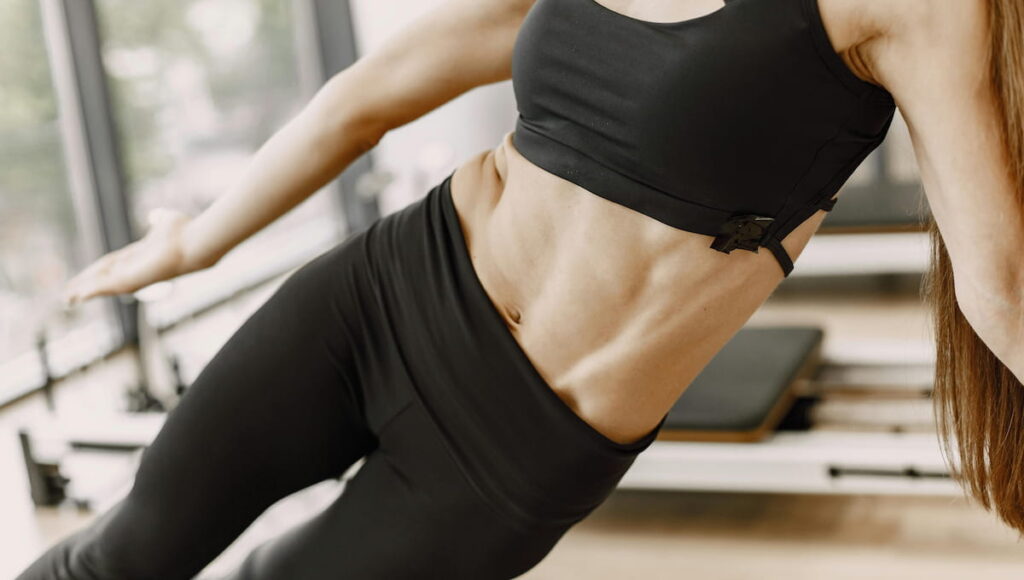
The side plank isolates the obliques and challenges lateral stability, which is crucial for spinal health and rotational movement. It also engages the gluteus medius and minimus, contributing to pelvic stability.
How to Perform
Lie on one side with legs stacked and the forearm beneath the shoulder. Lift the hips so the body forms a straight line. Keep the head in line with the spine. Hold for 20-45 seconds per side. Repeat for 2-3 sets.
Science-Backed Benefit
According to EMG data, the side plank elicits greater activation of the external obliques than the front plank (Ekstrom et al., 2007). It also reduces unilateral imbalances (McGill, 2001).
4. Bird Dog
Why It Works
This dynamic stability drill improves coordination and balance while targeting the erector spinae, multifidus, and transverse abdominis. It mimics contralateral movement patterns such as walking and running.
How to Perform
Begin on hands and knees in a tabletop position. Extend the right arm and left leg simultaneously while maintaining a neutral spine. Hold for 2-3 seconds, then return and alternate. Perform 3 sets of 10-12 reps per side.
Science-Backed Benefit
Research by McGill (2001) identifies bird dog as one of the “Big Three” core exercises that promote spinal health through low-load, high-endurance stimulation.
5. Hollow Body Hold
[wpcode id=”230599″]Why It Works
The hollow body hold demands total core tension and control. It’s a staple in gymnastics for developing midline stability and is particularly effective for activating the deep abdominal muscles.
How to Perform
Lie flat on your back. Raise shoulders and legs off the floor, keeping arms extended overhead. Lower back should remain in contact with the floor. Hold for 15-45 seconds and repeat for 3 sets.
Science-Backed Benefit
Though less studied directly, the hollow hold produces high EMG activation in the rectus abdominis and transverse abdominis, similar to hanging leg raises and rollouts (Comfort et al., 2011).
Final Thoughts
No gym? No problem. Consistent execution of these five movements can build a rock-solid core, reduce injury risk, and enhance performance in both athletic and everyday activities. The key lies not in duration but in quality and consistency. A 10-minute focused core session using these exercises can yield significant results over time.
Bibliography
Andersson, G.B.J. (1999). Epidemiological features of chronic low-back pain. The Lancet, 354(9178), pp.581-585.
Comfort, P., Pearson, S.J., Mather, D. and Suchomel, T.J. (2011). EMG analysis of core training exercises. Journal of Strength and Conditioning Research, 25(2), pp.377-384.
Ekstrom, R.A., Donatelli, R.A. and Carp, K.C. (2007). Electromyographic analysis of core trunk, hip, and thigh muscles during 9 rehabilitation exercises. Journal of Orthopaedic & Sports Physical Therapy, 37(12), pp.754-762.
Hibbs, A.E., Thompson, K.G., French, D.N., Wrigley, A. and Spears, I.R. (2013). Optimizing performance by improving core stability and core strength. Sports Medicine, 38(12), pp.995-1008.
Jeong, H.-S., Ko, Y., and Park, J. (2018). The effect of the dead bug exercise on the lumbar stability and activation of deep trunk muscles. Journal of Physical Therapy Science, 30(4), pp.553-557.
McGill, S.M. (2001). Low back stability: from formal description to issues for performance and rehabilitation. Exercise and Sport Sciences Reviews, 29(1), pp.26-31.
Key Takeaways Table
| Exercise | Primary Muscles Targeted | Duration/Reps | Evidence-Based Benefit |
|---|---|---|---|
| Plank | Rectus abdominis, transverse abdominis, obliques | 20-60 seconds, 3 sets | High activation with low spinal load |
| Dead Bug | Transverse abdominis, rectus abdominis | 8-12 reps/side, 3 sets | Improves motor control and lumbo-pelvic stability |
| Side Plank | Obliques, gluteus medius/minimus | 20-45 seconds/side, 2-3 sets | Enhances lateral stability, reduces imbalances |
| Bird Dog | Erector spinae, multifidus, transverse abdominis | 10-12 reps/side, 3 sets | Promotes spinal health and coordination |
| Hollow Body Hold | Rectus abdominis, transverse abdominis | 15-45 seconds, 3 sets | Builds deep core strength and midline stability |