Functional fitness focuses on building strength, balance, and flexibility to perform everyday activities with ease and safety. For seniors, this approach is crucial to maintaining independence, reducing the risk of falls, and improving quality of life.
This article highlights 10 science-backed functional fitness exercises tailored for older adults, offering practical guidance on execution, benefits, and physiological rationale. Each exercise is supported by research to ensure efficacy and safety for senior populations.


Why Functional Fitness Matters for Seniors
As people age, physiological changes such as sarcopenia (loss of muscle mass), decreased joint mobility, and reduced balance can significantly impair daily functioning. Functional exercises aim to slow these effects by mimicking real-life movements. Evidence shows that functional training enhances physical performance, increases strength, improves mobility, and reduces the risk of falls in older adults (de Vries et al., 2012; Liu & Latham, 2009).
Exercise 1: Sit-to-Stand
Purpose
This simple yet effective exercise improves lower-body strength and mimics the action of standing from a chair — a crucial daily task.
How to Perform
- Sit on a sturdy chair with feet flat on the floor, hip-width apart.
- Cross arms over your chest or extend them forward for balance.
- Lean forward slightly and push through your heels to stand up.
- Slowly sit back down.
Repetitions
Perform 10–15 repetitions, 2–3 sets.
Scientific Basis
Sit-to-stand movements are a functional assessment of lower extremity strength and have been linked to fall risk reduction when regularly practiced (Lord et al., 2002).
Exercise 2: Wall Push-Ups
Purpose
Wall push-ups build upper-body strength and promote joint mobility without requiring floor work, making them suitable for seniors.
How to Perform
- Stand an arm’s length from a wall with feet shoulder-width apart.
- Place hands on the wall at shoulder height and width.
- Lower your body toward the wall by bending your elbows.
- Push back to the starting position.
Repetitions
Perform 10–15 repetitions, 2–3 sets.
Scientific Basis
Resistance training improves muscular endurance and metabolic health in seniors, even at low intensities (Fragala et al., 2019).
Exercise 3: Marching in Place
Purpose
This exercise boosts cardiovascular health and enhances coordination and hip flexor strength.
How to Perform
- Stand near a sturdy surface for support.
- Lift one knee as high as comfortable, then lower it.
- Alternate legs in a marching rhythm.
Duration
March for 30–60 seconds per set, repeat 3 times.
Scientific Basis
Aerobic activity like marching in place is associated with improved cardiorespiratory fitness and reduced all-cause mortality in older adults (Paterson & Warburton, 2010).
Exercise 4: Heel-to-Toe Walk
Purpose
This exercise enhances balance and proprioception, critical for fall prevention.
How to Perform
- Stand upright and place one foot directly in front of the other, heel to toe.
- Walk in a straight line, focusing on steady movements.
- Use a wall or rail for support if needed.
Duration
Take 10–20 steps, repeat 2–3 times.
Scientific Basis
Balance training significantly reduces the incidence of falls in older populations (Sherrington et al., 2011).
Exercise 5: Step-Ups
Purpose
Step-ups mimic stair-climbing, improving leg strength and cardiovascular endurance.
How to Perform
- Use a low step or staircase.
- Step up with one foot, then bring the other foot up.
- Step down and repeat, alternating the lead foot.
Repetitions
10–12 repetitions per leg, 2–3 sets.
Scientific Basis
Step training is linked to better mobility and muscle function, especially in frail elderly adults (Cadore et al., 2013).
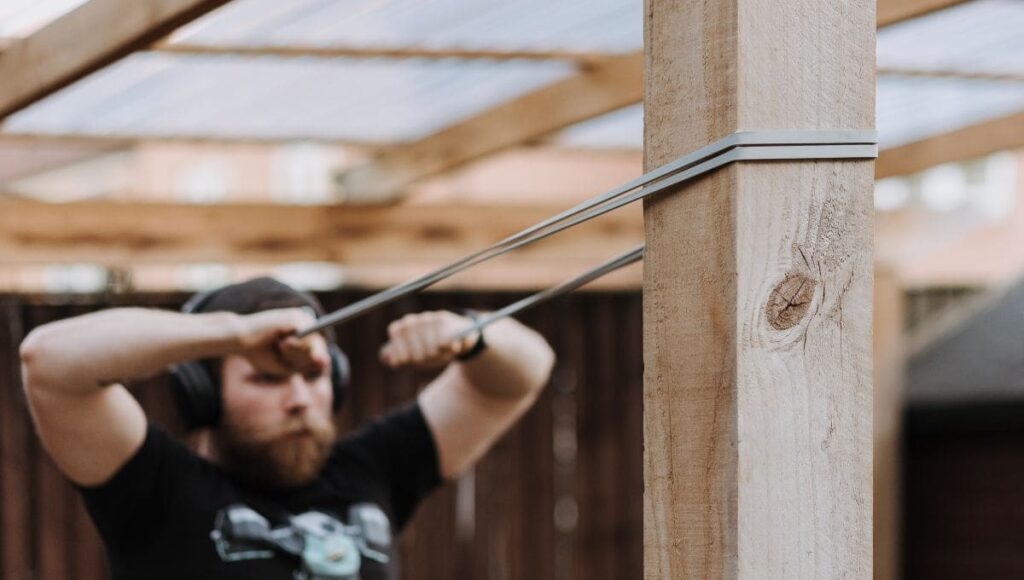
Exercise 6: Seated Row with Resistance Band
Purpose
This targets postural muscles and improves back strength, which helps counteract kyphosis.
How to Perform
- Sit on the floor or chair with legs extended.
- Loop a resistance band around your feet and hold both ends.
- Pull the band toward your waist while squeezing shoulder blades together.
- Return to the start slowly.
Repetitions
10–15 repetitions, 2–3 sets.
Scientific Basis
Resistance bands have proven effective for improving muscle strength and function in older adults (Colado & Triplett, 2008).
Exercise 7: Standing Calf Raises
Purpose
Strengthens the calves, improves ankle stability, and supports balance during walking.
How to Perform
- Stand with feet shoulder-width apart near a wall or chair.
- Raise heels off the ground slowly, then lower back down.
Repetitions
15–20 repetitions, 2–3 sets.
Scientific Basis
Calf strengthening enhances balance and gait efficiency, contributing to fall prevention (Granacher et al., 2011).
Exercise 8: Shoulder Rolls
Purpose
Alleviates stiffness and improves shoulder joint mobility.
How to Perform
- Sit or stand upright.
- Roll shoulders forward in circular motions for 10 reps.
- Reverse the direction for another 10 reps.
Repetitions
2–3 sets.
Scientific Basis
Mobility exercises help maintain range of motion and reduce musculoskeletal discomfort in older adults (Bennell et al., 2005).
Exercise 9: Side Leg Raises
Purpose
Strengthens hip abductors, which are essential for lateral stability and gait control.
How to Perform
- Stand behind a chair for support.
- Lift one leg out to the side slowly, keeping the back straight.
- Lower it and repeat on the other side.
Repetitions
10–12 repetitions per leg, 2–3 sets.
Scientific Basis
Hip abductor strengthening correlates with improved gait and reduced risk of lateral falls (Mills et al., 2016).
Exercise 10: Seated Torso Twists
Purpose
Improves spinal mobility and engages the core.
How to Perform
- Sit in a chair with feet flat on the floor.
- Cross arms over the chest.
- Twist the torso to one side, pause, then return to center.
- Repeat on the other side.
Repetitions
10–15 repetitions per side, 2–3 sets.
Scientific Basis
Core engagement exercises enhance postural stability and spinal health in older populations (Granacher et al., 2013).
Final Thoughts
Functional fitness exercises are not just about building strength or flexibility in isolation. They’re about enabling older adults to live independently, reduce injury risks, and maintain confidence in their daily movements.
Consistency, safety, and progression are key. Seniors should start at a comfortable intensity, possibly under supervision, and gradually increase repetitions or resistance.
Bibliography
Bennell, K., Dobson, F. and Hinman, R., 2005. Exercise in osteoarthritis: moving from prescription to adherence. Best Practice & Research Clinical Rheumatology, 20(1), pp.93-117.
Cadore, E.L., Rodríguez-Mañas, L., Sinclair, A. and Izquierdo, M., 2013. Effects of different exercise interventions on risk of falls, gait ability and balance in physically frail older adults: a systematic review. Rejuvenation Research, 16(2), pp.105-114.
Colado, J.C. and Triplett, N.T., 2008. Effects of a short-term resistance program using elastic bands versus weight machines for sedentary middle-aged women. Journal of Strength and Conditioning Research, 22(5), pp.1441-1448.
de Vries, N.M., van Ravensberg, C.D., Hobbelen, J.S., Olde Rikkert, M.G., Staal, J.B. and Nijhuis-van der Sanden, M.W., 2012. Effects of physical exercise therapy on mobility, physical functioning, physical activity and quality of life in community-dwelling older adults with impaired mobility, physical disability and/or multi-morbidity: a meta-analysis. Ageing Research Reviews, 11(1), pp.136-149.
Fragala, M.S., Cadore, E.L., Dorgo, S., Izquierdo, M., Kraemer, W.J., Peterson, M.D. and Ryan, E.D., 2019. Resistance training for older adults: Position statement from the National Strength and Conditioning Association. Journal of Strength and Conditioning Research, 33(8), pp.2019-2052.
Granacher, U., Muehlbauer, T., Zahner, L., Gollhofer, A. and Kressig, R.W., 2011. Comparison of traditional and recent approaches in the promotion of balance and strength in older adults. Sports Medicine, 41(5), pp.377-400.
Granacher, U., Gollhofer, A., Hortobágyi, T., Kressig, R.W. and Muehlbauer, T., 2013. The importance of trunk muscle strength for balance, functional performance, and fall prevention in seniors: a systematic review. Sports Medicine, 43(7), pp.627-641.
Liu, C.J. and Latham, N.K., 2009. Progressive resistance strength training for improving physical function in older adults. Cochrane Database of Systematic Reviews, (3).
Lord, S.R., Murray, S.M., Chapman, K., Munro, B. and Tiedemann, A., 2002. Sit-to-stand performance depends on sensation, speed, balance, and psychological status in addition to strength in older people. Journals of Gerontology Series A: Biological Sciences and Medical Sciences, 57(8), pp.M539-M543.
Mills, P.M., Barrett, R.S. and Morrison, S., 2016. Is lateral stability in gait influenced by functional strength training in older adults? Gait & Posture, 47, pp.87-92.
Paterson, D.H. and Warburton, D.E., 2010. Physical activity and functional limitations in older adults: a systematic review related to Canada’s Physical Activity Guidelines. International Journal of Behavioral Nutrition and Physical Activity, 7(1), p.38.
Sherrington, C., Whitney, J.C., Lord, S.R., Herbert, R.D., Cumming, R.G. and Close, J.C., 2011. Effective exercise for the prevention of falls: a systematic review and meta-analysis. Journal of the American Geriatrics Society, 56(12), pp.2234-2243.
Key Takeaways
| Exercise | Primary Benefit | Functional Outcome |
|---|---|---|
| Sit-to-Stand | Lower-body strength | Easier chair-to-stand transitions |
| Wall Push-Ups | Upper-body endurance | Improved daily pushing movements |
| Marching in Place | Cardiovascular and coordination | Enhanced walking and stamina |
| Heel-to-Toe Walk | Balance and proprioception | Reduced fall risk |
| Step-Ups | Lower limb strength and endurance | Easier stair navigation |
| Seated Row (Band) | Posture and upper back strength | Improved spinal alignment |
| Standing Calf Raises | Ankle stability and gait strength | Safer ambulation |
| Shoulder Rolls | Shoulder mobility | Reduced stiffness and pain |
| Side Leg Raises | Hip strength | Better side-to-side stability |
| Seated Torso Twists | Core and spinal flexibility | Improved posture and mobility |