Developing a powerful lower body is crucial not just for athletic performance but also for functional strength, injury prevention, and overall muscular balance. Among the tools available to enhance lower body strength, the barbell stands out as one of the most effective. It allows for progressive overload, full range of motion, and increased total-body coordination.
This article delves into three barbell leg exercises backed by science and biomechanical analysis to help you build a stronger, more resilient lower body. Each section explains the technique, muscles worked, and the science supporting their effectiveness.


Barbell Back Squat
Overview
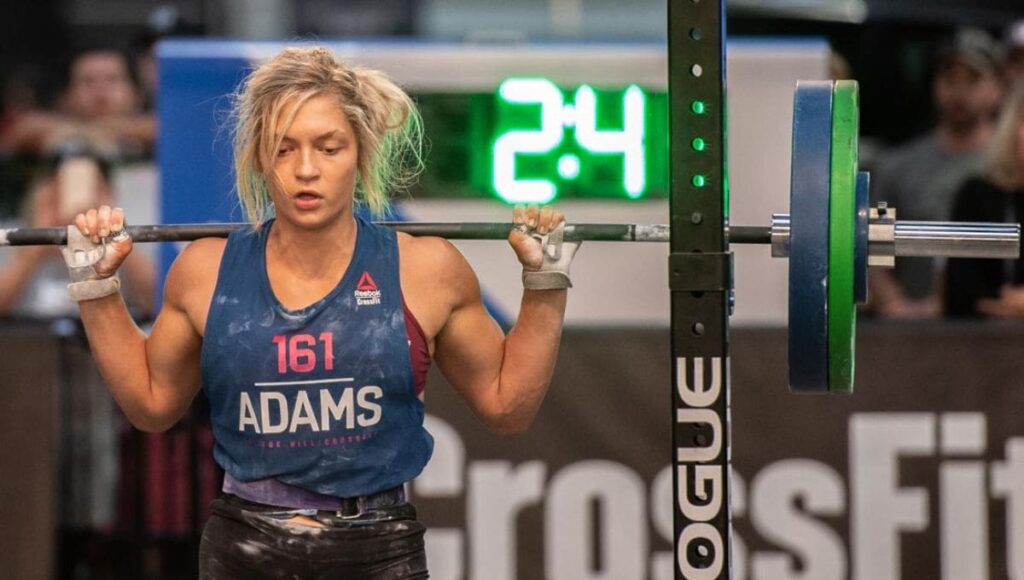
The barbell back squat is universally regarded as the king of lower body exercises—and for good reason. It recruits nearly every muscle in the lower half and engages core and upper body stabilizers as well. This compound movement involves hip and knee extension, making it ideal for developing strength, power, and hypertrophy in the glutes, quadriceps, and hamstrings.
Muscles Worked
- Quadriceps femoris
- Gluteus maximus
- Hamstrings
- Adductors
- Spinal erectors
- Core musculature
Execution
- Position the barbell on the upper traps or rear deltoids (depending on high-bar or low-bar squat).
- Set your feet shoulder-width apart with toes slightly turned out.
- Brace the core, inhale deeply, and descend by hinging at the hips and bending the knees simultaneously.
- Lower until the hips drop below the knees (depth permitting), keeping the spine neutral.
- Push through the mid-foot to rise back to the starting position, exhaling on the way up.
Scientific Justification
Electromyographic (EMG) studies consistently show high activation in the quadriceps, gluteus maximus, and adductor magnus during back squats (Escamilla et al., 2001). Additionally, squatting to parallel or deeper enhances glute and adductor activation without increasing the risk of injury, provided proper form is maintained (Hartmann et al., 2013). Another important finding is that low-bar squats favor posterior chain recruitment due to the forward lean, making it a strategic variation for athletes focusing on hip-dominant power (Gullett et al., 2009).
Squats also improve bone mineral density, particularly in the femur and spine, due to the compressive loading forces involved (Kohrt et al., 2004). This makes them especially beneficial not only for younger athletes but also for older adults aiming to prevent osteoporosis.
Barbell Romanian Deadlift (RDL)

Overview
While the conventional deadlift is an excellent lift, the Romanian deadlift offers a superior emphasis on the eccentric loading of the hamstrings and glutes. It targets the posterior chain with laser precision and is vital for developing hip-hinge mechanics and lower back resilience.
Muscles Worked
- Hamstrings
- Gluteus maximus
- Erector spinae
- Adductors
- Lats (stabilization)
Execution
- Stand with feet hip-width apart and a barbell held in front of your thighs with a shoulder-width grip.
- With a slight bend in the knees, hinge at the hips while maintaining a neutral spine and let the bar descend close to the legs.
- Lower the bar until you feel a strong stretch in the hamstrings (typically just below the knees).
- Contract the glutes and hamstrings to return to the standing position without overarching the back.
Scientific Justification
Research has shown that the RDL produces higher EMG activity in the hamstrings than traditional deadlifts, particularly during the eccentric phase (McAllister et al., 2014). This eccentric loading is crucial for hamstring injury prevention and muscle hypertrophy due to the high mechanical tension it generates. Moreover, eccentric training is more effective than concentric training for increasing fascicle length, which is linked to improved sprinting and jumping performance (Timmins et al., 2016).
RDLs are also associated with significant development in gluteus maximus size, owing to their large hip extension moment (Schick et al., 2010). Since the movement emphasizes control and range of motion over maximal weight, it also reduces axial loading compared to squats, making it joint-friendly while still effective.
Barbell Front Squat
Overview
The front squat is a quad-dominant alternative to the back squat that also requires greater core stability and mobility, particularly in the thoracic spine, wrists, and ankles. It shifts the center of gravity forward, making it biomechanically distinct and often harder to perform correctly, but incredibly rewarding.
Muscles Worked
- Quadriceps femoris
- Gluteus maximus
- Core musculature (especially rectus abdominis and obliques)
- Spinal erectors
- Upper back (trapezius, rhomboids)
Execution
- Rack the barbell on the front deltoids, using either the clean grip or cross-arm grip.
- Keep the elbows high and chest up to maintain an upright torso.
- Descend into a squat by bending the knees and hips simultaneously, keeping the bar over the mid-foot.
- Go as deep as mobility allows, ideally below parallel.
- Drive through the heels to return to standing, maintaining elbow and torso position.
Scientific Justification
Front squats reduce compressive forces on the lower back compared to back squats, making them a safer option for individuals with lumbar concerns (Gullett et al., 2009). EMG studies reveal that while glute and hamstring activity are somewhat lower in front squats, quadriceps engagement remains very high—sometimes even higher than back squats depending on depth (Yavuz et al., 2015).
Front squats demand greater thoracic spine and core activation due to the anterior load, which can enhance posture and upper back strength. This upright posture also benefits Olympic lifters and athletes needing vertical power, as it translates well to sport-specific movements like jumping and sprinting.
The front-loaded nature encourages a more upright spine, reducing shear stress on lumbar vertebrae and making the lift more accessible to those with spinal issues, provided form and mobility are adequate.
Integration Into Training Programs
Volume and Frequency Recommendations
The incorporation of these exercises depends on the athlete’s experience level and goals. For strength, aim for 3–5 sets of 3–6 reps at 80–90% 1RM. For hypertrophy, target 3–5 sets of 6–12 reps at 65–75% 1RM. For muscular endurance and joint health, higher reps with lower loads can be cycled in periodically. Perform these exercises 1–3 times per week, depending on training split and recovery capacity.
Recovery and Periodization
High-intensity barbell movements cause significant muscle damage and CNS fatigue. Periodizing these lifts—e.g., using deload weeks and alternating between front and back squats or substituting RDLs for traditional deadlifts—can help prevent overtraining and maintain long-term progress. Studies show that undulating periodization models improve both hypertrophy and strength outcomes over time compared to linear progression (Rhea et al., 2002).
Biomechanical and Functional Benefits
Joint Health and Mobility
Contrary to popular belief, deep squatting is not inherently bad for the knees. When executed with proper form, squats and front squats can actually improve knee joint health by promoting synovial fluid circulation and strengthening connective tissues (Schoenfeld & Grgic, 2020). Likewise, RDLs improve hip mobility and posterior chain flexibility, reducing injury risk during sport and daily movement.
Athletic Performance Transfer
The triple extension of the hips, knees, and ankles in squats directly correlates with sprinting, jumping, and cutting abilities in athletes. Studies have shown that squat strength is positively associated with vertical jump height and sprint times (Comfort et al., 2012). Additionally, RDLs enhance horizontal force production, critical for sports involving acceleration and deceleration.
Common Mistakes and How to Avoid Them
- Back Squat: Allowing the knees to cave inward (valgus collapse), which increases injury risk. Use resistance bands around the knees or cue “spread the floor” to correct.
- RDL: Rounding the lower back, often due to excessive range of motion. Keep the bar close to the shins and prioritize spinal neutrality.
- Front Squat: Letting the elbows drop, causing forward lean and bar instability. Focus on thoracic extension drills and wrist mobility exercises.
Conclusion
The barbell back squat, Romanian deadlift, and front squat are unparalleled in their ability to strengthen the lower body when executed correctly. Each targets a unique combination of muscles and offers different benefits, from hypertrophy to injury prevention to athletic performance. Backed by science and adaptable to various goals, these three movements should form the cornerstone of any serious strength training program. Progressively overload them, use impeccable form, and integrate them intelligently into your periodized plan—and your lower body will become a powerhouse of strength and function.
Bibliography
Comfort, P., Bullock, N., & Pearson, S.J. (2012). A comparison of maximal squat strength and 5-, 10-, and 20-meter sprint times, in athletes. Journal of Strength and Conditioning Research, 26(1), 251–255.
Escamilla, R.F., Fleisig, G.S., Lowry, T.M., Barrentine, S.W., & Andrews, J.R. (2001). A three-dimensional biomechanical analysis of the squat during varying stance widths. Medicine & Science in Sports & Exercise, 33(6), 984–998.
Gullett, J.C., Tillman, M.D., Gutierrez, G.M., & Chow, J.W. (2009). A biomechanical comparison of back and front squats in healthy trained individuals. Journal of Strength and Conditioning Research, 23(1), 284–292.
Hartmann, H., Wirth, K., Klusemann, M.J., Dalic, J., Matuschek, C., & Schmidtbleicher, D. (2013). Influence of squatting depth on jump performance and muscle volumes. European Journal of Applied Physiology, 113(8), 2131–2141.
Kohrt, W.M., Bloomfield, S.A., Little, K.D., Nelson, M.E., & Yingling, V.R. (2004). American College of Sports Medicine Position Stand: Physical activity and bone health. Medicine & Science in Sports & Exercise, 36(11), 1985–1996.
McAllister, M.J., Hammond, K.G., Schilling, B.K., Ferreria, L.C., & Reed, J.P. (2014). Muscle activation during various hamstring exercises. Journal of Strength and Conditioning Research, 28(6), 1573–1580.
Rhea, M.R., Ball, S.D., Phillips, W.T., & Burkett, L.N. (2002). A comparison of linear and daily undulating periodized programs with equated volume and intensity for strength. Journal of Strength and Conditioning Research, 16(2), 250–255.
Schick, E.E., Coburn, J.W., Brown, L.E., Judelson, D.A., Khamoui, A.V., Tran, T.T., & Uribe, B.P. (2010). A comparison of muscle activation between a Smith machine and free weight bench press. Journal of Strength and Conditioning Research, 24(3), 779–784.
Schoenfeld, B.J., & Grgic, J. (2020). Does training to failure maximize muscle hypertrophy? Strength and hypertrophy adaptations between failure and non-failure training: A systematic review and meta-analysis. Journal of Sports Sciences, 38(12), 1367–1376.
Timmins, R.G., Bourne, M.N., Shield, A.J., Williams, M.D., Lorenzen, C., & Opar, D.A. (2016). Short biceps femoris fascicles and eccentric knee flexor weakness increase the risk of hamstring injury in elite football (soccer): A prospective cohort study. British Journal of Sports Medicine, 50(24), 1524–1535.
Yavuz, H.U., Erdag, D., Amca, A.M., & Aritan, S. (2015). Kinematic and EMG activities during front and back squat variations in maximum loads. Journal of Sports Sciences, 33(10), 1058–1066.
Key Takeaways
| Exercise | Primary Muscles Worked | Key Benefits | Scientific Insight |
|---|---|---|---|
| Back Squat | Quads, Glutes, Hamstrings, Adductors, Core | Full lower body strength, increased bone density | High EMG activity and safe when performed to depth |
| Romanian Deadlift | Hamstrings, Glutes, Spinal Erectors | Posterior chain development, hamstring injury prevention | Superior eccentric activation for muscle growth |
| Front Squat | Quads, Core, Upper Back | Safer for spine, improves posture, excellent for sport specificity | Lower compressive spinal force, high core demand |