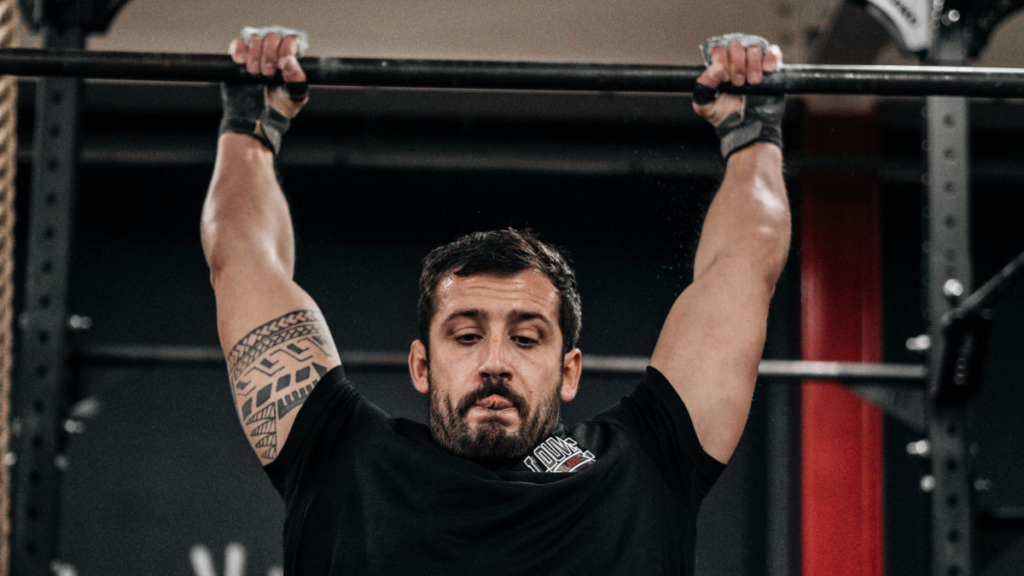
Shoulder strength is fundamental not only for overhead athletes and bodybuilders but also for general functional capacity, posture, and injury prevention. Developing formidable shoulders enhances pressing performance, fortifies the upper body against injury, and supports compound lifts such as the bench press, clean and jerk, and overhead squat.
This article outlines five scientifically-supported methods to develop explosive shoulder strength, diving deep into the most effective training protocols, their physiological underpinnings, and how to apply them to a practical regimen.


Method 1: Implement Heavy Overhead Pressing

The Rationale Behind Heavy Pressing
The overhead press, particularly the standing barbell overhead press, is one of the most effective compound exercises for building shoulder strength. It primarily targets the anterior and medial deltoid heads, engages the triceps brachii, and demands core and upper back stabilization.
Research indicates that heavy overhead pressing recruits high-threshold motor units and induces substantial neuromuscular adaptations. According to Behm and Sale (1993), high-intensity loads (80–90% of 1RM) significantly improve maximal strength due to increased motor unit synchronization and firing frequency.
Application Strategy
Use a 4-week progressive overload protocol focused on 4–5 sets of 3–6 reps at 80–90% 1RM, resting 2–3 minutes between sets. Integrate variations such as the strict press, push press, and Z-press to diversify neuromuscular demand and address weak points.
Method 2: Train the Posterior Deltoid and Rotator Cuff with Targeted Isolation
Muscle Balance and Joint Integrity
Many training programs overemphasize anterior deltoid work, neglecting the posterior chain of the shoulder, particularly the posterior deltoid and rotator cuff. This imbalance leads to poor scapular stability, compromised shoulder kinematics, and increased injury risk.
A study by Reinold et al. (2004) highlights that exercises emphasizing external rotation (e.g., prone Y raises, cable external rotations) significantly enhance rotator cuff strength and shoulder joint integrity.
Application Strategy
Perform posterior chain work twice weekly, focusing on 2–3 sets of 12–20 reps with slow eccentrics. Include exercises such as face pulls, reverse flyes, prone rear delt raises, and banded external rotations. These high-rep, low-load protocols improve muscular endurance and stability.
Method 3: Utilize Eccentric Overload and Tempo Training
The Power of Eccentric Training
Eccentric training refers to emphasizing the lengthening phase of a lift, which induces greater mechanical tension and muscle damage—both crucial for hypertrophy and strength. Eccentric overload also produces unique neuromuscular adaptations, including enhanced tendon stiffness and greater force production.
Research by Douglas et al. (2017) demonstrated that eccentric training leads to significantly greater strength gains compared to concentric-only training, particularly in the deltoids and triceps.
Application Strategy
Incorporate tempo-controlled reps with a 3–5 second eccentric phase into exercises such as dumbbell lateral raises, overhead presses, and Arnold presses. Use 65–75% 1RM for compound lifts and moderate weight for isolation work. Perform 3–4 sets of 6–10 reps.
Method 4: Plyometric and Dynamic Effort Work
Explosiveness and Rate of Force Development
Explosive strength depends on rate of force development (RFD), which reflects how quickly force can be generated. Plyometric training and dynamic effort work target the neuromuscular system’s speed elements, improving both RFD and intermuscular coordination.
Cormie et al. (2010) found that combining plyometric and dynamic effort methods yields significant improvements in power output and shoulder strength when performed consistently over 6–8 weeks.
Application Strategy
Incorporate med ball slams, plyo push-ups, band-resisted push presses, and overhead med ball throws twice a week. Perform 3–5 sets of 3–5 reps with maximal velocity and intent. Use light loads (30–50% 1RM) for dynamic effort barbell work and rest fully between sets.
Method 5: Integrate Isometric Holds and Carries
Stabilization and Time Under Tension
Isometric exercises develop static strength and enhance time under tension (TUT), which contributes to hypertrophy and joint stability. Overhead isometrics and loaded carries uniquely challenge the scapular stabilizers, core musculature, and deltoid heads simultaneously.
Schoenfeld et al. (2015) concluded that isometric holds can lead to hypertrophy comparable to traditional lifting when implemented with adequate intensity and duration.
Application Strategy
Include overhead kettlebell carries, wall-facing handstand holds, and static dumbbell presses in your regimen. Hold for 20–40 seconds per set, aiming for 3–4 sets. Progress by increasing load or time under tension incrementally.
Periodization and Recovery Considerations
Training the shoulders for maximal strength requires structured periodization to avoid overuse injuries and plateaus. Alternate between high-intensity, low-volume phases and moderate-intensity, higher-volume phases to stimulate adaptation. Implement deload weeks every 4–6 weeks and ensure sufficient recovery by monitoring sleep, stress, and nutritional intake.
The shoulder is a highly mobile joint with a wide range of motion but limited structural stability. As such, include active recovery work such as banded mobility drills, light swimming, and shoulder dislocates post-training to enhance recovery and maintain joint health.
Conclusion
Developing explosive shoulder strength demands a multi-faceted approach that balances compound lifting, isolation work, dynamic effort, eccentric overload, and isometric stability. By integrating these five methods into a comprehensive program, you can accelerate your shoulder performance while minimizing injury risk. As always, ensure proper technique and progression to maximize benefit.
Bibliography
Behm, D.G. and Sale, D.G., 1993. Velocity specificity of resistance training. Sports Medicine, 15(6), pp.374-388.
Cormie, P., McGuigan, M.R. and Newton, R.U., 2010. Developing maximal neuromuscular power. Sports Medicine, 40(9), pp.701-725.
Douglas, J., Pearson, S., Ross, A. and McGuigan, M., 2017. Chronic adaptations to eccentric training: a systematic review. Sports Medicine, 47(5), pp.917-941.
Reinold, M.M., Wilk, K.E., Reed, J., Crenshaw, K. and Andrews, J.R., 2004. Electromyographic analysis of the rotator cuff and deltoid musculature during common shoulder external rotation exercises. Journal of Orthopaedic & Sports Physical Therapy, 34(7), pp.385-394.
Schoenfeld, B.J., Ogborn, D. and Krieger, J.W., 2015. Effect of repetition duration during resistance training on muscle hypertrophy: a systematic review and meta-analysis. Sports Medicine, 45(4), pp.577-585.