


Sometimes a busy lifestyle and a lack of gym equipment may lead you to body weight exercises, but can these types of activities help you to reach your goals? The content ahead looks into bodyweight training for muscle gains and how these activities can help you to meet your goals.
Bodyweight training is one of the oldest forms of exercise. The biggest draw to these exercises is that you don’t need heavy weights to reach goals. While some pieces of equipment can be helpful for assisting the activity, the best part of a body weight exercise is that you can do it anywhere and at any time, especially at home. 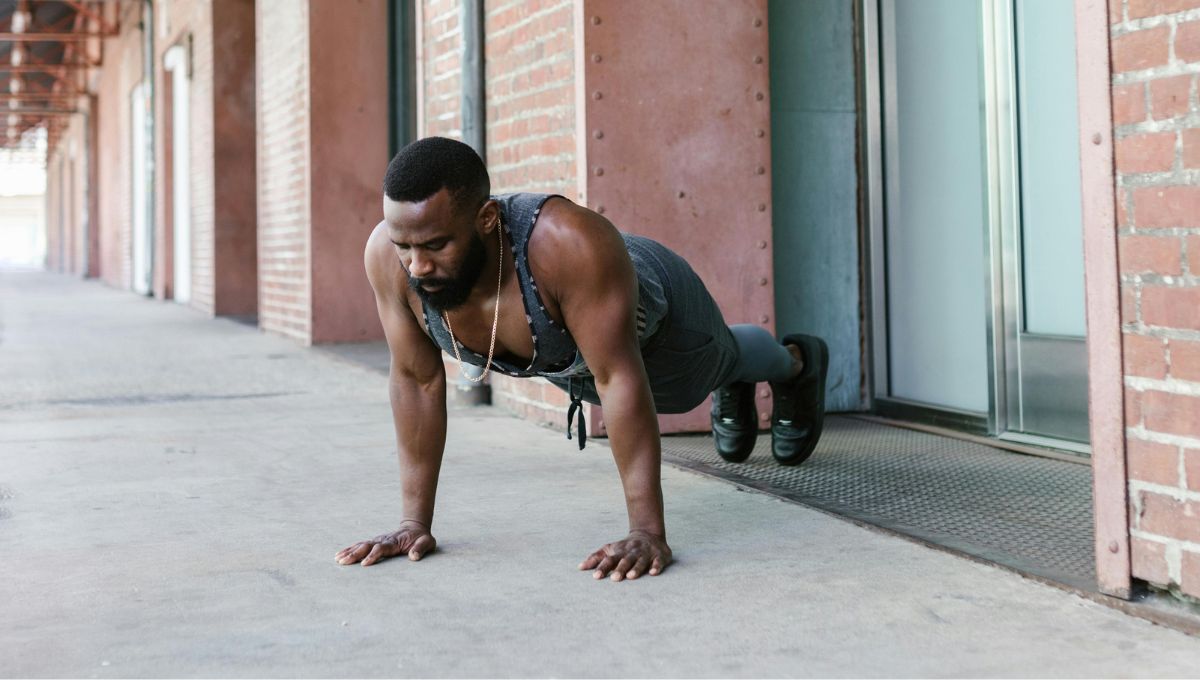


Let’s look closer into how body weight training for muscle gains can be part of your routine. No matter what your end goals are, this type of training can be used as a standalone or as a supplement to your lifts.
What are Your Goals?
Obviously, you need to have goals, but if you haven’t set out something to reach towards, you should. Goals are invaluable in helping you to reach a higher level and they help to place cause and effect to your activity. Your goals should align for strength, bigger muscles, or a combination of both and here are two muscle-oriented options for which to strive.
- Hypertrophy. This is a term used to describe growing muscle fibers bigger. Hypertrophy training is designed to build bigger and stronger muscle fibers and is very much responsible for that chiseled look. It is possible to achieve hypertrophy with bodyweight training, especially if you follow a blueprint that aims to achieve this goal.
- Strength. While this also comes with hypertrophy training, strength goals are one of the most commonly sought. Strength refers to your body’s ability to adapt to resistance and be able to handle force throughout a range of motion. If this is your goal, your bodyweight training program will need to reflect this and typically will mean more reps.
Bodyweight Exercises for Muscle Gains
The amount of bodyweight exercises you could perform are endless. Changing the angles, exercise type, and cadence really makes bodyweight training great. Here are some common types of bodyweight exercises to perform with some suggestions for variations listed within each as well.
- Push-Ups: The standard push-up is an original bodyweight training exercise and for good reason. This exercise primarily works the pecs, but can have secondary roles in the biceps, traps, and core areas.
- Variations: The best variations of push-ups involve changing angles, so with an incline or decline. Utilizing a stability ball can make it more challenging or even straps to test the stabilizers. You can also use a wide or narrow hand placement to change the angle of work on the chest.
- Progression: Perform any variation of push-up to failure, which means working to exhaustion. You should be able to add reps after a week or two of consistent work.
- Pull-Ups: This exercise is quite honestly a thorn in many athletes’ sides. In order to perform this bodyweight exercise, you will need a sturdy pull-up bar. The standard type of pull-up includes gripping the bar with the palms facing forward and this takes aim mostly at the lats, rhomboids, traps, biceps, deltoids, and core.
- Variations: If your pull-up bar has different grip configurations, then you will have many options. These group configurations include palms facing in, forward (standard), outward, and facing the body (chin-ups). Without different grip configurations, you will remain with pull-ups and chin-ups.
- Progression: Add more reps as you gain strength in this exercise and consider more sets as you progress further.
- Handstand Push-Ups: This variation of a push-up deserves its own due to the angle and difficulty. The handstand push-up solely works the shoulders and will really get results.
- Variations: There really are no variations for this, but you can get assistance if a gym partner holds your feet.
- Progression: This is a hard exercise, so take it slow to start and hone in on your form. Progress with more reps as you continue to progress throughout this exercise.
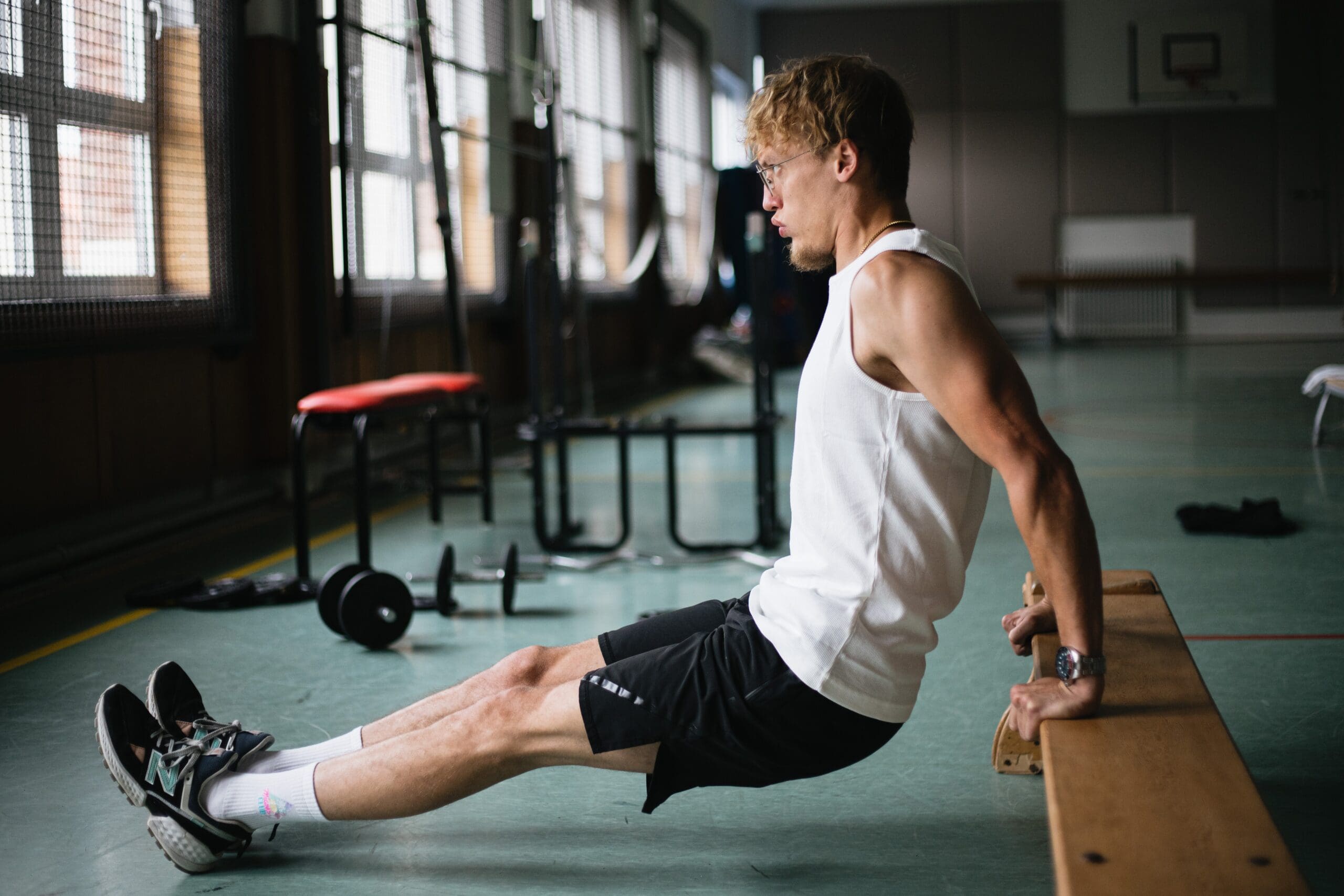
- Dips: This bodyweight exercise can truly get results in the chest and arms. Using a dip bar, this exercise can work the pecs, shoulders, biceps, and will have you sore in no time.
- Variations: The standard dip bar allows for palms facing inward. You can also perform dips with palms flat down with fingers facing forward or backwards.
- Progression: Add in more reps until you can perform about 15 in one set. Add another set if this is you and slow down your tempo with more controlled movements.
- Squats: This is an all-time favorite because it is a multi-joint exercise. Squats target the glutes, hamstrings, and quads and are a foundation for lower body workouts.
- Variations: The standard squat includes feet shoulder-width apart and toes mostly pointing forward. Variations can include a wide or narrow foot placement, toes pointing inward or outward, and a jump squat type.
- Progression: Starting with standard squats is a perfect spot. Progress by adding deeper squats with more reps until you’ve mastered the exercise. Advanced progressions should include jump squats.
- Core: Bodyweight training is great for core work. Especially with crunches, sit-ups, and back extensions, all you need is your body and gravity.
- Variations: Changing up the crunches can involve mixing the angles of work such as in an incline crunch. There are side crunches and trunk twists that can work as well.
- Progression: Add more reps as your body adjusts to this area of the body and consider more sets as well.
Trying New Exercises May be Valuable
In order to hit progressive overload for the muscles to grow, the body may need to work in a way that it’s not accustomed. There are various ways to adjust the exercises with variations and even unusual movements can help as well.
Sometimes a little trial and error works, but adding bodyweight training to your workouts can deliver results.
Final Words
Utilizing equipment in the gym is no doubt huge for gains, but adding less sometimes could mean more. Bodyweight training for muscle gains can happen with a sound routine, adding in extra exercises between sets, or by focusing on these lifts on your usual day. Just remember that recovery is still important in your journey to hit your goals, and rest is vital to success.
Resources
https://health.clevelandclinic.org/smart-fitness-goals


