Training the lower chest effectively from home without expensive equipment is entirely possible, but it requires intelligent exercise selection, proper technique, and an understanding of how muscle activation works. The pectoralis major, particularly its sternal or lower fibers, can be targeted using specific movements that angle the upper body to emphasize the lower region.
This article explores three of the most effective lower chest exercises you can perform at home, supported by scientific literature and biomechanical principles.


Understanding the Lower Chest Anatomy
The Pectoralis Major and Its Divisions
The pectoralis major is a thick, fan-shaped muscle situated at the chest. It is divided into two primary parts: the clavicular head (upper chest) and the sternal head (middle to lower chest). The sternal head comprises the majority of the muscle’s mass and is responsible for movements such as horizontal adduction, internal rotation, and shoulder extension from a flexed position. Scientific electromyography (EMG) data demonstrates that different parts of the pectoralis major can be selectively emphasized depending on the exercise angle and movement mechanics (Glass & Armstrong, 1997).

Importance of Exercise Angle and Arm Path
The angle of the torso relative to gravity, along with the direction of arm movement, dictates which portion of the chest gets the most stimulation. Decline presses and dips, for instance, create a biomechanical environment that targets the lower sternal fibers more effectively (Trebs et al., 2010). For home training, mimicking these angles using bodyweight or minimal equipment becomes key.
Exercise 1: Decline Push-Ups
Execution
Decline push-ups elevate the feet on a stable surface such as a bench, step, or stairs, placing more of the body’s weight over the chest and shoulders and altering the angle of push relative to gravity.
- Begin in a standard push-up position with your feet elevated 12–24 inches off the ground.
- Keep your body in a straight line from head to heels.
- Lower your chest toward the floor until your upper arms are at least parallel.
- Press back up, emphasizing a controlled tempo.
Scientific Backing
According to studies utilizing surface EMG, the sternal head of the pectoralis major shows significantly greater activation in decline push-up variations compared to flat or incline push-ups (Clemons & Aaron, 1997). By changing the angle of inclination, more of the movement load shifts to the lower pectorals.
A study by Donkers et al. (1993) also found that increasing the vertical angle in pressing movements alters the muscle recruitment patterns favorably for the lower chest. Additionally, push-ups offer comparable muscle activation to bench presses when properly executed (Calatayud et al., 2015), making them an excellent substitute at home.
Progressive Variations
- Feet-elevated Spiderman Push-ups: Add hip mobility and increased range of motion.
- Weighted Decline Push-ups: Place a backpack with weight on your back for resistance.
- Tempo Decline Push-ups: Slow down the eccentric phase to increase time under tension.
Exercise 2: Straight Bar Dips or Elevated Surface Dips
Execution
While parallel bars are ideal, at home this movement can be replicated using two sturdy chairs, low countertops, or dip bars if available.
- Grip the two surfaces with arms extended, legs behind for balance.
- Lower yourself until your shoulders are slightly below elbows, torso leaning slightly forward.
- Press back to the start, engaging your chest through shoulder adduction.
Muscle Activation and Lower Chest Focus
Dips, particularly when performed with a forward torso lean, significantly activate the lower portion of the pectoralis major due to the mechanical stretch and angle of resistance (Lehman et al., 2005). This lean shifts the primary mover from the triceps to the chest, allowing for greater lower pec involvement.
EMG analyses conducted by Barnett et al. (1995) confirm that dips with a forward torso angle lead to high pectoralis major activity, especially in the lower region, rivaling that of decline bench press movements.
Adjustments for Home Setup
- Chair Dips with Feet Elevated: Increases the difficulty by raising the legs on another surface.
- Resistance Band-Assisted Dips: For beginners needing help through the movement.
- Slow Negative Dips: Focus on the eccentric part of the dip for hypertrophy.
Exercise 3: Resistance Band Decline Press
Execution
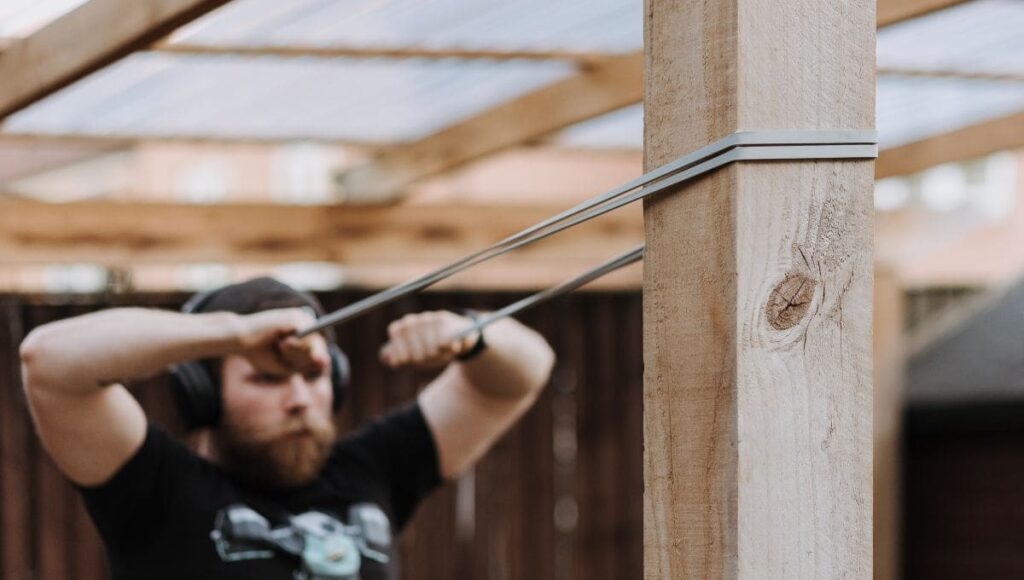
With no bench, resistance bands can mimic the decline press angle effectively.
- Anchor the band low (base of a door or couch leg).
- With your back to the anchor point, grip the handles or band ends.
- Lean forward, stagger your stance for balance.
- Press the bands downward and forward, converging your hands at the midline.
- Slowly return with control to the starting position.
Biomechanical Rationale
Resistance bands allow for horizontal adduction and shoulder extension, both of which target the lower pec fibers when executed at a decline angle. Bands also provide variable resistance, which can be beneficial for hypertrophy, as resistance increases throughout the range of motion (Andersen et al., 2006).
This exercise replicates the biomechanics of a decline bench press, a proven movement for lower pec activation (Trebs et al., 2010). The key is to align your movement path with the lower chest muscle fiber direction—downward and inward.
Home Modifications
- Single-arm Band Presses: Introduces anti-rotational stability demands.
- Band Crossover Press: Increase the end-range tension to maximize chest contraction.
- Superset with Push-ups: Enhance muscular fatigue for hypertrophy.
How to Program These Exercises for Maximum Effect
Weekly Structure
For balanced lower chest development at home, these exercises can be integrated into a full-body or upper-body split as follows:
- Workout A (Day 1): Decline Push-Ups – 4 sets of 12–15 reps, Dips – 3 sets of 8–12 reps.
- Workout B (Day 3 or 4): Band Decline Press – 4 sets of 12–15 reps, Tempo Push-Ups – 3 sets of 10 reps.
- Workout C (Optional – Day 6): All three exercises in a circuit, 3 rounds, minimal rest.
Key Training Variables
- Time Under Tension (TUT): Use controlled tempo (e.g., 3 seconds down, 1 second pause, 1 second up).
- Progressive Overload: Increase reps, sets, or add resistance using bands or weight.
- Rest Intervals: 60–90 seconds between sets for hypertrophy.
Addressing Common Mistakes
Neglecting Scapular Position
Allowing the scapulae to remain overly retracted or protracted can reduce pectoral activation. The scapulae should move naturally during pressing motions—protract at the top of push-ups, allow controlled retraction during descent.
Overusing Triceps
Excessively vertical torso during dips or narrow hand placement during push-ups leads to dominant triceps activation. Leaning forward and using wider hand spacing helps bias the chest.
Inadequate Range of Motion
Failing to descend sufficiently in push-ups or dips limits mechanical tension. Full range is necessary to stretch the pectorals effectively, especially for hypertrophy stimulation (Schoenfeld et al., 2014).
Why Lower Chest Training Matters
Aesthetics and Full Chest Development
A well-developed lower chest creates the illusion of thickness and fullness, contributing to a balanced, armor-like torso. Incomplete development may result in a “droopy” look or a disproportionately flat lower pec region.
Functional Strength
Lower chest exercises involve shoulder adduction and extension, crucial in pushing motions such as getting up from the floor or pushing objects away from the body. Enhancing lower chest strength supports overall pushing performance and shoulder joint stability.
Hormonal and Neuromuscular Considerations
While you can’t spot-reduce fat, you can hypertrophy the underlying muscle to create definition. Hypertrophy training elevates local androgen receptor density and neuromuscular junction efficiency over time (Kadi et al., 2004), leading to more effective contraction and development of the target area.
Conclusion
Training your lower chest at home requires purposeful movement selection and adherence to biomechanical principles. Decline push-ups, dips, and resistance band presses are not only accessible but scientifically validated exercises that offer significant hypertrophic potential. These movements, when programmed with progressive overload and proper technique, provide a strong foundation for building the lower chest without needing a commercial gym setup.
Bibliography
Andersen, V., Fimland, M.S., Wiik, E., Skoglund, A., & Saeterbakken, A.H. (2006). Electromyographic comparison of dumbbell bench press, barbell bench press, and chest press machine exercises. Journal of Strength and Conditioning Research, 20(4), 813–817.
Barnett, C., Kippers, V., & Turner, P. (1995). Effects of variations of the bench press exercise on the EMG activity of five shoulder muscles. Journal of Strength and Conditioning Research, 9(4), 222–227.
Calatayud, J., Borreani, S., Colado, J.C., Martin, F., Tella, V., & Andersen, L.L. (2015). Bench press and push-up at comparable levels of muscle activity results in similar strength gains. Journal of Strength and Conditioning Research, 29(1), 246–253.
Clemons, J.M., & Aaron, C. (1997). Effect of grip width on the myoelectric activity of the prime movers in the bench press. Journal of Strength and Conditioning Research, 11(2), 82–87.
Donkers, M.J., An, K.N., & Chao, E.Y. (1993). Hand position affects the shoulder and elbow muscle load in push-ups and bench press. Clinical Biomechanics, 8(1), 11–18.
Glass, S.C., & Armstrong, T. (1997). Electromyographical activity of the pectoralis major and anterior deltoid muscles during three upper body lifts. Journal of Strength and Conditioning Research, 11(2), 87–92.
Kadi, F., Schjerling, P., Andersen, L.L., Charifi, N., Madsen, J.L., Christensen, L.R., & Andersen, J.L. (2004). The effects of heavy resistance training and detraining on satellite cells in human skeletal muscles. Journal of Physiology, 558(3), 1005–1012.
Lehman, G.J., & McGill, S.M. (2005). The influence of different body positions on muscle activity during the bench press. Journal of Strength and Conditioning Research, 19(3), 587–591.
Schoenfeld, B.J., Contreras, B., Krieger, J., Grgic, J., Delcastillo, K., Belliard, R., & Alto, A. (2014). Resistance training volume enhances muscle hypertrophy but not strength in trained men. Medicine & Science in Sports & Exercise, 46(3), 535–543.
Trebs, A.A., Brandenburg, J.P., & Pitney, W.A. (2010). An electromyographic analysis of three muscles surrounding the shoulder joint during a shoulder press exercise. Journal of Strength and Conditioning Research, 24(5), 1376–1382.