Building well-defined, attractive shoulders isn’t exclusive to those lifting heavy. While traditional hypertrophy training emphasizes moderate to heavy weights, research increasingly supports the effectiveness of light loads—when used correctly—in driving muscle growth and sculpting physique.
This article will delve into the science behind shoulder development with light weights and offer a practical, evidence-based training approach.


Understanding Shoulder Anatomy and Function
The Three Heads of the Deltoid
The deltoid muscle comprises three distinct heads:
- Anterior deltoid (front): Responsible for shoulder flexion and internal rotation.
- Lateral deltoid (side): Controls shoulder abduction, contributing significantly to shoulder width.
- Posterior deltoid (rear): Assists in extension and external rotation, crucial for posture and overall symmetry.
An effective shoulder routine must target all three heads to achieve a balanced, aesthetic appearance.
Can Light Weights Build Muscle?
Scientific Evidence for Hypertrophy with Low Loads
Traditional hypertrophy training typically involves lifting 65–85% of one-repetition max (1RM) for 6–12 reps. However, research shows that training with loads as low as 30% of 1RM can elicit similar hypertrophic responses—provided the sets are taken to or near failure.
[wpcode id=”229888″]A landmark study by Schoenfeld et al. (2015) found no significant difference in muscle growth between participants training with 30% 1RM and those training with 80% 1RM, as long as sets were performed to failure. This has been confirmed by multiple meta-analyses showing comparable increases in muscle size from both light- and moderate-load resistance training when effort is equated.
Advantages of Light Weight Training for Shoulders
Improved Mind-Muscle Connection
Light weights allow for greater control, which enhances the mind-muscle connection. This neuromuscular awareness improves muscle recruitment, especially in the lateral and rear delts, which are often undertrained.
Reduced Joint Stress
Shoulder joints are inherently unstable and prone to injury. Using lighter weights reduces compressive and shear forces, lowering the risk of overuse injuries, particularly in the rotator cuff.
Greater Time Under Tension
When using light loads, sets naturally require more repetitions, which increases time under tension (TUT). This extended duration under muscular stress is a key driver of hypertrophy, especially for smaller, postural muscles like the deltoids.
Training Strategies for Shoulder Growth with Light Weights
1. Train to Near or Complete Failure
Light-load training only matches the effectiveness of heavy-load training when sets are taken to failure or close to it. Fatigue ensures full motor unit recruitment, particularly of type II muscle fibers, which have the greatest potential for growth (Morton et al., 2016).
2. Use High Repetitions (15–30+)
Aim for rep ranges between 15 and 30. At light weights (30–50% of 1RM), this range provides sufficient volume and metabolic stress, both essential for hypertrophy.
3. Incorporate Metabolic Stress Techniques
Metabolic stress, associated with muscle swelling, lactate buildup, and occlusion, is a potent hypertrophy stimulus. Methods such as supersets, drop sets, and partial reps can enhance this effect even with light weights.
4. Emphasize Controlled Tempos
Using slow tempos (e.g., 3 seconds eccentric, 1-second pause, 2 seconds concentric) can prolong time under tension and maximize muscle fiber recruitment. This also improves technique and reduces momentum compensation.
Effective Light-Weight Shoulder Exercises
Dumbbell Lateral Raise
Target: Lateral deltoid
Execution Tips:
- Raise dumbbells to shoulder height only.
- Lead with the elbows to reduce upper trap involvement.
- Pause at the top to enhance tension.
Programming: 3–4 sets of 20–30 reps to near failure.
Front Raise (Plate or Dumbbells)
Target: Anterior deltoid
Execution Tips:
- Maintain a slight bend in the elbows.
- Lift no higher than shoulder level.
- Avoid swinging by keeping the torso stable.
Programming: 3–4 sets of 15–25 reps.

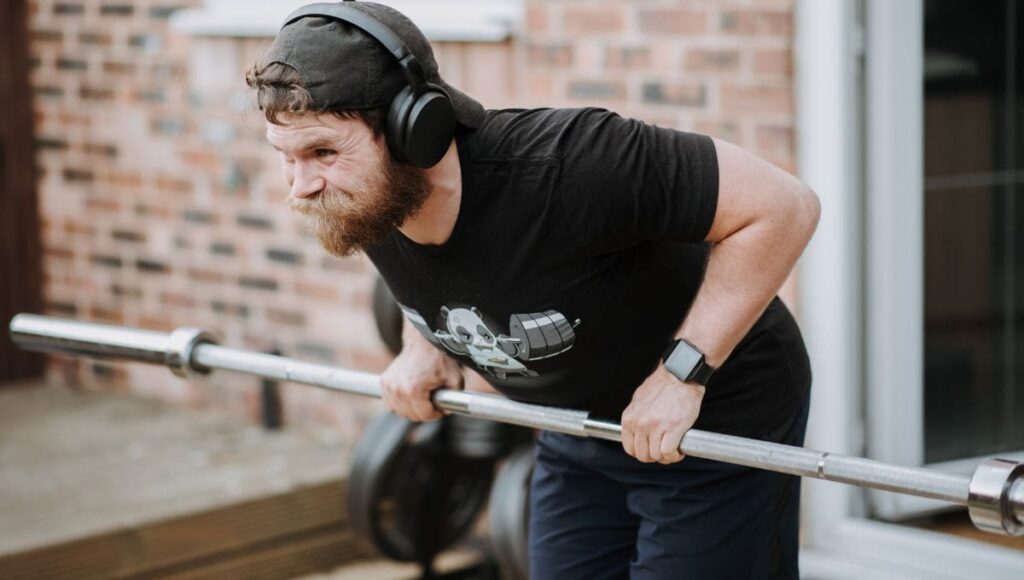
Bent-Over Rear Delt Raise
Target: Posterior deltoid
Execution Tips:
- Hinge at the hips and maintain a flat back.
- Focus on squeezing shoulder blades apart.
- Avoid shrugging—this shifts emphasis to traps.
Programming: 3–4 sets of 20–30 reps.
Seated Overhead Dumbbell Press
Target: All deltoid heads, primarily anterior
Execution Tips:
- Perform slowly with a full range of motion.
- Use light dumbbells to minimize momentum.
- Keep the spine neutral and avoid flaring elbows excessively.
Programming: 3 sets of 15–20 reps.
Resistance Band Face Pull
Target: Rear delts and external rotators
Execution Tips:
- Pull towards the forehead, elbows high.
- Squeeze shoulder blades at the end range.
- Maintain constant tension throughout.
Programming: 3 sets of 20–30 reps.
Weekly Program Example
| Day | Exercise | Sets | Reps | Notes |
|---|---|---|---|---|
| Monday | Lateral Raise | 4 | 25 | Slow tempo |
| Rear Delt Raise | 3 | 30 | To failure | |
| Overhead Press | 3 | 20 | Full ROM | |
| Wednesday | Front Raise | 3 | 25 | Controlled |
| Face Pull | 3 | 30 | Band tension | |
| Friday | Lateral Raise | 4 | 30 | Drop set on last set |
| Rear Delt Raise | 3 | 25 | Add partials | |
| Overhead Press | 3 | 20 | Paused reps |
Each session lasts under 45 minutes and emphasizes different deltoid heads across the week for balanced development.
Progressive Overload with Light Weights
Progressive overload is critical for continued muscle adaptation. With light weights, you can apply progressive overload through:
- Increasing reps: Gradually adding reps within the 15–30 rep range.
- Slowing tempo: Adding control increases muscular demand.
- Reducing rest time: Shorter rest increases metabolic stress.
- Advanced techniques: Incorporating drop sets, supersets, or isometric holds.
Importance of Volume and Frequency
Volume
Muscle growth is highly responsive to total weekly volume. Schoenfeld et al. (2019) recommend at least 10 sets per week per muscle group for hypertrophy, with benefits continuing up to 20+ sets for advanced trainees.
Frequency
Splitting shoulder training across 2–3 days per week enhances recovery and improves training quality. Light-load sessions allow for high frequency without overtraining.
Nutrition and Recovery Considerations
To build muscle, a slight caloric surplus and adequate protein intake (1.6–2.2 g/kg/day) are required (Morton et al., 2018). Recovery is equally important—ensure 7–9 hours of quality sleep per night and manage training stress to avoid fatigue accumulation.
Common Mistakes in Light-Weight Shoulder Training

Not Training Close to Failure
Stopping too far from muscular failure drastically reduces hypertrophic signaling. Sets should end when technique degrades or when completing another rep becomes impossible.
Using Momentum
Swinging or jerking movements reduce tension on the target muscle. Focus on slow, deliberate movement patterns to maintain load on the delts.
Neglecting Posterior Delts
The rear delts are often underdeveloped compared to the front delts due to pressing biases. Dedicated rear delt work is essential for balanced, injury-resistant shoulders.
Who Should Use Light Weights for Shoulders?
Light-weight shoulder training is especially suitable for:
- Beginners: Safer and easier to learn correct form.
- Older adults: Reduced joint stress and injury risk.
- Athletes in rehab: Allows progressive loading without compromising recovery.
- Bodybuilders: For isolating lagging deltoid heads and increasing training volume.
Conclusion
Building attractive, well-rounded shoulders doesn’t require heavy weights. Scientific evidence supports light-load training—when taken to failure—as an effective tool for hypertrophy. By emphasizing form, volume, and effort, you can carve out defined deltoids, enhance symmetry, and minimize injury risk. When paired with smart programming and recovery, light weights become a powerful ally in your physique journey.