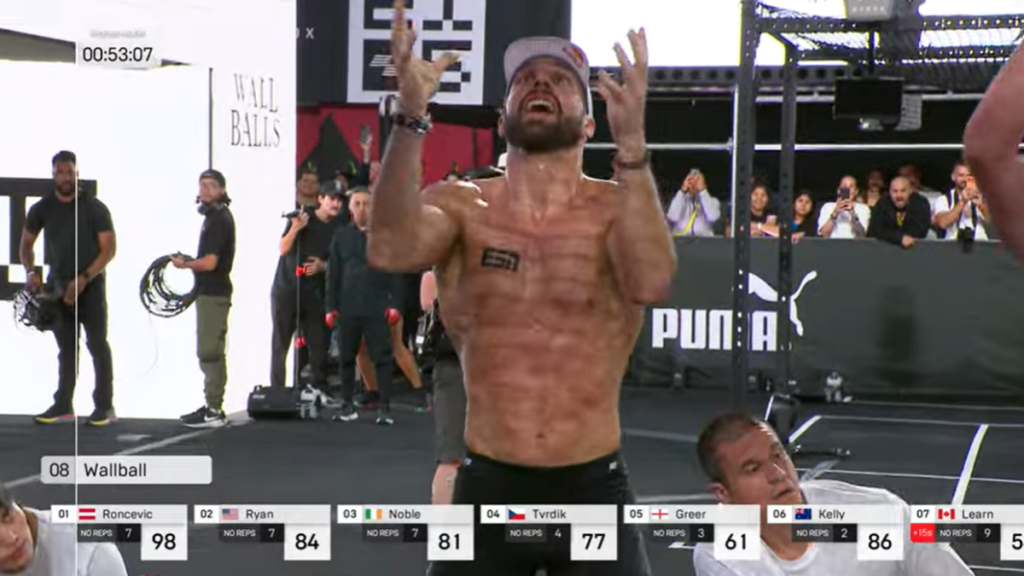
Developing a muscular back is essential not only for aesthetics but also for improving strength, posture, and overall athletic performance. The muscles of the back—particularly the latissimus dorsi, trapezius, rhomboids, and erector spinae—are involved in nearly every pulling movement and play a crucial role in stabilizing the spine and upper body during heavy lifts.
This article explores the five most effective exercises for building a more muscular back, focusing on those with the highest levels of muscle activation and long-term hypertrophic benefits. Each exercise is backed by evidence from peer-reviewed studies, which are listed in the bibliography at the end of the article.


Barbell Deadlift
The barbell deadlift is a foundational compound lift that targets the entire posterior chain, with specific emphasis on the erector spinae, latissimus dorsi, trapezius, and gluteal muscles. It is one of the most effective exercises for overall muscle mass development and posterior strength.
From a biomechanical standpoint, the deadlift maximizes axial loading and engages multiple joints, which makes it especially potent for stimulating systemic growth. It is unique in its ability to tax the nervous system while simultaneously producing high levels of mechanical tension, a primary driver of hypertrophy.
[wpcode id=”229888″]Research conducted by Escamilla et al. (2002) using electromyography (EMG) analysis confirmed that the deadlift generates significantly higher activation in the erector spinae compared to exercises like the back squat or good mornings. Another study by Häkkinen and Pakarinen (1993) demonstrated that the deadlift causes a substantial acute increase in anabolic hormones such as testosterone and growth hormone, both of which are correlated with muscle growth.
Proper execution of the deadlift requires a neutral spine, braced core, and active engagement of the lats to stabilize the bar path. The hips should hinge backward with minimal knee bend, and the bar should travel close to the body to reduce lumbar shear. Training in the 3–6 rep range is ideal for strength and hypertrophy synergy, particularly when using progressive overload protocols.
Pull-Ups and Weighted Pull-Ups
Pull-ups are among the most effective exercises for targeting the latissimus dorsi, the largest muscle of the back. They also engage the rhomboids, infraspinatus, teres major, and lower trapezius. The vertical pulling pattern of the pull-up builds back width and contributes to the V-shaped torso highly sought after in physique training.

The superiority of pull-ups in activating the lats has been confirmed by Youdas et al. (2010), who found that overhand grip pull-ups activated the latissimus dorsi more significantly than chin-ups or neutral grip variations. In trained individuals, weighted pull-ups further enhance fast-twitch muscle fiber recruitment, which is key for hypertrophic adaptation, as supported by Folland and Williams (2007).
Strict form is essential for maximal recruitment of the target muscles. Begin each repetition from a dead hang, pull until the chin clears the bar, and control the descent. Avoid using momentum or kipping, especially when the goal is hypertrophy. Weighted pull-ups should be introduced once an athlete can perform at least 10 bodyweight repetitions with proper technique. Sets of 6–10 reps are optimal for muscle growth, while sets of 3–5 reps with heavier loads are better suited for strength development.
Bent-Over Barbell Row
The bent-over barbell row is a horizontal pulling exercise that places direct mechanical tension on the rhomboids, posterior deltoids, mid and lower trapezius, and the spinal erectors. It is one of the best exercises for developing the middle back and promoting balanced musculature between the upper and lower posterior chain.
A key benefit of the bent-over row is its ability to load the back muscles in a stretched position, increasing time under tension—a known driver of hypertrophy. According to Andersen et al. (2014), horizontal row variations generate greater activation of the rhomboids and mid-trapezius compared to vertical pulls, which are more lat-dominant.
Form is critical to avoid injury and maximize recruitment. The lifter should maintain a hinge position, with the torso nearly parallel to the floor and a strong brace through the abdominals and lower back. The bar should be pulled toward the lower chest or upper abdomen, depending on the targeted area. Elbows should stay close to the body to emphasize the lats or flare slightly to engage more of the upper back.
Use moderate to heavy loads in the 6–10 rep range. Maintaining strict control, especially during the eccentric phase, further increases muscle fiber recruitment and metabolic stress, both of which contribute to muscle hypertrophy.
One-Arm Dumbbell Row
The one-arm dumbbell row allows for unilateral back training, which is valuable for correcting muscular imbalances and enhancing the mind-muscle connection. It primarily targets the latissimus dorsi, with secondary involvement from the rhomboids, traps, and rear delts. Additionally, unilateral loading increases demand on the spinal stabilizers and core musculature.
EMG research by Lusk et al. (2010) shows that the one-arm row elicits high levels of activation in the lats and mid-traps, often comparable to or exceeding bilateral rows when performed with proper form and full range of motion. The ability to concentrate on one side at a time also allows for higher quality contractions and improved neuromuscular efficiency.
To perform the exercise, place one hand and the same-side knee on a bench to stabilize the torso. The other hand rows a dumbbell from full extension to the side of the ribcage. Emphasize a controlled concentric and a slow eccentric to maximize mechanical tension. Reps in the 8–12 range work best for hypertrophy. Use straps if grip becomes a limiting factor in performance.
Seated Cable Row

The seated cable row offers constant tension through a fixed resistance profile, making it ideal for hypertrophy due to its smooth loading curve. It targets the mid-back, especially the rhomboids, mid-traps, and posterior deltoids, and is highly customizable based on grip and handle choice.
Andersen et al. (2014) found that rowing movements performed with a neutral or close grip promote high activation of the rhomboids and lower trapezius. Additionally, seated rows reduce spinal loading compared to free weight rows, which makes them ideal for lifters managing lower back fatigue or injuries.
When executing the seated cable row, maintain an upright torso and avoid excessive lean. Pull the handle toward the navel or lower chest and fully retract the scapulae at the end of each rep. Pause briefly to emphasize peak contraction, then slowly return to the start position. High volume (3–5 sets of 10–15 reps) is particularly effective due to the lower systemic fatigue and the ability to focus on muscle contraction.
Key Training Considerations
Maximizing back hypertrophy requires a balanced approach that includes both vertical and horizontal pulling, variation in grip and angles, and a mixture of heavy compound lifts with isolation or controlled movements. Key mechanisms for hypertrophy—mechanical tension, muscle damage, and metabolic stress—must all be present across the training week (Schoenfeld, 2010).
It’s also essential to train the back through its full contractile range, which includes stretched positions (such as at the bottom of a row) and peak contractions (such as the top of a pull-up). Additionally, advanced techniques such as tempo control, pauses, and drop sets can be implemented in later training blocks to increase training density and muscle fiber recruitment.
Incorporating these five exercises into a weekly program, with progressive overload and sound nutrition, will result in significant back development over time.
Bibliography
Andersen, V., Fimland, M.S., Wiik, E., Skoglund, A., & Saeterbakken, A.H. (2014). Effects of grip width on muscle strength and activation in the lat pull-down. Journal of Strength and Conditioning Research, 28(4), 1135–1142.
Boeckh-Behrens, W.U., & Buskies, W. (2000). Fitness Krafttraining: Theorie – Methoden – Praxis. BLV Buchverlag.
Escamilla, R.F., Francisco, A.C., Kayes, A.V., Speer, K.P., & Moorman, C.T. (2002). An electromyographic analysis of sumo and conventional style deadlifts. Medicine & Science in Sports & Exercise, 34(4), 682–688.
Folland, J.P., & Williams, A.G. (2007). The adaptations to strength training: Morphological and neurological contributions to increased strength. Sports Medicine, 37(2), 145–168.
Häkkinen, K., & Pakarinen, A. (1993). Acute hormonal responses to heavy resistance exercise in men and women at different ages. International Journal of Sports Medicine, 14(5), 295–301.
Lusk, S.J., Hale, B.D., & Russell, D.M. (2010). Muscle activation patterns during pull-up variations. Journal of Strength and Conditioning Research, 24(11), 2944–2950.
Schoenfeld, B.J. (2010). The mechanisms of muscle hypertrophy and their application to resistance training. Journal of Strength and Conditioning Research, 24(10), 2857–2872.
Youdas, J.W., Amundson, C.L., Cicero, K.S., Hahn, J.J., Harezlak, D.T., & Hollman, J.H. (2010). Surface electromyographic activation patterns and elbow joint motion during a pull-up, chin-up, or perfect pull-up rotational exercise. Journal of Strength and Conditioning Research, 24(12), 3404–3414.