Big arms don’t come from curling alone.
That’s a hard truth many lifters discover after months of stalled progress. If your triceps aren’t pulling their weight (literally), your arms will never look as big or as strong as they could. The key isn’t just doing more sets, even though that’s the biggest muscle hypertrophy predictor – sets per muscle group per week. It’s also doing the right exercises, at the right angles, with a smart plan, so you recover faster and experience fewer injuries while working out.


In this article, you will learn:
- Top tricep exercises ranked by EMG effectiveness
- How to program workouts by skill level for optimal growth
- Key science-based tips for faster tricep hypertrophy and injury prevention
Let’s begin with the anatomy and importance of the triceps.
Why Triceps Matter for Bodybuilding
If you want big arms, start with your triceps. They make up nearly two-thirds of your upper arm’s muscle mass, which is more than your biceps. Yet many lifters still treat them like an afterthought.
The triceps brachii has three heads: the long head, the lateral head, and the medial head. Each head contributes to different movements and angles of force. The long head runs along the back of your arm and gives it that thick, horseshoe shape when fully developed.
The lateral head adds width and definition to the outer arm.
The medial head works behind the scenes and primarily helps with endurance and locking out presses.
This muscle group also plays a huge role in strength. Your triceps are essential for any pressing movement. Think in terms of bench press, overhead press, dips, and push-ups. Without strong triceps, your lockout suffers, your pressing stalls, and your shoulders and elbows take on more stress than they should.
[wpcode id=”229888″]Here’s a common trap: thinking biceps training will give you big arms. It won’t, at least not by itself. You can curl all day, but if your triceps are weak or undertrained, your arms will always look incomplete. Biceps might pop in a flex, but triceps give your arms real size and thickness from every angle.
Bottom line?
Big arms start with strong triceps.
The Best Tricep Exercises by Equipment Type
If you want complete triceps development, you need more than one or two go-to movements. Different exercises and different types of equipment hit the triceps from different angles, with varying resistance curves. That’s key for building all three heads of the muscle.
Let’s break it down by equipment so you can build a routine that fits your setup and goals.

Also, while there are many tricep movements to choose from, incorporating the best exercises for bigger triceps into your plan can accelerate progress. These carefully selected exercises help target each head of the muscle for balanced growth and optimal strength development.
Bodyweight Tricep Exercises
Bodyweight movements are underrated.
They hit the triceps hard, especially when you control the form and push to fatigue.
- Diamond Push-Ups – EMG studies rank these as the #1 triceps activator (1). Keep your hands close together under your chest. Great for lateral and medial head activation.
- Dips – Parallel bar dips target all three heads. Stay upright and keep your elbows tucked to focus on triceps. Leaning forward shifts more load to the chest.
- Bench Dips – Ideal for beginners. Use a chair or bench behind you, and keep your form tight.
- Close-Grip Push-Ups – Easier than diamond push-ups, but still a solid triceps movement.
- TRX Extensions or Push-Ups – Adjustable angle means adjustable difficulty. These challenge the triceps with bodyweight and stability.
Dumbbell Tricep Exercises
Dumbbells offer flexibility and balance work. They’re also great for isolating each arm.
- Overhead Dumbbell Extensions – Excellent for targeting the long head thanks to the overhead stretch.
- Dumbbell Skullcrushers – Lying on a bench or the floor, these target the whole triceps. More joint-friendly than barbell versions.
- Kickbacks – High EMG activation. Focus on strict form and full extension.
- Close-Grip Dumbbell Press – A hybrid move for strength and size. Keeps stress on triceps with minimal shoulder involvement.
- Tate Press – An advanced move that hits the medial head uniquely. Use lighter weights and strict control.
Barbell and EZ-Bar Tricep Exercises
When you want to lift heavy and overload the muscle, bars are your best friend.
- Close-Grip Bench Press – A compound lift that builds strength and mass. Keep elbows at about a 45° angle to avoid shoulder strain.
- EZ-Bar Skullcrushers – Classic isolation movement. Use a full range of motion and keep elbows tucked.
- Overhead EZ-Bar Extensions – More long head activation, similar to dumbbell versions.
- JM Press – A hybrid of a press and an extension. Ideal for advanced lifters focused on triceps strength.
Cable and Machine Tricep Exercises
Cables give you constant tension.
Machines add stability.
Both are great for isolating and fatiguing the triceps.
- Rope Pushdowns – A staple. Allows full extension and peak contraction.
- Straight-Bar Pushdowns – Heavier loading possible, but be careful not to swing.
- Overhead Cable Extensions – One of the most effective for the long head. Supported by recent hypertrophy research.
- Cable Kickbacks – Keeps tension constant through the whole movement.
- Dip Machines and Pressdowns – Beginner-friendly and joint-safe, perfect for finishing a workout.
Resistance Band Tricep Exercises
No gym?
No problem.
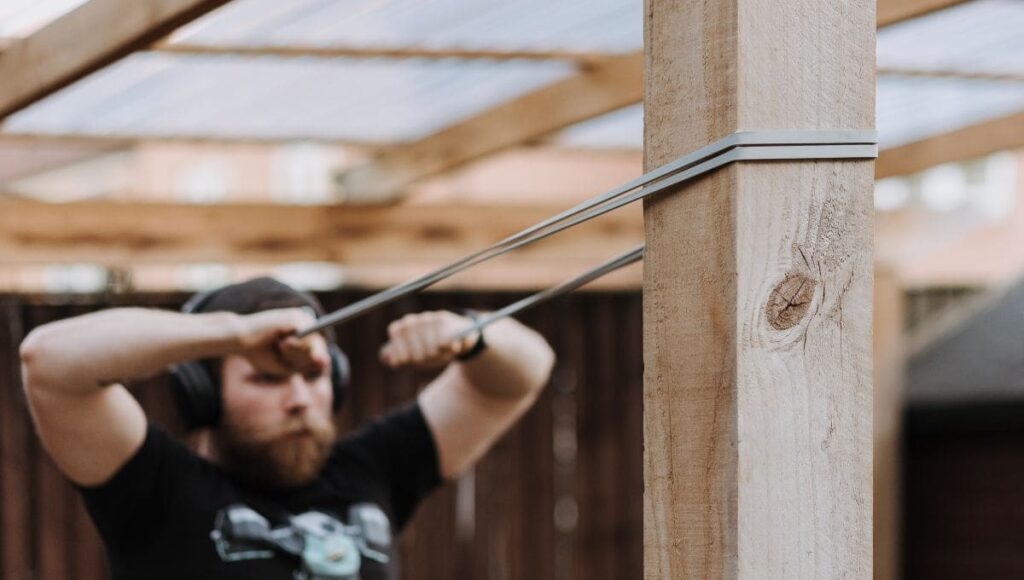
Bands replicate many cable movements and offer a smooth resistance curve.
- Band Pushdowns – Mimic the cable version. Great for warm-ups or high-rep finishers.
- Overhead Band Extensions – Easy to set up at home, great stretch and long head focus.
- Band Kickbacks – Joint-friendly and good for rehab or burnout sets.
Most Effective Tricep Exercises (EMG Study Results)
Not all tricep exercises are created equal. You can do ten different movements and still miss the mark if the muscle activation isn’t there.
That’s where EMG studies come in. Electromyography measures how much a muscle fires during an exercise. One study by the American Council on Exercise (ACE) compared eight popular triceps exercises to see which ones actually hit the muscle hardest (2).
The results were eye-opening.
Top 3 Triceps Activators According to EMG
Here are the top three triceps activators according to EMG:
- Diamond Push-Ups – 100% muscle activation. This bodyweight classic came out on top. The narrow hand placement puts the triceps in a prime position to take over, especially the lateral and medial heads. If you’re not including these in your routine, you’re leaving easy gains behind.
- Triceps Kickbacks – ~87% activation. Often dismissed because they use light weight, kickbacks are actually a top-tier isolation move when done with strict form. Keep the elbow pinned, extend fully, and squeeze hard at the top.
- Dips (Bench and Parallel Bar) – ~87% activation. Dips are a compound movement, which makes this level of triceps engagement even more impressive. Upright torso and tucked elbows make all the difference.
Other Solid Performers
- Overhead Dumbbell Extension – ~76%
- Rope Pushdown – ~74%
- Bar Pushdown – ~67%
- Lying EZ-Bar Skullcrusher – ~62%
- Close-Grip Bench Press – ~62%
Even though these scored slightly lower, they still deliver serious growth, especially when programmed smartly. Some exercises involve more stabilizers or allow for heavier loads, which makes them ideal for strength progression or muscle fatigue later in a workout.
What the Numbers Don’t Tell You
EMG is a great tool, but it doesn’t tell the whole story.
For example:
- Overhead extensions stretch the long head under load, which can trigger more hypertrophy even if EMG isn’t maxed.
- Pushdowns allow controlled high-rep work that helps with fatigue and metabolic stress.
- Compounds like the close-grip bench press help build overall pressing power.
So don’t obsess over rankings.
Instead, use EMG as a guide to prioritize movements that hit hard, but combine them with others that bring balance and variation.
Tricep Workout Routines for All Experience Levels
If you’re just starting out or already pressing big numbers, your tricep training should match your experience level. That means the right mix of volume, intensity, and exercise selection, not just doing more for the sake of it.
Below are sample routines for beginners, intermediates, and advanced lifters. Each one is designed to stimulate growth without overlapping too much with your other pressing workouts.
Beginner – Build the Foundation
At this stage, the goal is to learn movement patterns and get a strong mind-muscle connection. You don’t need high volume, just consistency and good form.
Workout plan:
- Bench Dips (feet on floor): 3 sets of 10
- Cable Rope Pushdowns: 3 sets of 12–15
- Overhead Dumbbell Extension (seated): 2–3 sets of 12
Tips:
- Focus on the full range of motion and control.
- Avoid back-to-back chest and triceps days since they overlap.
- Train triceps 1–2 times a week with 48 hours of recovery.
Intermediate – Mass and Strength
You’ve built a base. Now it’s time to push for more size and strength using heavier compounds and smart isolation work.
Workout plan:
- Close-Grip Barbell Bench Press: 4 sets of 6–8
- EZ-Bar Skullcrushers: 3 sets of 10–12
- Cable Rope Pushdowns (drop set on final set): 3 sets of 12–15
- Dumbbell Kickbacks (optional finisher): 2 sets of 15–20
Tips:
- Mix heavy and moderate reps for balanced growth.
- Aim for 8–12 total sets per week across 1–2 sessions.
- Add a drop set or higher-rep finisher to fully fatigue the muscle.
Advanced – Hypertrophy and Detail
Advanced lifters often need more volume and intensity techniques to keep growing.
Specialization cycles and strategic variety become very important here.
Workout plan (high-volume arm day):
Heavy compound focus:
- Weighted Dips: 3–4 sets of 6–8
- Close-Grip Incline Press (optional): 3 sets of 8–10
Isolation and volume:
- Overhead Cable Extension (rope): 4 sets of 10–12
- EZ-Bar Skullcrusher + Close-Grip Press Superset: 3 sets of 10 + 6
- Cable Pushdowns (slow negative): 2 sets of 15–20
Tips:
- Split volume across multiple sessions (e.g. push day + arm day).
- Periodize intensity: alternate between heavy and metabolic-focused workouts.
- Rotate exercises every 4–6 weeks to avoid joint stress and plateaus.
Science-Backed Programming for Growth
More sets don’t always mean more size (overtraining scenario). To grow your triceps efficiently and avoid injury, you need a smart balance of volume, frequency, intensity, and technique. Let’s break down what the research says and how to apply it.
Volume – How Much Is Enough?
Studies suggest 10–20 sets per muscle group per week is the sweet spot for muscle hypertrophy.
Triceps often need more than biceps because they assist in other pressing lifts. If you’re doing a lot of chest or shoulder work, your triceps are already getting indirect volume, so factor that in.
- Beginners: Start with 6–10 direct sets per week
- Intermediates: Build to 10–14 sets
- Advanced: Aim for 15–20+ sets, split over multiple sessions
Watch your recovery.
If your triceps are still sore after 48 hours, you may be doing too much. If you feel fresh but see no progress, consider adding more volume or intensity.
Frequency – How Often Should You Train Triceps?
Twice a week tends to outperform once-a-week splits. Spreading your volume gives your triceps more frequent stimulation and better quality reps (you’re less fatigued per session).
- Option 1: Push day + arm day
- Option 2: After chest one day, after shoulders later in the week
- Avoid: Training triceps the day after heavy pressing (give them at least 48 hours)
You can even vary your focus: one session heavier compounds, the other isolation and high reps.
Intensity and Rep Ranges – Heavy, Moderate, and Light
Triceps grow across all rep ranges, as long as you push close to failure.
- Heavy (4–8 reps): Best for compound lifts like close-grip bench or dips
- Moderate (8–12 reps): Ideal for most isolation movements
- High (15–20+ reps): Great for cable pushdowns, kickbacks, and finishers
Mixing rep ranges hits different muscle fibers and keeps training fresh. One week could focus on heavier skullcrushers, another on higher-rep overhead work.
Form and Execution – The Overlooked Key
Perfect form beats heavier weight.
Always.
- Keep elbows tucked during extensions and pushdowns
- Use a full range of motion for a deep stretch and full contraction
- Control the eccentric (lowering) phase, which means don’t just drop the weight
- Focus mentally on the triceps doing the work, not just moving the weight
This is where progress lives: consistent, quality effort with clean execution over time.
Warm-Up, Mobility & Injury Prevention
If you’ve ever had nagging elbow pain during tricep work, you’re not alone. Triceps training, especially with extensions, puts a lot of stress on the elbow joint. That’s why a proper warm-up and joint-friendly approach is essential.
Here’s how to stay pain-free while training hard.

Step 1 – General Warm-Up (5–10 Minutes)
Before you touch a weight, get your blood flowing.
- Light cardio: Rowing, cycling, or even walking briskly with arm movement
- Dynamic arm movements: Arm circles, shoulder rolls, elbow bends
This increases core temperature and prepares your joints for heavier work.
Step 2 – Triceps-Specific Warm-Up
Get the elbow joint and triceps ready directly.
Try:
- High-rep band pushdowns: 2 sets of 20 with very light resistance
- Light sets of your first tricep exercise: Start with ~50% of your working weight for 12–15 reps
Think of this as “elbow grease” or warming the joint and priming the muscle.
Step 3 – Improve Mobility Where It Matters
The triceps themselves don’t need much mobility work. But poor shoulder mobility or a tight upper back can ruin your overhead form.
Try these before overhead extensions:
- Doorway chest stretch: Loosens up tight pecs
- Lat stretch on wall or bar: Opens up your overhead range
- Foam rolling upper back: Improves thoracic mobility so you don’t overarch your lower back
This helps you get into the right position safely, especially for long head work.
Step 4 – Elbow-Friendly Training Habits
Avoid the two biggest triceps training mistakes: rushing into heavy extensions and doing the same movement every week forever.
Here’s how to protect your elbows:
- Progress gradually: Don’t jump 20 lbs on skullcrushers from one week to the next
Rotate exercises every few weeks: Switch from bar to dumbbell to cable to avoid overuse - Use EZ-bars or neutral grips: These reduce strain on wrists and elbows
- Avoid extreme ranges under load: Don’t dip below 90° if your shoulders scream, or overextend at the bottom of a heavy extension
- Warm joints: Elbow sleeves or long sleeves can help keep tendons warm and pain-free during training
Bonus – Triceps Stretching and Prehab
After training, do a simple overhead triceps stretch for 20–30 seconds per arm. You can also foam roll your triceps lightly or use a massage gun at low speed to flush the area.
If you’ve had elbow issues in the past, include these once or twice a week:
- Eccentric wrist extensions (to strengthen tendons)
- Isometric holds at triceps lockout (to reinforce joint control)
Recovery Strategies for Maximum Triceps Growth
Triceps don’t grow when you train them. They grow when you recover. It’s the part most lifters overlook, and it’s often the reason results stall.
You can do the perfect workout, but if you’re under-recovered, your arms won’t grow.
Sleep (The Overpowered Recovery Tool)
Sleep is your number one recovery asset. During deep sleep, your body releases growth hormone, repairs damaged tissue, and replenishes your energy systems.
If you’re training intensely but only sleeping five to six hours a night, you’re leaving growth on the table. Recovery suffers, performance dips, and your muscles don’t rebuild as efficiently.
Getting seven to nine hours of consistent, high-quality sleep every night should be a non-negotiable part of your training strategy.
Nutrition – Fuel the Repair Process
Muscle doesn’t grow without raw materials. Your body needs protein to rebuild muscle tissue, carbohydrates to restore energy levels, and a range of vitamins and minerals to keep everything functioning smoothly. After a workout, it’s important to eat a meal or shake with a solid dose of protein and some carbs to kickstart recovery.
Throughout the day, spreading your protein intake across multiple meals helps maintain a steady supply of amino acids for muscle repair. Hydration plays a supporting but essential role since your muscles are mostly water, and even mild dehydration can impair performance and delay recovery.
Active Recovery and Light Movement
Rest days don’t mean you have to be completely still.
In fact, light movement can actually enhance recovery by improving circulation and reducing stiffness. Simple activities like walking, gentle stretching, or mobility drills help clear out metabolic waste and bring fresh nutrients to your muscles.
Some lifters use light band work or high-rep, low-intensity pushdowns to pump blood into the triceps without causing further muscle damage. This kind of active recovery keeps your body engaged without interfering with the healing process.
Supplements – Useful, But Not Magic
Supplements can help, but they aren’t a substitute for solid sleep and good nutrition. A post-workout whey protein shake is a convenient way to hit your protein target, and creatine has well-documented benefits for recovery and strength.
If you’re dealing with joint soreness or inflammation, omega-3s or tart cherry juice may offer mild relief.
Some lifters also use collagen with vitamin C to support tendon health. Just remember: these are supporting players, not the foundation. You’ll get far more benefit from consistent sleep, proper fueling, and listening to your body.
Compound vs Isolation – What Builds Bigger Triceps?
When it comes to building big, defined triceps, there’s an ongoing debate: should you focus on heavy compound lifts, or lean into strict isolation movements? The best answer isn’t either-or. It’s both. But understanding how and when to use each will help you train smarter and grow faster.
Compound Exercises – Big Weights, Big Stimulus
Compound movements like close-grip bench presses, dips, and overhead presses let you lift heavy and engage multiple muscle groups at once. This makes them incredibly effective for overall strength and muscle recruitment.
When you perform a close-grip bench press, for example, your triceps are heavily involved, especially during the lockout phase of the lift. These exercises are ideal for progressive overload, which allows you to gradually increase the amount of weight your triceps handle.
But there’s a trade-off. Because compounds involve other muscles, like the chest and shoulders, your triceps don’t always get the maximum isolation they need. Fatigue may set in from other areas before your triceps are fully taxed. That said, compound lifts remain a cornerstone of any effective triceps program, especially when placed early in the workout.
Isolation Exercises – Precision and Detail
If compound lifts are your base, isolation movements are the fine-tuning tools. Exercises like rope pushdowns, dumbbell kickbacks, and overhead extensions allow you to directly target the triceps with minimal assistance from other muscles. This is where you really focus on squeezing at full contraction, controlling the tempo, and feeling the muscle work.
Isolation exercises also let you emphasize different heads of the triceps more precisely.
Overhead movements, for instance, stretch the long head and have been shown to drive more hypertrophy in that region compared to pushdowns alone. Kickbacks, though often performed with lighter weights, generate high activation when executed with strict form. These movements are invaluable for finishing off the muscle, especially after compounds have pre-fatigued it.
The Real Power Is in the Combination
Using both compound and isolation exercises is essential for complete development. Starting your workout with a heavy press or dip takes advantage of your energy reserves and helps recruit high-threshold motor units. Following that with focused isolation work ensures you’re fatiguing the muscle fully, hitting all heads, and building both size and definition.
This blend also reduces the risk of overuse injuries. Rotating between multi-joint and single-joint movements spreads the mechanical stress across different tissues and angles. For bodybuilders especially, combining the mass-building potential of compound lifts with the muscle-shaping effect of isolations leads to the most well-rounded results.
Finishing Strong – The Missing Piece in Your Triceps Game
You’ve seen how smart programming, varied exercises, and proper recovery build bigger triceps. But here’s what most lifters overlook: consistency in execution beats novelty in routine.
You don’t need new exercises every week. You need to master the key ones, feel the triceps working, and gradually do more over time. Keep a training log. Track weights, reps, and rest. Review how your triceps feel 24 and 48 hours after each session. That feedback loop is your roadmap to long-term growth.
If you’re ready to take your upper arms even further, your next step should be learning how to build balanced biceps that match your triceps, because real arm aesthetics demand both sides of the equation.