Building a thick, wide, and powerful back isn’t just about pulling heavy loads—it’s about intelligent programming that maximizes mechanical tension, metabolic stress, and muscle fiber recruitment. Supersets, where two exercises are performed back-to-back with minimal rest, are among the most effective methods to intensify training volume, maximize muscle recruitment, and accelerate hypertrophy.
This article presents the three best supersets scientifically designed to stimulate muscle growth in your lats, rhomboids, traps, and spinal erectors. Each pairing is backed by evidence from sports science, with considerations for biomechanics, fatigue management, and muscle activation patterns.


Why Supersets Are Effective for Back Hypertrophy
Supersets increase training density—more work in less time—amplifying mechanical and metabolic fatigue, two potent hypertrophy drivers. A study by Robbins et al. (2010) found that supersetting leads to greater total training volume in less time without compromising performance, enhancing both muscular endurance and hypertrophy. For back training, pairing movements that target complementary areas—horizontal and vertical pulls, compound and isolation—ensures comprehensive stimulation.
[wpcode id=”229888″]Moreover, back muscles consist of a high proportion of slow-twitch fibers, particularly in the erector spinae and trapezius, which respond well to high-volume, time-under-tension strategies like supersets (Gollnick et al., 1974). This means that to effectively overload these fibers, you must push them with both load and cumulative fatigue.
Superset 1: Weighted Pull-Ups + Chest-Supported Dumbbell Rows

Pull-Ups: Vertical Overload
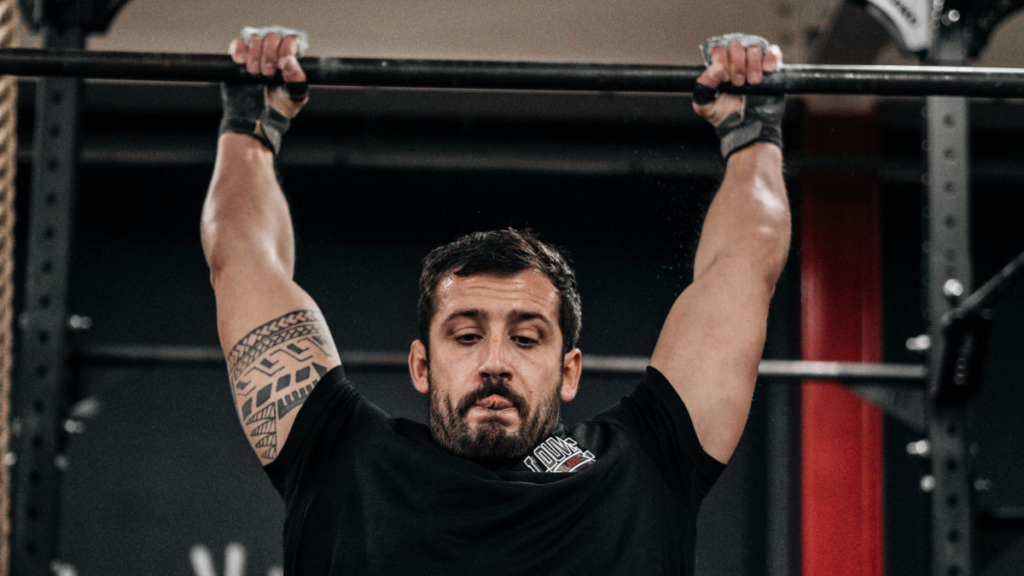
Weighted pull-ups emphasize latissimus dorsi, teres major, and lower traps with a strong vertical pull. EMG studies show that pull-ups activate the lats more significantly than lat pulldowns when performed with correct scapular depression and full elbow extension (Signorile et al., 2002). Adding external load ensures mechanical tension remains high even at lower rep ranges.
- Sets/Reps: 3–4 sets of 6–10 reps
- Tempo: 2-1-2 (concentric-pause-eccentric)
- Rest: 0–20 seconds before second exercise
Chest-Supported Dumbbell Rows: Horizontal Thickness
Immediately following the pull-up, the chest-supported dumbbell row targets the mid-traps, rhomboids, and rear delts. The support removes lower back engagement, allowing you to focus fully on scapular retraction without spinal fatigue. It’s especially effective for maintaining form under fatigue post-pull-up.
- Sets/Reps: 3–4 sets of 10–12 reps
- Tempo: 2-1-2
- Rest: 90–120 seconds after the superset
Why This Superset Works
Combining vertical and horizontal pulling ensures full development of both lat width and mid-back density. Performing rows after pull-ups allows you to recruit fatigued stabilizers in a supported position, extending time under tension. It’s also a strategic way to improve posture by strengthening scapular retractors immediately after lats.
Studies show this pairing induces greater total back activation across muscle regions than either vertical or horizontal pulling alone (Lehman et al., 2004). The mixed-directional stress also enhances motor unit recruitment and fatigue resistance.
Superset 2: T-Bar Rows + Straight-Arm Lat Pulldowns
T-Bar Rows: Posterior Chain Emphasis
T-bar rows engage the entire posterior chain—erector spinae, traps, rhomboids, and lats. This compound move allows for heavy loading and is ideal for building thickness in the mid and lower back. The neutral grip variant reduces wrist strain and better aligns with the scapular plane.
- Sets/Reps: 4 sets of 8–10 reps
- Tempo: 2-0-2
- Rest: 0–30 seconds before second exercise
Straight-Arm Lat Pulldowns: Isolation for Lats
A biomechanically pure isolation for the lats, straight-arm pulldowns emphasize shoulder extension without elbow flexion. This isolates the latissimus dorsi, particularly its long fibers. It is a highly effective movement when used post-compound due to pre-fatigue principles.
- Sets/Reps: 4 sets of 12–15 reps
- Tempo: 2-1-3
- Rest: 90 seconds after the superset
Why This Superset Works
This pairing delivers a one-two punch: the T-bar row creates foundational overload and neural drive, while the straight-arm pulldown focuses metabolic stress and fiber recruitment on the lats. The second exercise also provides joint relief by avoiding heavy spinal compression.
A study by Fonseca et al. (2014) supports this approach, showing that combining multi-joint and single-joint exercises in the same session leads to more complete hypertrophy across all muscle heads. The isolation movement also ensures that smaller, less dominant fibers receive sufficient stimulus post-fatigue.
Superset 3: Meadows Rows + Incline Prone Rear Delt Rows
Meadows Rows: Asymmetrical Lat Blasting
Named after John Meadows, this landmine-based row uses a staggered stance and diagonal pulling path. It biases the lower lats and teres major due to its mechanical stretch and rotational freedom. It also reduces spinal loading by supporting the non-working hand.
- Sets/Reps: 3 sets of 10–12 reps per arm
- Tempo: 3-0-2
- Rest: 0 seconds before second exercise
Incline Prone Rear Delt Rows: Upper Back Isolation
Using light dumbbells on an incline bench, this variation recruits the posterior delts, rhomboids, and lower traps. It emphasizes scapular movement and upper back detail—areas often undertrained in compound-centric programming.
- Sets/Reps: 3 sets of 12–15 reps
- Tempo: 2-1-3
- Rest: 90 seconds after the superset
Why This Superset Works
This combination creates balanced back development—especially in often-neglected regions like the lower lats and rear delts. By combining the rotational stress of the Meadows row with a high-rep isolation finisher, you achieve mechanical and metabolic overload across transverse and oblique planes of movement.
Research on regional hypertrophy confirms that variations in joint angle and grip significantly affect hypertrophy location within muscles (Schoenfeld et al., 2016). The mechanical stretch from the Meadows row also capitalizes on recent findings that loaded stretch during hypertrophy training can significantly enhance muscle growth due to increased passive tension (Maeo et al., 2021).
Programming Guidelines for Maximum Growth
When applying these supersets in your training routine, follow these evidence-based principles:
Frequency
Train your back 2–3 times per week using a rotation of these supersets. According to Schoenfeld et al. (2016), training each muscle group twice per week leads to superior hypertrophy compared to once-weekly frequency, likely due to more frequent muscle protein synthesis spikes.
Progression
Apply progressive overload via load, reps, or reduced rest intervals. Keep a logbook. Progression is the key signal for muscle adaptation (Krieger, 2010).
Volume
Aim for 10–20 weekly sets for the back, adjusting based on training age and recovery. Ensure at least 48 hours between high-volume back sessions.
Recovery and Variation
Include deloads every 4–6 weeks and rotate grip types, angles, and row variations to avoid overuse and encourage full hypertrophy across all back regions.
Scientific Considerations for Back Muscle Growth
The back’s complex architecture includes multiple muscle groups with varied functions and fiber types:
- Lats: Primarily responsible for shoulder adduction and extension. Mixed fiber composition.
- Trapezius: Upper traps respond to higher reps; mid and lower traps benefit from heavier rowing.
- Rhomboids: Small but vital for scapular retraction and posture.
- Erector Spinae: Primarily slow-twitch, essential for spinal stability and endurance.
Effective programming must balance heavy compounds for thickness with precision movements for complete development. EMG studies confirm that no single back movement maximally recruits all regions (Schoenfeld et al., 2014), further supporting the use of intelligently designed supersets.
Sample Weekly Back Plan Using Supersets
Day 1: Vertical Dominant
- Superset 1: Weighted Pull-Ups + Chest-Supported Dumbbell Rows
- Finisher: Face Pulls (3×15)
Day 2: Horizontal Dominant
- Superset 2: T-Bar Rows + Straight-Arm Lat Pulldowns
- Finisher: Shrugs (3×12)
Day 3: Isolation and Stretch Bias
- Superset 3: Meadows Rows + Incline Prone Rear Delt Rows
- Finisher: Cable Pullover (2×20)
This plan ensures variation in force vectors, fiber recruitment, and training density while covering all hypertrophic stimuli: mechanical tension, muscle damage, and metabolic stress.
Conclusion
Supersets are an underutilized tool in back hypertrophy training, offering time-efficient and neurologically demanding ways to hit every part of the posterior chain. By combining biomechanically sound compound and isolation movements in synergistic pairs, these three supersets elevate training intensity and effectiveness. Follow the programming guidance, focus on execution, and adapt based on your recovery to force your back muscles to grow beyond their current limits.
References
Fonseca, R. M., Roschel, H., Tricoli, V., De Souza, E. O., Wilson, J. M., Laurentino, G., … & Aoki, M. S. (2014). Changes in exercises are more effective than in loading schemes to improve muscle strength. Journal of Strength and Conditioning Research, 28(11), 3085–3092.
Gollnick, P. D., Armstrong, R. B., Saubert, C. W., Piehl, K., & Saltin, B. (1974). Enzyme activity and fiber composition in skeletal muscle of untrained and trained men. Journal of Applied Physiology, 33(3), 312–319.
Krieger, J. W. (2010). Single vs. multiple sets of resistance exercise for muscle hypertrophy: a meta-analysis. Journal of Strength and Conditioning Research, 24(4), 1150–1159.
Lehman, G. J., Buchan, D. D., Lundy, A., Myers, N., & Nalborczyk, A. (2004). Variations in muscle activation levels during traditional latissimus dorsi weight training exercises: An experimental study. Dynamic Medicine, 3(1), 1–7.
Maeo, S., Yamamoto, M., Kanehisa, H., & Nosaka, K. (2021). Effect of range of motion during eccentric training on muscle damage and hypertrophy. European Journal of Applied Physiology, 121(1), 113–125.
Robbins, D. W., Young, W. B., Behm, D. G., & Payne, W. R. (2010). The effect of a complex training protocol of back squats and plyometric jumps on the power-time curve. Journal of Strength and Conditioning Research, 24(7), 1782–1789.
Schoenfeld, B. J., Ogborn, D., & Krieger, J. W. (2016). Effects of resistance training frequency on measures of muscle hypertrophy: a systematic review and meta-analysis. Sports Medicine, 46(11), 1689–1697.
Schoenfeld, B. J., Contreras, B., Vigotsky, A., Ogborn, D., & Krieger, J. (2014). Differential effects of heavy versus moderate loads on measures of strength and hypertrophy in resistance-trained men. Journal of Sports Science and Medicine, 13(3), 586–593.
Signorile, J. F., Zink, A. J., & Szwed, S. (2002). A comparative electromyographical investigation of muscle utilization patterns using various hand positions during the lat pull-down. Journal of Strength and Conditioning Research, 16(4), 539–546.