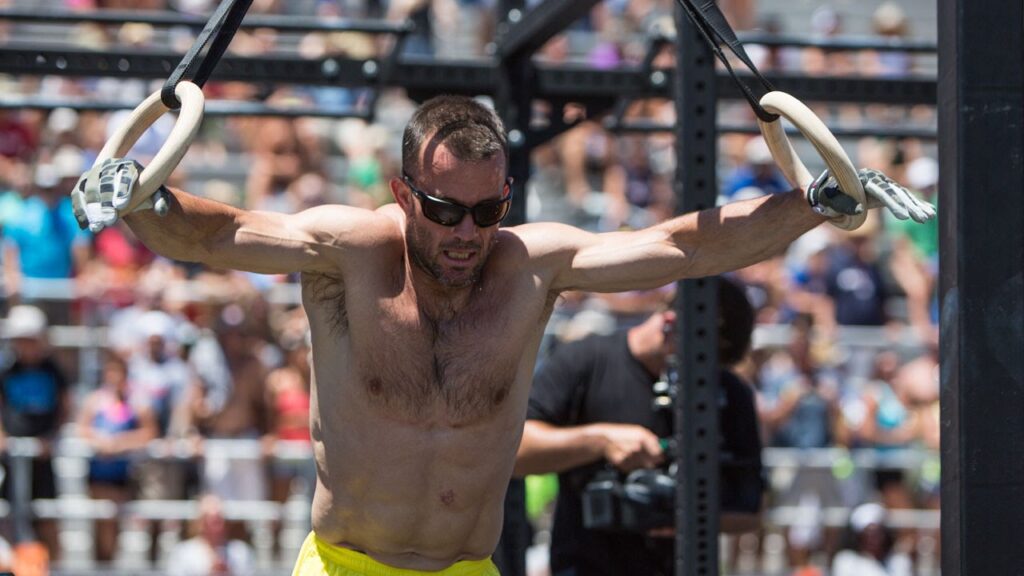
Building a muscular, defined, and powerful back is fundamental for performance, posture, and aesthetics. Whether you’re aiming to improve your deadlift, protect your spine, or achieve that wide V-taper, unlocking back muscle growth is essential.
This article explores seven scientifically supported and immediately applicable strategies to rapidly accelerate your back hypertrophy. No fluff—just clear, evidence-backed action steps.


1. Prioritize Mechanical Tension Over Weight
Mechanical tension, rather than sheer load, is the primary driver of hypertrophy. Research consistently shows that muscle fibers grow in response to sustained tension, especially under conditions of stretch and controlled contraction.
In practical terms, this means slowing down your reps and using a full range of motion during rows, pull-ups, and pulldowns. According to Schoenfeld (2010), mechanical tension stimulates mechanosensors in the muscle, initiating anabolic signaling pathways such as mTOR, ultimately triggering hypertrophy even at moderate loads if time under tension is sufficient.
This applies especially to the lats and traps, which are often under-stimulated when reps are rushed or loads are excessively heavy. By controlling the eccentric (lowering) phase of lifts like the barbell row or lat pulldown—taking 2–4 seconds—you increase fiber recruitment and microtrauma, both key growth stimulants.
Practical Tip
Use a 3-1-2 tempo: 3 seconds eccentric, 1 second pause at stretch, 2 seconds concentric. Focus on the stretch at the bottom of lat pulldowns or during dumbbell rows to maximize muscle lengthening and tension.
2. Train the Back with a High Frequency Split
Unlike smaller muscles, the back comprises multiple muscle groups (lats, traps, rhomboids, spinal erectors), which recover faster due to high oxidative fiber composition. This makes it more suited to higher training frequency.
A study by Schoenfeld et al. (2016) demonstrated that training each muscle group twice weekly resulted in significantly greater hypertrophy than once-weekly sessions. When applied to the back, this means you should aim for 2–3 focused sessions per week.
Divide your volume intelligently: one session emphasizing vertical pulls (lat pulldown, pull-ups), one focusing on horizontal pulls (rows), and a third on spinal erector and trap dominance (deadlifts, rack pulls, shrugs).
Practical Tip
Structure your training week as follows: Monday—Vertical Pull Day; Wednesday—Horizontal Pull Day; Friday—Deadlift & Trap Dominant Day. Keep total weekly volume in the 12–20 set range depending on experience.
3. Utilize Stretch-Mediated Hypertrophy
Muscles grow more when they are trained in a stretched position. This principle, known as stretch-mediated hypertrophy, is especially powerful for the lats and lower traps.
[wpcode id=”229888″]A recent study by Maeo et al. (2021) found that training muscles in their lengthened position led to superior hypertrophy compared to mid- or short-length training. Exercises such as the dumbbell pullover (for lats) and incline prone Y-raises (for lower traps) exploit this principle effectively.
The key is to train the muscle at long lengths under load. For example, a weighted stretch in a lat pulldown with elbows flared and a full overhead reach creates tension where the lats are most stretched, encouraging maximal growth.
Practical Tip
At the end of your lat workout, add a dumbbell pullover or cable straight-arm pulldown and emphasize the bottom position. Hold that stretch under load for 2–3 seconds for 3–4 sets.
4. Master Scapular Control for Full Back Activation
Many lifters fail to fully engage their back due to poor scapular movement patterns. For the lats, traps, and rhomboids to contract efficiently, the scapula must retract and depress correctly.
A study by Lehman et al. (2004) showed that exercises emphasizing scapular control (e.g., seated cable rows with scapular retraction) led to greater upper back EMG activity than traditional form. Without intentional scapular movement, arm-dominant muscles take over, limiting back stimulus.
Before pulling, think “pull your shoulder blades into your back pockets.” This activates the lower traps and rhomboids, creating a strong base for effective pulling and reducing biceps dominance.
Practical Tip
Add 2–3 sets of scapular pull-ups (hanging retraction only) and banded scapular retractions before pulling exercises. Use these as primers to engrain correct scapular mechanics.
5. Implement Overload Strategies Every 2–3 Weeks
Progressive overload is essential for hypertrophy. Yet, the back often stalls because lifters fail to systematically overload the tissues. Simply “lifting heavier” is not enough; variety in overload types is key.

According to Król and Piech (2021), overload can be achieved not only through weight, but via increased volume, frequency, time under tension, or range of motion. For back development, try implementing the following rotation: Week 1—Standard Sets; Week 2—Increased Time Under Tension; Week 3—Rest-Pause Sets or Myo-Reps.
This cyclical overload forces new adaptations and prevents accommodation, a state where muscles stop responding due to repeated identical stress.
Practical Tip
On cable rows or pulldowns, introduce rest-pause sets (perform 8–10 reps, rest 20 seconds, repeat 3–4 times) every third week. This increases metabolic stress, a key hypertrophy mechanism.
6. Don’t Neglect the Spinal Erectors and Thoracic Region
Back training isn’t just about width—it’s also about thickness and support. The spinal erectors and thoracic extensors give your back the rugged, dense look and are crucial for posture and performance.
Deadlifts, good mornings, and back extensions target these areas. A study by McGill (2002) highlighted the spinal erectors as critical for spinal stability and long-term lumbar health. Beyond aesthetics, a strong erector chain supports all compound lifts, including squats and overhead presses.
Many lifters underload these muscles due to fear of injury. However, with proper form and moderate progression, these can be trained safely and yield massive growth.
Practical Tip
Include Romanian deadlifts and 45-degree back extensions in your weekly routine. Focus on slow, controlled eccentrics and full extension at the top to fully recruit the erectors.
7. Choose Exercises with High EMG Activation
Not all back exercises are equal. EMG studies reveal which movements most effectively stimulate key back muscles. A systematic review by Bret Contreras (2010) and later analysis by Vigotsky et al. (2015) highlight the following:
- For the lats: Weighted pull-ups, bent-over barbell rows, and one-arm dumbbell rows rank highest in EMG activation.
- For the traps: Barbell shrugs, rack pulls, and prone Y-raises lead to superior activation.
- For rhomboids and mid traps: Seated rows with a pause and face pulls dominate.
Using these high-activation exercises ensures your training hits the target muscle with maximal intensity and neuromuscular efficiency.
Practical Tip
Base your weekly back programming on 2–3 of the highest-rated EMG movements. Cycle through different angles—vertical and horizontal—and include one unilateral row for symmetry and stability.
Bibliography
Contreras, B. (2010). EMG analysis and practical application of muscle activity for strength coaches. Strength & Conditioning Journal, 32(4), pp.60–65.
Król, H. and Piech, K. (2021). Strength Training: Scientific Principles and Practical Application. Journal of Human Kinetics, 77, pp.173–186.
Lehman, G. J., Buchan, D. D., Lundy, A., Myers, N. and Nalborczyk, A. (2004). Variations in muscle activation levels during traditional latissimus dorsi weight training exercises: An experimental study. Dynamic Medicine, 3(1), p.4.
Maeo, S., Yamamoto, M., Kanehisa, H., & Nosaka, K. (2021). Chronic effect of eccentric versus concentric training on muscle size and strength in young adults. Journal of Strength and Conditioning Research, 35(2), pp.353–360.
McGill, S. M. (2002). Low back disorders: evidence-based prevention and rehabilitation. Champaign, IL: Human Kinetics.
Schoenfeld, B. J. (2010). The mechanisms of muscle hypertrophy and their application to resistance training. Journal of Strength and Conditioning Research, 24(10), pp.2857–2872.
Schoenfeld, B. J., Ogborn, D. and Krieger, J. W. (2016). Effects of resistance training frequency on measures of muscle hypertrophy: A systematic review and meta-analysis. Sports Medicine, 46(11), pp.1689–1697.
Vigotsky, A. D., Halperin, I., Lehman, G. J., Trajano, G. S., & Vieira, T. M. (2015). Interpreting signal amplitudes in surface electromyography studies in sport and rehabilitation sciences. Frontiers in Physiology, 6, p.386.