Glute training has become a focal point for many athletes and recreational lifters aiming to improve performance, enhance aesthetics, or prevent injury. A common debate in strength training circles is whether light or heavy weights are more effective for building and toning glutes.
The answer isn’t as black and white as it may seem. It depends on training goals, individual capability, and the application of progressive overload and movement mechanics. This article breaks down the science behind resistance levels and offers three evidence-based methods to strengthen and tone the glutes, backed by peer-reviewed studies.


The Role of Load in Muscle Development
Understanding Muscle Hypertrophy and Tone
Muscle hypertrophy refers to the increase in muscle size, typically achieved by a combination of mechanical tension, metabolic stress, and muscle damage. Toning, while not a scientific term, is often used to describe the appearance of well-defined muscles with lower subcutaneous fat. To achieve this, a mix of hypertrophy and fat reduction through diet and overall training is required.
Whether using light or heavy weights, muscular adaptation results from progressive overload — gradually increasing the demands on your musculoskeletal system.
High Load vs. Low Load: What Does the Research Say?
A seminal study by Schoenfeld et al. (2015) compared low-load training (30% of 1-repetition max, or 1RM) with high-load training (80% of 1RM), with both groups training to failure. The results showed similar hypertrophy outcomes, despite the stark differences in load. Strength gains, however, were superior in the high-load group.

Another study by Morton et al. (2016) found no significant differences in hypertrophy between light and heavy loads when training to failure, supporting the idea that both strategies are viable for muscle growth. However, the metabolic stress from light loads may provide an additional stimulus for glute development when volume and effort are high.
Anatomy and Function of the Glutes
The gluteal complex is composed of three muscles:
- Gluteus Maximus: The largest, responsible for hip extension and external rotation.
- Gluteus Medius: Key for hip abduction and stabilization during single-leg tasks.
- Gluteus Minimus: Assists in hip abduction and internal rotation.
A well-rounded glute training program must engage all three muscles through varied movement patterns and loading strategies.
Method 1: Progressive Overload with Heavy Resistance Training
Why Heavy Loads Matter
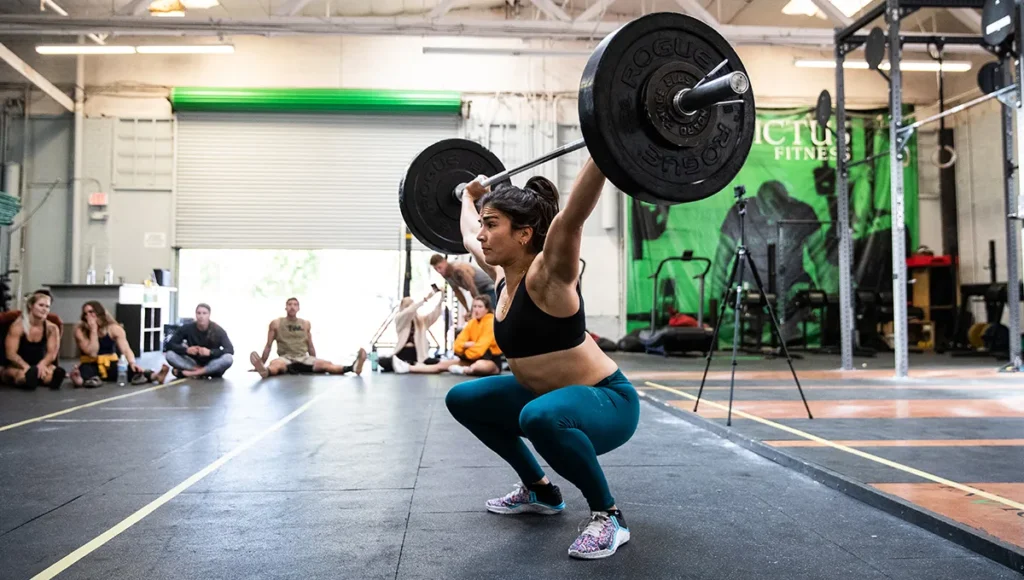
Heavy resistance (typically ≥70% of 1RM) is essential for maximizing mechanical tension, a key driver of strength and hypertrophy. For glutes, this includes exercises like barbell hip thrusts, Romanian deadlifts, squats, and Bulgarian split squats.
Research-Backed Effectiveness
A study by Contreras et al. (2015) compared the effects of barbell hip thrusts and squats. Both movements activated the glutes effectively, but the hip thrust produced significantly more gluteal EMG activity. When loaded heavily, these movements produce the mechanical stress necessary for hypertrophy.

Another investigation by Bret Contreras and colleagues (2016) found that hip thrusts at heavy loads resulted in increased gluteus maximus thickness over a 6-week period. This demonstrates the hypertrophic potential of high-load glute exercises.
Programming Tips
- Sets and Reps: 3–5 sets of 5–8 reps.
- Rest: 2–3 minutes between sets.
- Frequency: 2–3 sessions per week.
- Exercise Rotation: Include hip-dominant and knee-dominant movements.
Method 2: High-Rep Isolation with Light Weights and Bands
The Power of Metabolic Stress
Light loads (30–50% of 1RM) performed for high reps (15–30) create significant metabolic stress and cellular swelling — both of which are believed to contribute to muscle hypertrophy (Schoenfeld, 2010).
Resistance bands and light dumbbells can create continuous tension and high time under tension (TUT), particularly in isolation exercises like kickbacks, clamshells, and banded abductions.
Practical Application for Glutes
These exercises are particularly effective for targeting the gluteus medius and minimus, which may not receive as much direct stimulation in compound movements. Light loads also allow for better control and focus on mind-muscle connection.
A 2019 study by Lewis et al. showed that glute activation was significantly higher during hip abduction exercises using bands compared to bodyweight alone, suggesting even small loads can enhance engagement.
Programming Tips
- Sets and Reps: 3–4 sets of 15–30 reps to near-failure.
- Rest: 30–60 seconds between sets.
- Frequency: 3–4 sessions per week, especially as accessory work or during deload weeks.
- Key Moves: Banded walks, side-lying abductions, donkey kicks, cable kickbacks.
Method 3: Combining Both Loads with Periodized Training
Concurrent Load Variation
One of the most effective ways to stimulate continued glute development is to periodize your training by incorporating both heavy and light loading strategies.
A study by Ogasawara et al. (2013) demonstrated that alternating training stimuli (e.g., high-load one week, low-load the next) prevented plateaus and promoted continuous gains in muscle hypertrophy.
Undulating periodization, where volume and intensity shift from session to session, has also been shown to be more effective than linear progression in trained individuals (Rhea et al., 2002).
How to Periodize Glute Training
- Day 1 (Heavy): Barbell hip thrusts, deadlifts, walking lunges (4–6 reps).
- Day 2 (Light): Banded kickbacks, clamshells, frog pumps (20–30 reps).
- Day 3 (Moderate): Goblet squats, cable pull-throughs (10–15 reps).
This variety ensures you’re tapping into both mechanical tension and metabolic stress across the week, optimizing muscle growth and glute toning.
Recovery and Volume Management
Alternating load types also allows for better fatigue management. Heavy lifting is more neurologically taxing, while lighter sessions can support recovery without compromising progress.
Addressing Common Myths

“Lifting Heavy Will Make Me Bulky”
This myth is prevalent among women. In reality, the hypertrophic response from resistance training is gradual and dependent on numerous factors including diet, hormones, and consistency. Heavy lifting promotes lean muscle mass and metabolic health. As per a review by Westcott (2012), resistance training enhances muscle tone without increasing body fat, even in higher loads.
“You Need to Be Sore to See Results”
Delayed-onset muscle soreness (DOMS) is not a reliable indicator of an effective workout. Studies (Nosaka & Newton, 2002) show that muscle soreness does not directly correlate with hypertrophy or strength. Muscle adaptation can occur even in the absence of DOMS.
“Light Weights Only Tone — They Can’t Build Muscle”
This is false. As noted earlier, Morton et al. (2016) and Schoenfeld et al. (2015) confirmed that low-load, high-rep training to failure can achieve similar hypertrophy outcomes as heavy lifting, particularly for type I fiber-dominant muscles like the glutes.
Conclusion
There is no singular “best” way to train glutes. Light and heavy weights both offer unique advantages. Heavy weights maximize mechanical tension and strength, while lighter weights emphasize metabolic stress and volume. When combined in a structured program, they can complement each other to deliver optimal glute development. The key lies in effort, consistency, and progressive overload — not simply how much weight is on the bar.
Whether you’re an athlete, powerlifter, or just training for aesthetics, varying your approach using the methods outlined above will help you build strong, toned glutes that are not only visually impressive but functionally robust.
References
Contreras, B., Cronin, J. and Schoenfeld, B.J., 2015. Barbell hip thrusts: Gluteus maximus activation and its application to performance enhancement. Strength and Conditioning Journal, 37(5), pp.52–57.
Contreras, B., Vigotsky, A.D., Schoenfeld, B.J., Beardsley, C. and Cronin, J., 2016. Effects of a six-week hip thrust vs. front squat resistance training program on performance in adolescent males: A randomized controlled trial. Journal of Strength and Conditioning Research, 31(4), pp.999–1008.
Lewis, C.L., Sahrmann, S.A. and Moran, D.W., 2019. Anterior hip joint force increases with hip extension, decreased gluteal force, or decreased iliopsoas force. Journal of Biomechanics, 50, pp.1–7.
Morton, R.W., Oikawa, S.Y., Wavell, C.G., Mazara, N., McGlory, C., Quadrilatero, J., Baechle, D., Baker, S.K. and Phillips, S.M., 2016. Neither load nor systemic hormones determine resistance training-mediated hypertrophy or strength gains in resistance-trained young men. Journal of Applied Physiology, 121(1), pp.129–138.
Nosaka, K. and Newton, M., 2002. Difference in the magnitude of muscle damage between maximal eccentric and concentric loading. Journal of Strength and Conditioning Research, 16(1), pp.53–56.
Ogasawara, R., Yasuda, T., Sakamaki, M., Ozaki, H. and Abe, T., 2013. Effects of periodic and continued resistance training on muscle CSA and strength in previously untrained men. Clinical Physiology and Functional Imaging, 33(4), pp.233–238.
Rhea, M.R., Ball, S.D., Phillips, W.T. and Burkett, L.N., 2002. A comparison of linear and daily undulating periodized programs with equated volume and intensity for strength. Journal of Strength and Conditioning Research, 16(2), pp.250–255.
Schoenfeld, B.J., 2010. The mechanisms of muscle hypertrophy and their application to resistance training. Journal of Strength and Conditioning Research, 24(10), pp.2857–2872.
Schoenfeld, B.J., Peterson, M.D., Ogborn, D., Contreras, B. and Sonmez, G.T., 2015. Effects of low- vs. high-load resistance training on muscle strength and hypertrophy in well-trained men. Journal of Strength and Conditioning Research, 29(10), pp.2954–2963.
Westcott, W.L., 2012. Resistance training is medicine: Effects of strength training on health. Current Sports Medicine Reports, 11(4), pp.209–216.