Testosterone is the primary male sex hormone responsible for muscle mass, fat distribution, bone density, libido, and energy. Produced mainly in the testes, testosterone plays a critical role in regulating male physical performance and mood. However, starting around age 30, testosterone levels begin a gradual, inevitable decline—dropping approximately 1% per year (Harman et al., 2001).
This decline can have profound effects on a man’s well-being, especially for those who lead an active lifestyle. Symptoms of low testosterone include fatigue, reduced strength, weight gain (particularly fat around the midsection), decreased libido, poor concentration, and low mood.


Understanding how to mitigate this natural decline is essential for maintaining vitality, especially for men who want to stay physically and mentally sharp as they age. This article outlines three evidence-based strategies to fight back against age-related testosterone loss, including a modern supplement designed for active men.

1. Prioritize Resistance Training and HIIT
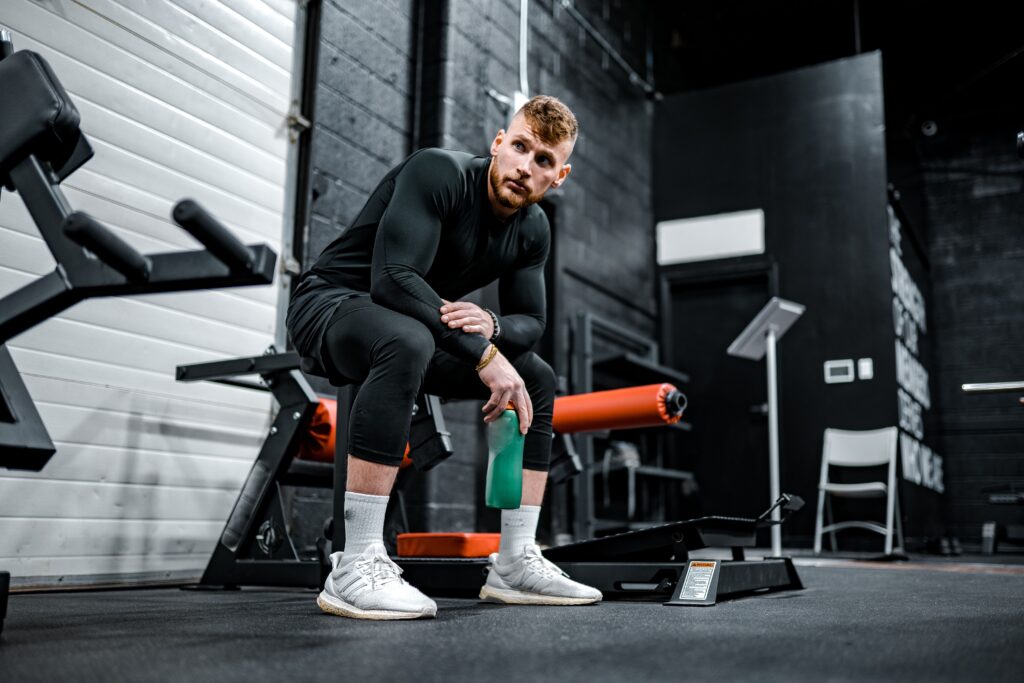
Physical activity is one of the most powerful natural stimulators of testosterone production. In particular, resistance training and high-intensity interval training (HIIT) have the strongest evidence of efficacy.
Resistance Training
Strength training stimulates the hypothalamic-pituitary-gonadal axis, which controls testosterone release. Compound movements like squats, deadlifts, and bench presses activate large muscle groups and create hormonal surges. A study by Kraemer et al. (1991) found that intense resistance training increased serum testosterone significantly in men, particularly when workouts involved high volume and moderate rest intervals.
To maximize the testosterone-boosting effects of resistance training:
- Lift heavy weights (70–90% of 1-rep max)
- Focus on multi-joint exercises
- Train each muscle group 2x/week
- Limit rest to 60–90 seconds between sets
High-Intensity Interval Training (HIIT)
HIIT involves alternating between bursts of intense activity and short recovery periods. This method has been shown to increase testosterone more effectively than steady-state cardio. A study by Trapp et al. (2008) demonstrated that HIIT increased total and free testosterone in adult males after just 8 weeks.
Unlike endurance cardio, which can elevate cortisol and suppress testosterone when overdone, HIIT offers both fat-burning and hormone-enhancing benefits in a short timeframe.
2. Optimize Sleep, Nutrition, and Recovery
Modern life places heavy demands on men’s recovery systems, and many unknowingly sabotage their testosterone through chronic sleep deprivation, nutrient deficiencies, and elevated stress levels. These lifestyle factors must be addressed to support hormonal health.
Sleep
Testosterone is produced during sleep, particularly during REM and deep sleep cycles. A landmark study by Leproult and Van Cauter (2011) found that young men restricted to five hours of sleep per night experienced a 10–15% drop in testosterone levels within one week.
To optimize sleep hygiene:
- Aim for 7–9 hours of quality sleep per night
- Stick to a consistent bedtime
- Avoid screens 1 hour before bed
- Keep your bedroom cool and dark
Nutrition
Nutritional status is intimately connected to testosterone production. Key micronutrients include:
- Zinc: Crucial for testosterone synthesis; deficiency has been linked to hypogonadism (Prasad et al., 1996).
- Magnesium: Supports total and free testosterone levels; enhances sleep quality (Cinar et al., 2011).
- Vitamin D3: Functions like a hormone and regulates testosterone production (Pilz et al., 2011).
- Healthy Fats: Cholesterol is a precursor to testosterone; low-fat diets can suppress hormone levels (Volek et al., 1997).
A whole-food diet rich in red meat, eggs, fatty fish, nuts, dark leafy greens, and fortified dairy products supports optimal testosterone status.
Stress Management
Cortisol, the body’s primary stress hormone, has an antagonistic relationship with testosterone. Chronic stress leads to elevated cortisol, which inhibits testosterone synthesis. Mindfulness practices, breathwork, low-intensity movement, and recovery days are essential tools for hormonal balance.
3. Support Your Hormones with Zapply
For many men, lifestyle changes alone may not fully restore optimal testosterone levels. This is where Zapply, a science-backed testosterone booster, comes in.
Zapply is designed to help men in their 30s and beyond naturally support their hormone levels without the need for synthetic hormones or prescriptions. It features a fully transparent label, no proprietary blends, and clinically validated dosages.

Key ingredients include:
Ashwagandha (600mg)
A powerful adaptogen that lowers cortisol and enhances testosterone. In a double-blind study, men supplementing with ashwagandha saw a 15% boost in testosterone and improved strength gains (Wankhede et al., 2015).
Fenugreek Extract (500mg)
Fenugreek inhibits the conversion of testosterone to estrogen. A randomized trial found that 8 weeks of supplementation increased free testosterone and resistance training performance (Poole et al., 2010).
Zinc (30mg)
Zinc deficiency is a common contributor to low testosterone. One study showed that zinc supplementation doubled testosterone levels in deficient men (Prasad et al., 1996).
Vitamin D3 (2000 IU)
Vitamin D receptors are found in Leydig cells, where testosterone is produced. Men with low D levels saw a significant rise in testosterone with supplementation over 12 months (Pilz et al., 2011).
Boron (10mg)
This trace mineral increases free testosterone by reducing SHBG (sex hormone-binding globulin). In one study, boron supplementation raised free testosterone by 28% in just one week (Naghii et al., 2011).
If you’re training hard, eating right, and still not feeling like your old self, Zapply can help close the gap. Click here to explore Zapply.
Zapply is not a steroid or pharmaceutical. It supports your body’s natural hormone production pathways, making it a safer and more sustainable solution for men concerned about testosterone decline.
To experience full benefits, take Zapply daily with food, ideally in the morning. Combine with proper training, nutrition, and recovery for optimal results. Most men begin noticing improvements in energy, mood, and performance within 2–3 weeks.
Discover how Zapply can support your training and vitality.
Conclusion
Testosterone decline after 30 is natural, but it doesn’t have to define your health, performance, or confidence. Through smart training, restorative sleep and nutrition, and science-backed supplementation, men can take control of their hormonal health.
- Train hard and smart: Use resistance training and HIIT to stimulate testosterone naturally
- Recover deeply: Prioritize sleep, micronutrients, and stress management
- Support with Zapply: A clinically dosed testosterone booster designed for modern men
Taking action today can pay dividends in energy, muscle gain, and overall well-being for years to come. Reclaim your edge with Zapply.
References (Harvard Style Bibliography)
Cinar, V., Polat, Y., Balci, G.A. and Badem, H., 2011. The effects of magnesium supplementation on testosterone levels of athletes and sedentary subjects at rest and after exhaustion. Biological Trace Element Research, 140(1), pp.18-23.
Harman, S.M., Metter, E.J., Tobin, J.D., Pearson, J. and Blackman, M.R., 2001. Longitudinal effects of aging on serum total and free testosterone levels in healthy men. The Journal of Clinical Endocrinology & Metabolism, 86(2), pp.724-731.
Kraemer, W.J., Marchitelli, L., Gordon, S.E., Harman, E., Dziados, J.E., Mello, R., Frykman, P., McCurry, D. and Fleck, S.J., 1991. Hormonal and growth factor responses to heavy resistance exercise protocols. Journal of Applied Physiology, 69(4), pp.1442-1450.
Leproult, R. and Van Cauter, E., 2011. Effect of 1 week of sleep restriction on testosterone levels in young healthy men. JAMA, 305(21), pp.2173-2174.
Naghii, M.R., Mofid, M., Asgari, A.R., Hedayati, M. and Daneshpour, M.S., 2011. Comparative effects of daily and weekly boron supplementation on plasma steroid hormones and proinflammatory cytokines. Journal of Trace Elements in Medicine and Biology, 25(1), pp.54-58.
Pilz, S., Frisch, S., Koertke, H., Kuhn, J., Dreier, J., Obermayer-Pietsch, B., Wehr, E. and Zittermann, A., 2011. Effect of vitamin D supplementation on testosterone levels in men. Hormone and Metabolic Research, 43(03), pp.223-225.
Poole, C., Bushey, B., Foster, C., Campbell, B., Willoughby, D., Kreider, R., Taylor, L., Wilborn, C., Taylor, J., Cooke, M. and Rasmussen, C., 2010. The effects of a commercially available botanical supplement on strength, body composition, power output, and hormonal profiles in resistance-trained males. Journal of the International Society of Sports Nutrition, 7(Suppl 1), p.P8.
Prasad, A.S., Mantzoros, C.S., Beck, F.W., Hess, J.W. and Brewer, G.J., 1996. Zinc status and serum testosterone levels of healthy adults. Nutrition, 12(5), pp.344-348.
Trapp, E.G., Chisholm, D.J., Freund, J. and Boutcher, S.H., 2008. The effects of high-intensity intermittent exercise training on fat loss and fasting insulin levels of young women. International Journal of Obesity, 32(4), pp.684-691.
Volek, J.S., Gomez, A.L., Love, D.M., Avery, N.G., Sharman, M.J., Kraemer, W.J. and Fernandez, M.L., 1997. Effects of a high-fat diet on testosterone and body composition in resistance-trained males. Journal of Strength and Conditioning Research, 11(4), pp.268-273.
Wankhede, S., Langade, D., Joshi, K., Sinha, S.R. and Bhattacharyya, S., 2015. Examining the effect of Withania somnifera supplementation on muscle strength and recovery: a randomized controlled trial. Journal of the International Society of Sports Nutrition, 12(1), p.43.