Leg training is notoriously difficult, both physically and mentally. Yet, growing impressive, strong legs is a mark of true commitment to training. Whether you’re aiming to fill out your jeans, dominate the squat rack, or perform better in sports, leg hypertrophy requires more than just squatting every Monday.
It demands science-backed strategies, structured programming, and consistent application. In this article, we’ll explore the most effective methods to stimulate more muscle growth in your legs, with zero fluff and maximum impact—supported by evidence and scientific literature.


The Fundamentals of Muscle Growth (Hypertrophy)
What Is Hypertrophy?
Hypertrophy refers to the increase in muscle fiber size, predominantly due to resistance training. It primarily occurs via mechanical tension, muscle damage, and metabolic stress (Schoenfeld, 2010). These mechanisms activate molecular pathways like mTOR signaling, which drives protein synthesis.
Muscle Fiber Types in the Legs
[wpcode id=”229888″]The major leg muscles—quadriceps, hamstrings, glutes, calves—comprise both Type I (slow-twitch) and Type II (fast-twitch) fibers. Notably, the quadriceps tend to have a higher proportion of Type II fibers, making them responsive to heavier loads and explosive movements (Staron et al., 2000). Effective programming must cater to both fiber types to maximize hypertrophy.
Training Variables to Maximize Leg Hypertrophy
1. Volume: The Primary Driver
Volume, defined as sets × reps × load, is consistently correlated with muscle growth. A meta-analysis by Schoenfeld et al. (2017) concluded that higher training volumes result in greater hypertrophic gains. For leg muscles, a weekly volume of 10–20 sets per muscle group is recommended, depending on training experience and recovery capacity.
[the_ad id=”129629″]
2. Intensity and Load
Working with loads of 65–85% of one-rep max (1RM) is optimal for hypertrophy. Lighter loads (30–50% 1RM) can also stimulate growth if taken close to failure, as shown by Morton et al. (2016). Therefore, both heavy squats (4–6 reps) and moderate-weight lunges (12–15 reps) can contribute to growth if effort is high.
3. Training to Near Failure
Training to failure recruits more motor units and muscle fibers. Research by Helms et al. (2018) indicates that training to or close to failure maximizes hypertrophy, especially with lighter loads. For legs, this means pushing your final reps with intensity, especially on unilateral exercises or isolation movements like leg extensions.
Exercise Selection: Compound vs. Isolation

Compound Movements
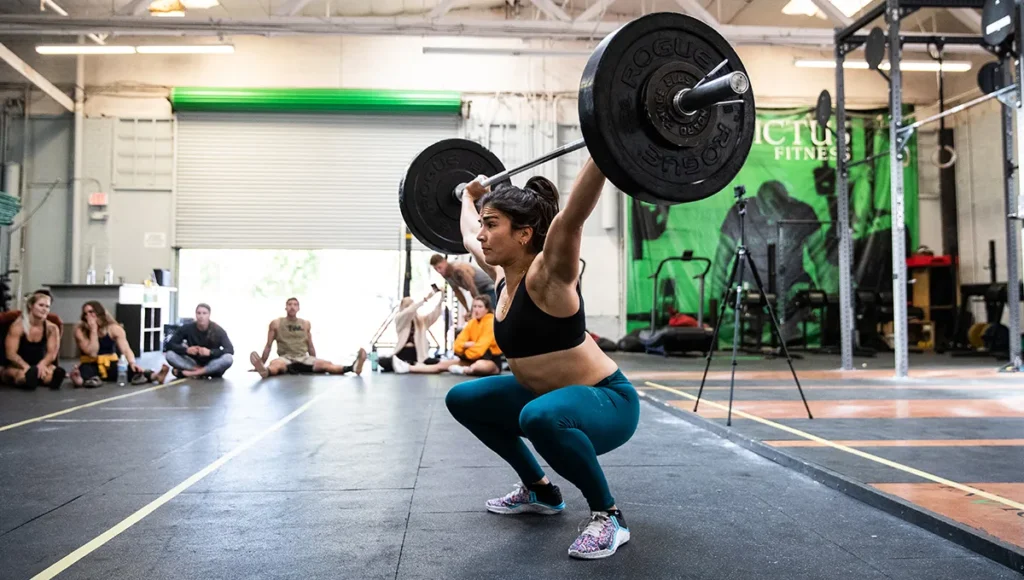
Compound exercises recruit multiple joints and muscle groups, creating high mechanical tension and systemic stress. These should form the foundation of any leg program:
- Back Squat: Activates quadriceps, glutes, and hamstrings.
- Romanian Deadlift: Targets the posterior chain with heavy emphasis on hamstrings.
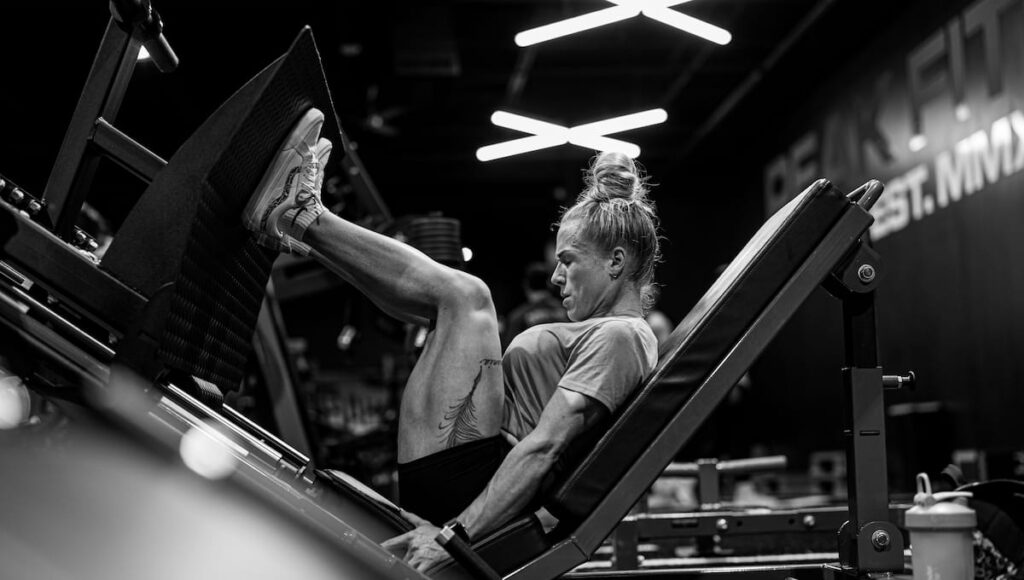
- Leg Press: Allows heavy loading with reduced spinal compression.
Electromyography (EMG) data suggests that multi-joint exercises provide superior muscle activation compared to isolation moves (Paoli et al., 2009). However, compound lifts are not enough on their own.
Isolation Movements
Leg extensions, hamstring curls, and calf raises allow targeted overload. A study by Wakahara et al. (2013) found that regional hypertrophy occurs, meaning different exercises stimulate different areas of the muscle. Isolation exercises complement compound lifts by targeting under-stimulated fibers.
Frequency and Recovery
Training Frequency
Training a muscle group 2–3 times per week leads to greater hypertrophy than once-weekly sessions (Schoenfeld et al., 2016). For legs, splitting volume across two or three sessions ensures sufficient stimulus while allowing for recovery. A sample split might look like:
- Day 1: Quads-focused (squats, leg extensions)
- Day 3: Glutes and hamstrings (RDLs, hip thrusts)
- Day 5: Unilateral and accessory work (lunges, calf raises)
Importance of Recovery
Muscles grow outside the gym. Lack of sleep or poor nutrition impairs recovery and protein synthesis. Research by Dattilo et al. (2011) links sleep deprivation with reduced anabolic hormone secretion. Aim for 7–9 hours of sleep and adequate protein (1.6–2.2g/kg/day) to support hypertrophy.
Progressive Overload: Non-Negotiable for Growth
Progressive overload involves gradually increasing training stress. This can be achieved by:
- Increasing load (e.g., adding weight)
- Increasing volume (e.g., more sets/reps)
- Improving exercise execution (e.g., deeper squats)
Without overload, adaptation stagnates. A study by Ogasawara et al. (2013) demonstrated that even short detraining phases can reverse hypertrophic adaptations. Log progress weekly to ensure upward momentum.
Advanced Techniques for Lagging Legs
1. Pre-Exhaust Training
Involves isolating a muscle group before a compound lift. For example, leg extensions before squats fatigue the quads, increasing their contribution during squats. Augustsson et al. (2003) found this technique can improve quad activation in individuals with dominant glutes or hamstrings.
2. Blood Flow Restriction (BFR)
BFR uses cuffs to restrict venous return while lifting light loads. Studies like Loenneke et al. (2012) show BFR can promote similar hypertrophy as heavy lifting, making it effective for high-frequency or rehab contexts.
3. Tempo Manipulation
Slowing down eccentric phases increases time under tension, a key factor in muscle damage and metabolic stress. A 3–4 second eccentric enhances hypertrophic signaling (Schoenfeld, 2010). Try 3:1:1 tempo squats or RDLs.
4. Unilateral Training
Single-leg exercises like Bulgarian split squats or step-ups improve stability and isolate imbalances. McCurdy et al. (2005) showed unilateral training can produce comparable strength and hypertrophy gains as bilateral movements.
Nutritional Support for Leg Growth

Caloric Surplus and Macronutrient Balance
To grow muscle, especially in large muscle groups like the legs, a slight caloric surplus is needed. Aim for a 10–20% increase above maintenance. Macronutrient distribution should prioritize protein (1.6–2.2g/kg/day), moderate fats, and ample carbohydrates to fuel training (Phillips & Van Loon, 2011).
Nutrient Timing
Consuming protein and carbs pre- and post-training can enhance performance and recovery. While total daily intake is more important, timing around workouts has been shown to influence muscle protein synthesis rates (Areta et al., 2013).
Supplements That Actually Work
- Creatine Monohydrate: Increases intramuscular water retention and performance in high-intensity efforts (Buford et al., 2007).
- Caffeine: Improves strength and power output when consumed 30–60 minutes pre-workout (Grgic et al., 2018).
- Beta-Alanine: Buffers acid buildup, enhancing volume in high-rep sets (Hobson et al., 2012).
Mobility and Range of Motion
Full ROM and Muscle Activation
Squatting deep—past parallel—has been shown to produce greater hypertrophy in the glutes and adductors compared to partial range (Bloomquist et al., 2013). Improving hip and ankle mobility enables this full ROM.
Dynamic Warm-Ups
Pre-training mobility work, like lunges, leg swings, and foam rolling, enhances performance and reduces injury risk. Don’t skip this step—it allows you to train harder and with better technique.
Program Sample: Hypertrophy-Focused Leg Routine (2x/Week)
Day 1: Quads Emphasis
- Back Squat – 4×8 @75% 1RM
- Leg Press – 3×12
- Bulgarian Split Squat – 3×10 each leg
- Leg Extension – 3×15
- Calf Raise – 4×15
Day 2: Posterior Chain Emphasis
- Romanian Deadlift – 4×8
- Hip Thrust – 3×10
- Walking Lunge – 3×12 steps
- Seated Leg Curl – 3×15
- Standing Calf Raise – 4×12
Rotate accessory lifts every 4–6 weeks. Track weights and reps. Deload every 6–8 weeks.
Conclusion
Leg hypertrophy requires meticulous planning, effort, and science-based training methods. The combination of optimal volume, appropriate loading, varied movements, progressive overload, and solid nutrition is non-negotiable. Don’t expect dramatic growth with minimal commitment—progress comes to those who consistently train smart and recover harder.
References
Areta, J.L., Burke, L.M., Ross, M.L., Camera, D.M., West, D.W.D., Broad, E.M., Jeacocke, N.A., Moore, D.R., Stellingwerff, T. and Phillips, S.M., 2013. Timing and distribution of protein ingestion during prolonged recovery from resistance exercise alters myofibrillar protein synthesis. The Journal of Physiology, 591(9), pp.2319–2331.
Augustsson, J., Thomeé, R., Hornstedt, P., Lindblom, J., Karlsson, J. and Grimby, G., 2003. Effect of pre-exhaustion exercise on lower-extremity muscle activation during a leg press exercise. The Journal of Strength & Conditioning Research, 17(2), pp.411–416.
Bloomquist, K., Langberg, H., Karlsen, S., Madsgaard, S., Boesen, M. and Raastad, T., 2013. Effect of range of motion in heavy load squatting on muscle and tendon adaptations. European Journal of Applied Physiology, 113(8), pp.2133–2142.
Buford, T.W., Kreider, R.B., Stout, J.R., Greenwood, M., Campbell, B., Spano, M., Ziegenfuss, T., López, H.L., Landis, J., Antonio, J. and Taylor, L., 2007. International Society of Sports Nutrition position stand: creatine supplementation and exercise. Journal of the International Society of Sports Nutrition, 4(1), p.6.
Dattilo, M., Antunes, H.K.M., Medeiros, A., Mônico-Neto, M., Souza, H.S., Lee, K.S., Tufik, S. and de Mello, M.T., 2011. Sleep and muscle recovery: endocrinological and molecular basis for a new and promising hypothesis. Medical Hypotheses, 77(2), pp.220–222.
Grgic, J., Trexler, E.T., Lazinica, B. and Pedisic, Z., 2018. Effects of caffeine intake on muscle strength and power: a systematic review and meta-analysis. Journal of the International Society of Sports Nutrition, 15(1), p.11.
Helms, E.R., Cronin, J., Storey, A. and Zourdos, M.C., 2018. Application of the repetitions in reserve-based rating of perceived exertion scale for resistance training. Strength & Conditioning Journal, 40(4), pp.34–49.
Hobson, R.M., Saunders, B., Ball, G., Harris, R.C. and Sale, C., 2012. Effects of β-alanine supplementation on exercise performance: a meta-analysis. Amino Acids, 43(1), pp.25–37.
Loenneke, J.P., Wilson, J.M., Wilson, G.J., Pujol, T.J. and Bemben, M.G., 2012. Potential safety issues with blood flow restriction training. Scandinavian Journal of Medicine & Science in Sports, 22(5), pp. 653–665.
McCurdy, K., Langford, G., Cline, A.L., Doscher, M. and Hoff, R., 2005. The reliability of 1-and 3RM tests of unilateral leg strength in trained and untrained men and women. The Journal of Sports Science and Medicine, 4(2), p.190.
Morton, R.W., Oikawa, S.Y., Wavell, C.G., Mazara, N., McGlory, C., Quadrilatero, J., Baechle, D., Baker, S.K. and Phillips, S.M., 2016. Neither load nor systemic hormones determine resistance training-mediated hypertrophy or strength gains in resistance-trained young men. Journal of Applied Physiology, 121(1), pp.129–138.
Ogasawara, R., Yasuda, T., Ishii, N. and Abe, T., 2013. Comparison of muscle hypertrophy following 6-month of continuous and periodic strength training. European Journal of Applied Physiology, 113(4), pp.975–985.