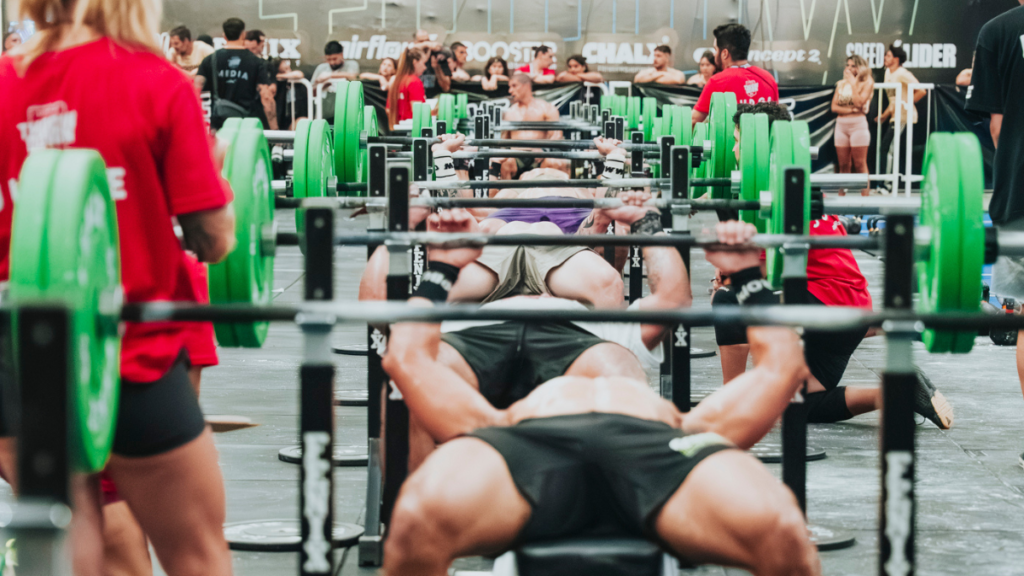
Strength training is not just about lifting heavy weights or building muscle mass. For athletes, it’s a fundamental pillar of physical development that underpins performance, reduces injury risk, and improves overall biomechanics.
Whether you’re a CrossFitter, endurance runner, powerlifter, or team sport athlete, understanding and applying the correct principles of strength training is essential. This guide outlines the 10 most important science-backed principles every athlete should follow to maximize gains safely and effectively.


1. Progressive Overload
The Foundation of Strength Development
Progressive overload is the cornerstone of all strength training. It refers to gradually increasing the demand placed on your muscles during training sessions. Without it, physical adaptations stall. Overload can be applied through more weight, more reps, more sets, increased training frequency, or decreased rest intervals.

A landmark study by Rhea et al. (2002) confirmed that consistent overload leads to significant strength increases across both trained and untrained individuals. The key is not to overwhelm the system but to make small, calculated increases.
Implementation Tips
- Increase load by 2–5% per week for upper-body exercises and 5–10% for lower-body lifts.
- Use linear progression for beginners and periodized approaches for intermediate to advanced athletes.
2. Specificity
Train for What You Want to Improve
The principle of specificity states that training should reflect the specific goals of the athlete. If your goal is maximal strength, your programming will look very different than if you’re training for power, hypertrophy, or endurance. Adaptations are highly specific to the type of exercise performed, movement pattern, velocity, muscle group, and energy system used.
Zatsiorsky and Kraemer (2006) emphasized that training adaptations are movement- and velocity-specific. Sprint athletes, for example, gain more from explosive Olympic lifts than long-duration endurance exercises.
Implementation Tips
- Tailor volume, intensity, and exercise selection to your sport and performance goals.
- Mimic sporting actions in gym work where applicable (e.g., unilateral movements for runners).
3. Individualization
No Two Athletes Are the Same
Training must be adapted to the individual’s age, training status, injury history, genetics, and goals. What works for one athlete may be suboptimal—or even harmful—for another. Individualization becomes increasingly critical as training experience grows.
A review by Mann et al. (2010) supports the concept of velocity-based training (VBT), which adapts loads based on the individual’s daily performance, showing superior results over fixed-percentage programming.
Implementation Tips
- Use auto-regulatory techniques like Rate of Perceived Exertion (RPE) or VBT.
- Monitor performance indicators to adjust volume and intensity weekly.
4. Variation and Periodization

Avoid Plateaus and Overtraining
The human body adapts to stress quickly, so varying training stimuli is essential for continued progression. Periodization is the planned manipulation of training variables (volume, intensity, frequency) to optimize adaptation and recovery.
Bompa and Haff (2009) describe periodization as key to long-term athletic development. Both linear and undulating models have proven effective, with undulating periodization showing advantages in more experienced lifters (Rhea et al., 2002).
Implementation Tips
- Change exercise selection every 4–6 weeks.
- Integrate phases of hypertrophy, strength, and power across the training year.
- Use deload weeks every 4–6 weeks to facilitate recovery.
5. Recovery and Adaptation
Gains Happen Outside the Gym
Training creates the stimulus, but recovery is when adaptation occurs. Without sufficient recovery, performance drops and injury risk increases. Key recovery components include sleep, nutrition, hydration, and appropriate rest between sessions.
Research by Hausswirth and Mujika (2013) highlights that inadequate recovery leads to overreaching and overtraining syndromes, impairing performance and immune function.
Implementation Tips
- Sleep 7–9 hours per night, with consistency in bedtime and wake time.
- Consume 1.6–2.2 g/kg of protein daily to support muscle repair (Phillips & Van Loon, 2011).
- Schedule at least one full rest day per week for most athletes.
6. Technique First, Load Second
Mastery Prevents Injury
Proper technique ensures mechanical efficiency and reduces injury risk. Athletes who compromise form for the sake of heavier loads are at significantly higher risk of acute and chronic injuries. Early technical mastery also lays the foundation for future overload and variation.
A prospective study by Keogh and Winwood (2017) reported that poor technique was a major contributing factor in weight room injuries across strength sports.
Implementation Tips
- Use video analysis or work with a qualified coach to correct technique.
- Prioritize movement quality over maximal loading during all training phases.
- Drill key lifts (e.g., squat, deadlift, press) with submaximal loads to ingrain motor patterns.
7. Consistency Over Intensity
Sustainable Training Beats Occasional Maximal Efforts
Training consistency outweighs intensity in the long run. A moderate, sustained approach promotes adaptation and reduces the risk of injury and burnout. High-intensity efforts have their place but should be strategically programmed, not habitual.
A study from the Journal of Strength and Conditioning Research (Raedke & Smith, 2001) found a strong correlation between inconsistent training patterns and increased dropout rates in athletes due to mental fatigue and overtraining.
Implementation Tips
- Stick to a weekly training plan, adjusting for schedule conflicts instead of skipping sessions.
- Track workouts to ensure adherence and accountability.
- Include deloads and light days to maintain consistency during high-stress periods.
8. Compound Movements Are King
Maximize Efficiency and Neuromuscular Adaptation
Compound exercises—such as squats, deadlifts, presses, and rows—engage multiple joints and muscle groups, mimicking real-life movements and sports actions. They provide the greatest return on investment in terms of strength, hypertrophy, and coordination.
Escamilla et al. (2001) showed that compound movements like the deadlift elicit significantly greater muscle activation and hormonal response compared to isolation exercises.
Implementation Tips
- Make compound lifts the foundation of each training session.
- Train movement patterns: push, pull, hinge, squat, carry, and rotate.
- Use isolation exercises as accessories, not primary lifts.
9. Strength Is a Skill
Practice Lifting Like a Sport
Lifting heavy is not just about muscular strength—it’s also about motor control, neural efficiency, and technical consistency. Strength should be viewed as a skill, with regular, deliberate practice essential to improve it.
Enoka (2008) highlighted the role of neural adaptations in strength gains, especially in the early phases of training. This reinforces the need to treat lifts like athletic skills.
Implementation Tips
- Train main lifts multiple times per week using varied intensities and volumes.
- Use submaximal loads (70–85% 1RM) to drill technique while managing fatigue.
- Warm up with the barbell each session to rehearse patterns.
10. Monitor and Measure Progress
Data Drives Development
Tracking key performance indicators (KPIs) allows athletes to assess what’s working and make informed adjustments. Without data, progression becomes guesswork. Monitoring progress includes strength metrics, training load, readiness, and recovery.
A study by Saw et al. (2016) confirmed that subjective and objective monitoring—such as wellness questionnaires and bar velocity tracking—strongly correlate with improved performance and injury prevention.
Implementation Tips
- Record all lifts, reps, sets, and RPEs in a training log or app.
- Use metrics like vertical jump, sprint times, or velocity to assess performance gains.
- Regularly reassess 1RMs or estimated 1RMs based on training data.
Conclusion
Strength training is as much a science as it is an art. By integrating these 10 foundational principles into your training routine, you can unlock sustainable performance improvements, reduce the risk of injury, and develop a robust physical base for sport. Each principle is interconnected—neglecting one can compromise the others. Understand the science, respect the process, and commit to consistency.
Bibliography
Bompa, T.O. & Haff, G.G. (2009). Periodization: Theory and Methodology of Training. 5th ed. Champaign, IL: Human Kinetics.
Enoka, R.M. (2008). Neuromechanics of Human Movement. 4th ed. Champaign, IL: Human Kinetics.
Escamilla, R.F., Francisco, A.C., Fleisig, G.S., Barrentine, S.W., Welch, C.M., Kayes, A.V., Speer, K.P. & Andrews, J.R. (2001). A three-dimensional biomechanical analysis of sumo and conventional style deadlifts. Medicine and Science in Sports and Exercise, 32(7), pp.1265–1275.
Hausswirth, C. & Mujika, I. (2013). Recovery for Performance in Sport. Champaign, IL: Human Kinetics.
Keogh, J.W. & Winwood, P.W. (2017). The epidemiology of injuries across the weight-training sports. Sports Medicine, 47(3), pp.479–501.
Mann, J.B., Ivey, P.A., Sayers, S.P. (2010). Velocity-based training in football. Strength and Conditioning Journal, 32(6), pp.14–22.
Phillips, S.M. & Van Loon, L.J.C. (2011). Dietary protein for athletes: from requirements to optimum adaptation. Journal of Sports Sciences, 29(sup1), pp.S29–S38.
Raedke, T.D. & Smith, A.L. (2001). Development and preliminary validation of an athlete burnout measure. Journal of Sport and Exercise Psychology, 23(4), pp.281–306.
Rhea, M.R., Ball, S.D., Phillips, W.T. & Burkett, L.N. (2002). A comparison of linear and daily undulating periodized programs with equated volume and intensity for strength. Journal of Strength and Conditioning Research, 16(2), pp.250–255.
Saw, A.E., Main, L.C. & Gastin, P.B. (2016). Monitoring the athlete training response: subjective self-reported measures trump commonly used objective measures. British Journal of Sports Medicine, 50(5), pp.281–291.
Zatsiorsky, V.M. & Kraemer, W.J. (2006). Science and Practice of Strength Training. 2nd ed. Champaign, IL: Human Kinetics.