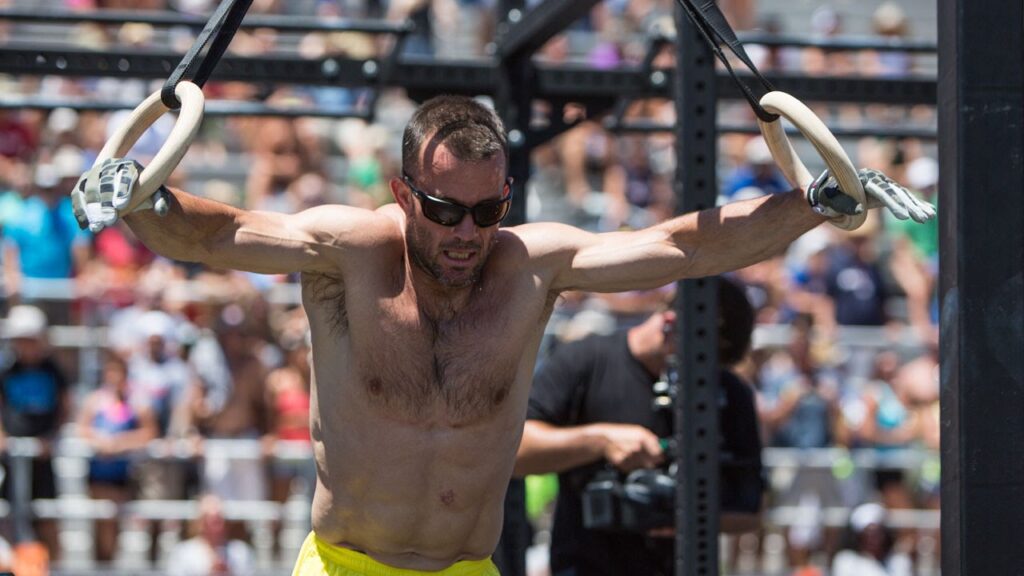
The latissimus dorsi—or “lats”—are the broadest muscles of the back and a central player in building a wide, powerful physique. They play a crucial role not only in aesthetics but also in performance. However, many lifters struggle to properly activate their lats during training. Poor activation can reduce hypertrophy potential, limit strength gains, and increase injury risk due to compensations.
This guide explores exactly how to activate your lats, the science behind muscle activation, and actionable strategies to optimize lat engagement for greater muscle growth.


Why Lat Activation Matters
Anatomy and Function of the Lats
The latissimus dorsi is a large, fan-shaped muscle that spans the mid-to-lower back and attaches to the humerus (upper arm bone). Its primary functions include:
- Shoulder extension
- Shoulder adduction
- Internal rotation of the arm
- Assisting with scapular depression and spinal stability
Because of its size and role across multiple joints, full activation of the lats requires deliberate effort. When not engaged, secondary muscles like the biceps, traps, or rhomboids often take over.

Muscle Activation and Hypertrophy
Muscle activation refers to the recruitment of motor units within a muscle during contraction. Greater activation generally correlates with more mechanical tension—a key driver of hypertrophy according to the mechanical tension theory of muscle growth (Schoenfeld, 2010). Poor lat activation shifts the workload to supporting muscles, reducing hypertrophic stimulus to the lats.
EMG Evidence for Activation Patterns
Electromyography (EMG) studies show that exercises targeting the lats vary widely in activation effectiveness. Research by Bret Contreras and colleagues (2010) demonstrated that exercises like the pull-up and the bent-over row had significantly higher lat EMG activity than other common movements. But even in these exercises, activation was highly influenced by form and cueing.
Common Mistakes That Limit Lat Activation
Overusing the Biceps and Upper Back
A common problem in pulling exercises is the dominance of the biceps and traps. Without proper scapular positioning or elbow mechanics, these muscles take over, minimizing lat involvement.
Poor Scapular Control
Scapular positioning plays a critical role in enabling lat recruitment. If the scapulae are elevated or protracted (as in shrugging or rounded posture), the lats are placed in a mechanically disadvantaged position.
Lack of Mind-Muscle Connection (MMC)
Studies show that intentionally focusing on the target muscle improves activation. A 2016 study (Calatayud et al.) demonstrated that participants who consciously focused on their lats during pulldowns had significantly higher EMG activity compared to a neutral focus.
Inadequate Warm-Up
Jumping into heavy sets without preparing the neuromuscular system can hinder muscle recruitment. This is especially true for complex muscles like the lats that work across several joints.
Strategies to Improve Lat Activation
1. Master Lat Function and Scapular Mechanics
Understanding the anatomy helps in applying the correct cues during training. The lats are best activated when the scapulae are slightly depressed and retracted—not shrugged upward. Practicing scapular depression without arm movement can teach the correct pattern.
Drill: Scapular depressions on a pull-up bar
Hang with passive arms, then gently pull the scapulae down without bending your elbows. Hold for 3–5 seconds. This isolates the lat’s role in scapular control.
2. Use Pre-Activation Exercises
Pre-activation drills help fire up the mind-muscle connection and prime the neuromuscular system.
Examples:
- Straight-arm pulldowns: Focus on keeping elbows locked and pulling through the lats.
- Banded lat pushdowns: Use light resistance to isolate the motion and feel the contraction.
- Iso-holds in peak contraction positions (e.g., bottom of pulldown or top of row)
Pre-activation stimulates intramuscular coordination and increases EMG amplitude during subsequent compound lifts (Behm & Sale, 1993).
3. Use Internal Cueing for Better Mind-Muscle Connection

Internal cues direct focus to the muscle itself. Examples include:
- “Tuck your elbows into your back pockets”
- “Drive your elbows down, not back”
- “Squeeze your armpits shut”
Compared to external cues (e.g., “pull the bar down”), internal focus has been shown to increase target muscle activation (Schoenfeld & Contreras, 2016). However, excessive internal cueing may reduce performance under heavy loads, so apply it strategically.
4. Adjust Exercise Selection for Optimal Activation
Some exercises are better suited to lat engagement than others. Based on EMG studies and anatomical mechanics, here are top-tier movements:
Pulling Vertically:
- Pull-ups (especially neutral or semi-supinated grip)
- Lat pulldowns with a shoulder-width, neutral grip
- Single-arm cable pulldowns (more freedom for elbow path)
Pulling Horizontally:
- Chest-supported row with elbows tight to the body
- One-arm dumbbell row with scapular depression emphasis
- Cable row using a D-handle with a lat-focused elbow drive
A study by Andersen et al. (2014) showed that exercises with scapular depression and shoulder extension produce more consistent lat activation.
5. Optimize Range of Motion and Resistance Profiles
The lats are most active when the shoulder is extended and adducted under load. To enhance activation:
- Train through full range: Avoid shortening the range in rows or pulldowns. Maximize stretch and contraction phases.
- Align resistance curves: Use cables and machines that provide constant resistance throughout the movement. Dumbbells may lose tension at peak contraction.
6. Don’t Neglect Isometric and Eccentric Training
Isometric holds in peak contraction positions enhance neural drive and reinforce recruitment patterns. Eccentric-focused training increases muscle fiber recruitment and time under tension, key factors in hypertrophy (Douglas et al., 2017).
Example protocol:
- 3–5 second eccentric on lat pulldown
- 2–3 second isometric hold at full contraction
- Focus on full scapular depression throughout
7. Train Unilaterally to Eliminate Compensations
Unilateral (single-arm) training prevents dominant-side takeover and allows better control of joint positioning. It also improves intermuscular coordination and proprioception, making lat engagement more intentional.
Top movements:
- Single-arm cable rows
- Single-arm kneeling lat pulldowns
- Dumbbell rows with thoracic rotation to deepen lat stretch
Programming Tips for Lat-Focused Back Training
Frequency and Volume
Lats can tolerate high training frequency due to their fiber composition (roughly 50/50 fast and slow-twitch). Train 2–3 times per week for hypertrophy, using 10–20 sets per week depending on recovery and goals.
Load and Reps
Use a variety of rep ranges:
- 4–6 reps for strength and high-tension recruitment
- 8–12 reps for hypertrophy
- 12–20 reps for MMC and fatigue accumulation
Order of Exercises
Start sessions with lat isolation drills to prime activation, then move to compound lifts. Finish with pump-style sets (e.g., high-rep cable pulldowns) to fully fatigue the muscle.
Example Lat-Emphasis Workout
- Straight-arm cable pulldown – 3×15 (activation)
- Pull-ups – 4×6–10
- One-arm cable pulldown – 3×10–12
- Chest-supported neutral grip row – 3×8
- Lat-biased dumbbell row – 3×12 (with stretch at bottom)
- Finisher: 30-20-10 lat pulldown dropset
Signs Your Lats Are Actually Activated
- You feel a deep contraction in your back, not your arms.
- You can hold peak contraction without cramping or shaking.
- You feel soreness 24–48 hours later in the mid to lower lats.
- You notice progressive load increases with good form and control.
- You can maintain scapular depression throughout the rep.
Summary
Activating your lats isn’t just about adding more pulling volume. It requires an understanding of anatomy, refined technique, and focused execution. The right combination of cueing, exercise selection, and targeted programming can dramatically increase lat recruitment. Over time, this leads to better muscle growth, improved aesthetics, and stronger pulling performance.
Train smart, not just hard. Build the connection first—then load it heavy.
Bibliography
Andersen, V., Fimland, M. S., Brennset, O., Haslestad, L. R., Lundteigen, M. S., Skalleberg, K., & Saeterbakken, A. H. (2014). Muscle activation and strength in squat and bulgarian squat on stable and unstable surface. International Journal of Sports Medicine, 35(6), 479–485.
Behm, D. G., & Sale, D. G. (1993). Intended rather than actual movement velocity determines velocity-specific training response. Journal of Applied Physiology, 74(1), 359–368.
Calatayud, J., Borreani, S., Colado, J. C., Martin, F., Flandez, J., & Behm, D. G. (2016). Bench press and push-up at comparable levels of muscle activity results in similar strength gains. Journal of Strength and Conditioning Research, 29(1), 246–253.
Contreras, B., Vigotsky, A., Schoenfeld, B., Beardsley, C., & Cronin, J. (2010). A comparison of gluteus maximus, biceps femoris, and vastus lateralis EMG activity in the back squat and barbell hip thrust exercises. Journal of Applied Biomechanics, 29(3), 225–230.
Douglas, J., Pearson, S., Ross, A., & McGuigan, M. (2017). Chronic adaptations to eccentric training: A systematic review. Sports Medicine, 47(5), 917–941.
Schoenfeld, B. J. (2010). The mechanisms of muscle hypertrophy and their application to resistance training. Journal of Strength and Conditioning Research, 24(10), 2857–2872.
Schoenfeld, B. J., & Contreras, B. (2016). Attentional focus for maximizing muscle development: The mind-muscle connection. Strength and Conditioning Journal, 38(1), 27–29.