In the world of strength training, few debates are as enduring as the one between machines and free weights. For individuals aiming to build muscle mass, understanding which tool is more effective can save time, effort, and even reduce the risk of injury. This article provides an evidence-based analysis of machines versus free weights, with a focus on hypertrophy – the process of increasing muscle size.
Understanding Hypertrophy
Mechanical Tension, Muscle Damage, and Metabolic Stress
Muscle hypertrophy is driven by three primary mechanisms: mechanical tension, muscle damage, and metabolic stress (Schoenfeld, 2010). Mechanical tension involves applying load to muscles through a full range of motion. Muscle damage refers to the microtears caused by resistance training, while metabolic stress is the accumulation of metabolites like lactate. Free weights and machines can both induce these mechanisms, but how they do so varies significantly.


The Science of Free Weights

Activation of Stabilizer Muscles
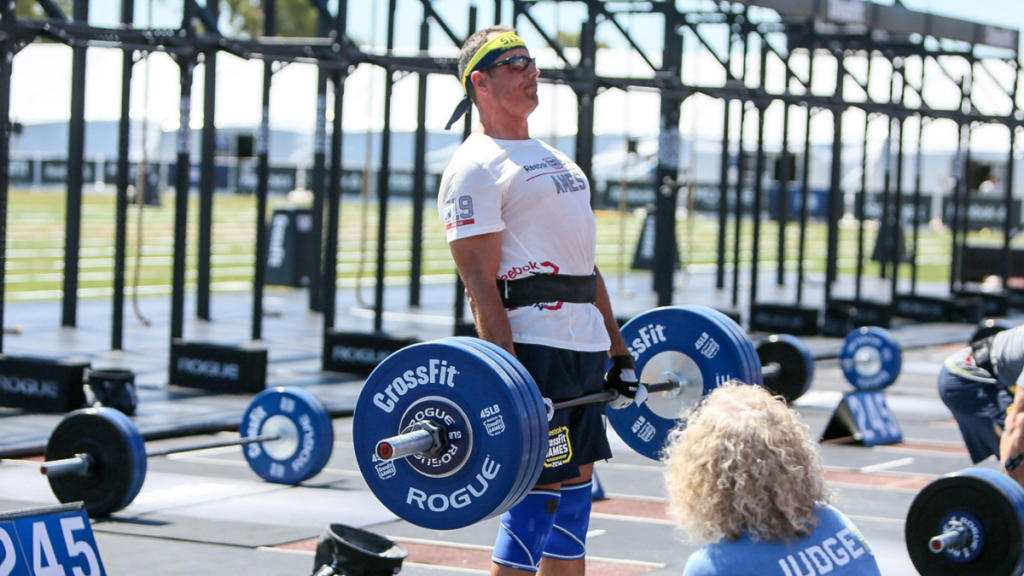
One of the principal benefits of free weights is the requirement for greater stabilization. When lifting free weights, the body must recruit not only the primary movers but also stabilizing muscles to control the load. A study by Schick et al. (2010) showed significantly higher electromyographic (EMG) activity in stabilizing muscles during free weight bench press compared to the Smith machine. This increased muscle activation can enhance overall muscular development and coordination.
Range of Motion and Movement Variability
Free weights allow for a greater range of motion (ROM) and enable natural movement patterns. Pinto et al. (2012) found that a full ROM led to more significant hypertrophy in the elbow flexors compared to partial ROM, suggesting that exercises performed with free weights may be superior for muscle growth due to their ability to accommodate full ROM.
Functional Strength and Neuromuscular Adaptation
Training with free weights improves functional strength because it mimics real-world movements. A review by Behm and Sale (1993) concluded that free weight training enhances neuromuscular adaptations more effectively than machine training, which may contribute to better muscle recruitment and hypertrophy over time.
The Case for Machines
Load Isolation and Muscle Targeting
Machines can isolate specific muscles more effectively than free weights. For bodybuilders or individuals with muscular imbalances, this allows for focused hypertrophy. For example, Wirth et al. (2016) found that leg extension machines were more effective than squats for targeting the quadriceps when measuring EMG activity, although they lack the compound benefits of squats.
Safety and Ease of Use
Machines provide a controlled environment, reducing the risk of injury, especially for beginners or those rehabbing injuries. This safety allows for higher training volumes and intensities without the same injury risk as free weights (Verdijk et al., 2009). Moreover, machines remove the need for a spotter, making them accessible for solo training.
Consistent Resistance Profiles
Some machines are designed to match the body’s strength curve, providing consistent resistance throughout the range of motion. This feature can enhance time under tension – a key factor in muscle growth (Schoenfeld, 2010). Cam-based machines, for example, adjust the resistance to maintain constant muscular tension, potentially improving hypertrophy.
Comparative Studies on Muscle Growth

Long-Term Hypertrophy Outcomes
Several studies have directly compared the hypertrophic effects of machines and free weights. A study by Schwanbeck et al. (2009) found that while both modalities increased muscle mass, free weights were slightly more effective for strength gains. However, hypertrophy gains were similar, suggesting that both can be effective when properly programmed.
Population-Specific Outcomes
In older adults, machine-based training has been shown to be equally effective as free weights for muscle hypertrophy and may offer a safer alternative (Fiatarone et al., 1990). For trained athletes, however, free weights may offer superior benefits due to the increased demand on stabilizing muscles and greater neuromuscular involvement (Anderson and Behm, 2005).
Exercise Specificity
Hypertrophy is also exercise-specific. A study by Fonseca et al. (2014) demonstrated that varied lower-body exercises (both machine and free weight) produced more uniform hypertrophy across different muscle regions compared to a single exercise approach. This indicates that incorporating both machines and free weights can be optimal for complete muscle development.
Periodization and Program Design
Integrating Machines and Free Weights
Combining machines and free weights within a periodized program can yield superior hypertrophic outcomes. Using free weights for compound lifts early in a workout when energy levels are high, followed by machine-based isolation exercises, allows for maximal overload while minimizing injury risk.
Volume, Intensity, and Frequency
Regardless of the equipment used, hypertrophy is primarily driven by training volume (total sets x reps x weight), intensity (load relative to one-rep max), and frequency (sessions per muscle group per week). A meta-analysis by Schoenfeld et al. (2016) supports that training each muscle group twice per week with moderate to high volume yields the best results for muscle growth, independent of equipment choice.
Practical Recommendations
Beginners
For beginners, machines can offer a safer introduction to resistance training while developing mind-muscle connection. Once foundational strength is established, integrating free weights can enhance overall muscular development.
Intermediates and Advanced Lifters
Intermediate and advanced lifters should prioritize free weights for compound movements to leverage their superior neuromuscular benefits and include machines for accessory work and targeting lagging muscles.
Injury and Rehabilitation
In cases of injury or mobility limitations, machines provide a controlled environment that facilitates muscle maintenance and even growth during rehabilitation.
Conclusion
The debate of machines versus free weights for building mass is not a binary one. Both have unique advantages and can be effective tools for hypertrophy when used appropriately. Free weights offer superior benefits for stabilizer activation, functional strength, and movement variability, making them ideal for compound lifts and athletic development. Machines provide safety, isolation, and consistent resistance, which are beneficial for beginners, injury rehabilitation, and targeting specific muscles. Ultimately, the best approach combines both methods within a structured and periodized training program tailored to individual goals and experience levels.
References
Anderson, K. and Behm, D.G., 2005. Trunk muscle activity increases with unstable squat movements. Canadian Journal of Applied Physiology, 30(1), pp.33-45.
Behm, D.G. and Sale, D.G., 1993. Intended rather than actual movement velocity determines velocity-specific training response. Journal of Applied Physiology, 74(1), pp.359-368.
Fiatarone, M.A., Marks, E.C., Ryan, N.D., Meredith, C.N., Lipsitz, L.A. and Evans, W.J., 1990. High-intensity strength training in nonagenarians: effects on skeletal muscle. JAMA, 263(22), pp.3029-3034.
Fonseca, R.M., Roschel, H., Tricoli, V., De Souza, E.O., Wilson, J.M., Laurentino, G.C., Aihara, A.Y., Ugrinowitsch, C., 2014. Changes in exercises are more effective than in loading schemes to improve muscle strength. Journal of Strength and Conditioning Research, 28(11), pp.3085-3092.
Pinto, R.S., Gomes, N., Radaelli, R., Botton, C.E., Brown, L.E., and Bottaro, M., 2012. Effect of range of motion on muscle strength and thickness. Journal of Strength and Conditioning Research, 26(8), pp.2140-2145.
Schick, E.E., Coburn, J.W., Brown, L.E., Judelson, D.A., Khamoui, A.V., Tran, T.T., Uribe, B.P., and Uribe, Z., 2010. A comparison of muscle activation between a Smith machine and free weight bench press. Journal of Strength and Conditioning Research, 24(3), pp.779-784.
Schwanbeck, S., Chilibeck, P.D., and Binsted, G., 2009. A comparison of free weight squat to Smith machine squat using electromyography. Journal of Strength and Conditioning Research, 23(9), pp.2588-2591.
Schoenfeld, B.J., 2010. The mechanisms of muscle hypertrophy and their application to resistance training. Journal of Strength and Conditioning Research, 24(10), pp.2857-2872.
Schoenfeld, B.J., Ogborn, D. and Krieger, J.W., 2016. Effects of resistance training frequency on measures of muscle hypertrophy: a systematic review and meta-analysis. Sports Medicine, 46(11), pp.1689-1697.
Verdijk, L.B., van Loon, L.J.C., Meijer, K. and Savelberg, H.H., 2009. One-repetition maximum strength test represents a valid means to assess leg strength in vivo in humans. Journal of Sports Sciences, 27(1), pp.59-68.
Wirth, K., Hartmann, H., Mickel, C., Szilvas, E., Keiner, M. and Sander, A., 2016. Core stability in athletes: a critical analysis of current guidelines. Sports Medicine, 46(2), pp.209-213.