The V-taper physique—a broad upper back and shoulders tapering down to a narrow waist—is widely regarded as the hallmark of an aesthetically pleasing, athletic body. Popularized by bodybuilding icons and desired by fitness enthusiasts alike, this shape symbolizes strength, balance, and discipline.
Achieving a true V-taper requires intelligent training strategies that focus on hypertrophy and neuromuscular efficiency, particularly in the lats, deltoids, and upper back. Two primary resistance training tools are often compared in this pursuit: free weights and resistance bands.


This article explores, in scientific detail, how each training modality contributes to building the V-taper and ultimately answers which is more effective based on evidence.
Understanding the Muscular Requirements for a V-Taper
The Key Muscle Groups
To build a classic V-taper, three muscle groups take precedence:
- Latissimus Dorsi (Lats): These give width to the back.
- Deltoids (especially lateral delts): These provide shoulder width.
- Obliques and Core: A tight waist enhances the taper illusion, even if these muscles are smaller.
Other contributors include the trapezius, teres major, and even the thoracolumbar fascia.
Muscle Fiber Types and Hypertrophy
Resistance training affects both Type I (slow-twitch) and Type II (fast-twitch) fibers, but Type II fibers have more potential for growth. Training for hypertrophy typically requires moderate to high loads, moderate volume, and controlled tempos—factors that play differently between free weights and resistance bands.
The Biomechanics of Free Weights

Linear Resistance and Gravity
Free weights use gravity as the resistance force. This linearity allows for consistent tension throughout much of the movement, especially when the line of force aligns with the muscle’s direction of pull.
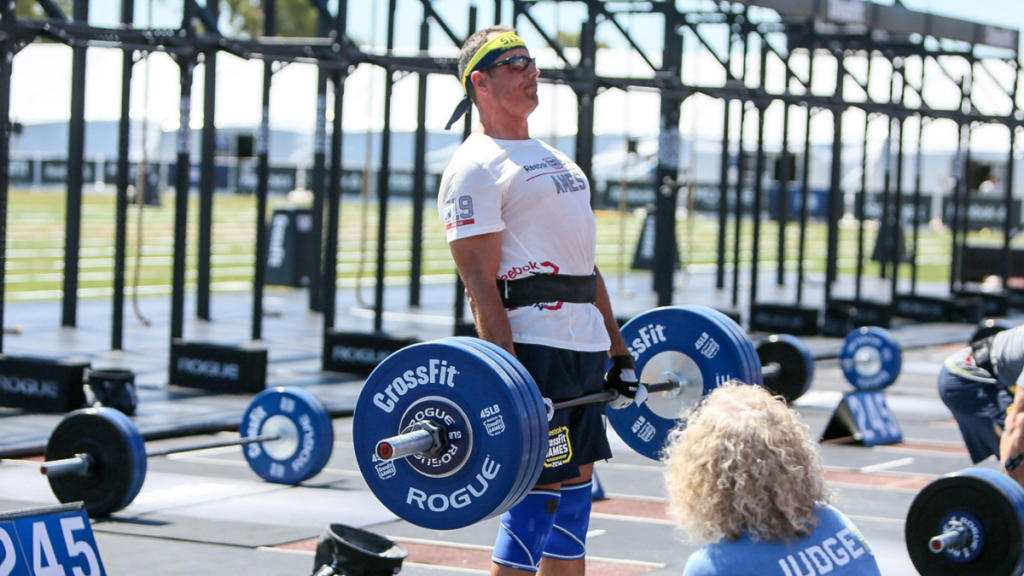
Compound lifts like pull-ups, bent-over rows, barbell shoulder presses, and dumbbell lateral raises are staples for developing a V-taper. Each can be progressively overloaded by increasing weight or volume, which is critical for hypertrophy.
Scientific Support
A study by Schoenfeld et al. (2010) emphasized the importance of mechanical tension and progressive overload in muscle hypertrophy. Free weights provide a superior capacity for both due to the ease of load adjustment and high levels of muscle recruitment during multi-joint exercises.
Electromyographic (EMG) analysis also consistently shows higher muscle activation in free-weight exercises compared to machine or elastic resistance training (Andersen et al., 2006).
The Mechanics of Resistance Bands
Variable Resistance
Resistance bands offer variable resistance—the load increases as the band stretches. This results in lower tension at the beginning of the movement and higher tension at the end range, which can enhance muscle peak contraction but reduce the load in the more mechanically advantageous portions of the lift.
This non-linear resistance profile may benefit rehabilitation, joint health, and accessory muscle recruitment, but it can limit strength gains if not calibrated properly.
Portability and Control
Bands are incredibly versatile, allowing athletes to train anywhere, and can replicate many free-weight movements. They also reduce joint stress, which can be advantageous during deload phases or for lifters with injuries.
Comparing Muscle Activation: Bands vs. Free Weights
Latissimus Dorsi
A 2019 study by Calatayud et al. showed that traditional pull-ups elicited higher EMG activation in the lats compared to band-assisted variations. The same study noted that bands could reduce neuromuscular demand at the movement’s start, reducing total mechanical work done by the lats.
Deltoids
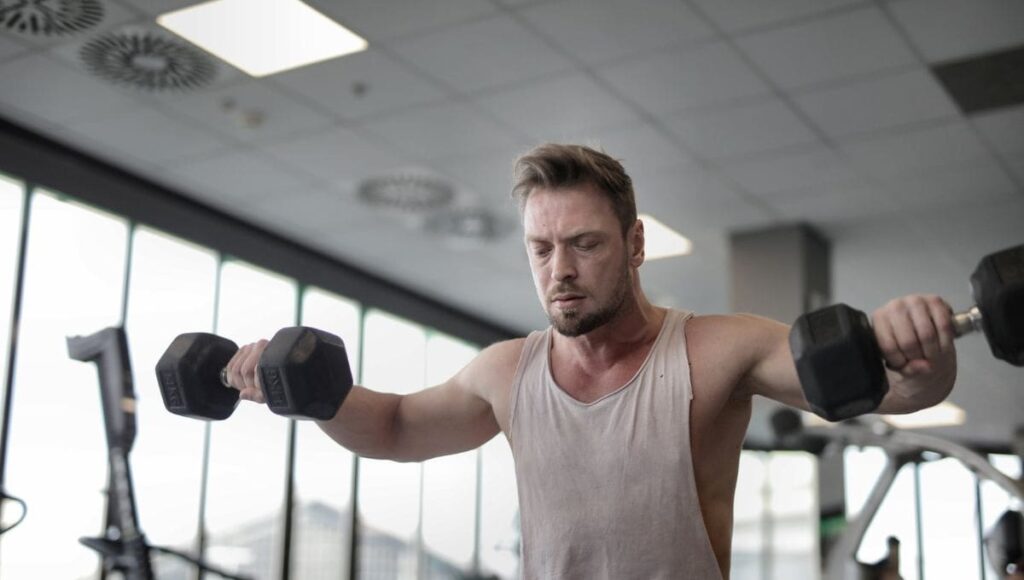
When comparing resistance band lateral raises to dumbbell versions, higher deltoid activation was recorded in the dumbbell trials across multiple rep ranges (Andersen et al., 2006). The reason lies in consistent gravitational tension, particularly at mid-range where shoulder torque is greatest.
Core Engagement
Interestingly, training with bands often requires greater stabilizer muscle recruitment, including the core, especially during standing rows or band-resisted anti-rotation presses. However, this benefit is more functional than hypertrophic.
Hypertrophy and Strength Gains: Evidence-Based Outcomes
A meta-analysis by Lopes et al. (2019) found that while both elastic resistance and free-weight resistance improved strength and hypertrophy, free weights led to significantly greater strength gains. Hypertrophy improvements were comparable when volume was equated, but free weights had an edge when it came to long-term progression due to ease of load manipulation.
Another study by Colado et al. (2010) demonstrated similar hypertrophy in trained individuals using both resistance modalities over a 10-week protocol, though free weights were superior for increasing maximal strength.
Progressive Overload and Periodization
Free Weights: Superior for Overload
Free weights are easy to scale. A 2.5 lb increase on a dumbbell row provides a precise, linear progression that can be structured into long-term periodized programs. This is critical for sustained V-taper development.
Resistance Bands: Challenging to Quantify
While resistance bands are color-coded, the actual resistance provided varies based on length, tension, and stretch. Tracking overload becomes imprecise. Some advanced bands with measured tension (in pounds) exist, but they’re less common in home or general gym settings.
Mobility, Stability, and Joint Health
Resistance bands shine when it comes to improving mobility and reinforcing stability. For example:
- Band pull-aparts improve scapular control and posture.
- Face pulls with bands activate the rear deltoids and external rotators without the compressive load of cables or weights.
Such movements enhance shoulder health and posture, indirectly contributing to a better-looking upper body.
Practical Application for a V-Taper Routine
Optimal Programming with Free Weights
- Pull-Ups (Weighted if advanced): Primary lat builder.
- Barbell or Dumbbell Rows: Mid-back thickness and width.
- Overhead Press (Barbell or Dumbbell): Anterior and lateral delt development.
- Lateral Raises: Isolation for width through the medial deltoids.
- Shrugs or Face Pulls: Upper traps and rear delts.
These should be structured with progressive overload, moderate rep ranges (8–12), and adequate rest periods for muscle recovery.
Optimal Band Programming (if weights unavailable)
- Band-Assisted Pull-Ups or Band Lat Pulls
- Standing Band Rows
- Overhead Presses with Bands
- Band Lateral Raises
- Band Face Pulls and Pull-Aparts
For hypertrophy, perform higher reps (12–20), use slow eccentrics, and combine resistance angles to maximize time under tension.
Psychological and Practical Considerations
Free weights tend to boost adherence and motivation due to their association with strength training culture, especially in gym environments. The visible progression (lifting heavier weights) reinforces compliance. Resistance bands are often viewed as secondary or rehab tools, which can psychologically undermine their perceived value in serious hypertrophy training unless framed properly.
Conclusion: What Builds a V-Taper Best?
While resistance bands can contribute to muscle development—particularly for beginners or those with joint limitations—free weights offer superior mechanical tension, load progression, and muscle activation essential for building a classic V-taper physique. Bands are best used as supplemental tools to enhance mobility, improve posture, and add metabolic stress at the end of workouts.
Ultimately, for athletes and bodybuilders aiming for maximum hypertrophy and a dramatic V-taper, a program built around free-weight compound and isolation movements, with accessory band work for joint health and posture, provides the most complete and science-supported strategy.
References
- Andersen, V., Fimland, M.S., Wiik, E., Skoglund, A., & Saeterbakken, A.H. (2006). Electromyographic Comparison of Barbell Deadlift, Hex Bar Deadlift, and Hip Thrust Exercises: A Cross-sectional Study. Journal of Strength and Conditioning Research, 30(12), 3110–3115.
- Calatayud, J., Borreani, S., Colado, J.C., Martin, F., Tella, V., & Andersen, L.L. (2019). Muscle Activation During Pull-Ups With Different External Resistance: A Comparison Between Weight and Elastic Bands. Journal of Sports Sciences, 37(2), 178–184.
- Colado, J.C., Garcia-Masso, X., Pellicer, M., Alakhdar, Y., Benavent, J., & Cabeza-Ruiz, R. (2010). A Comparison of Elastic Tubing and Isotonic Resistance Exercises. International Journal of Sports Medicine, 31(11), 810–817.
- Lopes, J., Machado, A.F., Micheletti, J.K., de Almeida, A.C., Pastre, C.M., & Dinato, R.C. (2019). Effects of Training with Elastic Resistance Versus Conventional Resistance on Muscle Strength: A Systematic Review and Meta-Analysis. SAGE Open Medicine, 7, 2050312119831116.
- Schoenfeld, B.J. (2010). The Mechanisms of Muscle Hypertrophy and Their Application to Resistance Training. Journal of Strength and Conditioning Research, 24(10), 2857–2872.