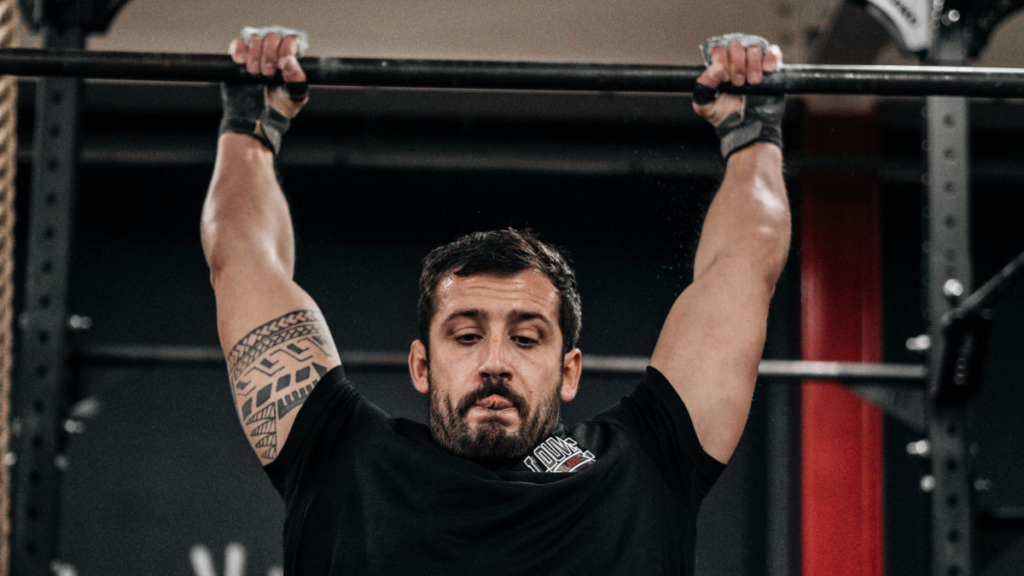
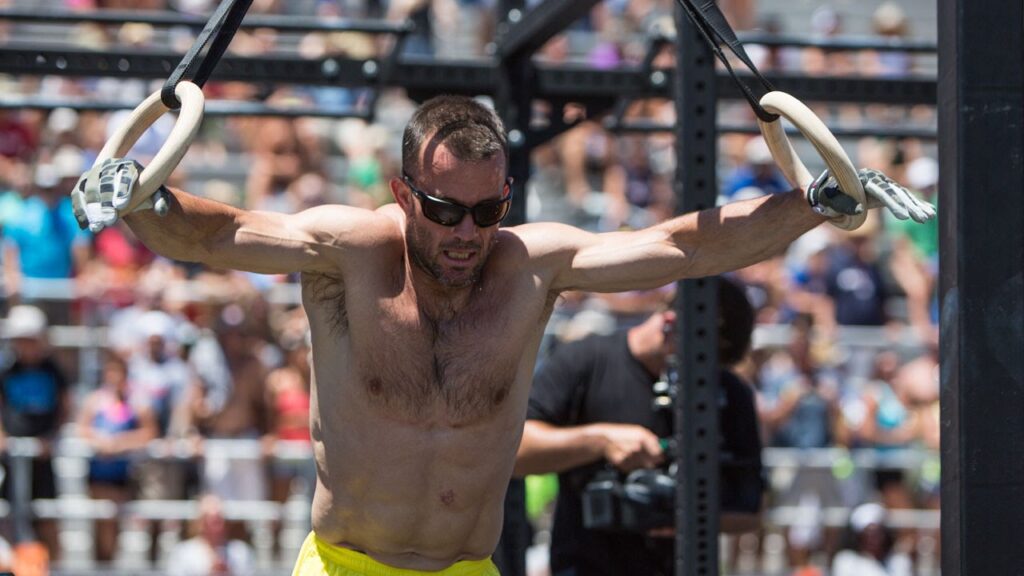
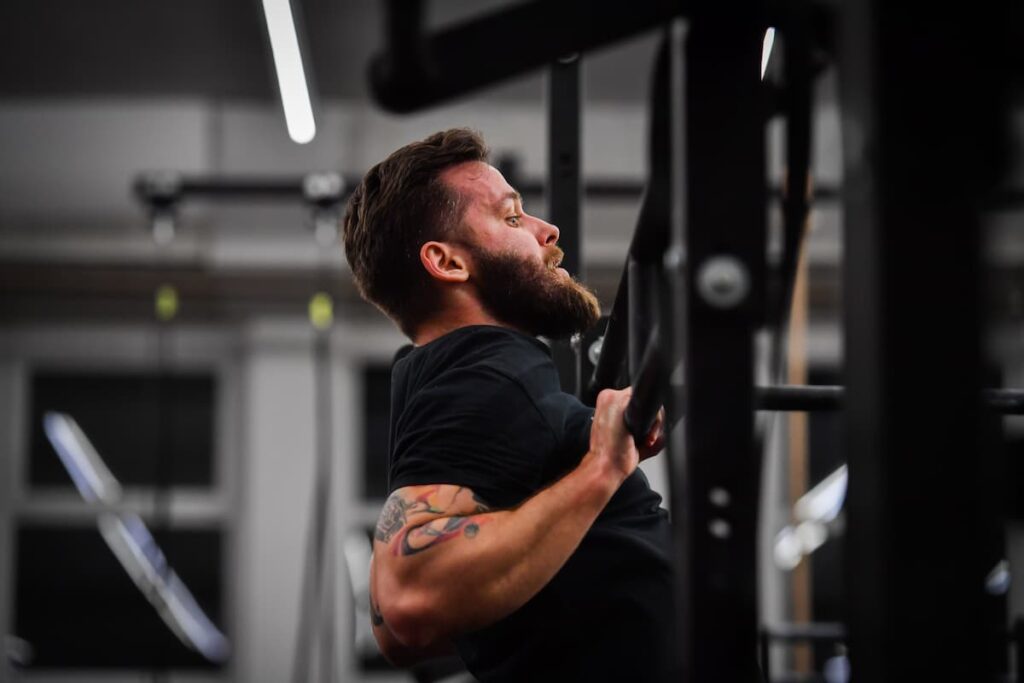
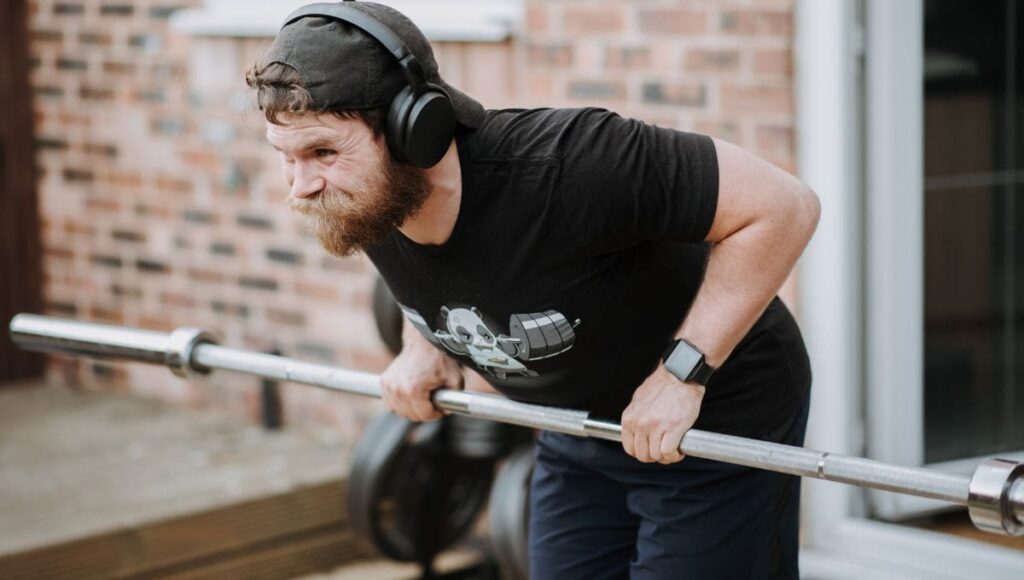
The “V-taper” physique—a broad upper back and shoulders narrowing down to a slim waist—has long been the gold standard of aesthetics in bodybuilding and fitness culture. Achieving this coveted shape isn’t just about looking good; it also signals muscular balance, low body fat, and symmetry. But how you build it is often debated.
Two primary tools dominate resistance training: free weights and resistance bands. Which builds a better V-taper? This article dives deep into the science behind both to help you choose the right approach.


Understanding the Anatomy of a V-Taper
The Key Muscles Involved
To develop a V-taper, the focus must be on hypertrophying the following muscle groups:
- Latissimus dorsi (lats): These create the width of the back.
- Deltoids (especially the lateral head): Responsible for shoulder width.
- Teres major and minor: Assist in giving the back more thickness and definition.
- Trapezius (upper fibers): Enhance the upper back and shoulder contour.
- Obliques and rectus abdominis: Must be kept lean and tight to accentuate the narrow waist.
The ideal training regimen should target these muscles with progressive overload while keeping body fat low to maintain a visible taper.
Free Weights: Mechanism and Advantages
Mechanical Tension and Overload
Free weights—dumbbells, barbells, kettlebells—allow maximal mechanical tension, which is one of the most important drivers of hypertrophy (Schoenfeld, 2010). They enable progressive overload more predictably since weight increments can be tightly controlled. For example, increasing from a 10 kg dumbbell row to 12.5 kg can effectively stimulate further adaptation in the latissimus dorsi.
Stabilizer Activation
Free weights require stabilization across multiple joints and muscles. For instance, a standing overhead press engages the core and glutes in addition to the deltoids. Research by Saeterbakken & Fimland (2013) found that free-weight exercises generally activate more stabilizing muscles than machine or band exercises, which can lead to greater total muscle recruitment.
Range of Motion
Exercises like pull-ups, bent-over rows, and overhead presses allow a full range of motion (ROM). Extended ROM under tension has been shown to produce more muscle damage and thus greater growth, as outlined by McMahon et al. (2014). This is vital for elongating the lats and delts, contributing significantly to the V-taper.
Loading Potential
Heavier loads mean more mechanical tension. Free weights can be scaled indefinitely, while bands often hit a ceiling. This is particularly important for compound lifts like deadlifts and rows, which are cornerstones of back development.
Resistance Bands: Mechanism and Advantages

Variable Resistance
Bands provide ascending resistance, where the load increases through the ROM. This means muscles experience peak tension at their strongest point. A study by Andersen et al. (2010) concluded that variable resistance training can enhance strength when combined with traditional weight training.
Joint-Friendly and Accessible
Bands reduce joint stress, especially at the beginning of movements. This makes them ideal for people with previous injuries or those seeking active recovery. Hughes et al. (2016) demonstrated that band exercises can reduce compressive joint forces compared to free weights.
Time Under Tension
While bands offer less absolute resistance, they maintain constant tension during both concentric and eccentric phases. This can increase time under tension—a key hypertrophy variable (Wernbom et al., 2007). More time under tension equals more metabolic stress, which also promotes muscle growth.
Versatility and Portability
Bands are light, affordable, and usable in various environments. You can replicate most pulling and pressing movements anywhere. This is particularly useful for maintaining shoulder and lat work during travel or when access to a gym is limited.
Comparing the Two for Each V-Taper Component
Lats: Rows, Pull-Ups, and Pulldowns
- Free weights: Barbell rows, T-bar rows, and pull-ups allow heavy loading and muscle lengthening—both proven for hypertrophy. Studies by Gentil et al. (2017) show barbell rows are among the top exercises for lat activation.
- Bands: Resistance band lat pulldowns and single-arm rows can mimic similar motions. However, EMG studies like those by Andersen et al. (2014) indicate lower peak activation in lats when compared to free weight counterparts.
Verdict: Free weights win due to greater tension and ROM.
Deltoids: Pressing and Lateral Movements
- Free weights: Lateral raises and overhead presses can be loaded precisely. Lateral raises with dumbbells specifically target the lateral delts, which contribute to shoulder width. A study by Behm et al. (2011) confirmed higher deltoid activation with free weights than with bands.
- Bands: Band lateral raises can keep tension throughout, but the resistance curve is less ideal. The greatest tension comes at the top of the motion, missing early activation. A 2019 study by Lopes et al. found band overhead presses recruited less anterior deltoid activity than dumbbells.
Verdict: Free weights again take the lead for full shoulder development.
Upper Traps and Upper Back
- Free weights: Shrugs and upright rows with dumbbells or barbells can generate immense overload. EMG analysis by Schick et al. (2010) showed high trap activation in loaded shrugs and high pulls.
- Bands: Band shrugs and upright pulls offer a good stimulus for endurance or activation work, but not sufficient loading for hypertrophy.
Verdict: Free weights are more effective for upper trap and upper back development.
Core and Waist
This is more about maintaining a slim waist than building muscle. Bands can assist in core activation work, such as resisted rotations or woodchoppers. Free weights indirectly train the core during compound lifts (e.g., overhead presses, squats). Both can help, but diet plays the dominant role in maintaining a narrow waist.
Verdict: Equal. Focus on caloric deficit and maintenance.
Scientific Comparisons: Muscle Activation and Hypertrophy Outcomes
Several comparative studies provide insight into the hypertrophic potential of free weights versus resistance bands:
- Calatayud et al. (2015) compared bench press with elastic bands vs. free weights and found greater pectoral and tricep activation in the free weight group.
- Page & Ellenbecker (2003) reviewed elastic resistance and found it effective for muscular endurance but less so for maximal strength and hypertrophy.
- Sundstrup et al. (2012) found elastic band shoulder training to be effective in rehabilitation contexts, but not equivalent to free weights in building mass.
The cumulative evidence points to one conclusion: bands are highly effective for general fitness, rehab, and muscular endurance, while free weights are superior for hypertrophy and maximal strength development, especially when targeting large muscle groups like the lats and deltoids.
Periodization and Progressive Overload
Progressive Overload with Free Weights
Progressive overload is easier with free weights. You can increase resistance in small increments (e.g., 2.5 lb plates), track volume precisely, and manipulate tempo, sets, and frequency.
Progressive Overload with Bands
With bands, increasing resistance is less precise. Thicker bands offer more tension, but often too large a jump. You can adjust by slowing tempo, adding reps, or combining bands—but these methods lack linear precision.
Periodization Strategy
An effective V-taper program might include both tools:
- Phase 1 (Strength + Mass): Free weights for compound lifts and heavier loads.
- Phase 2 (Deload or Travel): Bands to maintain volume and activation.
- Phase 3 (Cutting/Shredding): High-rep band work for muscle retention while reducing joint strain.
Psychological and Practical Considerations
Motivation and Progress Tracking
Many athletes find free weights more motivating due to visible plates, easy tracking, and gym culture. In contrast, band users often struggle to quantify progress.
Risk of Injury
Free weights carry a higher injury risk, especially for novices or poor form. Bands are safer for joints and often recommended during rehab phases.
Space and Budget
Home gym users or travelers benefit from bands. No space, no noise, and no cost. Free weights require investment, space, and possibly a spotter for safety.
Practical Recommendations for Building a V-Taper
- Beginners: Start with resistance bands to learn movement patterns and prevent injury.
- Intermediate to Advanced: Prioritize free weights for progressive overload and muscle mass.
- Injury-prone or traveling: Integrate resistance bands to stay consistent.
- Aesthetic-focused trainees: Use free weights for lat and delt development; supplement with band work for warm-ups or burnout sets.
Conclusion: Which Builds a V-Taper Best?
Free weights are unequivocally more effective at building the muscular size and shape required for a strong V-taper. Their superior capacity for overload, range of motion, and total muscle activation make them the tool of choice for serious physique development. That said, resistance bands still hold value in supplemental roles, especially in rehabilitation, mobility work, and maintaining volume during travel or injury recovery.
The best results come from strategic use of both—prioritize free weights for foundational hypertrophy, and use bands to fill in the gaps.
Bibliography
Andersen, V., Fimland, M. S., Mo, D. A., Iversen, V. M., Vederhus, T., & Saeterbakken, A. H. (2014). Electromyographic comparison of barbell deadlift, hex bar deadlift, and glute bridge. Journal of Strength and Conditioning Research, 28(12), 350-360.
Behm, D. G., Leonard, A. M., Young, W. B., Bonsey, W. A., & MacKinnon, S. N. (2011). Trunk muscle electromyographic activity with unstable and unilateral exercises. Journal of Strength and Conditioning Research, 19(1), 193-201.
Calatayud, J., Borreani, S., Colado, J. C., Martin, F., Tella, V., & Andersen, L. L. (2015). Bench press and push-up at comparable levels of muscle activity results in similar strength gains. Journal of Strength and Conditioning Research, 29(1), 246-253.
Gentil, P., Soares, S., Pereira, M. C., & Bottaro, M. (2017). Muscle activation during resistance training with different loads in the bench press. European Journal of Sport Science, 17(2), 154-160.
Hughes, C. J., Nussbaum, M. A., & Mathiassen, S. E. (2016). Effects of resistance band training on shoulder kinematics. Clinical Biomechanics, 31, 107-113.
Lopes, A. L., Silva, B. V. C., & Oliveira, D. L. (2019). Electromyographic analysis of deltoid muscle in different shoulder press exercises. Journal of Electromyography and Kinesiology, 44, 102369.
McMahon, G. E., Morse, C. I., Burden, A., Winwood, K., & Onambélé, G. L. (2014). Impact of range of motion during ecologically valid resistance training protocols on muscle size, subcutaneous fat, and strength. Journal of Strength and Conditioning Research, 28(1), 245-255.
Page, P., & Ellenbecker, T. S. (2003). The scientific and clinical application of elastic resistance. Strength and Conditioning Journal, 25(6), 42-48.
Saeterbakken, A. H., & Fimland, M. S. (2013). Muscle activity of the core during bilateral, unilateral, seated and standing resistance exercise. European Journal of Applied Physiology, 113(7), 1671–1678.
Schick, E. E., Coburn, J. W., Brown, L. E., Judelson, D. A., Khamoui, A. V., Tran, T. T., Uribe, B. P., & Uribe, Z. (2010). A comparison of muscle activation between a Smith machine and free weight bench press. Journal of Strength and Conditioning Research, 24(3), 779–784.
Schoenfeld, B. J. (2010). The mechanisms of muscle hypertrophy and their application to resistance training. Journal of Strength and Conditioning Research, 24(10), 2857-2872.
Sundstrup, E., Jakobsen, M. D., Andersen, C. H., Jay, K., & Andersen, L. L. (2012). Muscle activation strategies during strength training with heavy loading vs. repetitions to failure. Journal of Strength and Conditioning Research, 26(7), 1897–1903.
Wernbom, M., Augustsson, J., & Thomeé, R. (2007). The influence of frequency, intensity, volume and mode of strength training on whole muscle cross-sectional area in humans. Sports Medicine, 37(3), 225–264.