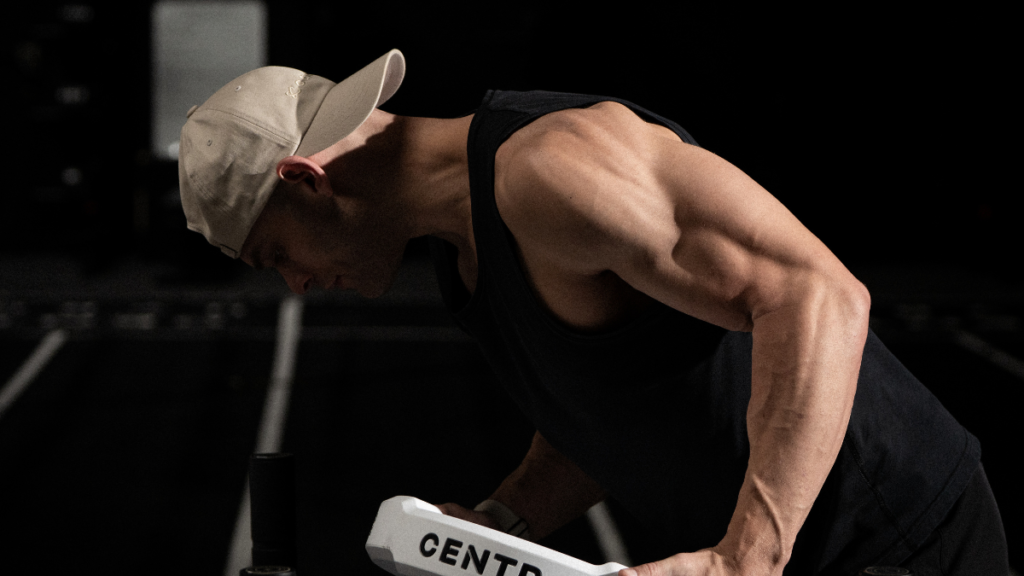
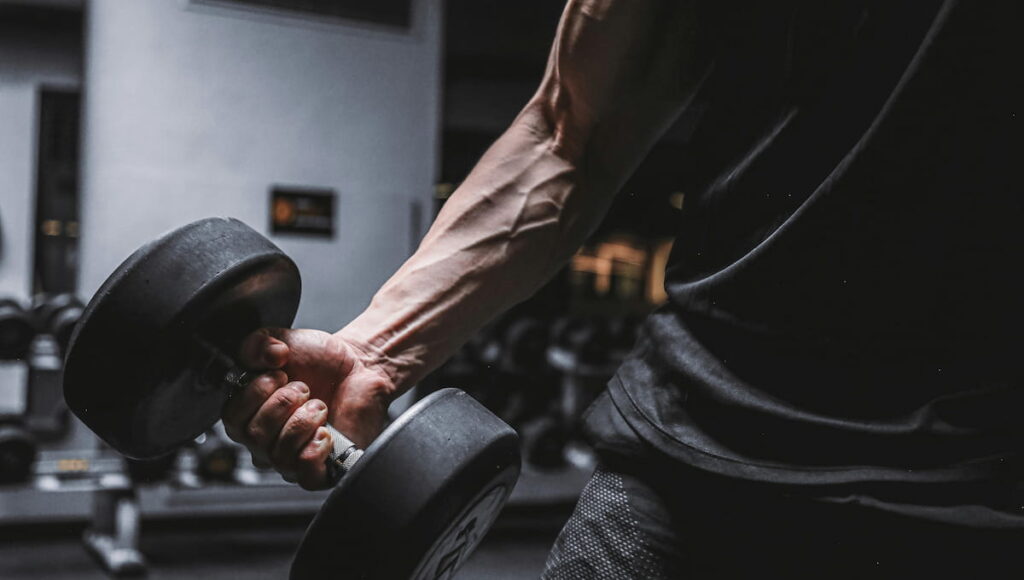
Building a well-defined chest is a common goal in resistance training, whether for aesthetics, performance, or general fitness. Two popular approaches are bodyweight exercises—such as push-ups, dips, and variations—and dumbbell-based resistance training, including presses, flyes, and incline work.
Both methods have unique benefits and limitations, and their effectiveness for chest definition depends on biomechanical principles, muscle physiology, and training variables. This article examines the scientific evidence to determine which method might be better for chest definition.


Understanding Chest Anatomy and Function
The chest muscles—primarily the pectoralis major and pectoralis minor—play key roles in upper body movement. The pectoralis major consists of two heads:
- Clavicular head (upper chest): Assists in flexion and horizontal adduction of the shoulder.
- Sternal head (lower chest): Responsible for horizontal adduction and internal rotation of the arm.
The pectoralis minor lies underneath, aiding in scapular stabilization.
Chest definition is influenced by two main factors:
- Muscle hypertrophy: Increasing muscle size through progressive overload.
- Low body fat: Revealing muscular contours through reduced subcutaneous fat.
The Principles of Progressive Overload

Regardless of exercise type, progressive overload—the gradual increase in stress placed on muscles—is essential for hypertrophy. This can be achieved by:
- Increasing load or resistance
- Adding repetitions or sets
- Enhancing time under tension
- Manipulating exercise angles
Both bodyweight and dumbbell exercises can be structured to apply progressive overload, though the mechanisms differ.
Bodyweight Training for Chest Development

Mechanics and Examples
Bodyweight training uses the practitioner’s mass as resistance. Common chest-focused movements include:
- Standard push-ups
- Decline push-ups
- Ring push-ups
- Dips (chest-focused lean)
- Pseudo-planche push-ups
By altering body position, leverage, or stability demands, bodyweight exercises can increase load or recruit additional musculature.
Scientific Evidence on Effectiveness
A study by Calatayud et al. (2015) compared push-up and bench press variations, equating load to match intensity. The researchers found similar muscle activation in the pectoralis major when external resistance was added to push-ups to match bench press load. This suggests that bodyweight exercises, when appropriately overloaded, can be as effective as free weights for chest activation.
Another investigation by Youdas et al. (2010) reported high pectoral EMG activation in unstable push-up variations (e.g., suspension trainer push-ups), suggesting increased neuromuscular demands may aid muscle growth.
Advantages
- Minimal equipment: Accessible anywhere.
- Joint-friendly: Often lower compressive joint stress compared to heavy free weights.
- Core activation: Greater stabilizer recruitment, particularly with unstable variations.
- Functional strength: Movement patterns often mimic daily or sport activities.
Limitations
- Load progression challenges: Without external resistance, progression relies on leverage changes, which can be less precise than adding dumbbell weight.
- Lower absolute loading potential: Particularly for well-trained individuals, max loading may be insufficient for optimal hypertrophy unless weighted vests or bands are used.
Dumbbell Training for Chest Development
Mechanics and Examples
Dumbbells allow free range of motion and independent limb movement. Common chest exercises include:
- Flat dumbbell bench press
- Incline dumbbell press
- Dumbbell flyes
- Pullover variations
Dumbbells permit nuanced angles and symmetrical strength development.
Scientific Evidence on Effectiveness
Barnett et al. (1995) demonstrated that altering bench angles shifts activation between the clavicular and sternal portions of the pectoralis major, highlighting dumbbells’ ability to precisely target chest regions.
A study by Saeterbakken et al. (2017) found that dumbbell presses led to slightly greater stabilizer activation than barbell presses, potentially contributing to functional strength and shoulder health while allowing for greater range of motion.
Advantages
- Precise load control: Simple, linear progression by adding weight.
- Greater range of motion: Enhances muscle stretch under load, which is linked to hypertrophy.
- Unilateral training potential: Addresses imbalances and coordination.
- Variety of angles: Adjustable benches allow focused work on upper, middle, or lower chest.
Limitations
- Equipment requirement: Needs access to various dumbbell weights and benches.
- Higher joint stress potential: Improper form with heavy weights can strain shoulders and elbows.
- Spotter necessity: For maximal loading, safety considerations may require assistance.
Comparing Hypertrophy Potential
Load Management
Dumbbells allow more direct and substantial loading than most bodyweight exercises, facilitating consistent progressive overload. While weighted bodyweight movements can match this, they require additional gear and may be more awkward to implement.
Range of Motion and Stretch-Mediated Hypertrophy
Research indicates that training muscles in lengthened positions (deep stretch under load) promotes hypertrophy (Wakahara et al., 2012). Dumbbell flyes or deep presses can achieve a greater pectoral stretch compared to most push-up variations, potentially enhancing growth stimulus.
Muscle Activation
EMG studies consistently show that both methods can produce high activation when load and effort are matched. However, dumbbells may better isolate chest fibers due to adjustable angles, while bodyweight variations often involve more whole-body stabilization.
Impact on Chest Definition
Chest definition is not purely a function of exercise choice—it is primarily determined by muscle size and low body fat levels. Both methods can build muscle; fat loss depends on overall caloric expenditure and diet.
From a caloric burn perspective, bodyweight circuits may slightly edge out isolated dumbbell movements due to higher metabolic demand and involvement of more stabilizing muscles, but this is secondary to dietary control in revealing muscle definition.
Combining Methods for Optimal Results
Evidence suggests that varied stimuli enhance long-term hypertrophy (Schoenfeld et al., 2016). Combining bodyweight and dumbbell exercises offers:
- Strength in multiple movement patterns
- Greater variety in angles and muscle lengths
- Joint health via alternating loading styles
- Practicality when equipment is limited
For example:
- Heavy incline dumbbell presses for upper chest hypertrophy
- Weighted dips for lower chest thickness
- Ring push-ups for stability and accessory muscle development
Practical Recommendations
- Beginners: Start with bodyweight exercises to build foundational strength and joint resilience. Progress to dumbbell work as technique and capacity improve.
- Intermediates and advanced lifters: Use dumbbells for primary hypertrophy stimulus, supplemented by advanced bodyweight variations to maintain functional strength and stability.
- For definition: Focus on hypertrophy in the chest, combined with a caloric deficit to reduce body fat.
- Progressive overload: Regardless of method, ensure gradual increases in challenge over time.
Conclusion
Scientific evidence indicates that both bodyweight and dumbbell training can effectively develop the chest when properly programmed. Dumbbells offer more precise load progression, greater range of motion, and angle variability, making them slightly more efficient for targeted hypertrophy. However, bodyweight training remains highly effective, especially when modified for overload, and provides added benefits in stability, accessibility, and joint health. For most trainees, the optimal approach involves integrating both methods into a periodized program.
Bibliography
- Barnett, C., Kippers, V. & Turner, P. (1995). Effects of variations of the bench press exercise on the EMG activity of five shoulder muscles. Journal of Strength and Conditioning Research, 9(4), pp. 222-227.
- Calatayud, J., Borreani, S., Colado, J.C., Martin, F., Tella, V. & Andersen, L.L. (2015). Bench press and push-up at comparable levels of muscle activity results in similar strength gains. Journal of Strength and Conditioning Research, 29(1), pp. 246-253.
- Saeterbakken, A.H., Mo, D.-A., Scott, S. & Andersen, V. (2017). The effects of bench press variations in competitive athletes on muscle activity and performance. Journal of Human Kinetics, 57(1), pp. 61-73.
- Schoenfeld, B.J., Ogborn, D. & Krieger, J.W. (2016). Effects of resistance training frequency on measures of muscle hypertrophy: a systematic review and meta-analysis. Sports Medicine, 46(11), pp. 1689-1697.
- Wakahara, T., Fukutani, A., Kawakami, Y. & Yanai, T. (2012). Nonuniform muscle hypertrophy: its relation to muscle activation in training session. Medicine & Science in Sports & Exercise, 44(6), pp. 1120-1127.
- Youdas, J.W., Amundson, C.L., Cicero, K.S., Hahn, J.J., Harezlak, D.T. & Hollman, J.H. (2010). Surface electromyographic analysis of core trunk and hip muscles during selected rehabilitation exercises in the side-lying position. Journal of Orthopaedic & Sports Physical Therapy, 40(12), pp. 777-791.
Key Takeaways
| Factor | Bodyweight Training | Dumbbell Training |
|---|---|---|
| Load Progression | Limited without external resistance; leverage changes used | Easy and precise by adding weight |
| Equipment Need | Minimal or none | Requires dumbbells and bench |
| Range of Motion | Moderate; limited stretch in most variations | Greater stretch possible, enhancing hypertrophy |
| Stability & Core Engagement | High, especially with unstable surfaces | Moderate; can focus more on chest isolation |
| Accessibility | Excellent, can train anywhere | Limited to equipped environments |
| Best For | Functional strength, beginners, travel | Targeted hypertrophy, advanced load management |
| Ideal Approach | Combine with weighted progressions | Combine with bodyweight work for variety and joint health |