Building a muscular, well-developed upper body requires more than simply lifting weights and waiting for results. While consistent training is crucial, research shows that specific strategies can dramatically accelerate hypertrophy and strength gains.
Below, we break down three science-backed training “secrets” that will help you develop a powerful, aesthetic upper body faster than the average gym-goer.


Secret 1: Prioritize Mechanical Tension with Proper Load Selection
Mechanical tension is the primary driver of muscle hypertrophy. This refers to the force generated by muscles when contracting under resistance. Studies consistently demonstrate that applying sufficient mechanical load to muscles triggers the signaling pathways responsible for growth.
The Science of Load and Tension
Research indicates that lifting in the range of 65–85% of one-repetition maximum (1RM) provides the optimal balance between mechanical tension and volume for hypertrophy (Schoenfeld, 2010). Lighter loads performed to failure can also stimulate hypertrophy, but moderate-to-heavy resistance is more time-efficient and consistently effective across populations (Morton et al., 2016).
Exercise Selection for Maximum Tension
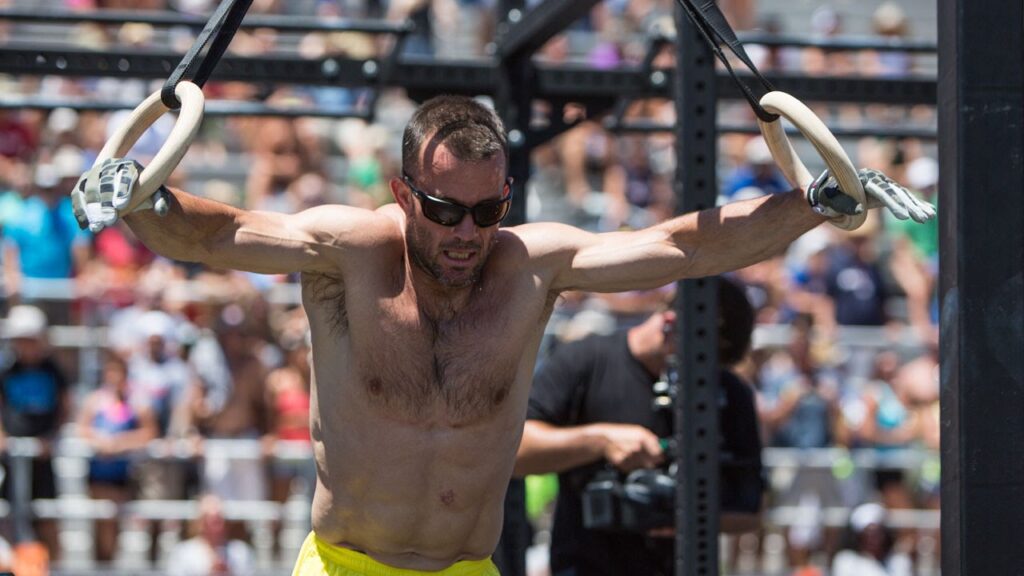
Multi-joint compound movements like the bench press, pull-ups, and overhead press are superior for generating mechanical tension compared to isolation movements. These exercises recruit large amounts of muscle fibers, particularly in the chest, shoulders, and back. By prioritizing them early in your workout, you maximize tension before fatigue reduces output.
Practical Application
- Train in the 6–12 rep range with loads of 65–85% 1RM.
- Prioritize compound lifts before isolation work.
- Use controlled tempos to avoid momentum reducing muscular tension.
Secret 2: Optimize Training Volume and Frequency
Volume, defined as sets × reps × load, is another crucial factor in stimulating muscle growth. However, doing more is not always better. Instead, research reveals that there is a dose-response relationship between training volume and hypertrophy, with diminishing returns after a certain point.
The Evidence on Volume
A meta-analysis by Schoenfeld et al. (2017) showed that performing 10+ weekly sets per muscle group led to greater hypertrophy compared to lower volumes. However, volumes beyond 20 sets per week often provide minimal additional benefit and may increase risk of overtraining if recovery is inadequate.
Frequency Matters
Spreading volume across multiple sessions per week is more effective than concentrating it into one “chest day” or “back day.” A randomized trial by Schoenfeld et al. (2019) found that training each muscle group twice per week produced significantly greater hypertrophy than once per week, even with equal total volume.
Practical Application
- Aim for 10–20 quality sets per muscle group per week.
- Distribute volume across at least two sessions for each muscle group.
- Track weekly sets for each muscle group to ensure progressive overload without exceeding recovery capacity.
Secret 3: Leverage Advanced Training Techniques to Maximize Hypertrophy
Once you’ve mastered the basics of load and volume, advanced training techniques can further accelerate progress by increasing time under tension, metabolic stress, and motor unit recruitment—all key contributors to muscle growth.

Rest-Pause Training
Rest-pause involves performing a set close to failure, resting briefly (10–20 seconds), and then performing additional mini-sets. A study by Prestes et al. (2019) showed that rest-pause training produced greater hypertrophy and strength compared to traditional straight sets, particularly in the upper body.
Drop Sets
Drop sets involve reducing the load after reaching failure and continuing the set without rest. This method extends time under tension and increases metabolic stress, both strong hypertrophic stimuli (Fink et al., 2018). Drop sets are particularly effective for isolation exercises such as lateral raises or triceps pushdowns, where joint stress is minimal.
Blood Flow Restriction (BFR) Training
BFR involves restricting venous blood flow to the muscle using a cuff or band while training with light loads (20–40% 1RM). Research shows BFR can induce hypertrophy comparable to heavy training, making it a powerful tool for accessory work or when recovering from injury (Lixandrao et al., 2018).
Practical Application
- Incorporate rest-pause sets on compound lifts to push beyond standard volume.
- Use drop sets on isolation exercises at the end of a session.
- Apply BFR training strategically for arms and shoulders to enhance growth with minimal joint strain.
Conclusion
The fastest route to a jacked upper body is not random effort, but scientifically informed training. By prioritizing mechanical tension through smart load selection, managing training volume and frequency, and strategically employing advanced techniques, you can maximize hypertrophy while minimizing wasted time and effort. These strategies, grounded in research, provide a blueprint for building muscle efficiently and effectively.
Key Takeaways
| Secret | Method | Practical Application |
|---|---|---|
| Mechanical Tension | Train with 65–85% 1RM, focus on compound lifts | 6–12 reps, controlled tempo, prioritize big lifts first |
| Training Volume & Frequency | 10–20 weekly sets per muscle group, spread across sessions | Train each muscle group 2+ times per week |
| Advanced Techniques | Rest-pause, drop sets, BFR training | Use for accessory lifts or to push beyond standard sets |
Bibliography
- Fink, J.E., Kikuchi, N., Yoshimoto, T., Nakazato, K. and Iemitsu, M., 2018. Impact of drop set resistance training on muscle hypertrophy and strength. Journal of Sports Science and Medicine, 17(3), pp.345–352.
- Lixandrao, M.E., Ugrinowitsch, C., Berton, R., Vechin, F.C., Conceicao, M.S., Damas, F., Libardi, C.A. and Roschel, H., 2018. Magnitude of muscle strength and mass adaptations between high-load resistance training versus low-load resistance training associated with blood-flow restriction: a systematic review and meta-analysis. Sports Medicine, 48(2), pp.361–378.
- Morton, R.W., Oikawa, S.Y., Wavell, C.G., Mazara, N., McGlory, C., Quadrilatero, J., Baechler, B.L., Baker, S.K., Phillips, S.M. and Mitchell, C.J., 2016. Neither load nor systemic hormones determine resistance training-mediated hypertrophy or strength gains in resistance-trained young men. Journal of Applied Physiology, 121(1), pp.129–138.
- Prestes, J., Tibana, R.A., de Azevedo Abad, C.C., de Sousa, N.M.F., Brown, L.E. and Willardson, J.M., 2019. Comparison between linear and daily undulating periodized resistance training to increase strength. Journal of Strength and Conditioning Research, 33(Suppl 1), pp.S193–S201.
- Schoenfeld, B.J., 2010. The mechanisms of muscle hypertrophy and their application to resistance training. Journal of Strength and Conditioning Research, 24(10), pp.2857–2872.
- Schoenfeld, B.J., Ogborn, D. and Krieger, J.W., 2017. Dose-response relationship between weekly resistance training volume and increases in muscle mass: A systematic review and meta-analysis. Journal of Sports Sciences, 35(11), pp.1073–1082.
- Schoenfeld, B.J., Grgic, J., Ogborn, D. and Krieger, J.W., 2019. Strength and hypertrophy adaptations between low- vs. high-load resistance training: A systematic review and meta-analysis. Journal of Strength and Conditioning Research, 33(Suppl 1), pp.S1–S18.