A strong, well-developed back is not only crucial for athletic performance and aesthetics but also for injury prevention and overall health. Research consistently shows that a resilient posterior chain reduces the risk of lower back pain, shoulder dysfunction, and postural imbalances. While gym equipment offers variety, you can still build a muscular and injury-proof back at home using scientifically validated bodyweight and minimal-equipment exercises.
This article explores three of the most effective home-based exercises for back development, explains the biomechanics behind them, and cites peer-reviewed evidence on why they work.


Why Back Training Matters
The back is a complex structure made up of multiple muscle groups, including the latissimus dorsi, trapezius, rhomboids, erector spinae, and smaller stabilizers such as the multifidus and rotator cuff. Together, they provide support for posture, spinal integrity, and force transfer across the body. Weakness or imbalance in these muscles can result in:
- Increased risk of lower back pain, which affects up to 80% of adults at some point in their lives (Hartvigsen et al., 2018).
- Higher susceptibility to shoulder injuries due to poor scapular stability (Kibler & Sciascia, 2016).
- Reduced performance in daily activities and athletic tasks requiring pulling strength, rotation, or lifting.
Therefore, effective back training must target multiple planes of motion, integrate stability, and account for progressive overload.
Exercise 1: Pull-Ups (and Variations)

Why Pull-Ups Are Essential
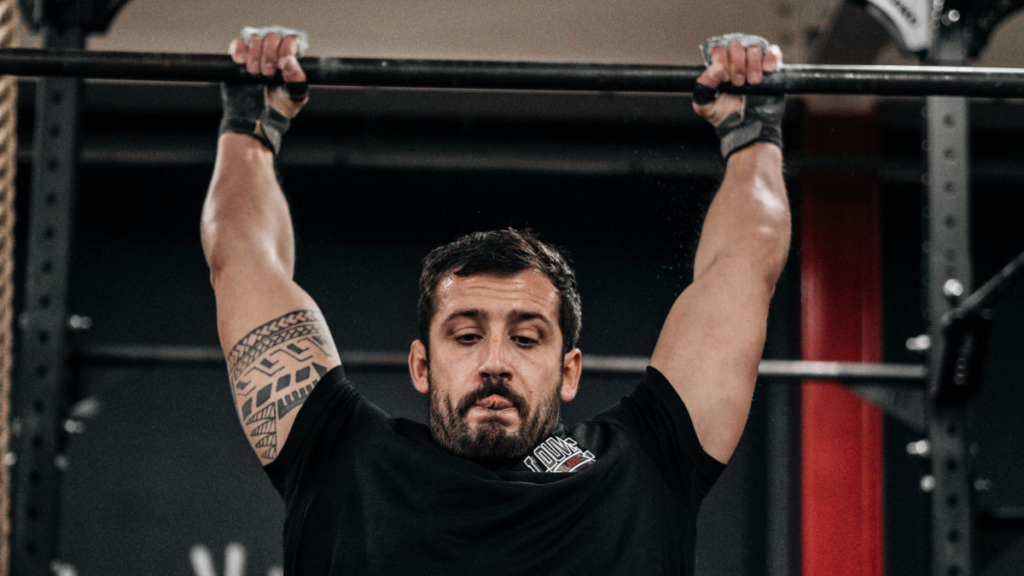
Pull-ups are one of the most effective compound bodyweight exercises for building back strength and hypertrophy. They target the latissimus dorsi as the prime mover while heavily engaging the trapezius, rhomboids, posterior deltoids, and spinal stabilizers. A study by Signorile et al. (2002) confirmed that pull-ups and chin-ups elicit significant electromyographic activation in both the lats and biceps, making them efficient for upper-body pulling development.
Furthermore, pull-ups are scalable. Beginners can use bands or negatives, while advanced athletes can progress to weighted pull-ups or archer variations.
Biomechanics and Muscle Activation
- Prime movers: Latissimus dorsi, biceps brachii.
- Synergists: Brachialis, brachioradialis, posterior deltoid, rhomboids.
- Stabilizers: Core musculature and spinal erectors.
By working against gravity, pull-ups not only stimulate hypertrophy but also improve shoulder girdle stability, which is protective against injury.
Scientific Evidence
Pull-ups have been shown to improve scapulothoracic rhythm, which helps prevent impingement syndromes in the shoulder (Ludewig & Cook, 2000). Regular practice also enhances grip strength, which correlates strongly with overall health outcomes and reduced risk of all-cause mortality (Leong et al., 2015).
Variations for Home Training
- Band-assisted pull-ups.
- Neutral-grip pull-ups for reduced wrist and shoulder stress.
- Towel pull-ups for grip endurance.
- Eccentric pull-ups for hypertrophy emphasis.
Exercise 2: Inverted Rows
Why Inverted Rows Are Underrated
The inverted row (also known as the bodyweight row or Australian pull-up) is a horizontal pulling exercise that balances the vertical pulling motion of pull-ups. A balanced back training routine must include both vertical and horizontal pulls to reduce risk of muscular imbalances and shoulder dysfunction (Page et al., 2010).
Inverted rows can be performed with a suspension trainer, sturdy table edge, or low bar, making them accessible at home.
Biomechanics and Muscle Activation
- Prime movers: Middle trapezius, rhomboids, latissimus dorsi.
- Synergists: Posterior deltoids, biceps.
- Stabilizers: Erector spinae, transverse abdominis.
Compared to pull-ups, inverted rows emphasize scapular retraction and horizontal adduction, which are essential for postural alignment and shoulder health.
Scientific Evidence
Electromyography (EMG) analysis shows that inverted rows activate the middle trapezius and rhomboids at levels comparable to seated rows with weights (Youdas et al., 2010). This makes them an effective home substitute for machine-based horizontal pulling.
Moreover, horizontal pulling exercises like rows have been linked to reduced forward shoulder posture, which is a major contributor to both shoulder and neck pain (Kendall et al., 2005).
Variations for Home Training
- Feet elevated inverted rows for greater intensity.
- Single-arm inverted rows to increase unilateral stability demands.
- Isometric holds at the top for scapular endurance.
Exercise 3: Superman Extensions
Why Posterior Chain Work Is Crucial
While pull-ups and rows target upper and mid-back muscles, spinal extensors and deep stabilizers are equally vital for an injury-proof back. The Superman extension is a low-load bodyweight exercise that recruits the erector spinae, multifidus, glutes, and hamstrings. These muscles are crucial for spinal integrity and injury resilience.
According to a meta-analysis by Steele et al. (2014), low-load spine extension exercises like the Superman improve both endurance and resilience of the back extensors, which is associated with lower incidence of chronic lower back pain.
Biomechanics and Muscle Activation
- Prime movers: Erector spinae, gluteus maximus.
- Synergists: Hamstrings, posterior deltoids.
- Stabilizers: Multifidus, transverse abdominis.
The exercise promotes spinal extension endurance, essential for maintaining upright posture and resisting flexion-related injuries.
Scientific Evidence
McGill (2001) highlighted the importance of endurance in the back extensors for injury prevention, noting that fatigue rather than maximal strength is more predictive of lower back injuries. The Superman, performed in high-repetition or sustained-hold formats, develops precisely this endurance capacity.
Furthermore, Gatti et al. (2011) demonstrated that targeted lumbar stabilization training can significantly reduce recurrence rates of back pain, underlining the value of exercises like the Superman.
Variations for Home Training
- Alternating arm/leg Superman for anti-rotational stability.
- Weighted Superman holds (with small plates or household objects).
- Dynamic Supermans with controlled repetitions for hypertrophy.
Integrating These Exercises Into a Program
A balanced home back routine should include vertical pulling (pull-ups), horizontal pulling (inverted rows), and spinal extension/stability (Superman extensions). Together, these cover all primary planes of motion and ensure comprehensive muscular development.
Sample Routine
- Pull-ups: 3–5 sets of 6–12 reps.
- Inverted rows: 3–4 sets of 10–15 reps.
- Superman holds: 3–4 sets of 20–40 seconds.
Progression can be applied by adjusting leverage, tempo, or external load. For injury-proofing, prioritize strict form and full range of motion over maximal intensity.
Conclusion
Building a muscular and injury-proof back at home is entirely possible using evidence-based bodyweight movements. Pull-ups develop vertical pulling strength and scapular stability. Inverted rows balance horizontal pulling demands and correct postural imbalances. Superman extensions strengthen spinal extensors and enhance injury resilience.
When combined consistently, these exercises provide a science-backed foundation for both hypertrophy and long-term health.
Key Takeaways
| Exercise | Primary Muscles | Injury-Prevention Benefits | Home Variations |
|---|---|---|---|
| Pull-Ups | Lats, traps, rhomboids, biceps | Enhances scapular stability, improves grip strength | Band-assisted, neutral grip, eccentric |
| Inverted Rows | Mid-traps, rhomboids, rear delts | Corrects posture, prevents shoulder dysfunction | Feet elevated, single-arm, isometric holds |
| Superman Extensions | Erector spinae, glutes, hamstrings | Improves spinal endurance, reduces back pain risk | Alternating limbs, weighted holds, dynamic reps |
Bibliography
- Gatti, R., Faccendini, S., Tettamanti, A., Barbero, M., Balestri, A. and Stucovitz, E., 2011. Efficacy of an exercise-based rehabilitation program for patients with chronic low back pain: A prospective, randomized, controlled trial. European Spine Journal, 20(3), pp.468–476.
- Hartvigsen, J., Hancock, M.J., Kongsted, A., Louw, Q., Ferreira, M.L., Genevay, S., Hoy, D., Karppinen, J., Pransky, G., Sieper, J., Smeets, R.J. and Underwood, M., 2018. What low back pain is and why we need to pay attention. The Lancet, 391(10137), pp.2356–2367.
- Kendall, F.P., McCreary, E.K., Provance, P.G., Rodgers, M.M. and Romani, W.A., 2005. Muscles: Testing and function with posture and pain. 5th ed. Philadelphia: Lippincott Williams & Wilkins.
- Kibler, W.B. and Sciascia, A., 2016. Current concepts: scapular dyskinesis. British Journal of Sports Medicine, 50(5), pp. 295–305.
- Leong, D.P., Teo, K.K., Rangarajan, S., Lopez-Jaramillo, P., Avezum, A., Orlandini, A., Seron, P., Ahmed, S.H., Rosengren, A., Kelishadi, R., Rahman, O. and Yusuf, S., 2015. Prognostic value of grip strength: findings from the Prospective Urban Rural Epidemiology (PURE) study. The Lancet, 386(9990), pp.266–273.
- Ludewig, P.M. and Cook, T.M., 2000. Alterations in shoulder kinematics and associated muscle activity in people with symptoms of shoulder impingement. Physical Therapy, 80(3), pp.276–291.
- McGill, S.M., 2001. Low back stability: from formal description to issues for performance and rehabilitation. Exercise and Sport Sciences Reviews, 29(1), pp.26–31.
- Page, P., Frank, C.C. and Lardner, R., 2010. Assessment and treatment of muscle imbalance: the Janda approach. Champaign: Human Kinetics.
- Signorile, J.F., Zink, A.J. and Szwed, S.P., 2002. A comparative electromyographical investigation of muscle utilization patterns using various hand positions during the lat pull-down. Journal of Strength and Conditioning Research, 16(4), pp.539–546.
- Steele, J., Bruce-Low, S. and Smith, D., 2014. A review of the efficacy of supervised, low-load, motor control exercises for reducing pain and disability in people with chronic non-specific low back pain. Journal of Exercise Rehabilitation, 10(6), pp.340–350.
- Youdas, J.W., Amundson, C.L., Cicero, K.S., Hahn, J.J., Harezlak, D.T. and Hollman, J.H., 2010. Surface electromyographic activation patterns and elbow joint motion during a pull-up, chin-up, or perfect-pull-up rotational exercise. Journal of Strength and Conditioning Research, 24(12), pp.3404–3414.