Meditation has long been associated with spiritual practice and stress reduction, but in recent decades it has become a scientifically validated tool for optimizing both mental and physical performance. For athletes and fitness enthusiasts, meditation is not a luxury—it is a powerful practice that directly influences recovery, focus, endurance, and even physical health.
In this article, we will explore eight science-backed reasons why every fitness fan should meditate. Each section draws upon peer-reviewed research to show how meditation can elevate training outcomes, enhance well-being, and improve long-term performance.


1. Meditation Enhances Focus and Cognitive Control
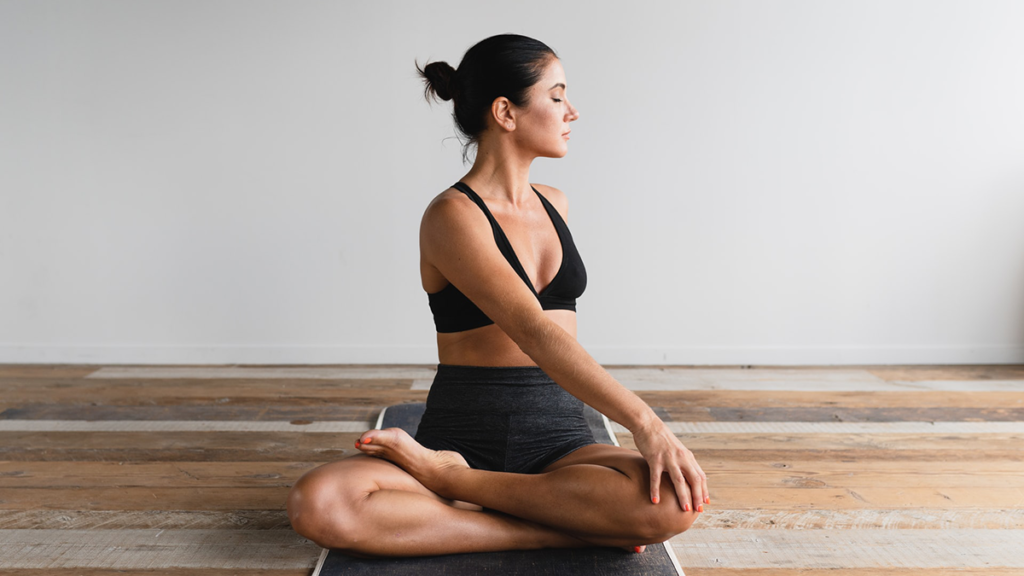
The ability to maintain concentration during workouts, whether in strength training, endurance sports, or high-intensity functional training, is a critical determinant of success. Meditation, particularly mindfulness-based practices, has been shown to improve attentional control.
Research Evidence
A study published in Psychological Science found that participants who engaged in mindfulness meditation training exhibited significantly better sustained attention and working memory capacity compared to controls (Mrazek et al., 2013). Improved attention translates directly into better movement precision, fewer training errors, and more effective technique execution.
Application for Fitness
For athletes, sharpening focus through meditation can reduce mental lapses during long endurance sessions or complex strength workouts. This reduces the risk of injury and enhances training quality.
2. Meditation Reduces Stress and Cortisol Levels
Training itself is a form of controlled stress, but excessive psychological stress can impair recovery and performance. Chronic stress elevates cortisol, which interferes with muscle growth, fat metabolism, and immune function.
Research Evidence
Tang et al. (2007) demonstrated that short-term meditation practice reduced cortisol and improved mood states in participants. Similarly, Black and Slavich (2016) found that mindfulness meditation was effective in lowering inflammatory markers linked to stress.
Application for Fitness
By keeping cortisol in check, meditation supports muscle repair, reduces fatigue, and accelerates post-workout recovery. Athletes who meditate are therefore less likely to overtrain and more likely to maintain consistency in their programs.
3. Meditation Improves Sleep Quality
Sleep is one of the most overlooked factors in fitness progression. Quality sleep enables muscle recovery, hormonal balance, and mental clarity. Meditation can act as a non-pharmacological aid for improving sleep onset and depth.
Research Evidence
A randomized controlled trial published in JAMA Internal Medicine found that mindfulness meditation significantly improved sleep quality in adults with moderate sleep disturbances (Black et al., 2015). Neuroimaging studies also show that meditation promotes parasympathetic nervous system activity, which helps induce deeper sleep cycles.
Application for Fitness
Better sleep translates into higher energy levels during training, improved reaction times, and faster recovery between sessions. Fitness enthusiasts who adopt meditation often report improved sleep efficiency and less insomnia.
4. Meditation Boosts Pain Tolerance and Perception
High-intensity workouts inevitably bring discomfort. Athletes who can regulate their perception of pain are more likely to sustain performance in endurance sports and resistance training. Meditation has been shown to alter pain processing pathways in the brain.
Research Evidence
Zeidan et al. (2011) reported that mindfulness meditation significantly reduced both the intensity and unpleasantness of experimentally induced pain. fMRI scans revealed reduced activation in pain-related brain regions, suggesting meditation alters pain perception at a neural level.
Application for Fitness
For fitness fans, meditation can be a tool to push through challenging sets or long endurance events without succumbing to discomfort. It is not about ignoring pain signals that prevent injury, but about reframing discomfort as a manageable sensation.
5. Meditation Enhances Emotional Regulation and Motivation
Sustaining a fitness journey requires mental resilience. Many athletes struggle with motivation during plateaus, setbacks, or fatigue. Meditation trains emotional regulation, reducing reactivity and improving long-term adherence to training.
Research Evidence
Hölzel et al. (2011) found that meditation practice increased gray matter density in brain regions associated with emotion regulation, such as the hippocampus and prefrontal cortex. Another study by Malinowski et al. (2017) linked mindfulness training to improvements in motivation and reduced performance anxiety.
Application for Fitness
Meditation helps athletes approach training with patience, accept setbacks without discouragement, and maintain intrinsic motivation. Emotional stability prevents burnout and sustains long-term progress.
6. Meditation Improves Cardiovascular Health
Fitness is not only about performance but also long-term health. Meditation has been shown to reduce cardiovascular risk factors such as high blood pressure and heart rate variability dysregulation.
Research Evidence
A systematic review in Circulation: Cardiovascular Quality and Outcomes concluded that meditation practices are associated with reductions in blood pressure and improvements in cardiovascular risk profiles (Brook et al., 2013). Regular meditation activates the parasympathetic nervous system, lowering resting heart rate and blood pressure.
Application for Fitness
Athletes with lower resting heart rates and improved vascular function can recover faster between workouts and sustain endurance activities more efficiently. Meditation thus complements cardiovascular training.
7. Meditation Strengthens Immune Function
Intense training temporarily suppresses the immune system, increasing susceptibility to illness. Meditation has been linked to improved immune resilience, which is vital for athletes who need to remain healthy to train consistently.
Research Evidence
Davidson et al. (2003) demonstrated that participants in an eight-week mindfulness program showed increased antibody titers in response to influenza vaccination compared to controls. More recently, Black and Slavich (2016) reviewed evidence showing meditation’s role in reducing systemic inflammation.
Application for Fitness
A stronger immune system reduces sick days and allows athletes to maintain uninterrupted training schedules. This is particularly important during periods of heavy load or competition.
8. Meditation Enhances Mind-Body Awareness
Fitness is not just about external performance metrics but also about cultivating body awareness—knowing how the body moves, feels, and responds. Meditation enhances interoception, the perception of internal bodily signals.
Research Evidence
Farb et al. (2013) reported that mindfulness training improved interoceptive accuracy and body awareness. Athletes who practice meditation become more attuned to their breathing, muscle activation, and fatigue levels, which helps prevent overtraining and injury.
Application for Fitness
Improved body awareness allows athletes to refine technique, optimize breathing patterns, and adjust training loads intuitively. It also supports mental presence during training, which enhances performance quality.
Conclusion
Meditation is not just a mental health intervention; it is a performance-enhancing practice supported by scientific research. From sharpening focus and reducing cortisol to improving sleep, cardiovascular health, and immune function, meditation provides measurable advantages to fitness enthusiasts at all levels. For those seeking an edge in performance, recovery, and longevity, meditation deserves a permanent place alongside strength and conditioning routines.
Key Takeaways
| Reason | Scientific Evidence | Fitness Benefit |
|---|---|---|
| Enhances focus | Improves attention and working memory | Better training precision |
| Reduces stress | Lowers cortisol and inflammation | Faster recovery, less fatigue |
| Improves sleep | Enhances sleep onset and depth | Better energy and recovery |
| Boosts pain tolerance | Alters pain perception pathways | Increased endurance capacity |
| Strengthens emotional regulation | Structural brain changes | Sustained motivation, less burnout |
| Improves cardiovascular health | Lowers blood pressure, HR | Better endurance and recovery |
| Strengthens immunity | Boosts antibody production | Fewer sick days, consistent training |
| Enhances mind-body awareness | Improves interoception | Better technique, injury prevention |
References
- Black, D.S. & Slavich, G.M., 2016. Mindfulness meditation and the immune system: a systematic review of randomized controlled trials. Annals of the New York Academy of Sciences, 1373(1), pp.13-24.
- Black, D.S., O’Reilly, G.A., Olmstead, R., Breen, E.C. & Irwin, M.R., 2015. Mindfulness meditation and improvement in sleep quality and daytime impairment among older adults with sleep disturbances: a randomized clinical trial. JAMA Internal Medicine, 175(4), pp.494-501.
- Brook, R.D., Appel, L.J., Rubenfire, M., Ogedegbe, G., Bisognano, J.D., Elliott, W.J., Fuchs, F.D., Hughes, J.W., Lackland, D.T., Staffileno, B.A. & Townsend, R.R., 2013. Beyond medications and diet: alternative approaches to lowering blood pressure. Circulation: Cardiovascular Quality and Outcomes, 6(5), pp.643-650.
- Davidson, R.J., Kabat-Zinn, J., Schumacher, J., Rosenkranz, M., Muller, D., Santorelli, S.F., Urbanowski, F., Harrington, A., Bonus, K. & Sheridan, J.F., 2003. Alterations in brain and immune function produced by mindfulness meditation. Psychosomatic Medicine, 65(4), pp.564-570.
- Farb, N.A., Segal, Z.V. & Anderson, A.K., 2013. Mindfulness meditation training alters cortical representations of interoceptive attention. Social Cognitive and Affective Neuroscience, 8(1), pp.15-26.
- Hölzel, B.K., Carmody, J., Vangel, M., Congleton, C., Yerramsetti, S.M., Gard, T. & Lazar, S.W., 2011. Mindfulness practice leads to increases in regional brain gray matter density. Psychiatry Research: Neuroimaging, 191(1), pp.36-43.
- Malinowski, P., Moore, A.W., Mead, B.R. & Gruber, T., 2017. Mindfulness training enhances self-regulation and facilitates health behavior change. Frontiers in Psychology, 8, p.1279.
- Mrazek, M.D., Franklin, M.S., Phillips, D.T., Baird, B. & Schooler, J.W., 2013. Mindfulness training improves working memory capacity and GRE performance while reducing mind wandering. Psychological Science, 24(5), pp.776-781.
- Tang, Y.Y., Ma, Y., Wang, J., Fan, Y., Feng, S., Lu, Q., Yu, Q., Sui, D., Rothbart, M.K., Fan, M. & Posner, M.I., 2007. Short-term meditation training improves attention and self-regulation. Proceedings of the National Academy of Sciences, 104(43), pp.17152-17156.
- Zeidan, F., Martucci, K.T., Kraft, R.A., Gordon, N.S., McHaffie, J.G. & Coghill, R.C., 2011. Brain mechanisms supporting the modulation of pain by mindfulness meditation. Journal of Neuroscience, 31(14), pp.5540-5548.