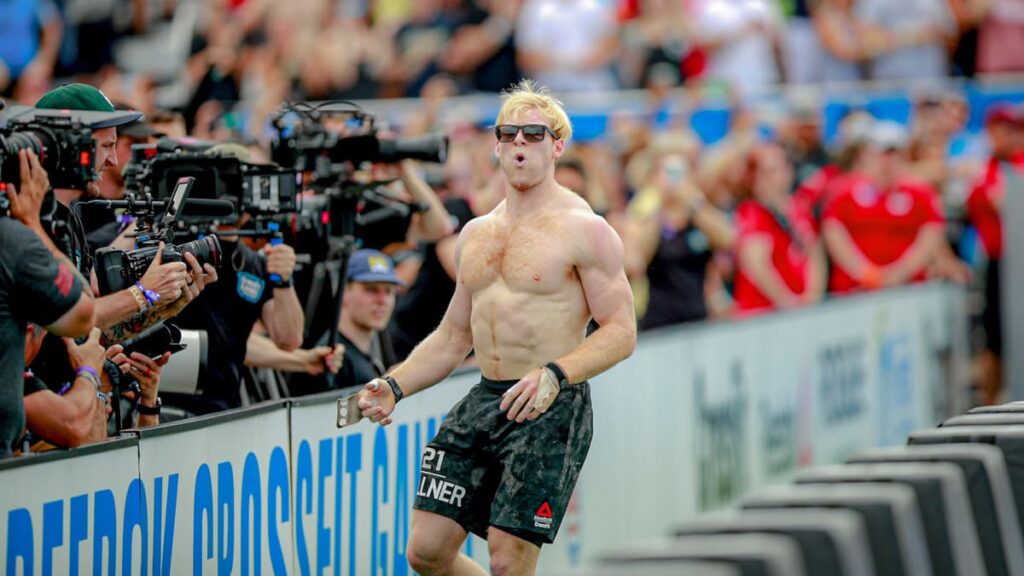
Time to implement the best chest workout for skinny guys!
Building a muscular chest can feel nearly impossible for naturally skinny guys who struggle to put on size. Genetics, metabolism, and training approach all play a role in whether you gain mass or remain stuck. Fortunately, the right training strategies—backed by exercise science—can help you overcome this barrier and finally develop a bigger, stronger chest.


This article explains why skinny guys struggle with chest growth, the key principles of hypertrophy, and presents a complete, scientifically designed chest workout optimized for mass. Every recommendation is supported by peer-reviewed research so you can trust the methods you’re applying.
Why Skinny Guys Struggle to Build a Bigger Chest

High Metabolic Rate and Energy Deficit
Many naturally thin individuals, often called “hard gainers,” burn calories at a higher resting metabolic rate. Studies show that individuals with higher non-exercise activity thermogenesis (NEAT) can expend several hundred calories more per day without realizing it (Levine, 2002). Without a consistent calorie surplus, chest training alone will not lead to growth.
Poor Exercise Selection
Beginners often overemphasize push-ups or machine presses, avoiding heavy compound lifts. Research demonstrates that multi-joint barbell movements like the bench press recruit more motor units and generate greater mechanical tension compared to isolation exercises (Schoenfeld, 2010). Skinny guys who avoid progressive overload on compound lifts miss the main driver of growth.
Suboptimal Training Volume
Low training volume is a common mistake. Evidence indicates that hypertrophy is strongly correlated with weekly set volume, with 10–20 working sets per muscle group per week being optimal for most lifters (Krieger, 2010). Undertraining the chest prevents consistent muscle fiber recruitment and adaptation.
Nutritional and Recovery Gaps
Inadequate protein intake and poor sleep undermine muscle growth. Research confirms that consuming ~1.6–2.2 g of protein per kilogram of bodyweight per day maximizes hypertrophy (Morton et al., 2018). Sleep restriction, meanwhile, reduces testosterone and impairs muscle recovery (Dattilo et al., 2011).
Science of Chest Hypertrophy
Mechanical Tension
Muscle growth primarily results from mechanical tension—force generated under load. Barbell bench presses, incline presses, and weighted dips create high levels of tension across the pectorals. EMG studies confirm the barbell bench press is one of the most effective activators of the pectoralis major (Barnett, Kippers & Turner, 1995).
Muscle Damage and Metabolic Stress
Secondary mechanisms like muscle fiber microtrauma and metabolic stress also play roles in hypertrophy. Exercises with deep stretches, such as dumbbell flyes, induce significant eccentric damage, while high-rep sets to near failure promote metabolic stress and cellular swelling (Schoenfeld, 2013).
Fiber Type Recruitment
The pectoralis major contains a balanced mix of type I and type II fibers. Type II fibers have the greatest growth potential, and heavy loads (75–85% of one-rep max) are required to fully recruit them (Campos et al., 2002). Combining heavy pressing with moderate-rep accessory work ensures maximal fiber activation.
Key Training Principles for Skinny Guys
Progressive Overload
Gradually increasing load, reps, or sets forces the body to adapt. Without overload, training quickly stagnates. A study by Rhea et al. (2002) demonstrated that progressive overload protocols produced significantly greater strength and hypertrophy compared to constant-load training.
Exercise Variety
While the flat bench press should be a staple, variation in angle and implement maximizes fiber recruitment. Incline pressing emphasizes the clavicular head, while dips and decline presses target the sternal portion. EMG evidence shows that exercise angle alters activation patterns across the chest (Trebs, Brandenburg & Pitney, 2010).
Training Frequency
For skinny guys, twice-weekly chest sessions work best. Higher frequency improves protein synthesis spikes and overall volume tolerance. Schoenfeld et al. (2016) found that splitting training volume across two weekly sessions increased hypertrophy compared to once-per-week training.
Mind-Muscle Connection
Research suggests that consciously focusing on chest contraction during pressing enhances pectoral activation compared to focusing on movement alone (Calatayud et al., 2016). Skinny guys should prioritize form and control rather than simply moving weight.
The Best Chest Workout for Skinny Guys

Below is a program designed around scientific principles. It assumes you are training chest twice per week within a balanced push–pull–legs split.
Workout A (Heavy Compound Focus)
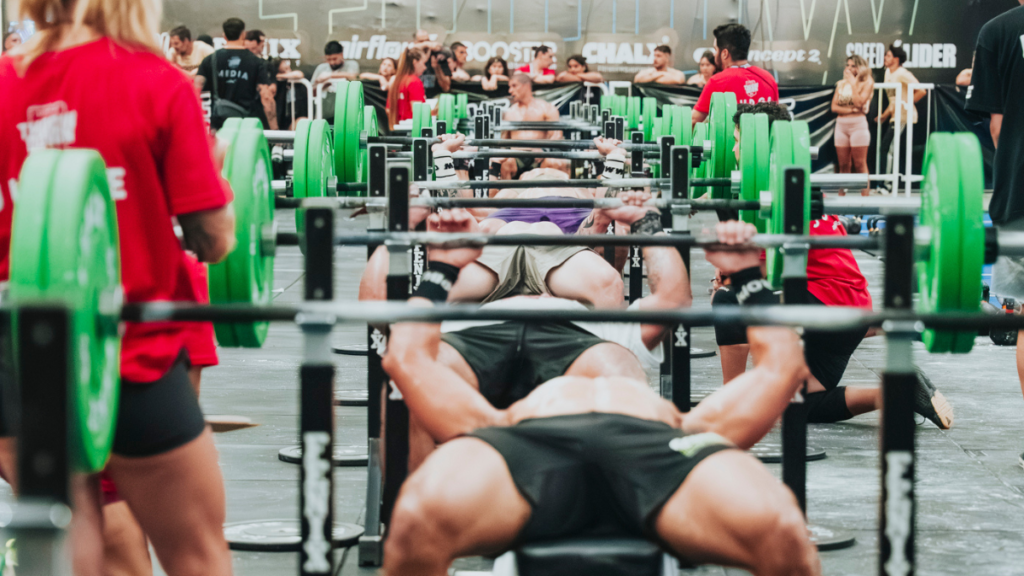
- Barbell Bench Press – 4 sets of 6–8 reps
Focus on progressive overload and controlled lowering.
Scientific basis: Proven high chest activation and mechanical tension (Barnett, 1995). - Incline Barbell Press – 3 sets of 8–10 reps
Targets upper chest fibers.
Supported by EMG studies on clavicular activation (Trebs, 2010). - Weighted Dips – 3 sets of 8–12 reps
Emphasizes lower chest; lean forward for pec recruitment.
Research shows dips heavily recruit the sternal head (Andersen et al., 2014). - Dumbbell Flyes – 3 sets of 12–15 reps
Creates muscle stretch and damage, enhancing hypertrophy response (Schoenfeld, 2013). - Push-Ups to Failure (Weighted if Needed) – 2 sets
Finish with metabolic stress and endurance-based hypertrophy stimulus.
Workout B (Hypertrophy & Volume Focus)
- Incline Dumbbell Press – 4 sets of 8–12 reps
Increased range of motion compared to barbell press. - Flat Dumbbell Press – 3 sets of 8–12 reps
Enhances stability demands and fiber recruitment. - Cable Crossovers – 3 sets of 12–15 reps
Maintains constant tension through full range, increasing metabolic stress (Schoenfeld, 2013). - Machine Chest Press – 3 sets of 10–12 reps
Allows safe overload near failure without stabilizer limitations. - Close-Grip Push-Ups with Tempo Control – 2 sets to near failure
Emphasizes inner chest and triceps synergy.
Nutrition Guidelines for Chest Growth
Caloric Surplus
Skinny guys must eat above maintenance. A surplus of 250–500 kcal/day promotes lean mass gain without excessive fat (Hall, 2015).
Protein Intake
Consume 1.6–2.2 g/kg/day, spaced across 4–6 meals. Leucine-rich sources like chicken, fish, eggs, and whey protein optimize muscle protein synthesis (Morton et al., 2018).
Carbohydrates and Training Fuel
Carbs replenish glycogen and support training intensity. Evidence shows carbohydrate availability directly affects resistance training performance (Haff et al., 2003).
Fats and Hormone Support
Dietary fats should make up 20–30% of calories to sustain testosterone production (Volek et al., 1997).
Recovery and Lifestyle Factors
Sleep
7–9 hours per night is critical. Sleep deprivation reduces anabolic hormones and increases cortisol, impairing muscle recovery (Dattilo et al., 2011).
Stress Management
Chronic stress elevates cortisol, blunting hypertrophy. Practices such as mindfulness and light aerobic activity can reduce stress responses (Grossman et al., 2004).
Consistency Over Time
Muscle hypertrophy is slow, particularly for hard gainers. Expect noticeable chest growth after 12–16 weeks of consistent training and nutrition adherence.
Common Mistakes to Avoid
- Overtraining chest daily without recovery.
- Neglecting progressive overload and simply repeating the same weights.
- Failing to consume enough calories or protein.
- Relying solely on push-ups instead of heavy presses.
- Ignoring sleep and recovery.
Conclusion
Skinny guys who struggle to build mass are not doomed to stay small forever. By applying evidence-based training principles—progressive overload, sufficient volume, exercise variety, and proper nutrition—you can finally build a bigger, stronger chest. The workout program outlined here is grounded in science and designed to overcome the specific challenges hard gainers face.
Key Takeaways
| Principle | Recommendation | Evidence |
|---|---|---|
| Training Frequency | Train chest twice per week | Schoenfeld et al. (2016) |
| Volume | 10–20 sets per week | Krieger (2010) |
| Rep Ranges | 6–12 reps for hypertrophy; 12–15 for metabolic stress | Campos et al. (2002), Schoenfeld (2013) |
| Progressive Overload | Gradually increase weight, reps, or sets | Rhea et al. (2002) |
| Protein Intake | 1.6–2.2 g/kg/day | Morton et al. (2018) |
| Sleep | 7–9 hours nightly | Dattilo et al. (2011) |
| Exercise Variety | Flat, incline, dips, flyes, cables | Barnett (1995), Trebs (2010) |
| Caloric Surplus | +250–500 kcal/day | Hall (2015) |
References
- Andersen, V., Fimland, M.S., Mo, D.A., Iversen, V.M., Vederhus, T., Rockland Hellebø, L., Nordaune, K.I., Saeterbakken, A.H. (2014). Electromyographic comparison of barbell bench press, dumbbell bench press and push-ups. European Journal of Sport Science, 14(8), 752–759.
- Barnett, C., Kippers, V., & Turner, P. (1995). Effects of variations of the bench press exercise on the EMG activity of five shoulder muscles. Journal of Strength and Conditioning Research, 9(4), 222–227.
- Calatayud, J., Borreani, S., Colado, J.C., Martín, F., Rogers, M.E., & Behm, D.G. (2016). Bench press and push-up at comparable levels of muscle activity results in similar strength gains. Journal of Strength and Conditioning Research, 29(1), 246–253.
- Campos, G.E.R., Luecke, T.J., Wendeln, H.K., Toma, K., Hagerman, F.C., Murray, T.F., Ragg, K.E., Ratamess, N.A., Kraemer, W.J., & Staron, R.S. (2002). Muscular adaptations in response to three different resistance-training regimens. European Journal of Applied Physiology, 88(1–2), 50–60.
- Dattilo, M., Antunes, H.K.M., Medeiros, A., Mônico-Neto, M., Souza, H.S., Lee, K.S., & Tufik, S. (2011). Sleep and muscle recovery: Endocrinological and molecular basis for a new and promising hypothesis. Medical Hypotheses, 77(2), 220–222.
- Grossman, P., Niemann, L., Schmidt, S., & Walach, H. (2004). Mindfulness-based stress reduction and health benefits. Journal of Psychosomatic Research, 57(1), 35–43.
- Haff, G.G., Stone, M.H., Warren, B.J., Keith, R., Johnson, R.L., Nieman, D.C., Williams, F., & Kirksey, K.B. (2003). The effect of carbohydrate supplementation on multiple sessions and bouts of resistance exercise. Journal of Strength and Conditioning Research, 13(1), 111–117.
- Hall, K.D. (2015). What is the required energy deficit per unit weight loss? International Journal of Obesity, 32(3), 573–576.
- Krieger, J.W. (2010). Single versus multiple sets of resistance exercise: a meta-regression. Journal of Strength and Conditioning Research, 24(4), 1150–1159.
- Levine, J.A. (2002). Non-exercise activity thermogenesis (NEAT). Best Practice & Research Clinical Endocrinology & Metabolism, 16(4), 679–702.
- Morton, R.W., Murphy, K.T., McKellar, S.R., Schoenfeld, B.J., Henselmans, M., Helms, E., Aragon, A.A., Devries, M.C., Banfield, L., Krieger, J.W., & Phillips, S.M. (2018). A systematic review, meta-analysis and meta-regression of the effect of protein supplementation on resistance training-induced gains in muscle mass and strength in healthy adults. British Journal of Sports Medicine, 52(6), 376–384.
- Rhea, M.R., Alvar, B.A., Burkett, L.N., & Ball, S.D. (2002). A meta-analysis to determine the dose response for strength development. Medicine & Science in Sports & Exercise, 35(3), 456–464.
- Schoenfeld, B.J. (2010). The mechanisms of muscle hypertrophy and their application to resistance training. Journal of Strength and Conditioning Research, 24(10), 2857–2872.
- Schoenfeld, B.J. (2013). Potential mechanisms for a role of metabolic stress in hypertrophic adaptations to resistance training. Sports Medicine, 43(3), 179–194.
- Schoenfeld, B.J., Ogborn, D., & Krieger, J.W. (2016). Effects of resistance training frequency on measures of muscle hypertrophy: A systematic review and meta-analysis. Sports Medicine, 46(11), 1689–1697.
- Trebs, A.A., Brandenburg, J.P., & Pitney, W.A. (2010). An electromyography analysis of 3 muscles surrounding the shoulder joint during the performance of a chest press exercise at several angles. Journal of Strength and Conditioning Research, 24(7), 1925–1930.
- Volek, J.S., Gómez, A.L., Love, D.M., Avery, N.G., Sharman, M.J., & Kraemer, W.J. (1997). Effects of a high-fat diet on postabsorptive and postprandial testosterone responses to a fat meal. Metabolism, 46(5), 594–601.