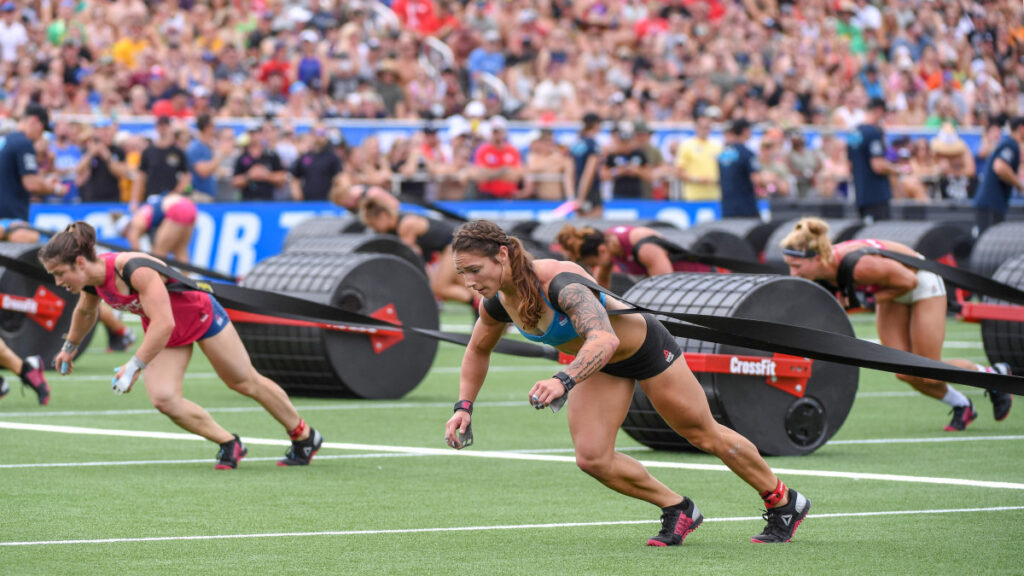
Check out the resistance band exercises for home gains that you need in your life.
Resistance bands are one of the most versatile and cost-effective tools for strength training at home. Unlike free weights, bands provide variable resistance, challenging muscles throughout the full range of motion and improving both strength and stability.


Scientific evidence has shown that resistance band training can be just as effective as traditional weight training for improving muscle mass, strength, and functional performance.
This article presents the 10 best resistance band exercises for building muscle at home, backed by research and explained in detail for practical application.
Why Resistance Bands Work
Resistance bands create linear variable resistance, meaning the tension increases as the band stretches. This contrasts with free weights, where resistance is constant throughout the movement. Studies show that this characteristic promotes greater muscle activation, especially during the concentric (lifting) phase, while also reducing joint stress. For example, Andersen et al. (2010) found that elastic resistance training improved muscle strength and rehabilitation outcomes comparably to free weights.
Furthermore, resistance bands are lightweight, portable, and adaptable to a wide range of exercises, making them ideal for home workouts where equipment and space are limited.
Resistance Band Exercises for Home: Key Training Principles
Before diving into the exercises, it is important to apply principles of progressive overload, volume, and intensity:
- Progressive overload: Gradually increase band thickness or tension level to continue stimulating adaptations.
- Volume: Perform 3–4 sets of 8–15 repetitions, depending on your goal (strength vs hypertrophy).
- Tempo control: Emphasize slow eccentrics to maximize muscle engagement.
With these principles in mind, let’s explore the top 10 resistance band exercises.
1. Resistance Band Exercises for Home: Band Squats
How to Perform
- Stand on the band with feet shoulder-width apart, holding the handles or band ends at shoulder height.
- Squat down, keeping your chest upright and knees tracking over toes.
- Drive upward against the resistance until standing tall.
Muscles Worked
Quadriceps, glutes, hamstrings, core.
Science
A study by Colado and Triplett (2008) demonstrated that lower-body elastic resistance exercises effectively activate quadriceps and glute muscles, making them suitable alternatives to weighted squats.
2. Resistance Band Exercises for Home: Band Deadlifts
How to Perform
- Stand on the band with feet hip-width apart.
- Hold the ends with palms facing inward, hinge at the hips, and keep your back flat.
- Extend hips and stand tall, squeezing the glutes at the top.
Muscles Worked
Glutes, hamstrings, lower back, traps.
Science
Research highlights that elastic resistance training produces significant electromyographic (EMG) activity in posterior chain muscles, supporting its role in improving strength and reducing risk of hamstring injuries (Jakobsen et al., 2012).
3. Resistance Band Exercises for Home: Band Chest Press
How to Perform
- Anchor the band behind you at chest height.
- Hold handles and step forward to create tension.
- Press arms forward until fully extended, then return slowly.
Muscles Worked
Pectorals, triceps, anterior deltoids.
Science
In clinical populations, resistance band chest presses improved muscular strength and cardiovascular health markers, highlighting its utility even beyond hypertrophy (Andersen et al., 2010).
4. Resistance Band Exercises for Home: Band Rows
How to Perform
- Anchor the band at waist height.
- Grip both ends, step back for tension, and pull elbows backward.
- Squeeze the shoulder blades together before returning.
Muscles Worked
Lats, rhomboids, biceps, rear delts.
Science
Resistance band rows promote scapular retraction and postural control, which is critical for both athletes and sedentary individuals (Andersen et al., 2010).
5. Band Overhead Press
How to Perform
- Stand on the band, holding ends at shoulder height.
- Press arms overhead until fully extended.
- Lower with control.
Muscles Worked
Deltoids, triceps, trapezius.
Science
EMG studies show high deltoid activation during elastic resistance overhead presses, making them comparable to dumbbell variations (Jakobsen et al., 2012).
6. Resistance Band Exercises for Home: Band Pull-Aparts
How to Perform
- Hold the band at shoulder height with arms extended forward.
- Pull hands apart until arms are stretched out to the sides.
- Slowly return.
Muscles Worked
Rear delts, rhomboids, mid traps.
[wpcode id=”229888″]Science
Pull-aparts are recommended for shoulder stability and injury prevention, particularly among athletes with high shoulder stress (Andersen et al., 2010).
7. Band Bicep Curls
How to Perform
- Stand on the band and hold ends with palms facing forward.
- Curl arms upward, keeping elbows tucked.
- Lower slowly to full extension.
Muscles Worked
Biceps brachii, brachialis, forearms.
Science
Band curls produce comparable hypertrophy stimulus to free weights due to continuous tension (Colado & Triplett, 2008).
8. Resistance Band Exercises for Home: Band Tricep Extensions
How to Perform
- Anchor the band overhead.
- Hold the ends with elbows bent at 90 degrees.
- Extend arms downward until fully straightened, then return.
Muscles Worked
Triceps brachii.
Science
Elastic resistance training effectively isolates the triceps, and studies show increased activation in pushing movements when bands are used as an accessory (Sundstrup et al., 2016).
9. Resistance Band Exercises for Home: Band Lateral Walks
How to Perform
- Place a looped band around your thighs or ankles.
- Assume a slight squat position.
- Step sideways, maintaining constant band tension.
Muscles Worked
Gluteus medius, gluteus maximus, hip stabilizers.
Science
Research confirms that lateral band walks activate the gluteus medius more than many other exercises, making them highly effective for hip stability (Distefano et al., 2009).
10. Resistance Band Exercises for Home: Band Face Pulls
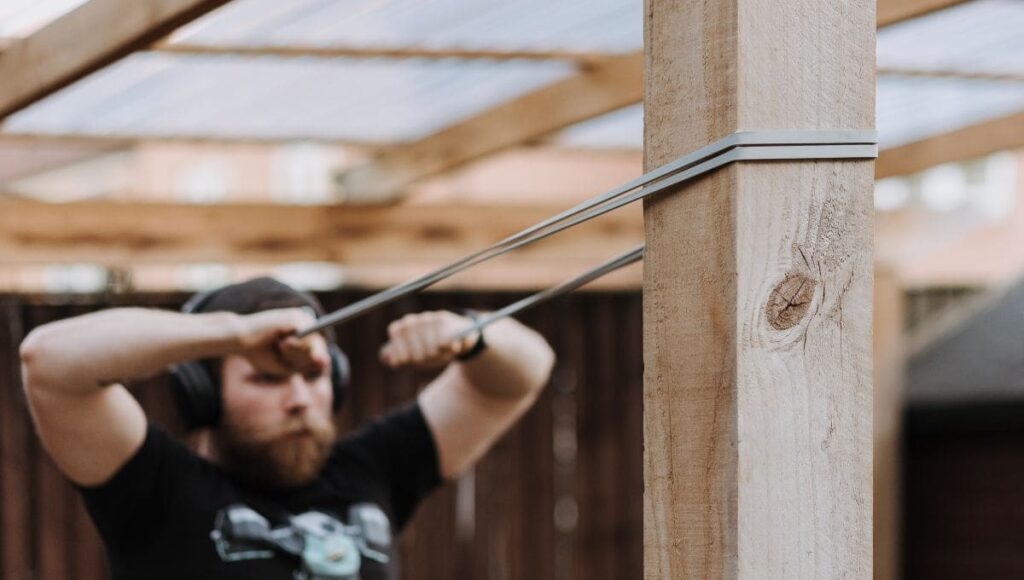
How to Perform
- Anchor the band at upper chest height.
- Hold ends with palms facing down.
- Pull towards your face, elbows high, externally rotating shoulders.
Muscles Worked
Rear delts, traps, external rotators.
Science
Face pulls with resistance bands enhance rotator cuff strength and scapular control, essential for reducing risk of shoulder impingement (Reinold et al., 2004).
Programming Resistance Band Workouts
For hypertrophy, aim for 8–12 reps per set with moderate to high tension. For strength and power, use lower reps (4–6) with thicker bands. Combine 5–6 of the above exercises into a full-body workout performed 3–4 times per week. Progressive overload should be applied by increasing band resistance or repetitions over time.
Conclusion
Resistance bands are a powerful tool for at-home training. Backed by research, they provide a safe, effective, and scalable way to build muscle, improve stability, and enhance athletic performance. By mastering these 10 exercises, individuals can achieve significant gains without needing expensive gym equipment.
Key Takeaways
| Exercise | Primary Muscles Worked | Scientific Benefit Highlighted |
|---|---|---|
| Band Squats | Quads, glutes, hamstrings | Comparable muscle activation to weights |
| Band Deadlifts | Glutes, hamstrings, back | Improves posterior chain activation |
| Band Chest Press | Chest, triceps, delts | Effective for strength & rehab |
| Band Rows | Lats, rhomboids, biceps | Enhances posture & scapular stability |
| Band Overhead Press | Delts, triceps, traps | High deltoid activation |
| Band Pull-Aparts | Rear delts, rhomboids | Improves shoulder health |
| Band Bicep Curls | Biceps, forearms | Comparable hypertrophy stimulus |
| Band Tricep Extensions | Triceps | Isolates triceps effectively |
| Band Lateral Walks | Glute medius, stabilizers | High glute activation for hip stability |
| Band Face Pulls | Rear delts, rotator cuff | Improves rotator cuff strength |
Bibliography
- Andersen, C.H., Andersen, L.L., Mortensen, O.S., Poulsen, O.M., Bjørnlund, I.B. & Zebis, M.K., 2010. Muscle activation and perceived loading during rehabilitation exercises: Comparison of dumbbells and elastic resistance. Journal of Strength and Conditioning Research, 24(12), pp. 3266–3273.
- Colado, J.C. & Triplett, N.T., 2008. Effects of a short-term resistance program using elastic bands versus weight machines for sedentary middle-aged women. Journal of Strength and Conditioning Research, 22(5), pp. 1441–1448.
- Distefano, L.J., Blackburn, J.T., Marshall, S.W. & Padua, D.A., 2009. Gluteal muscle activation during common therapeutic exercises. Journal of Orthopaedic and Sports Physical Therapy, 39(7), pp. 532–540.
- Jakobsen, M.D., Sundstrup, E., Andersen, C.H., Aagaard, P. & Andersen, L.L., 2012. Muscle activity during knee-extension strengthening exercise performed with elastic tubing and isotonic resistance. International Journal of Sports Physical Therapy, 7(6), pp. 606–616.
- Reinold, M.M., Escamilla, R.F. & Wilk, K.E., 2004. Current concepts in the scientific and clinical rationale behind exercises for glenohumeral and scapulothoracic musculature. Journal of Orthopaedic and Sports Physical Therapy, 34(7), pp. 385–403.
- Sundstrup, E., Jakobsen, M.D., Andersen, C.H., Jay, K. & Andersen, L.L., 2016. Effectiveness of elastic resistance training for musculoskeletal health and fitness: A systematic review and meta-analysis. European Journal of Sport Science, 16(5), pp. 639–652.