Developing a powerful, muscular back is not only an aesthetic pursuit—it is fundamental for performance, injury prevention, and overall athletic capacity.
The back consists of several large muscle groups, including the latissimus dorsi, trapezius, rhomboids, and erector spinae, all of which play critical roles in pulling strength, spinal stability, and posture.


Building a “jacked” back requires a structured approach supported by exercise science. Below, we break down five evidence-based steps to maximize back development in the gym.
Step 1: Prioritize Compound Movements
Why Compound Lifts Matter
Compound lifts recruit multiple joints and muscle groups simultaneously, making them the most efficient way to stimulate hypertrophy and strength. Deadlifts, pull-ups, barbell rows, and bent-over dumbbell rows are cornerstones of back development.
Research shows that multi-joint exercises generate significantly greater increases in muscle mass and strength compared to isolation movements because of higher mechanical tension and systemic hormonal responses (Schoenfeld, 2010).
Key Movements
- Deadlift (Conventional or Trap Bar): Targets the entire posterior chain, including spinal erectors, lats, and traps.
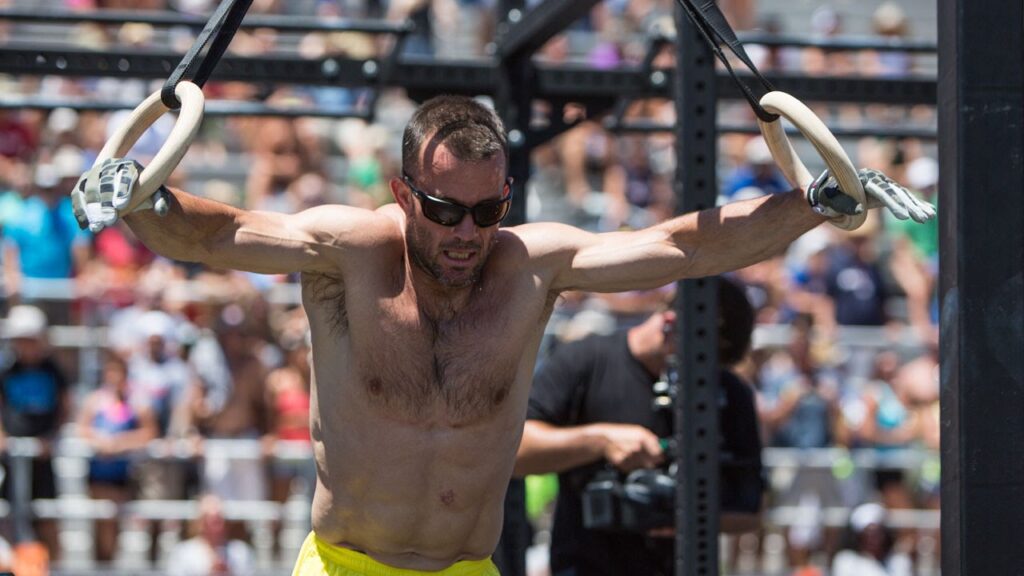
- Pull-Up/Chin-Up: Bodyweight vertical pulling that emphasizes latissimus dorsi recruitment and scapular stability.
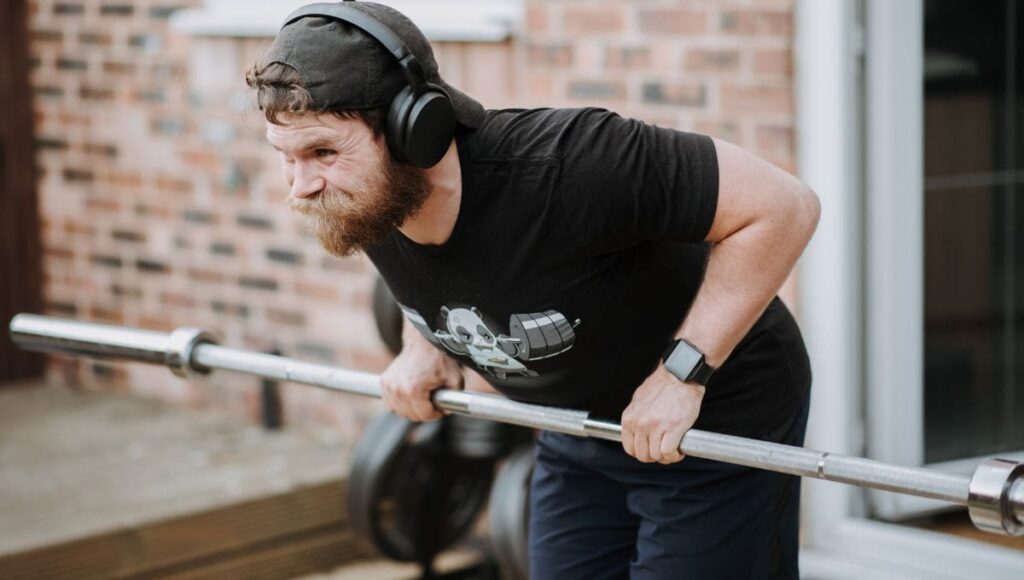
- Barbell Row: Horizontal pulling that develops thickness through the mid-back and rhomboid activation.
Scientific Backing
A study by Contreras et al. (2010) highlighted that the deadlift and its variations elicit high electromyographic (EMG) activity across both the erector spinae and latissimus dorsi. Similarly, Youdas et al. (2010) found that the pull-up is one of the most effective exercises for lat activation, surpassing many machine-based alternatives.
[wpcode id=”229888″]Step 2: Optimize Training Volume and Frequency
Understanding Volume
Training volume—defined as sets × reps × load—is one of the primary drivers of hypertrophy. Schoenfeld et al. (2017) demonstrated that higher weekly set volumes (10+ sets per muscle group) significantly increase muscle growth compared to lower volumes.
Frequency Considerations
Dividing back work across 2–3 sessions per week is superior to once-weekly training for maximizing hypertrophy. Research by Zaroni et al. (2019) showed that training a muscle group multiple times per week led to greater growth, even when total weekly volume was equated.

Practical Application
- Weekly Sets for Back: Aim for 12–20 working sets per week, spread across different rep ranges and exercises.
- Intensity: Use loads of 65–85% of 1RM for hypertrophy, with occasional heavier work (85–95%) to drive strength.
Step 3: Train Across Movement Planes
Vertical and Horizontal Pulling
Balanced back development requires addressing both vertical and horizontal pulling. Vertical pulls (pull-ups, lat pulldowns) emphasize width by targeting the lats, while horizontal pulls (rows, face pulls) enhance thickness and rear deltoid support.
Rotational and Anti-Rotational Work
Spinal stabilizers such as the multifidus and obliques also contribute to functional back strength. Exercises like single-arm rows and landmine rotations add unilateral loading and challenge anti-rotational stability, which is supported by research on core training and spinal health (Behm et al., 2010).
Erector Spinae and Lower Back
Neglecting the lower back is a common mistake. The erector spinae supports spinal alignment and heavy lifting. Back extensions, Romanian deadlifts, and good mornings provide effective stimulation while maintaining injury resilience (McGill, 2007).
Step 4: Apply Progressive Overload and Periodization
Principles of Progressive Overload
Muscle adaptation occurs when stress exceeds current capacity. Over time, you must increase load, volume, or intensity to continue progressing. Research by Peterson et al. (2005) confirmed that progressive overload is essential for strength and hypertrophy.
Periodization Models
Linear and undulating periodization strategies are both effective. A meta-analysis by Rhea and Alderman (2004) concluded that periodized training yields superior strength gains compared to non-periodized programs. For back training, alternating between heavy strength phases and moderate hypertrophy blocks ensures continuous adaptation.
Practical Strategies
- Load Increases: Add 2–5% to major lifts every 2–3 weeks.
- Rep Cycling: Rotate between 5–8 reps for strength, 8–12 for hypertrophy, and 12–15 for muscular endurance.
- Deload Weeks: Reduce volume every 6–8 weeks to promote recovery and long-term progression.
Step 5: Integrate Recovery and Nutritional Support

Recovery
Muscle repair and growth occur outside the gym. Sleep, stress management, and adequate rest days are non-negotiable. Studies indicate that 7–9 hours of sleep per night enhances muscle recovery, hormonal balance, and strength performance (Dattilo et al., 2011).
Nutrition
Protein intake is the cornerstone of recovery. Morton et al. (2018) established that consuming 1.6–2.2 g of protein per kilogram of bodyweight per day maximizes hypertrophy. Carbohydrates are equally important for glycogen replenishment, particularly for high-volume back training.
Supplementation
- Creatine Monohydrate: Proven to increase strength and training volume capacity (Kreider et al., 2017).
- Caffeine: Enhances acute strength and endurance performance (Grgic et al., 2019).
Conclusion
Building a jacked back requires more than just throwing weights around. It demands a structured, evidence-based approach that combines heavy compound lifts, optimal training volume, balanced movement patterns, progressive overload, and proper recovery. By integrating these five steps, lifters can maximize muscle growth, functional strength, and long-term resilience.
Key Takeaways
| Step | Focus | Application |
|---|---|---|
| 1 | Compound Movements | Prioritize deadlifts, pull-ups, and rows for maximum recruitment |
| 2 | Training Volume & Frequency | 12–20 weekly sets across 2–3 sessions |
| 3 | Multi-Plane Training | Balance vertical and horizontal pulls; include lower back |
| 4 | Progressive Overload | Increase load, reps, or volume; use periodization |
| 5 | Recovery & Nutrition | Sleep 7–9 hrs, 1.6–2.2 g/kg protein, creatine for support |
Bibliography
- Behm, D.G., Drinkwater, E.J., Willardson, J.M. and Cowley, P.M., 2010. The use of instability to train the core musculature. Applied Physiology, Nutrition, and Metabolism, 35(1), pp.91–108.
- Contreras, B., Schoenfeld, B., Beardsley, C., Cronin, J. and Ogborn, D., 2010. The biomechanics of the deadlift. Strength and Conditioning Journal, 33(5), pp.61–79.
- Dattilo, M., Antunes, H.K.M., Medeiros, A., Mônico-Neto, M., Souza, H.S. and Tufik, S., 2011. Sleep and muscle recovery: Endocrinological and molecular basis for a new and promising hypothesis. Medical Hypotheses, 77(2), pp.220–222.
- Grgic, J., Trexler, E.T., Lazinica, B. and Schoenfeld, B.J., 2019. Effects of caffeine intake on muscle strength and power: A systematic review and meta-analysis. Journal of the International Society of Sports Nutrition, 15(1), p.11.
- Kreider, R.B., Kalman, D.S., Antonio, J., Ziegenfuss, T.N., Wildman, R., Collins, R. and Candow, D.G., 2017. International Society of Sports Nutrition position stand: safety and efficacy of creatine supplementation in exercise, sport, and medicine. Journal of the International Society of Sports Nutrition, 14(1), p.18.
- McGill, S.M., 2007. Low back disorders: Evidence-based prevention and rehabilitation. Champaign, IL: Human Kinetics.
- Morton, R.W., Murphy, K.T., McKellar, S.R., Schoenfeld, B.J., Henselmans, M., Helms, E. and Phillips, S.M., 2018. A systematic review, meta-analysis and meta-regression of the effect of protein supplementation on resistance training-induced gains in muscle mass and strength in healthy adults. British Journal of Sports Medicine, 52(6), pp.376–384.
- Peterson, M.D., Rhea, M.R. and Alvar, B.A., 2005. Applications of the dose-response for muscular strength development: A review of meta-analytic efficacy and reliability for designing training prescription. Journal of Strength and Conditioning Research, 19(4), pp.950–958.
- Rhea, M.R. and Alderman, B.L., 2004. A meta-analysis of periodized versus nonperiodized strength and power training programs. Research Quarterly for Exercise and Sport, 75(4), pp.413–422.
- Schoenfeld, B.J., 2010. The mechanisms of muscle hypertrophy and their application to resistance training. Journal of Strength and Conditioning Research, 24(10), pp.2857–2872.
- Schoenfeld, B.J., Ogborn, D. and Krieger, J.W., 2017. Dose-response relationship between weekly resistance training volume and increases in muscle mass: A systematic review and meta-analysis. Journal of Sports Sciences, 35(11), pp.1073–1082.
- Youdas, J.W., Amundson, C.L., Cicero, K.S., Hahn, J.J., Harezlak, D.T. and Hollman, J.H., 2010. Surface electromyographic analysis of the latissimus dorsi during common rehabilitation exercises. Journal of Strength and Conditioning Research, 24(12), pp.3533–3541.
- Zaroni, R.S., Brigatto, F.A., Schoenfeld, B.J., Braz, T.V., Benvenutti, J.C., Germano, M.D. and Aoki, M.S., 2019. High resistance-training frequency enhances muscle thickness in resistance-trained men. Journal of Strength and Conditioning Research, 33(Suppl 1), pp.S140–S151.