Are you making any of these common lifting mistakes?
Strength training is one of the most effective ways to build muscle, enhance performance, and improve overall health. However, even experienced lifters often fall into technical or programming errors that limit progress and increase injury risk.


Correcting these mistakes is critical if you want to push toward personal records (PRs) safely and efficiently.
This article outlines five of the most common lifting mistakes, explains why they matter, and provides evidence-based solutions to help you break plateaus and maximize strength gains.
Mistake 1: Neglecting Proper Technique

Common Lifting Mistakes: Why Technique Matters
Poor lifting technique increases the risk of injury and reduces mechanical efficiency. Research shows that improper biomechanics in compound lifts such as the squat or deadlift place unnecessary stress on joints and connective tissues, impairing force transfer and long-term progression (Escamilla, 2001). Technique is not simply about aesthetics but about ensuring optimal motor patterns for performance and safety.
Common Lifting Mistakes: Common Errors
- Rounded lumbar spine during deadlifts.
- Excessive forward knee travel in squats.
- Lack of scapular retraction during bench press.
These compensations often emerge from fatigue, mobility limitations, or lack of technical awareness.
How to Fix It
- Video Analysis: Filming lifts provides objective feedback. Studies on motor learning emphasize visual feedback as a tool for correcting technique (Winstein, 1991).
- Movement Cues: Short, specific cues (“chest up,” “spread the floor,” “elbows under the bar”) are proven to improve motor performance without overloading attention (Wulf, 2013).
- Accessory Mobility Work: Limited ankle dorsiflexion or hip extension often causes technical breakdowns. Targeted mobility routines can restore correct joint mechanics (Behm & Chaouachi, 2011).
Mistake 2: Overemphasizing Volume Without Recovery
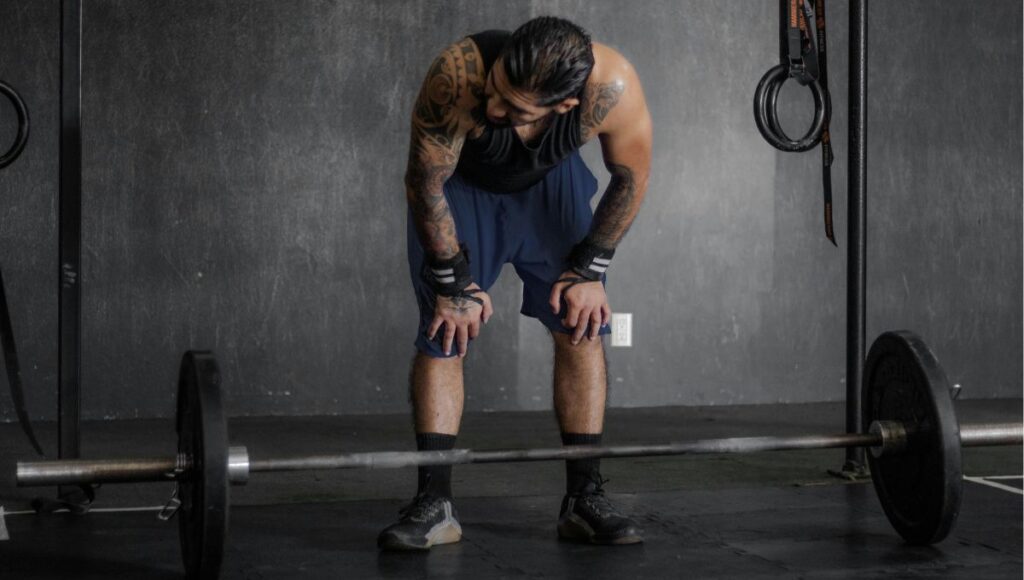
Common Lifting Mistakes: Why Recovery Matters
Training volume is a major driver of hypertrophy and strength (Schoenfeld et al., 2016). However, excessive volume without adequate recovery can induce non-functional overreaching, fatigue, and injury risk. Chronic recovery deficits blunt anabolic signaling and impair strength gains (Meeusen et al., 2013).
Common Lifting Mistakes: Common Errors
- Training to failure in every session.
- Neglecting rest days.
- Prioritizing volume over quality of work.
How to Fix It
- Follow Structured Periodization: Periodized training, alternating phases of intensity and recovery, has been shown to produce superior performance compared to constant high-load training (Kraemer & Ratamess, 2004).
- Respect Sleep and Nutrition: Sleep under 7 hours is linked to reduced strength gains and increased injury risk (Fullagar et al., 2015). Protein intake of ~1.6–2.2 g/kg/day optimizes muscle repair (Morton et al., 2018).
- Monitor Fatigue: Tracking performance metrics (e.g., bar velocity) and subjective wellness scales can help identify when recovery is insufficient.
Mistake 3: Ignoring Progressive Overload
Why Progressive Overload Is Essential
Without gradual increases in training load, the body adapts to a fixed stimulus and plateaus. Progressive overload, whether through load, volume, or density, is the cornerstone of strength development (Peterson et al., 2005).
Common Lifting Mistakes: Common Errors
- Repeating the same weight and rep scheme for months.
- Adding random intensity “shock weeks” without structure.
- Confusing exercise variation with true overload.
How to Fix It
- Use Measurable Load Progressions: Increasing weight by 2–5% per week in key lifts provides sufficient progressive stimulus while minimizing injury risk.
- Track Reps in Reserve (RIR): Autoregulation with RIR or Rate of Perceived Exertion (RPE) has been shown to improve strength outcomes compared to fixed percentage training (Helms et al., 2018).
- Apply Double Progression: Once you reach the top of a rep range with good form, increase load and repeat. This ensures continual stimulus while protecting against stagnation.
Mistake 4: Neglecting Accessory and Stability Work
Common Lifting Mistakes: Why Accessory Work Matters
Many lifters focus exclusively on the “big three” lifts—squat, bench, and deadlift—while neglecting supporting musculature. Imbalances reduce force efficiency and predispose lifters to injury. Research confirms that weak stabilizers, such as the gluteus medius or rotator cuff, compromise movement quality and strength performance (Caterisano et al., 2002).
Common Errors
- Skipping unilateral lower-body work.
- Avoiding horizontal pulling movements.
- Neglecting core stability training.
Common Lifting Mistakes: How to Fix It
- Strengthen Weak Links: Incorporate Bulgarian split squats, single-leg Romanian deadlifts, and rows to address asymmetries.
- Core Stability Training: Anti-extension and anti-rotation exercises such as planks and Pallof presses enhance trunk stiffness, which improves barbell lifts (McGill, 2010).
- Rotator Cuff and Scapular Work: External rotations and face pulls support shoulder health, critical for bench and overhead lifts.
Mistake 5: Poor Warm-Up and Activation Strategies
Why Warm-Ups Are Crucial
Dynamic warm-ups increase muscle temperature, enhance neural drive, and improve force output (Fradkin et al., 2010). Skipping or rushing this step can reduce performance and increase injury likelihood.
Common Lifting Mistakes: Common Errors
[wpcode id=”229888″]- Static stretching before maximal lifts.
- Jumping straight to working sets.
- Neglecting specific activation of weak or inhibited muscles.
Common Lifting Mistakes: How to Fix It
- Dynamic Mobility Drills: Movements such as walking lunges, hip circles, and arm swings enhance range of motion without impairing performance.
- Specific Muscle Activation: Glute bridges, band pull-aparts, and scapular push-ups prepare key stabilizers. Activation drills improve recruitment patterns during heavy lifts (Distefano et al., 2009).
- Gradual Ramp-Up Sets: Performing submaximal sets that progressively increase load primes the neuromuscular system for heavy work.
Common Lifting Mistakes: Conclusion
Strength training progress requires more than just intensity and motivation. Avoiding technical, programming, and preparation errors is fundamental for long-term performance and safety.
By focusing on proper technique, structured recovery, progressive overload, balanced accessory work, and evidence-based warm-ups, lifters can consistently push past plateaus and achieve new personal records.
Common Lifting Mistakes: Key Takeaways
| Mistake | Why It Matters | How to Fix It |
|---|---|---|
| Poor Technique | Increases injury risk and reduces efficiency | Use video feedback, apply cues, and address mobility limits |
| Excessive Volume, Little Recovery | Causes fatigue and blunts adaptation | Periodize training, prioritize sleep/nutrition, track fatigue |
| Lack of Progressive Overload | Leads to plateaus | Increase load systematically, use RIR/RPE, apply double progression |
| Ignoring Accessory Work | Creates imbalances and weak links | Add unilateral lifts, core stability, and rotator cuff training |
| Skipping Warm-Up | Reduces performance and raises injury risk | Perform dynamic mobility, activation drills, and ramp-up sets |
References
- Behm, D.G. & Chaouachi, A. (2011). A review of the acute effects of static and dynamic stretching on performance. European Journal of Applied Physiology, 111(11), pp.2633–2651.
- Caterisano, A., Moss, R.F., Pellinger, T.K., Woodruff, K., Lewis, V.C., Booth, W. & Khadra, T. (2002). The effect of back squat depth on the EMG activity of 4 superficial hip and thigh muscles. Journal of Strength and Conditioning Research, 16(3), pp.428–432.
- Distefano, L.J., Blackburn, J.T., Marshall, S.W. & Padua, D.A. (2009). Gluteal muscle activation during common therapeutic exercises. Journal of Orthopaedic & Sports Physical Therapy, 39(7), pp.532–540.
- Escamilla, R.F. (2001). Knee biomechanics of the dynamic squat exercise. Medicine & Science in Sports & Exercise, 33(1), pp.127–141.
- Fradkin, A.J., Zazryn, T.R. & Smoliga, J.M. (2010). Effects of warming-up on physical performance: a systematic review with meta-analysis. Journal of Strength and Conditioning Research, 24(1), pp.140–148.
- Fullagar, H.H., Skorski, S., Duffield, R. & Meyer, T. (2015). The effect of sleep loss on athletic performance. Sports Medicine, 45(2), pp.161–186.
- Helms, E.R., Grgic, J., Zourdos, M.C. & Storey, A.G. (2018). Application of the repetitions in reserve-based rating of perceived exertion scale for resistance training. Strength and Conditioning Journal, 40(4), pp.34–49.
- Kraemer, W.J. & Ratamess, N.A. (2004). Fundamentals of resistance training: progression and exercise prescription. Medicine & Science in Sports & Exercise, 36(4), pp.674–688.
- McGill, S.M. (2010). Core training: Evidence translating to better performance and injury prevention. Strength and Conditioning Journal, 32(3), pp.33–46.
- Meeusen, R., Duclos, M., Foster, C., Fry, A., Gleeson, M., Nieman, D., Raglin, J., Rietjens, G., Steinacker, J. & Urhausen, A. (2013). Prevention, diagnosis and treatment of the overtraining syndrome. European Journal of Sport Science, 13(1), pp.1–24.
- Morton, R.W., Murphy, K.T., McKellar, S.R., Schoenfeld, B.J., Henselmans, M., Helms, E., Aragon, A.A., Devries, M.C., Banfield, L., Krieger, J.W. & Phillips, S.M. (2018). A systematic review, meta-analysis and meta-regression of the effect of protein supplementation on resistance training–induced gains in muscle mass and strength in healthy adults. British Journal of Sports Medicine, 52(6), pp.376–384.
- Peterson, M.D., Rhea, M.R. & Alvar, B.A. (2005). Applications of the dose-response for muscular strength development: a review of meta-analytic efficacy and reliability for designing training prescription. Journal of Strength and Conditioning Research, 19(4), pp.950–958.
- Schoenfeld, B.J., Ogborn, D. & Krieger, J.W. (2016). Effects of resistance training frequency on measures of muscle hypertrophy: a systematic review and meta-analysis. Sports Medicine, 46(11), pp.1689–1697.
- Winstein, C.J. (1991). Knowledge of results and motor learning—implications for physical therapy. Physical Therapy, 71(2), pp.140–149.
- Wulf, G. (2013). Attentional focus and motor learning: a review of 15 years. International Review of Sport and Exercise Psychology, 6(1), pp.77–104.