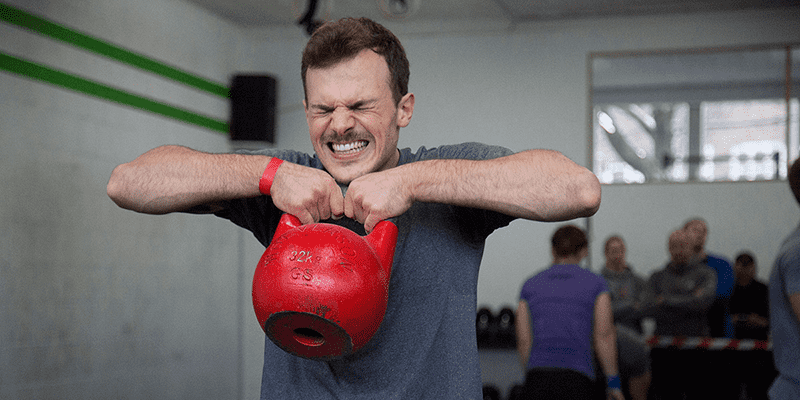
Strength training is one of the most effective ways to improve health, build muscle, and enhance athletic performance. For beginners stepping into the gym for the first time, one of the most common questions is: should you start with barbells or dumbbells?
Both tools are staples of resistance training, but each comes with distinct advantages and drawbacks. Understanding which is better for beginners requires an evidence-based exploration of biomechanics, safety, progression, and adaptability.


This article breaks down the science behind barbells and dumbbells, compares their benefits and limitations, and provides practical recommendations for beginners who want to start their strength training journey with confidence.
The Science of Resistance Training for Beginners
Why Strength Training Matters Early On
Strength training is foundational for physical health. It increases lean muscle mass, improves bone density, reduces the risk of chronic disease, and enhances metabolic function (Westcott, 2012). For beginners, structured resistance training also establishes neuromuscular coordination—the brain-muscle connection necessary to perform movements safely and effectively (Gabriel et al., 2006).
Starting with the right equipment can set the tone for long-term progress and adherence.
Progressive Overload and Adaptation
The principle of progressive overload—gradually increasing resistance over time—underpins all effective strength training. Both barbells and dumbbells provide scalable resistance, but the ease of progression differs. Beginners benefit from a training modality that allows safe, measurable, and incremental increases in load (Kraemer & Ratamess, 2004). Whether barbells or dumbbells fit this role better depends on the exercise, the lifter’s coordination, and their training environment.
Dumbbells: Benefits and Limitations for Beginners

Benefits of Dumbbells
- Improved Muscle Activation and Balance
Dumbbells require each limb to move independently, reducing the likelihood of muscular imbalances. Studies show that unilateral training enhances stabilizer muscle activation compared to bilateral training with barbells (Saeterbakken et al., 2013). - Greater Range of Motion (ROM)
Dumbbells allow a more natural path of movement, accommodating individual joint angles. Research confirms that exercises performed with dumbbells often increase ROM compared to barbells, potentially leading to better hypertrophy outcomes (Schoenfeld, 2010). - Accessibility and Safety
For beginners, dumbbells offer an approachable entry point. They can be dropped safely if fatigue sets in, unlike barbells, which may require a spotter or safety equipment. - Versatility for Functional Movements
Dumbbells are excellent for functional training—movements that mimic daily activities—because they demand stabilization across multiple planes (Behm & Sale, 1993).
Limitations of Dumbbells
- Load Ceiling
Dumbbells can limit progression for stronger individuals because gym dumbbell racks often top out at 40–50 kg. Beginners won’t hit this ceiling immediately, but long-term progression may be restricted. - Stability Demands
The freedom of movement, while beneficial, can also make dumbbells harder to control. Beginners with low coordination may struggle initially, increasing injury risk. - Time Efficiency
Setting up dumbbell exercises—especially heavy presses or rows—takes more time and energy compared to racking a barbell.

Barbells: Benefits and Limitations for Beginners
[wpcode id=”229888″]Benefits of Barbells
- Heavier Progressive Loading
Barbells allow lifters to move more weight safely. Research shows that barbell exercises like the squat, bench press, and deadlift recruit large muscle groups efficiently, facilitating progressive overload (Campos et al., 2002). - Efficiency in Training
With one barbell, a beginner can perform foundational compound lifts that target multiple muscle groups at once. This makes barbells ideal for strength-building efficiency. - Structured Movement Patterns
Barbell lifts follow more fixed movement paths, reducing instability compared to dumbbells. This can help beginners focus on core strength without worrying about excessive balance demands. - Performance Transfer
Because barbells allow maximum loading, they are particularly beneficial for athletes whose performance depends on absolute strength and power (Suchomel et al., 2016).

Limitations of Barbells
- Safety Concerns
Heavy barbell lifts often require spotters or safety equipment. Beginners without access to proper supervision may face higher injury risks. - Reduced Range of Motion
Compared to dumbbells, barbells restrict natural joint movement. For example, barbell bench presses lock both hands into a fixed path, which may not suit individuals with shoulder limitations (Welsch et al., 2005). - Intimidation Factor
Many beginners find barbells psychologically intimidating, particularly in busy gym environments. This barrier may reduce adherence to training programs.
Comparing Barbells and Dumbbells Across Key Metrics
Muscle Activation
- Dumbbells: Higher stabilizer activation due to unilateral demand (Saeterbakken et al., 2013).
- Barbells: Greater prime mover activation in maximal lifts, enabling heavier loads (Schick et al., 2010).
Range of Motion
- Dumbbells provide superior ROM, which can enhance hypertrophy (Schoenfeld, 2010).
- Barbells restrict ROM but allow higher absolute loads.
Injury Risk
- Dumbbells reduce catastrophic injury risk since they can be dropped.
- Barbells, if misused, can trap a beginner under load, requiring more safety measures.
Progression Potential
- Barbells scale infinitely with weight plates.
- Dumbbells cap out at gym-specific weight limits but are adequate for beginner and intermediate phases.
The Role of Neuromuscular Coordination
Beginners often underestimate the role of motor learning in strength training. Coordination improvements explain rapid early strength gains, independent of hypertrophy (Gabriel et al., 2006). Dumbbells encourage this adaptation because they demand stabilization and control. However, barbells help establish consistent motor patterns through repeatable movements. Both play complementary roles in training neuromuscular efficiency.
Psychological and Adherence Factors
Adherence is a critical predictor of long-term success in exercise programs. Beginners are more likely to stick with training when exercises feel approachable and confidence-building (Williams et al., 2008). Dumbbells may be less intimidating, especially in home or light-commercial settings. Conversely, barbells may build confidence through mastery of foundational lifts, which often carry a sense of accomplishment and measurable progression.
Which Is Better for Beginners?
The question of whether barbells or dumbbells are better for beginners does not have a single answer. Instead, it depends on goals, environment, and personal factors.
- Dumbbells are better for beginners seeking accessibility, safety, and improved motor control. They are ideal for home workouts or individuals with joint limitations.
- Barbells are better for beginners focused on long-term strength progression, efficient compound training, and athletic performance.
The optimal solution may be a hybrid approach: start with dumbbells to build coordination and stability, then gradually integrate barbells for progressive overload once foundational movement patterns are established.
Practical Recommendations for Beginners
- Start with Dumbbells for Form
Focus on dumbbell presses, rows, and goblet squats to learn movement mechanics safely. - Introduce Barbells Gradually
Begin with light barbell lifts, prioritizing technique over load. Exercises like the barbell squat and bench press should be learned under supervision. - Prioritize Safety
Use spotters or safety pins when attempting barbell lifts. Choose dumbbells when training alone. - Program for Progression
Incorporate both tools into a structured beginner program that includes compound lifts, accessory movements, and gradual load increases.
Conclusion
When deciding whether barbells or dumbbells are better for beginners, context matters. Dumbbells provide safety, accessibility, and joint-friendly movement patterns, making them ideal for early-stage lifters. Barbells, on the other hand, offer unparalleled potential for long-term progression and efficiency. Beginners will benefit most from combining both, starting with dumbbells for coordination and transitioning to barbells for strength development.
Key Takeaways
| Factor | Dumbbells | Barbells | Better for Beginners |
|---|---|---|---|
| Muscle Activation | Higher stabilizer engagement | Greater prime mover recruitment | Depends on goal |
| Range of Motion | Superior, more joint-friendly | Limited, fixed path | Dumbbells |
| Safety | Can be dropped easily | Requires spotter/safety | Dumbbells |
| Progression | Limited by dumbbell rack weight | Infinite with plates | Barbells |
| Coordination | Higher demand, improves balance | Lower demand, easier motor pattern | Dumbbells |
| Intimidation | Lower, approachable | Higher, intimidating | Dumbbells |
| Long-Term Strength | Limited ceiling | Superior progression | Barbells |
Bibliography
- Behm, D.G. & Sale, D.G., 1993. Intended rather than actual movement velocity determines velocity-specific training response. Journal of Applied Physiology, 74(1), pp.359-368.
- Campos, G.E.R., Luecke, T.J., Wendeln, H.K., Toma, K., Hagerman, F.C., Murray, T.F., Ragg, K.E., Ratamess, N.A., Kraemer, W.J. & Staron, R.S., 2002. Muscular adaptations in response to three different resistance-training regimens: specificity of repetition maximum training zones. European Journal of Applied Physiology, 88(1-2), pp.50-60.
- Gabriel, D.A., Kamen, G. & Frost, G., 2006. Neural adaptations to resistive exercise: mechanisms and recommendations for training practices. Sports Medicine, 36(2), pp.133-149.
- Kraemer, W.J. & Ratamess, N.A., 2004. Fundamentals of resistance training: progression and exercise prescription. Medicine & Science in Sports & Exercise, 36(4), pp.674-688.
- Saeterbakken, A.H., van den Tillaar, R. & Seiler, S., 2013. Effect of core stability training on throwing velocity in female handball players. Journal of Strength and Conditioning Research, 27(3), pp.712-718.
- Schick, E.E., Coburn, J.W., Brown, L.E., Judelson, D.A., Khamoui, A.V., Tran, T.T., Uribe, B.P., Leubbers, P.E. & Vingren, J.L., 2010. A comparison of muscle activation between a Smith machine and free weight bench press. Journal of Strength and Conditioning Research, 24(3), pp.779-784.
- Schoenfeld, B.J., 2010. The mechanisms of muscle hypertrophy and their application to resistance training. Journal of Strength and Conditioning Research, 24(10), pp.2857-2872.
- Suchomel, T.J., Nimphius, S. & Stone, M.H., 2016. The importance of muscular strength in athletic performance. Sports Medicine, 46(10), pp.1419-1449.
- Welsch, E.A., Bird, M. & Mayhew, J.L., 2005. Electromyographic activity of the pectoralis major during bench press exercise. Journal of Strength and Conditioning Research, 19(2), pp.449-452.
- Westcott, W.L., 2012. Resistance training is medicine: effects of strength training on health. Current Sports Medicine Reports, 11(4), pp.209-216.
- Williams, D.M., Dunsiger, S. & Marcus, B.H., 2008. Self-efficacy and self-determination theory: effects on exercise motivation. Journal of Behavioral Medicine, 31(5), pp.465-471.
About the Author

Robbie Wild Hudson is the Editor-in-Chief of BOXROX. He grew up in the lake district of Northern England, on a steady diet of weightlifting, trail running and wild swimming. Him and his two brothers hold 4x open water swimming world records, including a 142km swim of the River Eden and a couple of whirlpool crossings inside the Arctic Circle.
He currently trains at Falcon 1 CrossFit and the Roger Gracie Academy in Bratislava.