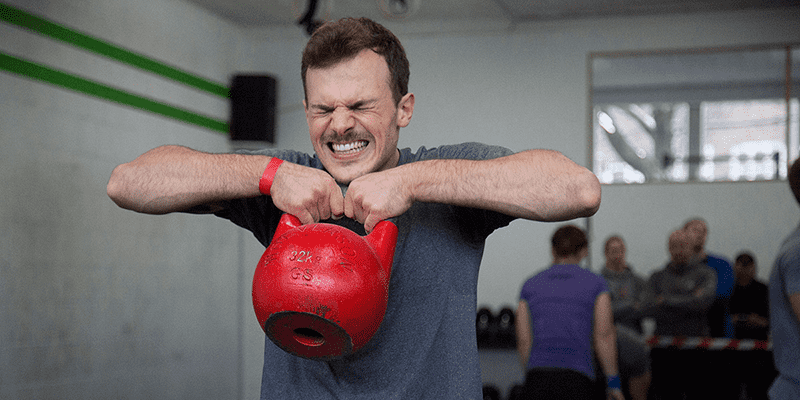
Designing a Beginner Friendly Training Plan is essential for new trainees to build strength, endurance, and consistency while avoiding injury. An evidence-based approach ensures that the plan is effective, scalable, and grounded in proven exercise science principles. This article provides a step-by-step framework to help beginners get started safely and sustainably.
Why a Beginner Friendly Training Plan Matters
For individuals new to exercise, the biggest challenges are often consistency, understanding safe training volumes, and setting realistic expectations. Research shows that poorly structured programs can lead to high dropout rates, excessive fatigue, and injury risk (Dishman et al., 1985). A beginner plan reduces these risks by focusing on progressive overload, adequate recovery, and balanced training modalities.


Principles of a Beginner Friendly Training Plan
Progressive Overload
Progressive overload—gradually increasing exercise difficulty—is the cornerstone of training adaptation. Without it, the body quickly plateaus (ACSM, 2021). For beginners, this may mean adding repetitions, sets, or small amounts of weight weekly rather than large jumps.
Beginner Friendly Training Plan – Specificity
Training must align with goals. A beginner seeking general fitness requires a balanced approach across strength, cardiovascular fitness, and mobility (Schoenfeld & Grgic, 2018).
Recovery and Adaptation
Beginners need more recovery than advanced trainees. Evidence shows that novices experience greater muscle damage after sessions, requiring longer rest to adapt (Clarkson & Hubal, 2002).
Beginner Friendly Training Plan – Individualization
Factors such as age, body composition, injury history, and lifestyle must be considered. Even within beginner populations, adaptation rates vary widely (Hubal et al., 2005).
Structuring the Training Plan
Frequency
Research suggests three sessions per week provide optimal balance of adaptation and recovery for beginners (Garber et al., 2011). This schedule reduces burnout risk while promoting habit formation.
Duration
Each session should last 45–60 minutes. Studies show that adherence drops significantly when workouts exceed one hour, particularly in beginners (Wilson et al., 2016).
Beginner Friendly Training Plan – Intensity
Moderate intensity is ideal for new trainees. Cardiovascular activity should target 50–70% of maximal heart rate, while resistance training should use loads of 60–70% of one-repetition maximum (RPE 6–7 out of 10) (ACSM, 2021).
Components of the Plan
Warm-Up
A 5–10 minute dynamic warm-up increases blood flow, reduces injury risk, and enhances performance (Behm & Chaouachi, 2011). Recommended movements include bodyweight squats, lunges, and arm circles.
Strength Training
Beginner strength training should emphasize compound movements. Research confirms that multi-joint exercises like squats and presses elicit greater hormonal and neuromuscular responses (Paoli et al., 2017).
Key movements:
- Squat variations (bodyweight, goblet squat)
- Hip hinge (Romanian deadlift, hip thrust)
- Push (push-ups, dumbbell press)
- Pull (rows, assisted pull-ups)
- Core stability (planks, dead bugs)
Cardiovascular Training
Aerobic conditioning supports cardiovascular health, weight management, and recovery. A mix of steady-state cardio and low-intensity intervals is effective for beginners (Gibala et al., 2012). Sessions can include brisk walking, cycling, or rowing.
Mobility and Flexibility
Static stretching post-workout improves range of motion and reduces soreness perception (Behm et al., 2016). Beginners benefit from 10 minutes of targeted stretches at the end of sessions.
[wpcode id=”229888″]Weekly Template Example
Day 1 (Full Body Strength + Cardio)
- Warm-up: 10 minutes dynamic
- Strength: 5 exercises, 3 sets each
- Cardio: 20 minutes brisk walking
- Stretching: 10 minutes
Day 2 (Active Recovery / Mobility)
- Yoga, stretching, or light walking
Day 3 (Strength + Intervals)
- Warm-up: 10 minutes
- Strength: 4–5 compound lifts
- Cardio: 10 x 1-minute intervals at moderate pace
- Cool-down: 10 minutes stretching
Day 4 (Rest)
Day 5 (Strength + Steady State Cardio)
- Warm-up: 10 minutes
- Strength: 4 compound lifts
- Cardio: 30 minutes cycling at steady pace
- Stretching: 10 minutes
Day 6 (Optional Light Activity)
Day 7 (Rest)
Nutrition and Recovery Considerations
Protein Intake
Adequate protein supports muscle growth. Evidence recommends 1.6–2.2 g per kg body weight per day for active individuals (Morton et al., 2018).
Sleep
Sleep enhances recovery, hormone regulation, and training response. Studies show athletes sleeping less than 6 hours have impaired strength gains compared to those with 8 hours (Dattilo et al., 2011).
Hydration
Dehydration impairs both aerobic and strength performance. A fluid intake of 30–35 ml/kg body weight is recommended for active individuals (Sawka et al., 2007).
Monitoring Progress
Beginners should track sessions, weights, and perceived exertion. Studies show self-monitoring significantly improves adherence and results (Burke et al., 2011).
Common Mistakes to Avoid
- Overtraining: Excessive volume without recovery leads to fatigue and injury (Kreher & Schwartz, 2012).
- Neglecting Technique: Poor movement patterns can cause injury and limit progress.
- Skipping Warm-Ups/Cool-Downs: These components reduce injury risk and enhance recovery.
Adjusting the Plan Over Time
After 8–12 weeks, beginners should reassess goals and gradually increase training intensity or variety. Periodization—planned variations in training—improves long-term progress (Issurin, 2010).
Key Takeaways Table
| Principle | Evidence-Based Guideline | Application for Beginners |
|---|---|---|
| Frequency | 3 sessions per week optimal | Full body focus each session |
| Duration | 45–60 minutes | Keeps sessions manageable |
| Intensity | Moderate (RPE 6–7) | Encourages progression without overload |
| Strength | Compound lifts preferred | Squats, presses, pulls |
| Cardio | Mix of steady-state & intervals | Walking, cycling, rowing |
| Recovery | 1–2 days rest per week | Sleep 7–9 hours |
| Nutrition | 1.6–2.2 g protein/kg | Supports muscle adaptation |
| Monitoring | Track weights & effort | Encourages adherence |
Bibliography
- ACSM (2021) ACSM’s Guidelines for Exercise Testing and Prescription. 11th ed. Philadelphia: Wolters Kluwer.
- Behm, D.G. and Chaouachi, A. (2011) ‘A review of the acute effects of static and dynamic stretching on performance’, European Journal of Applied Physiology, 111(11), pp. 2633–2651.
- Behm, D.G. et al. (2016) ‘Acute effects of muscle stretching on physical performance, range of motion, and injury incidence in healthy active individuals: a systematic review’, Applied Physiology, Nutrition, and Metabolism, 41(1), pp. 1–11.
- Burke, L.E. et al. (2011) ‘Self-monitoring in weight loss: a systematic review of the literature’, Journal of the American Dietetic Association, 111(1), pp. 92–102.
- Clarkson, P.M. and Hubal, M.J. (2002) ‘Exercise-induced muscle damage in humans’, American Journal of Physical Medicine & Rehabilitation, 81(11 Suppl), pp. S52–S69.
- Dattilo, M. et al. (2011) ‘Sleep and muscle recovery: endocrine and molecular basis for a new and promising hypothesis’, Medical Hypotheses, 77(2), pp. 220–222.
- Dishman, R.K. et al. (1985) ‘Determinants of physical activity and exercise adherence’, Public Health Reports, 100(2), pp. 158–171.
- Garber, C.E. et al. (2011) ‘Quantity and quality of exercise for developing and maintaining cardiorespiratory, musculoskeletal, and neuromotor fitness in apparently healthy adults’, Medicine & Science in Sports & Exercise, 43(7), pp. 1334–1359.
- Gibala, M.J. et al. (2012) ‘Physiological adaptations to low-volume, high-intensity interval training in health and disease’, Journal of Physiology, 590(5), pp. 1077–1084.
- Hubal, M.J. et al. (2005) ‘Variability in muscle size and strength gain after unilateral resistance training’, Medicine & Science in Sports & Exercise, 37(6), pp. 964–972.
- Issurin, V.B. (2010) ‘New horizons for the methodology and physiology of training periodization’, Sports Medicine, 40(3), pp. 189–206.
- Kreher, J.B. and Schwartz, J.B. (2012) ‘Overtraining syndrome: a practical guide’, Sports Health, 4(2), pp. 128–138.
- Morton, R.W. et al. (2018) ‘A systematic review, meta-analysis and meta-regression of the effect of protein supplementation on resistance training–induced gains in muscle mass and strength in healthy adults’, British Journal of Sports Medicine, 52(6), pp. 376–384.
- Paoli, A. et al. (2017) ‘Resistance training with single vs. multi-joint exercises at equal total load volume: effects on body composition, cardiorespiratory fitness, and muscle strength’, Frontiers in Physiology, 8, p. 1105.
- Sawka, M.N. et al. (2007) ‘American College of Sports Medicine position stand. Exercise and fluid replacement’, Medicine & Science in Sports & Exercise, 39(2), pp. 377–390.
- Schoenfeld, B.J. and Grgic, J. (2018) ‘Evidence-based guidelines for resistance training volume to maximize muscle hypertrophy’, Strength and Conditioning Journal, 40(4), pp. 107–112.
- Wilson, P.M. et al. (2016) ‘Longer workouts and adherence in novice exercisers: a randomized controlled trial’, Psychology of Sport and Exercise, 24, pp. 139–146.
About the Author

Robbie Wild Hudson is the Editor-in-Chief of BOXROX. He grew up in the lake district of Northern England, on a steady diet of weightlifting, trail running and wild swimming. Him and his two brothers hold 4x open water swimming world records, including a 142km swim of the River Eden and a couple of whirlpool crossings inside the Arctic Circle.
He currently trains at Falcon 1 CrossFit and the Roger Gracie Academy in Bratislava.