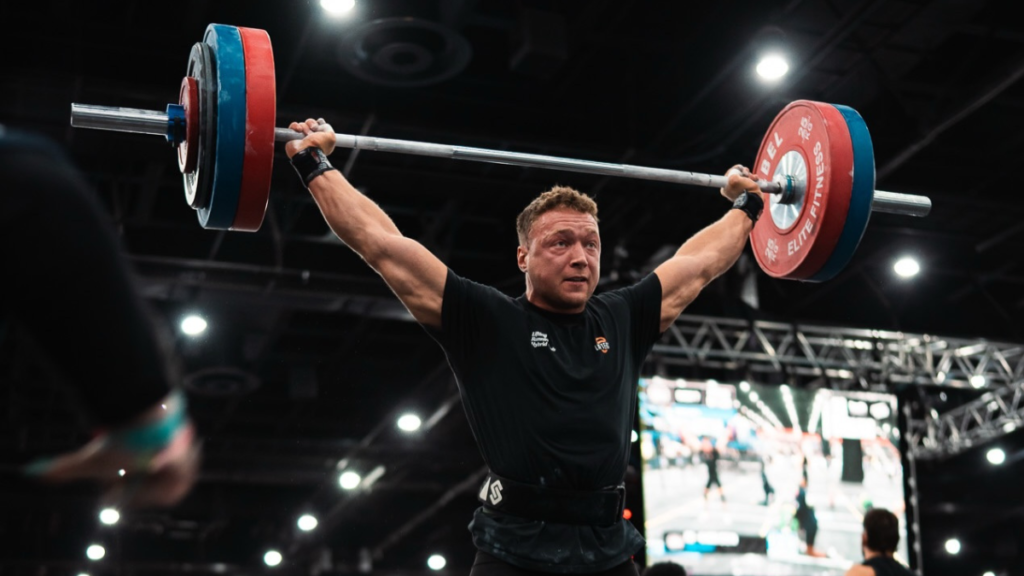
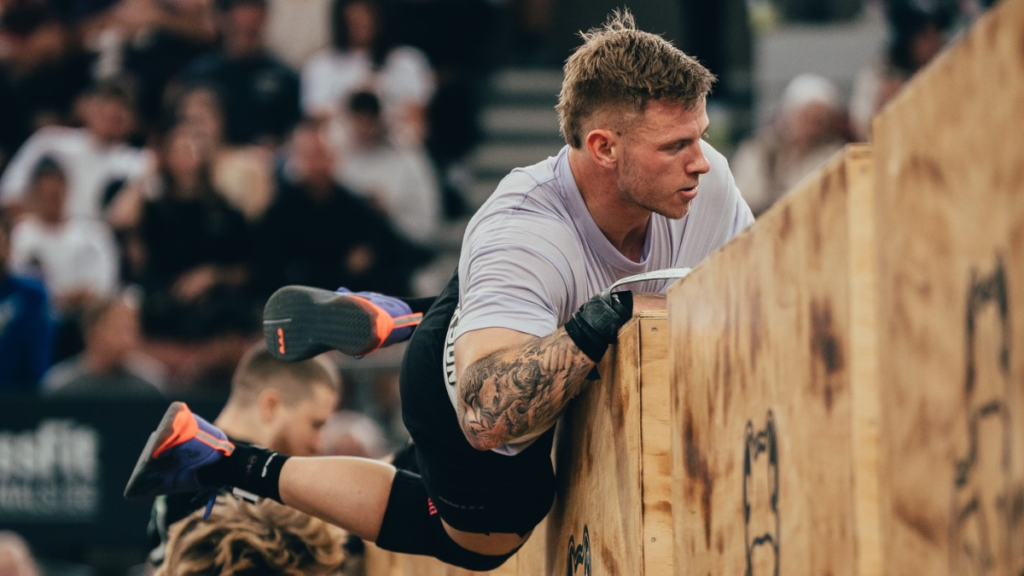
The 2025 TYR Wodapalooza concluded in Miami Beach on 23–26 January with James Sprague (549 pts) and Lucy Campbell (490 pts) winning the elite individual titles. The Boys (579 pts) topped the elite men’s teams and YETI Outkasts (504 pts) led the elite women’s teams. Full podiums and point totals are below.
Elite Individual — Top 5
- Men: 1) James Sprague (549), 2) Pat Vellner (525), 3) Austin Hatfield (522), 4) Ricky Garard (481), 5) Jonne Koski (468).
- Women: 1) Lucy Campbell (490), 2) Laura Horvath (485), 3) Alexis Raptis (470), 4) Emma Tall (458), 5) Elisa Fuliano (422).
Elite Teams — Top 5
- Men: 1) The Boys (579), 2) Mayhem Tres Leches (570), 3) Team GOWOD (561), 4) Team PJ’s (552), 5) Sculpted Scholars (507).
- Women: 1) YETI Outkasts (504), 2) Team NUSA (498), 3) Swedish House Mafia (495), 4) Relyte Salt Baes (489), 5) Tres Leches (451).
Division Champions
James Sprague, Elite Individual – Men
Lucy Campbell, Elite Individual – Women
The Boys, Elite Teams – Men
YETI Outkasts, Elite Teams – Women
Roldan Goldbaum, LatAm Cup – Men
Mariana Meza, LatAm Cup – Women
Ty Jenkins, RX – Men
Miley Wade, RX – Women
Nick Dompierre, Intermediate – Men
Maria Miranda, Intermediate – Women
Jan Bryčka, Open – Men
Lucie Tvrznikova, Open – Women
Robert Wakeham, Masters 35-39 – Men
Andrea Nisler, Masters 35-39 – Women
Bradley Alcock, Masters 40-44 – Men
Chelsea Hanson, Masters 40-44 – Women
Josh Petlowany, Masters 45-49, Men
Boukerrou Pascale, Masters 45-49, Women
Brian Cheek, Masters 50-54 – Men
Monica Marigliano, Masters 50-54 – Women
Jay Sanderson, Masters 55-59 – Men
Janet Pam, Masters 55-59 – Women
Ralph Bass, Masters 60+ – Men
Karen Dawkins, Masters 60+ – Women
Kaiden Hogan, Teens 16-18 – Boys
Maggie Sullivan, Teens 16-18 – Girls
Maddox Metcalf, Teens 13-15 – Boys
Keira McManus, Teens 13-15 – Girls
Crossdepot, RX Team – Men
FSU, RX Team – Women
Team Stamina, Intermediate Team – Men
Team Malta, Intermediate Team – Women
Cowboys du CrossFit, Open Team – Men
Hold My Beer, Open Team – Women
Three Ami-Bros, RX Masters Team – Men
Masters Chitter Chatter, RX Masters Team – Women
The Breaking Backs, Open Masters Team – Men
Gym Boss Babes, Open Masters Team – Women
Anthony Gutierrez, Lower Adaptive – Men
Alicia Burton, Lower Adaptive – Women
Josh Robinson, Neuro Adaptive – Men
Courtnei Lopez, Neuro Adaptive – Women
Josh Maldonado, Upper Adaptive – Men
Debbie O’Connell, Upper Adaptive – Women
Tom Miazga, Seated Adaptive – Men
Amalia Ortuno Lizano, Seated Adaptive – Women
Florian Gruhlke, Open Standing Adaptive – Men
Sara Perry, Open Standing Adaptive – Women


What the Results Indicate About Performance in Multi-Event Fitness
Consistency across varied tasks is decisive
Wodapalooza’s cumulative scoring rewards athletes who avoid low placings across mixed modalities. Research in functional fitness consistently shows that performance depends on multiple physiological qualities (maximal strength, anaerobic capacity, aerobic power), and broader profiles—rather than single peaks—better predict competitive outcomes across repeated events (Butcher et al., 2015; Martínez-Gómez et al., 2020; Mangine et al., 2021). In practice, this aligns with Sprague’s and Campbell’s high placements across events.
Pacing and sustainable round rates matter
Pilot data on the CrossFit Open show that average round rate and the ability to avoid slow rounds strongly predict workout performance, emphasizing controlled, sustainable pacing over early surges (Mangine et al., 2021). Such pacing models explain how athletes preserve ranking in late-week events where fatigue accumulates.
Strength remains a key predictor—but not alone
Across benchmark WODs like Fran and Grace, whole-body strength (CrossFit Total) is a major predictor of time, while anaerobic threshold and power also contribute (Butcher et al., 2015; Serafini et al., 2019). This helps explain event-to-event variability: strong lifters may excel in heavy complexes yet still require conditioning and skill efficiency to maintain overall rank.
Recovery kinetics shape late-competition performance
After high-rep tasks (e.g., wall-ball-dominant pieces), physiological and performance markers often require 24–72 h to normalize, with measurable decrements persisting into the next day (Sousa Neto et al., 2022; comprehensive review in 2024). Effective between-event recovery (nutrition, pacing, and load management) is therefore performance-critical over four consecutive days.
Modality drives fatigue; technical efficiency reduces losses
Experimental work comparing gymnastics, metabolic conditioning and weightlifting shows distinct fatigue profiles by modality (e.g., greater neuromuscular fatigue from continuous, non-interval tasks), reinforcing the value of efficient mechanics to limit unnecessary breaks and no-reps (Maté-Muñoz et al., 2017; JSSM review). These findings support the competitive premium on clean execution in skills and barbell cycling.