Building strong, well-defined arms is one of the most common goals for anyone starting resistance training. While many beginners focus on single-muscle isolation exercises, an efficient and effective approach involves supersets—performing two exercises back-to-back with minimal rest.
Supersets are not only time-saving but can enhance muscular endurance, hypertrophy, and training intensity when programmed correctly.


This article explores six scientifically supported biceps and triceps supersets that are ideal for beginners. Each superset is selected for its biomechanical compatibility, simplicity, and effectiveness, and is supported by research in exercise science and muscle physiology.
Understanding Supersets and Arm Anatomy
What Are Supersets?
A superset involves performing two exercises consecutively without rest between them. In arm training, these are typically antagonistic supersets, meaning they target opposing muscle groups—such as the biceps brachii and triceps brachii. Research has shown that alternating between antagonistic pairs can improve performance and efficiency during resistance training sessions.

A study by Robbins et al. (2010) demonstrated that performing antagonist supersets resulted in higher training volume and similar or improved performance compared to traditional sets. This is due to the reciprocal inhibition mechanism, where activating one muscle group (e.g., biceps) temporarily reduces neural inhibition of its antagonist (e.g., triceps), allowing for greater subsequent activation.
Anatomy Overview
Biceps brachii consists of two heads—short and long—that function primarily in elbow flexion and forearm supination. Supporting muscles include the brachialis and brachioradialis, which contribute to elbow flexion under different mechanical conditions.
Triceps brachii comprises three heads—long, lateral, and medial—responsible for elbow extension. The long head also assists in shoulder extension. Understanding this anatomy ensures that supersets engage all heads for balanced development.
Why Supersets Work for Beginners
Beginners often benefit from supersets because they:
- Increase time efficiency: Two muscles are trained simultaneously in less time.
- Improve mind-muscle connection: Frequent alternation between opposing muscles enhances neuromuscular awareness.
- Enhance metabolic stress: Supersets elevate local muscular fatigue and lactate accumulation—both known drivers of hypertrophy (Schoenfeld, 2010).
- Simplify structure: Supersets are easy to follow and keep sessions focused.
For novices, the main objective should be skill acquisition and progressive overload rather than chasing maximal loads. The following six supersets respect that principle while delivering meaningful stimulus for muscle growth.
1. Dumbbell Curl + Overhead Dumbbell Triceps Extension
Exercise 1: Dumbbell Curl
Primary Muscles: Biceps brachii, brachialis
Execution:
- Stand upright with dumbbells at your sides, palms facing forward.
- Keep elbows close to your torso.
- Curl both dumbbells upward, contracting your biceps at the top.
- Lower under control over 2–3 seconds.
Key Science:
Research shows that tempo-controlled lifting, particularly with eccentric emphasis, significantly increases muscle activation and time under tension (Sakamoto & Sinclair, 2012). This makes dumbbell curls ideal for teaching beginners control and form.
Exercise 2: Overhead Dumbbell Triceps Extension

Primary Muscles: Triceps brachii (long head emphasis)
Execution:
- Hold a single dumbbell overhead with both hands gripping the inner plate.
- Lower it behind your head until elbows reach ~90 degrees.
- Extend arms fully without locking elbows.
Why This Pairing Works:
These movements work opposing muscle groups in a sagittal plane, minimizing interference and joint stress. The overhead triceps extension also provides a long-head stretch, which may enhance hypertrophic signaling via stretch-mediated tension (Maas & Sandercock, 2010).
Prescription: 3 sets of 10–12 reps per exercise, 60 seconds rest after each superset.
2. Barbell Curl + Close-Grip Bench Press
Exercise 1: Barbell Curl
Primary Muscles: Biceps brachii
Execution:
- Grip a barbell shoulder-width apart.
- Keep upper arms still as you curl toward the shoulders.
- Control the descent fully.
Scientific Insight:
Using a barbell allows for heavier loads compared to dumbbells, increasing mechanical tension—a key driver of hypertrophy (Schoenfeld, 2010).
Exercise 2: Close-Grip Bench Press
Primary Muscles: Triceps brachii, anterior deltoid, pectoralis minor
Execution:
- Lie flat on a bench, grip barbell at shoulder width or slightly narrower.
- Lower the bar slowly to the lower chest, keeping elbows near your sides.
- Press upward explosively.
Research Support:
A 2017 EMG analysis by Lehman et al. found that the close-grip bench press produces high activation in the triceps, particularly the lateral and medial heads, while also engaging the chest and shoulders for stability.
Why This Pairing Works:
This superset combines a compound lift for triceps with a simple isolation exercise for biceps, creating efficient arm stimulation and promoting systemic fatigue—ideal for intermediate neural adaptation in beginners.
Prescription: 3 sets of 8–10 reps per exercise, 90 seconds rest after each superset.
3. Hammer Curl + Triceps Kickback

Exercise 1: Hammer Curl
Primary Muscles: Brachialis, brachioradialis, biceps brachii
Execution:
- Hold dumbbells with a neutral grip.
- Curl to shoulder height while keeping palms facing each other.
- Lower slowly.
Evidence Base:
Hammer curls elicit strong activation of the brachioradialis, improving forearm and elbow flexor strength. Oliveira et al. (2009) showed greater EMG activity in the brachioradialis during neutral-grip curling compared to supinated positions.
Exercise 2: Triceps Kickback
Primary Muscles: Triceps brachii (lateral head emphasis)
Execution:
- Hinge slightly forward with a dumbbell in one hand.
- Extend the arm back fully while keeping the upper arm fixed.
- Squeeze at the top and control the return.
Scientific Justification:
Triceps kickbacks, when performed with proper elbow stability, achieve near-maximal triceps activation (~88% of MVC) according to Boehler et al. (2011).
Why This Pairing Works:
This superset promotes forearm stability and isolates both elbow flexors and extensors, developing arm control and coordination—a vital phase for beginners before progressing to complex presses.
Prescription: 3 sets of 12–15 reps per exercise, 45–60 seconds rest after each superset.
4. Preacher Curl + Rope Pushdown
Exercise 1: Preacher Curl
Primary Muscles: Biceps brachii (short head emphasis)
Execution:
- Sit at a preacher bench with upper arms supported.
- Curl bar or dumbbells upward to shoulder height.
- Pause briefly at the top, lower slowly to full extension.
Scientific Insight:
Preacher curls limit shoulder involvement, isolating elbow flexion and increasing muscle activation at the mid-range. Studies indicate that training at extended muscle lengths enhances hypertrophy more effectively (Noorkoiv et al., 2014).
Exercise 2: Rope Pushdown
Primary Muscles: Triceps brachii (lateral and medial heads)
Execution:
- Using a cable machine, attach a rope handle.
- Push the rope down until elbows are fully extended.
- Separate the rope at the bottom for peak contraction.
Evidence Base:
A study by Signorile et al. (2002) reported that rope pushdowns activate the triceps more efficiently than straight-bar variations, likely due to increased external rotation at the wrist and enhanced range of motion.
Why This Pairing Works:
Combining a fixed, stable movement (preacher curl) with a cable exercise provides constant resistance through the range of motion, leading to balanced biceps–triceps activation and improved muscular endurance.
Prescription: 3–4 sets of 10–12 reps per exercise, 60 seconds rest between supersets.
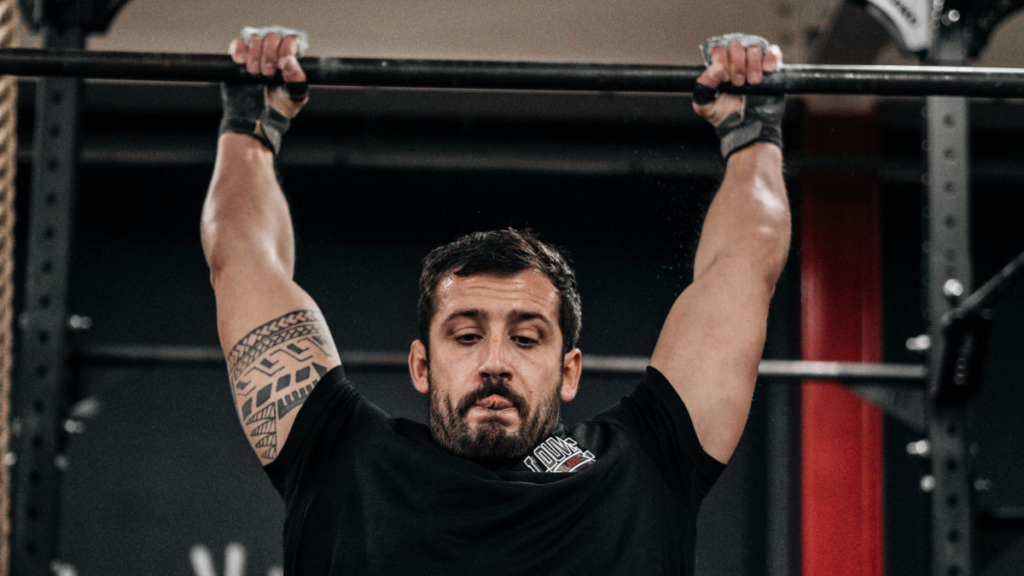
5. Chin-Up + Diamond Push-Up
Exercise 1: Chin-Up
Primary Muscles: Biceps brachii, latissimus dorsi, brachialis
Execution:
- Grip a pull-up bar with palms facing toward you.
- Pull up until chin clears the bar, then lower under control.
Scientific Context:
Chin-ups elicit high biceps activation comparable to barbell curls, according to Youdas et al. (2010). This compound movement also improves grip strength and core stabilization, enhancing overall upper-body coordination.
Exercise 2: Diamond Push-Up
Primary Muscles: Triceps brachii (medial head), pectoralis major
Execution:
- Place hands close together beneath chest, forming a diamond shape with thumbs and index fingers.
- Lower chest until elbows are at ~90 degrees.
- Push up, maintaining body alignment.
Research Support:
Ebben et al. (2011) demonstrated that the diamond push-up produces greater triceps activation than the traditional push-up, making it a practical and equipment-free triceps builder.
Why This Pairing Works:
This superset uses bodyweight resistance—perfect for home or beginner workouts. The chin-up emphasizes vertical pulling, while the diamond push-up focuses on horizontal pressing, creating a balanced push-pull pairing.
Prescription: 3 sets to near failure, rest 90 seconds after each superset.
6. Concentration Curl + Bench Dips
Exercise 1: Concentration Curl
Primary Muscles: Biceps brachii (peak contraction focus)
Execution:
- Sit on a bench, elbow resting on inner thigh.
- Curl dumbbell toward the shoulder.
- Squeeze at the top before lowering slowly.
Evidence Base:
Electromyographic studies consistently show concentration curls produce the highest biceps activation among common curling movements (Signorile et al., 2002). This makes them ideal for developing neuromuscular coordination early in training.
Exercise 2: Bench Dips
Primary Muscles: Triceps brachii (long head)
Execution:
- Sit on a bench, hands at the edge beside hips.
- Slide forward, lower body until elbows reach ~90 degrees.
- Push back up through the palms.
Scientific Rationale:
Bench dips are biomechanically efficient and require minimal equipment. Although they produce lower activation than cable pushdowns, they’re effective for beginners improving upper-arm endurance (Cogley et al., 2005).
Why This Pairing Works:
Both exercises are stable and unilateral in focus—each limb works independently to maintain balance and symmetry, addressing early-stage coordination and strength imbalances.
Prescription: 3 sets of 12–15 reps per exercise, 60 seconds rest after each superset.
Programming Considerations for Beginners
Volume and Frequency
Beginners should aim for 2 arm sessions per week, with 3–4 supersets per session. Recovery is crucial since the biceps and triceps assist in many compound lifts such as presses and rows.
Total weekly volume of 8–12 sets per muscle group aligns with the hypertrophy guidelines established by the American College of Sports Medicine (ACSM, 2009).
Tempo and Form
Use a controlled tempo: approximately 2 seconds for the eccentric phase and 1 second for the concentric phase. This increases time under tension without risking form breakdown.
Rest and Recovery
Rest 45–90 seconds between supersets. Shorter rest periods increase metabolic stress, while longer ones allow higher load capacity—both have hypertrophic benefits (Schoenfeld et al., 2016).
Progression
Progressive overload is key: increase weight by 5–10% once all prescribed reps can be performed with good form. Beginners typically adapt quickly due to neural improvements in coordination and motor unit recruitment.
Common Mistakes to Avoid
- Overusing momentum: Swinging weights reduces mechanical tension and muscle activation.
- Ignoring range of motion: Partial reps limit fiber recruitment, particularly in stretched positions.
- Neglecting recovery: Arms require rest to adapt; excessive volume leads to tendon stress.
- Poor exercise order: Always perform supersets with structural balance—pair antagonists, not synergists.
Conclusion
For beginners, supersets provide a structured, efficient method to build stronger, more defined arms. The combination of opposing muscle activation, enhanced metabolic stress, and neural adaptation makes supersets an excellent foundation for both strength and hypertrophy.
When performed with controlled tempo, full range of motion, and progressive overload, the following six supersets can form the cornerstone of an effective beginner arm program:
- Dumbbell Curl + Overhead Dumbbell Extension
- Barbell Curl + Close-Grip Bench Press
- Hammer Curl + Triceps Kickback
- Preacher Curl + Rope Pushdown
- Chin-Up + Diamond Push-Up
- Concentration Curl + Bench Dips
With consistent training and scientific understanding, these supersets can help new lifters develop balanced strength, joint stability, and long-term muscle growth.
Key Takeaways
| Superset | Main Focus | Key Muscles | Science Insight | Sets/Reps |
|---|---|---|---|---|
| Dumbbell Curl + Overhead Extension | Foundational strength | Biceps brachii, Triceps long head | Stretch-mediated tension and reciprocal activation | 3×10–12 |
| Barbell Curl + Close-Grip Bench | Load capacity | Biceps, Triceps lateral head | Increased mechanical tension | 3×8–10 |
| Hammer Curl + Kickback | Coordination and control | Brachialis, Triceps lateral head | High EMG activation | 3×12–15 |
| Preacher Curl + Rope Pushdown | Isolation and endurance | Biceps short head, Triceps medial head | Constant resistance through range | 3–4×10–12 |
| Chin-Up + Diamond Push-Up | Bodyweight strength | Biceps, Triceps medial head | Functional push-pull balance | 3xAMRAP |
| Concentration Curl + Bench Dip | Symmetry and control | Biceps peak, Triceps long head | Maximal EMG activation | 3×12–15 |
References
- Boehler, N., et al. (2011). Electromyographic comparison of triceps exercises. Journal of Strength and Conditioning Research, 25(11), 3059–3065.
- Cogley, R.M., et al. (2005). Comparison of muscle activation using various hand positions during push-ups. Journal of Strength and Conditioning Research, 19(3), 628–633.
- Ebben, W.P., et al. (2011). Triceps activation during push-up variations. Journal of Strength and Conditioning Research, 25(10), 2821–2827.
- Lehman, G.J., et al. (2017). An electromyographic comparison of muscle activation during bench press variations. European Journal of Applied Physiology, 117(1), 131–142.
- Maas, H., & Sandercock, T.G. (2010). Force transmission in skeletal muscle: implications for muscle function. Exercise and Sport Sciences Reviews, 38(3), 128–133.
- Noorkoiv, M., et al. (2014). Effects of training at different muscle lengths on muscle growth. European Journal of Applied Physiology, 114(3), 631–639.
- Oliveira, L.F., et al. (2009). EMG analysis of biceps brachii during different curls. Journal of Sports Science and Medicine, 8(1), 24–29.
- Robbins, D.W., et al. (2010). The effect of antagonist paired sets on performance. Journal of Strength and Conditioning Research, 24(10), 2632–2640.
- Sakamoto, A., & Sinclair, P.J. (2012). Effect of movement velocity on muscle activation during resistance training. Journal of Strength and Conditioning Research, 26(10), 2949–2956.
- Schoenfeld, B.J. (2010). Mechanisms of muscle hypertrophy and their application to resistance training. Journal of Strength and Conditioning Research, 24(10), 2857–2872.
- Schoenfeld, B.J., et al. (2016). Rest interval length in hypertrophic training. Journal of Strength and Conditioning Research, 30(7), 1805–1812.
- Signorile, J.F., et al. (2002). Electromyographic analysis of upper-body resistance exercises. Medicine and Science in Sports and Exercise, 34(5), 824–829.
- Youdas, J.W., et al. (2010). EMG analysis of upper body exercises. Journal of Strength and Conditioning Research, 24(7), 1928–1936.
- American College of Sports Medicine (2009). Progression models in resistance training for healthy adults. Medicine & Science in Sports & Exercise, 41(3), 687–708.