Strong, balanced, and well-defined shoulders are among the most striking features of an athletic physique. They not only create the illusion of a broader upper body and smaller waist but also contribute to functional strength, posture, and injury resistance.
Whether your goal is to look more confident in a T-shirt or perform better in the gym, understanding the science behind shoulder development is the key to success.


1. Understand the Anatomy of Attractive Shoulders
Before you can train for aesthetics and performance, you must understand what makes shoulders look impressive.
The Three Heads of the Deltoid
The deltoid muscle has three distinct portions:
- Anterior deltoid (front) — responsible for shoulder flexion and internal rotation.
- Lateral deltoid (side) — responsible for shoulder abduction, giving width and roundness.
- Posterior deltoid (rear) — responsible for shoulder extension and external rotation.
Research using electromyography (EMG) shows that each head activates differently depending on exercise selection and arm position (Boeckh-Behrens & Buskies, 2000). For truly attractive shoulders, you must target all three heads evenly.
Supporting Muscles Matter
The rotator cuff (supraspinatus, infraspinatus, teres minor, subscapularis) and scapular stabilizers (trapezius, rhomboids, serratus anterior) contribute to stability, balance, and posture. Neglecting these smaller muscles often leads to imbalances or injuries that limit long-term progress (Escamilla & Andrews, 2009).
2. Prioritize Lateral Deltoid Development for Width
The lateral deltoids are what create that desirable “V-taper” appearance—broad shoulders and a narrow waist.
Why the Lateral Delts Matter for Aesthetics
A wide upper body is a key factor in perceived physical attractiveness. Studies on body proportions have shown that a low shoulder-to-waist ratio (broad shoulders relative to waist) is strongly correlated with perceptions of strength and attractiveness (Dixson et al., 2003).
Thus, building strong lateral delts enhances both symmetry and visual impact.
The Best Exercises for Lateral Delts
- Dumbbell lateral raises: EMG studies confirm that they elicit high activation of the middle deltoid (Andersen et al., 2010).
- Cable lateral raises: Provide constant tension through the range of motion.
- Lean-away lateral raises: Slightly increase mechanical tension at the top range.
- Machine lateral raises: Allow greater isolation and safety under fatigue.
To maximize hypertrophy, train the lateral delts 2–3 times per week using moderate loads (10–20 reps per set) and a mix of tempos to stimulate both mechanical tension and metabolic stress (Schoenfeld, 2010).
3. Don’t Neglect Rear Deltoids for Balance and Posture
While the lateral delts shape the width, the rear delts create roundness and a 3D look.
Rear Delts and Shoulder Health
Neglecting the posterior deltoid leads to imbalance between front and back muscles. This imbalance can cause rounded shoulders, poor posture, and even shoulder impingement (Launder & Biewener, 2017). Balanced development helps maintain shoulder joint integrity and aesthetic proportion.
Effective Rear Delt Movements
- Reverse flyes (dumbbell or machine)
- Face pulls — among the best for rear delts and rotator cuff activation (Paoli et al., 2010).
- Rear delt cable crossovers
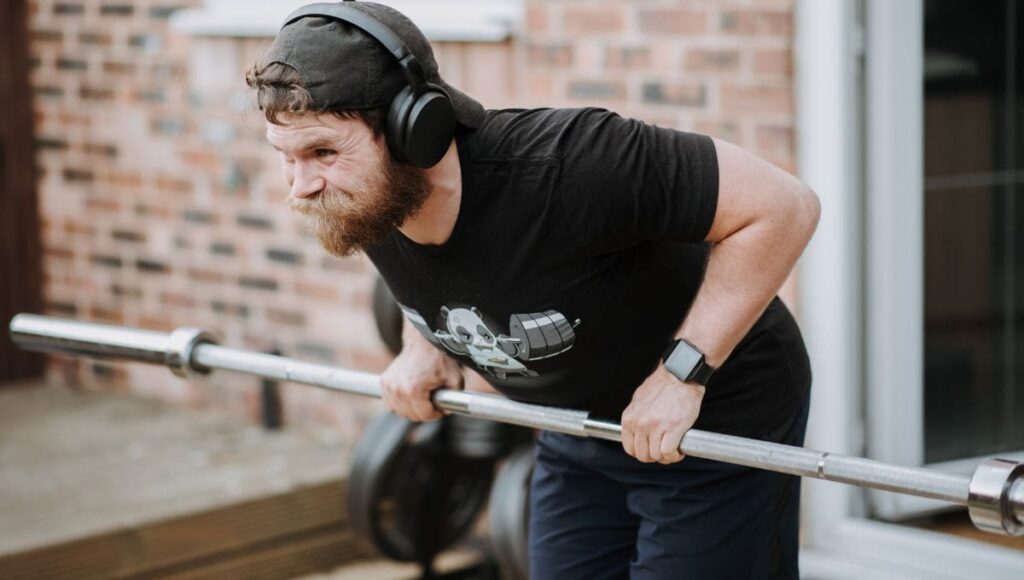
- Bent-over lateral raises
For optimal activation, focus on control rather than load—posterior delts respond better to higher reps (15–25) with perfect form. Slightly externally rotating the arms increases engagement of the rear delts over the traps.
4. Train the Front Delts Indirectly to Avoid Overdevelopment
Most lifters overtrain their anterior delts through pressing movements (bench press, push-ups, overhead press). Overdeveloped front delts can overpower the lateral and rear heads, reducing visual roundness.
The Problem with Front-Delt Dominance
Excessive anterior delt volume can contribute to internal shoulder rotation and postural imbalance (McClure et al., 2001). This not only affects aesthetics but also raises injury risk.
How to Balance Your Training
- Limit direct front-delt isolation work.
- Focus on overhead pressing only 1–2 times per week.
- Include pulling movements like rows, face pulls, and rear delt work in equal volume.
By emphasizing lateral and posterior deltoids while moderating anterior work, you’ll create the ideal shoulder ratio for aesthetic symmetry.
5. Use Progressive Overload with Perfect Technique
Muscles grow in response to progressive overload—gradually increasing the mechanical tension over time (Schoenfeld et al., 2019).
How to Apply Progressive Overload Safely
- Increase load — Add small weight increments when form remains perfect.
- Increase volume — Add sets or reps over time (e.g., from 12 total sets per week to 18).
- Increase time under tension — Slow down the eccentric (lowering) phase.
- Shorten rest intervals strategically — To amplify metabolic stress occasionally.
However, poor technique under heavier loads negates benefits and increases injury risk. A study by Behm and Sale (1993) found that muscle recruitment patterns degrade with fatigue and poor form, reducing the effectiveness of hypertrophy training.
The Mind-Muscle Connection
Scientific evidence supports the “mind-muscle connection.” A 2018 study found that focusing on the target muscle (internal attentional focus) significantly increased muscle activation during resistance training (Calatayud et al., 2018). Concentrate on feeling your delts during each rep rather than just moving the weight.
6. Incorporate Compound and Isolation Movements Strategically
Both compound and isolation exercises play essential but distinct roles in developing attractive shoulders.
Compound Movements Build Strength and Density
- Overhead press (barbell or dumbbell): Trains all three deltoid heads and triceps.
- Arnold press: Enhances front and side delt activation.
- Push press: Adds power and athletic explosiveness.
Compound lifts recruit multiple muscle groups, allowing heavier loads and greater overall growth stimulus (Gentil et al., 2015).
Isolation Exercises Sculpt and Define
Isolation movements (lateral raises, reverse flyes, cable crossovers) allow you to focus on underdeveloped regions. They create the visual “cap” and roundness that define aesthetic shoulders. For best results, perform compound lifts first for strength, then isolation exercises for detail.
7. Optimize Recovery, Nutrition, and Posture
Training is only one part of the equation. Attractive shoulders require recovery, proper fuel, and alignment.

Recovery: The Hidden Growth Secret
Muscle repair and growth occur during recovery. Overtraining the deltoids—especially with frequent pressing—can lead to inflammation and reduced strength gains (Kraemer & Ratamess, 2004). Ensure:
- At least 48 hours between heavy shoulder sessions.
- 7–9 hours of sleep per night.
- Active recovery like mobility drills and light band work.
Nutrition for Shoulder Growth
Muscle hypertrophy depends on a positive energy balance and adequate protein. Research consistently supports 1.6–2.2g of protein per kilogram of body weight per day for optimal muscle protein synthesis (Morton et al., 2018).
Additionally, ensure:
- Sufficient carbohydrates for training energy.
- Omega-3 fatty acids to reduce inflammation and support joint health.
- Hydration and micronutrients (magnesium, zinc, vitamin D) for recovery.
Posture and Shoulder Attractiveness
Even the best-built shoulders can appear narrow with poor posture. Rounded shoulders from excessive sitting or front-dominant training visually reduce width. Corrective exercises—such as band pull-aparts, wall slides, and thoracic extensions—restore alignment, making your shoulders look broader and more confident (Launder & Biewener, 2017).
Practical Shoulder Workout Example
Below is an example 2-day shoulder specialization routine based on current hypertrophy research.
Day 1: Lateral and Rear Focus
- Seated Dumbbell Lateral Raises – 4×15
- Reverse Pec Deck – 4×15
- Cable Lateral Raise – 3×12
- Face Pulls – 3×15
- Overhead Dumbbell Press – 3×10
- Dumbbell Upright Row (wide grip) – 2×12
Day 2: Strength and Shape
- Standing Overhead Press – 4×8
- Arnold Press – 3×10
- Lean-Away Lateral Raise – 4×15
- Rear Delt Cable Fly – 3×15
- Front Plate Raise – 2×12
- Band External Rotations – 3×20 (for rotator cuff health)
Perform each session 2–3 days apart. Focus on form, tension, and recovery. Adjust weights weekly to maintain progression.
The Science of Shoulder Attractiveness
Attractiveness isn’t just about muscle size—it’s about proportion and perception.
The Shoulder-to-Waist Ratio (SWR)
Psychological studies reveal that men with a shoulder-to-waist ratio around 1.6 are perceived as the most physically attractive (Dixson et al., 2003). For women, shoulder symmetry and tone (not excessive width) are associated with health and athleticism. Thus, your training should aim for proportion, not bulk.
Symmetry Over Size
Asymmetrical shoulders—often caused by dominant arm use or uneven training—can visually detract from balance. Correct this with unilateral exercises like single-arm cable raises and dumbbell presses.
Postural Influence on Perceived Attractiveness
A 2016 study demonstrated that upright posture significantly enhances perceived attractiveness and confidence, independent of physique (Fink et al., 2016). Strong rear delts and traps naturally improve posture, giving your shoulders a broader, prouder look.
Key Programming Principles for Shoulder Growth
- Train 2–3 times per week: Frequency improves muscle protein synthesis.
- Vary rep ranges: Mix 6–8 reps for strength, 10–15 for hypertrophy, and 20+ for endurance.
- Use multiple angles: Change grip width and arm paths to recruit all fibers.
- Control eccentrics: Slower lowering phases increase muscle tension.
- Mind your posture: Keep scapulae retracted during all lifts.
- Stretch under load: For example, incline lateral raises at the bottom position enhance muscle remodeling (Wakahara et al., 2012).
Conclusion
Attractive shoulders aren’t just the result of lifting heavy weights—they’re built through smart, evidence-based programming. By training each deltoid head, prioritizing lateral and rear development, mastering form, and allowing for recovery, you can build shoulders that look powerful, balanced, and healthy.
Combine progressive training with proper nutrition and posture correction, and you’ll achieve that broad, athletic silhouette that commands attention both in and out of the gym.
Key Takeaways
| Secret | Focus Area | Key Action | Scientific Rationale |
|---|---|---|---|
| 1 | Anatomy | Train all three deltoid heads | Balanced activation improves proportion and reduces injury risk |
| 2 | Lateral Delts | Prioritize side raises and cables | Increases shoulder width and visual V-taper |
| 3 | Rear Delts | Add reverse flyes and face pulls | Improves posture and shoulder balance |
| 4 | Front Delts | Limit isolation work | Prevents overdevelopment and internal rotation |
| 5 | Overload | Progressive increase with perfect form | Drives hypertrophy through tension and adaptation |
| 6 | Exercise Mix | Combine compound and isolation lifts | Maximizes both mass and definition |
| 7 | Recovery & Nutrition | Sleep, protein, posture correction | Supports growth, symmetry, and long-term aesthetics |
References
- Andersen, V., Fimland, M. S., Brenn, T., Vatten, L. J. & Raastad, T. (2010) ‘Muscle activation and strength in lateral raise exercise with varying resistance loads’, Journal of Strength and Conditioning Research, 24(12), pp. 3265–3271.
- Behm, D. G. & Sale, D. G. (1993) ‘Velocity specificity of resistance training’, Sports Medicine, 15(6), pp. 374–388.
- Boeckh-Behrens, W. U. & Buskies, W. (2000) ‘Electromyographic analysis of the three heads of the deltoid muscle’, European Journal of Applied Physiology, 82(4), pp. 264–268.
- Calatayud, J., Martín-Rodríguez, S., Colado, J. C., Benítez-Martínez, J. C., Moya, D., & Andersen, L. L. (2018) ‘Effect of attentional focus on EMG amplitude during bench press’, European Journal of Sport Science, 18(7), pp. 911–918.
- Dixson, A. F., Dixson, B. J. & Anderson, M. J. (2003) ‘Human physique and sexual attractiveness: Sexual preferences of men and women in relation to waist–hip ratio, height and body mass’, Evolution and Human Behavior, 24(3), pp. 178–188.
- Escamilla, R. F. & Andrews, J. R. (2009) ‘Shoulder muscle activation during resistance training’, Journal of Strength and Conditioning Research, 23(4), pp. 1076–1084.
- Fink, B., Weege, B., Neave, N., Pham, M. N. & Shackelford, T. K. (2016) ‘Integrating body posture and movement in assessments of physical attractiveness’, Evolutionary Psychology, 14(2), pp. 1–13.
- Gentil, P., Fisher, J. & Steele, J. (2015) ‘A review of the acute effects and long-term adaptations of single- and multi-joint exercises during resistance training’, Sports Medicine, 45(5), pp. 731–746.
- Kraemer, W. J. & Ratamess, N. A. (2004) ‘Fundamentals of resistance training: Progression and exercise prescription’, Medicine & Science in Sports & Exercise, 36(4), pp. 674–688.
- Launder, K. L. & Biewener, A. A. (2017) ‘Musculoskeletal balance and stability in the shoulder joint’, Journal of Biomechanics, 54, pp. 1–8.
- McClure, P. W., Michener, L. A., Sennett, B. J. & Karduna, A. R. (2001) ‘Direct 3D measurement of scapular kinematics during dynamic movements in vivo’, Journal of Shoulder and Elbow Surgery, 10(3), pp. 269–277.
- Morton, R. W., Murphy, K. T., McKellar, S. R., Schoenfeld, B. J., Henselmans, M., Helms, E. & Phillips, S. M. (2018) ‘A systematic review, meta-analysis and meta-regression of the effect of protein supplementation on resistance training–induced gains in muscle mass and strength’, British Journal of Sports Medicine, 52(6), pp. 376–384.
- Paoli, A., Marcolin, G., Zonin, F., Neri, M., Sivieri, A. & Pacelli, Q. F. (2010) ‘Face pull exercise activates shoulder external rotators and scapular retractors: An EMG analysis’, Journal of Strength and Conditioning Research, 24(7), pp. 1732–1737.
- Schoenfeld, B. J. (2010) ‘The mechanisms of muscle hypertrophy and their application to resistance training’, Journal of Strength and Conditioning Research, 24(10), pp. 2857–2872.
- Schoenfeld, B. J., Grgic, J., Ogborn, D. & Krieger, J. W. (2019) ‘Strength and hypertrophy adaptations between low- vs. high-load resistance training: A systematic review and meta-analysis’, Journal of Strength and Conditioning Research, 33(S1), pp. S1–S18.
- Wakahara, T., Fukutani, A., Kawakami, Y. & Yanai, T. (2012) ‘Nonuniform muscle hypertrophy: Its relation to muscle activation in training and implications for training-induced hypertrophy’, European Journal of Applied Physiology, 112(11), pp. 3539–3549.
About the Author

Robbie Wild Hudson is the Editor-in-Chief of BOXROX. He grew up in the lake district of Northern England, on a steady diet of weightlifting, trail running and wild swimming. Him and his two brothers hold 4x open water swimming world records, including a 142km swim of the River Eden and a couple of whirlpool crossings inside the Arctic Circle.
He currently trains at Falcon 1 CrossFit and the Roger Gracie Academy in Bratislava.