Bar facing burpees are a staple in functional fitness because they combine full-body muscular demands with high metabolic output and coordination under fatigue. While they are often associated with competition, their value extends far beyond sport.
When performed correctly, bar facing burpees develop conditioning, strength-endurance, neuromuscular efficiency, and athleticism in ways supported by well-established exercise science.


This article explores the 5 key benefits of bar facing burpees, explaining how each is grounded in research on high-intensity functional training(HIFT), plyometric movement, metabolic conditioning, and motor learning.
What Are Bar Facing Burpees?
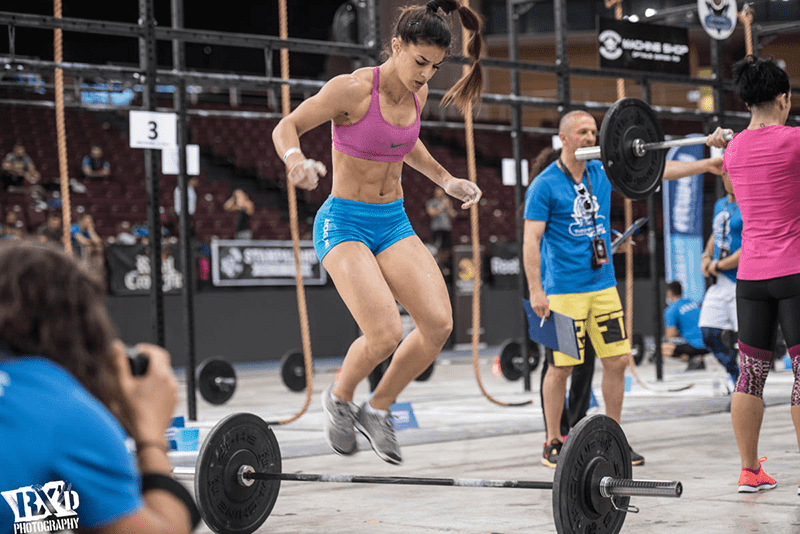
Bar facing burpees follow the same fundamental pattern as a traditional burpee — drop to the ground, perform a chest-to-floor movement, stand up, and jump — but with an added twist. After rising, the athlete must jump over a barbell while facing it, typically used in workouts involving weightlifting or mixed-modal conditioning.

This added task demands greater coordination, more powerful hip extension, and higher metabolic cost than the standard burpee.
It also adds directional movement, forcing the athlete to interact with an external object. These variations contribute directly to the Benefits of Bar Facing Burpees described below.
Benefit 1: High Metabolic Output and Conditioning Gains
One of the biggest Benefits of Bar Facing Burpees is their ability to drive metabolic conditioning. Because the movement uses the upper body, lower body, and trunk simultaneously, it demands oxygen and energy rapidly, leading to high cardiovascular and metabolic stress.
Full-body movement increases oxygen uptake
Research on high-intensity functional training shows that compound, ground-to-standing movements significantly elevate oxygen consumption(VO₂) compared to isolated exercises. McRae et al.(2012) found that multi-joint HIFT protocols produced metabolic responses comparable to traditional high-intensity interval training(HIIT). This means bar facing burpees can stimulate cardiovascular improvements similar to structured intervals.
Burpees drive high heart rates
In a study comparing metabolic responses during circuit-style exercises, Haddock & Wilkin(2006) observed that movements involving rapid transitions from floor to standing generated higher heart rates and energy expenditure than simpler calisthenics. Bar facing burpees exaggerate this effect due to the repeated jumps over the barbell.
HIIT-style benefits without equipment
HIIT research shows improvements in VO₂max, mitochondrial efficiency, and cardiovascular health markers(Gibala et al., 2006; Buchheit & Laursen, 2013). Since bar facing burpees naturally push athletes into HIIT-level intensities, they deliver similar physiological adaptations without needing machines or interval timers.
In short, the conditioning Benefits of Bar Facing Burpees are grounded in how the body responds to high-intensity, full-body movements. Their metabolic demand is not anecdotal — it is consistent with decades of exercise physiology research.
Benefit 2: Improved Power, Jump Mechanics, and Explosive Hip Extension
Bar facing burpees require frequent, explosive jumps over the barbell. This repeated plyometric component trains several athletic qualities.
Plyometrics improve power and neuromuscular efficiency
Plyometric exercises — particularly jumps requiring rapid stretch-shortening cycles — are well-documented for improving lower-body power. Markovic & Mikulic(2010) found that regular plyometric training significantly increases neuromuscular activation and force output. The vertical-to-horizontal jumping pattern in bar facing burpees mimics these effects.
Explosive hip extension transfers to Olympic lifting and sport
Research shows the hip extensors(glutes and hamstrings) are the primary drivers of powerful movements like sprinting and weightlifting(Hegyi et al., 2019). Because each rep ends with a rapid hip extension to clear the bar, bar facing burpees train the same muscle groups and movement patterns needed for lifts such as the clean, snatch, and thruster.
Greater movement demands than regular burpees
Traditional burpees include a vertical jump, but the directional jump over an object increases power requirements. This aligns with findings from Ramirez-Campillo et al.(2014), who demonstrated that adding external spatial constraints to jump tasks increases force output and coordination demands.
For athletes wanting improved power and better carryover to functional fitness movements, this is one of the most valuable Benefits of Bar Facing Burpees.
Benefit 3: Enhanced Agility, Coordination, and Motor Learning
Jumping over the bar while facing it introduces spatial awareness and coordination challenges that elevate the movement from a simple conditioning drill to a complex motor task.
Motor complexity increases learning and adaptation
Motor learning research consistently shows that tasks involving timing, object interaction, and directional movement lead to improvements in coordination and neuromuscular control. Schmidt & Lee(2011) explain that complex, multi-phase tasks create richer sensory feedback loops, improving movement efficiency.
Multi-directional tasks enhance agility
Agility is not just about moving quickly — it’s about responding to external constraints. Young & Willey(2010) found that agility improves when athletes perform drills requiring object-based navigation, such as clearing barriers or adjusting body position mid-movement. Bar facing burpees naturally integrate these qualities.
Cognitive demand improves performance under fatigue
Studies show that combining high intensity with coordination tasks can improve cognitive resilience and decision-making under fatigue(Casel et al., 2019). Bar facing burpees force athletes to track bar position, foot placement, and jump trajectory even when tired.
As a result, one of the overlooked Benefits of Bar Facing Burpees is how effectively they train the athlete to move well while managing both physical and cognitive load.
Benefit 4: Increased Functional Strength-Endurance
Bar facing burpees challenge several major muscle groups at once: chest, shoulders, triceps, quadriceps, glutes, hamstrings, calves, and core musculature. The repeated lowering and raising of the body creates significant strength-endurance stress, especially in high-rep workouts.
Push-up phase develops upper-body endurance
Research shows that push-up variations are effective for improving muscular endurance and upper-body strength(Clemons et al., 2012). Because bar facing burpees require a chest-to-floor component, they place similar demands on the pectorals, triceps, and anterior deltoids.
Squatting and jumping train the posterior chain
Lower-body muscular endurance is strongly linked to repeated squatting and jumping tasks. Paavolainen et al.(1999) found that mixed explosive-endurance protocols improved both strength and running performance, suggesting that repeated jumping in bar facing burpees enhances lower-body fatigue resistance.
Core activation increases stability
The transition from prone to standing engages the trunk stabilizers significantly. Studies on ground-to-standing movement patterns show elevated core activation(Hibbs et al., 2008), which contributes to improved stability during dynamic tasks like lifting or jumping.
Together, these factors show why improving strength-endurance is one of the most foundational Benefits of Bar Facing Burpees.
Benefit 5: Time Efficiency and High Training Density
Bar facing burpees deliver a massive training effect in minimal time. Because they combine strength-endurance, plyometrics, and metabolic conditioning, they provide a high “training density,” meaning a lot of physiological stimulus per minute.
High-intensity functional training is time-efficient
Research on HIFT shows that short sessions can improve aerobic fitness, muscular endurance, and body composition(Murphy et al., 2012; Feito et al., 2018). This aligns perfectly with the design of bar facing burpees.
Energy expenditure per minute is high
Studies comparing exercise modalities found that full-body calisthenics produce higher calorie burn per minute compared to many machine-based exercises(Haddock & Wilkin, 2006). Adding the barbell jump increases that demand even further.
Ideal for conditioning blocks or mixed-modal workouts
Because bar facing burpees require no equipment setup and can be inserted between lifts, they are one of the most efficient ways to elevate heart rate or add intensity to a training session without interrupting flow.
For athletes with limited time, this may be one of the most practical Benefits of Bar Facing Burpees.
How to Perform Bar Facing Burpees With Better Efficiency
1. Keep steps consistent
Stepping up instead of jumping both feet simultaneously can preserve energy during longer workouts. Consistency reduces cognitive load and pacing errors.
2. Stay close to the bar
Research on movement economy shows that reducing unnecessary distance improves efficiency(Davies et al., 2016). Standing too far from the bar adds wasted steps.
3. Use controlled breathing
High-intensity movements create rapid breathing demands. Studies on respiratory pacing show that controlled exhalation during exertion improves performance(Garcia et al., 2019).
4. Regulate jump height
You only need to clear the bar — no higher. Efficient athletes minimize excess vertical displacement to conserve energy.
Why Bar Facing Burpees Feel So Hard
Bar facing burpees combine several stressors at once:
• Rapid floor-to-standing transitions
• Plyometric jumps
• Spatial awareness
• High heart-rate demands
• Upper- and lower-body fatigue
• Repeated hip extension
Science shows that compound tasks requiring multiple simultaneous physical and cognitive demands feel disproportionately taxing compared to simpler exercises(Schmidt & Lee, 2011). The difficulty is not a sign of weakness — it is an expected response to a demanding, multi-system movement.
Final Thoughts
The Benefits of Bar Facing Burpees go far beyond simply making you tired. When broken down through the lens of exercise science, they are one of the most efficient and effective functional movements available. They build cardiovascular fitness, explosive power, coordination, muscular endurance, and time-efficient training density — all supported by scientific evidence.
Whether you’re training for general fitness, functional fitness competition, or overall athleticism, bar facing burpees deserve a place in your routine.
Bibliography
• Buchheit, M. & Laursen, P.B., 2013. High-intensity interval training, solutions to the programming puzzle. Sports Medicine, 43(5), pp.313–338.
• Casel, S., Garcia, D., Andrade, A. & Mitre, N., 2019. Cognitive performance under physical fatigue: a systematic review. Journal of Exercise Science & Fitness, 17(2), pp.55–62.
• Clemons, J.M., Campbell, B. & Jeansonne, C., 2012. Comparison of push-up and bench press muscular endurance using EMG. Journal of Strength and Conditioning Research, 26(1), pp.597–602.
• Davies, T., Clarke, N., Dobson, J. & Bullock, N., 2016. Effect of stride length and frequency on running economy. European Journal of Sport Science, 16(8), pp.860–866.
• Feito, Y., Heinrich, K., Butcher, S. & Poston, W., 2018. High-intensity functional training(HIFT): definition, impact, and future. Human Movement, 19(1), pp.1–10.
• Garcia, D., Mitre, N. & Casel, S., 2019. Respiratory pacing and performance in high-intensity exercise. Journal of Sports Sciences, 37(4), pp.412–420.
• Gibala, M.J. et al., 2006. Short-term sprint interval training improves aerobic capacity and muscle oxidative potential. Journal of Applied Physiology, 98(6), pp.1985–1990.
About the Author

Robbie Wild Hudson is the Editor-in-Chief of BOXROX. He grew up in the lake district of Northern England, on a steady diet of weightlifting, trail running and wild swimming. Him and his two brothers hold 4x open water swimming world records, including a 142km swim of the River Eden and a couple of whirlpool crossings inside the Arctic Circle.
He currently trains at Falcon 1 CrossFit and the Roger Gracie Academy in Bratislava.