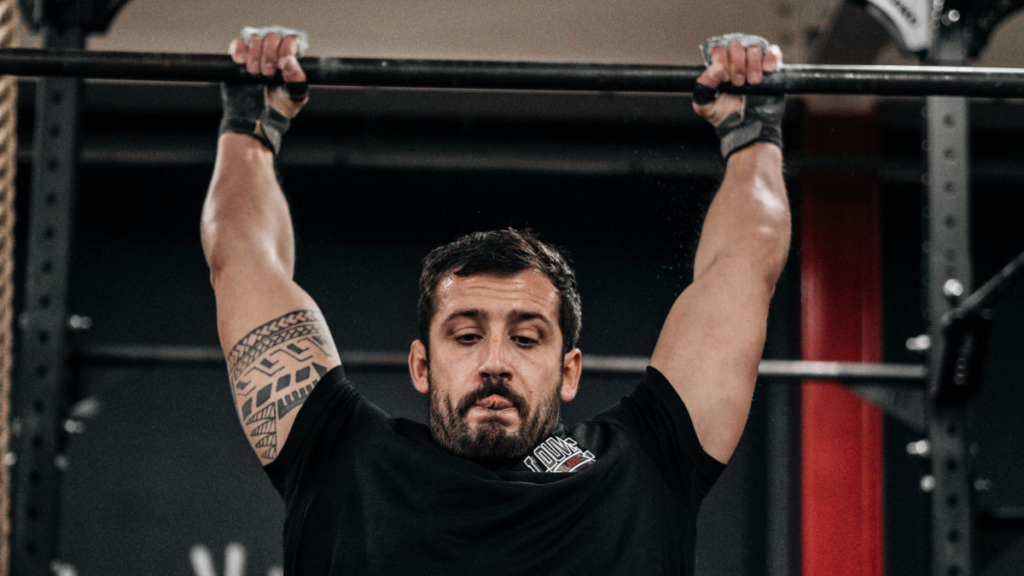
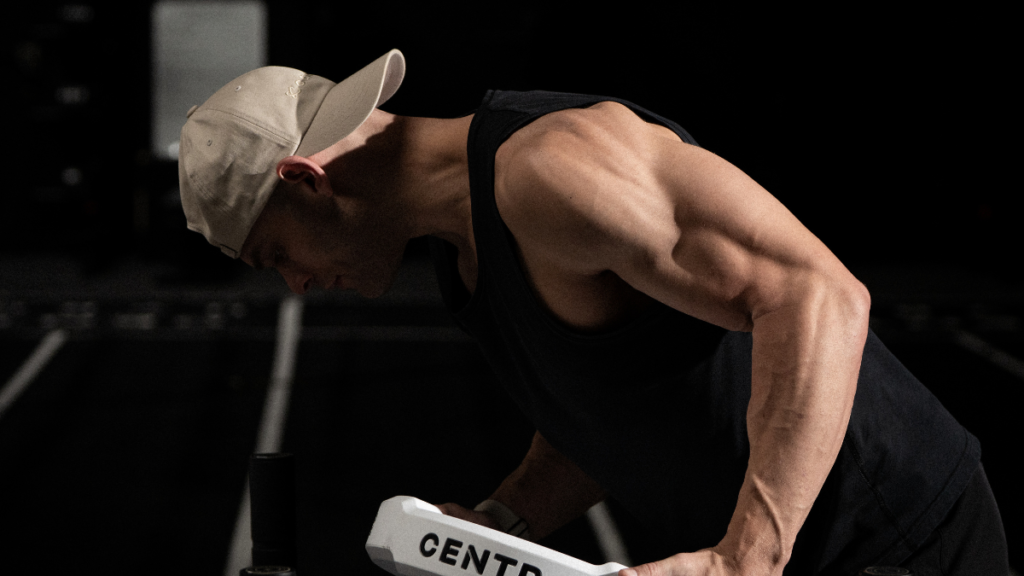
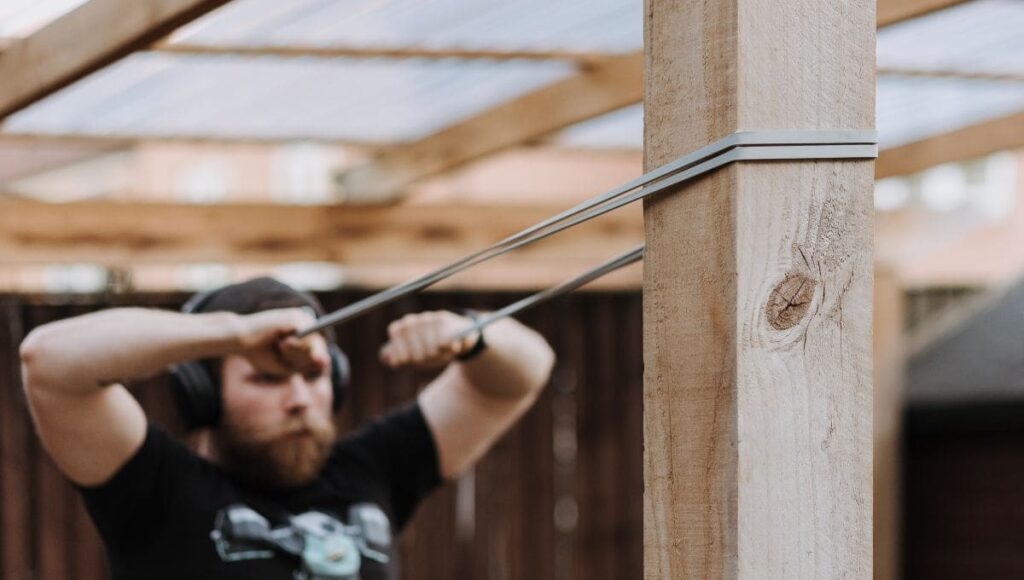
If you want to truly Level Up Your Grip Strength, it helps to understand why grip strength is such a powerful indicator of overall physical capability. Grip strength isn’t just about handshakes or carrying groceries.
Numerous scientific studies show that grip strength is strongly correlated with total-body strength, functional independence, and long-term health outcomes. Researchers often use grip strength as a biomarker because of its relationship to muscular performance across the body, as well as its predictive value for health and aging.


In strength training, grip is a limiting factor for many major lifts—deadlifts, pull-ups, rows, kettlebell movements, carries, and more. When your grip fails, the lift fails, even if the rest of your body could handle the weight. Building stronger grip strength allows you to lift heavier, train longer, and maintain better control of loads in the gym.
From a health perspective, low grip strength is associated with increased risk of mobility loss, frailty, disability, cardiovascular disease, and even all-cause mortality. Large-scale population studies have demonstrated that grip strength tends to decline with age, but training can slow this decline significantly. That is why improving grip strength is both a performance strategy and a long-term health investment.
Traditional exercises like wrist curls or basic hand-gripper squeezes only train limited aspects of grip. To truly Level Up Your Grip Strength, you need to target all dimensions of gripping capacity—including support grip, crushing grip, pinch grip, and wrist stability. The three unusual exercises below challenge these systems in ways most common routines fail to address.
Understanding the Different Types of Grip Strength
Before getting into the exercises, it is important to recognize that grip strength includes several components. Effective training targets all of them:
Support Grip
This involves holding onto a load for time—like dead hangs, farmer’s carries, or holding a barbell at the top of a deadlift. It depends heavily on finger flexors, intrinsic hand muscles, and overall forearm endurance.

Crushing Grip
This refers to squeezing force—like closing a gripper or crushing an object in your palm. It relies on maximal force production from the forearm flexors.
Pinch Grip
This is the ability to hold something between your thumb and fingers without significant palm contact. It develops thumb strength, intrinsic hand muscles, and the finger flexors at different angles.
Wrist and Forearm Stability
This includes the ability to resist rotational, lateral, or bending forces. Wrist stability is essential for safe and effective lifting, especially for pressing, pulling, and carrying movements.
These four categories work together during daily activities and athletic movements. Weakness in one of them limits performance in the others. The exercises below help Level Up Your Grip Strength by challenging all areas—especially those most lifters overlook.
Three Unusual Exercises to Level Up Your Grip Strength
Here are three science-supported, unconventional exercises that provide a powerful stimulus for grip development.
Exercise 1: Towel or Rope Pull-Ups and Hangs
Why This Exercise Is “Unusual”
Most people train pull-ups or dead hangs using a straight bar. Switching to a towel or rope creates an unstable, shifting grip surface. This forces your hands, forearms, wrists, and fingers to engage more intensely. Because you must squeeze and stabilize against a soft, movable object, the muscles activate differently compared to gripping a fixed steel bar.
How It Helps You Level Up Your Grip Strength
Towel or rope work increases support grip, crushing grip, and dynamic stabilization. Instead of merely holding onto an unmoving surface, your hands must constantly adjust to maintain the grip, which recruits more motor units. The added instability also improves neuromuscular coordination between the forearm flexors, extensors, and intrinsic muscles.
Research in biomechanics shows that unstable surfaces recruit higher levels of stabilizer and synergist muscles. By increasing friction-based tension and instability, towel or rope pull-ups and hangs force the hand musculature to work much harder than standard variations. This trains grip strength that directly translates to real-world tasks like climbing, carrying irregular objects, and maintaining grip under unpredictable loads.
How to Perform Towel/Rope Pull-Ups or Hangs
- Toss a strong towel or rope over a pull-up bar.
- Grip one end in each hand.
- Pull your body up smoothly, or perform static dead hangs if pull-ups are too challenging.
- Keep your wrists strong and neutral while squeezing the towel firmly.
- Perform 2–4 sets of either hangs (20–40 seconds) or pull-ups (3–8 reps).
As your hands adapt, you will notice dramatic improvements in support grip, pulling power, and forearm conditioning.
Exercise 2: Fat-Grip (Thick-Handle) Training
What Makes This Exercise Unique
Fat-grip training involves enlarging the diameter of a barbell, dumbbell, or pull-up bar using thick rubber attachments or dedicated axle bars. A larger handle forces your hand to open wider, which makes the grip exponentially more difficult.
How It Works Physiologically
The wider the handle, the harder your finger flexors, extensor muscles, and intrinsic hand muscles must work to maintain grip. Research on thick-bar training in resistance-trained individuals shows improved handgrip strength, increased forearm activation, and better upper-body strength development compared to standard handles.
Increasing the “grip aperture” (how wide you must open your hand) alters the mechanical angle at which the finger flexors operate. This decreases mechanical efficiency and forces more muscle fibers to recruit to generate the same force. Thick-handle work also strengthens the wrist joint, improves stability during heavy lifts, and enhances neuromuscular coordination.
How to Implement Fat-Grip Training
You can use fat-grip attachments or dedicated thick-handle equipment for:
- Deadlifts
- Farmer’s carries
- Dumbbell holds
- Rows
- Pull-ups
- Static barbell holds
Start by adding thick-grip work once or twice a week. Because the intensity is high, begin with lighter loads and shorter sets. Over time, increase duration, load, or thickness of the handle.
Fat-grip training is one of the purest and most efficient ways to Level Up Your Grip Strength, rapidly improving both crushing and support grip.

Exercise 3: Pinch and Finger-Strength Training
Why Pinch Grip Is Overlooked
Most lifters rarely train pinch strength or isolated finger strength, yet these abilities are vital for real-world grip tasks. Opening jars, climbing, manipulating tools, and handling awkward objects rely on pinch strength far more than traditional crushing grip.
Scientific Basis for Pinch Training
Biomechanical studies on finger force production show that grip strength varies significantly depending on wrist position, thumb involvement, and finger flexor muscle length. When wrist alignment changes, the force-length relationship of the finger flexors shifts, reducing force output. Pinch- and finger-strength drills train the muscles that stabilize the wrist in neutral positions while improving motor control and force production across the fingers and thumb.
Pinch training also strengthens the intrinsic muscles of the hand—small muscles that play a major role in precision gripping, stability, and fine motor control. These muscles are not effectively stimulated by standard forearm exercises or gripper work, so pinch training fills a critical gap.
How to Perform Pinch and Finger-Strength Work
Plate Pinches:
- Hold two weight plates together with the smooth sides facing outward.
- Pinch them between your thumb and fingers.
- Hold for 15–30 seconds.
- Perform 2–4 sets per hand.
Finger Presses or Isometric Pinch Holds:
- Press your fingertips against a block, plate edge, or static object.
- Maintain a strong isometric contraction for 10–20 seconds.
Wrist-Stability Drills:
- Use a wrist roller (a handled rod with a rope and weight attached).
- Roll the weight up and down with control.
Together, these methods improve pinch strength, thumb power, wrist integrity, and finger coordination—key ingredients for a complete grip-training system.
Structuring a Grip-Strength Program
To Level Up Your Grip Strength effectively, it helps to train grip with the same principles you use for any other muscle group: consistency, variation, progressive overload, and recovery.
Weekly Training Frequency
Aim for 2–3 grip-focused sessions per week. Grip training is demanding on the tendons and small muscles, so allow recovery days between sessions.
You can structure your week like this:
- One day focusing on towel/rope hangs or pull-ups
- One day focusing on fat-grip training
- One day focusing on pinch and finger strength
Progressive Overload Strategies
Improve gradually by increasing:
- Duration of hangs
- Thickness of handles
- Weight of pinch plates
- Number of reps (for towel pull-ups)
- Total sets or weekly frequency
Small improvements are enough. Grip strength tends to progress slowly because the muscles and tendons of the hand have unique recovery demands, but the long-term results are significant.
Balancing Grip Training With Full-Body Training
Since grip training can fatigue your hands and wrists, plan it strategically around your major lifts. For example:
- Do pinch work after lower-body sessions
- Do fat-grip work on days without heavy pulling
- Do towel hangs at the end of sessions
This prevents grip fatigue from limiting your primary lifts.
What Grip Training Can and Cannot Do
Because grip strength is widely studied, we have a good understanding of what improvements realistically achieve.
What Grip Training Can Do
- Improve lifting performance by reducing grip failure
- Enhance forearm strength and muscular endurance
- Boost wrist stability and reduce injury risk
- Improve functional capacity in daily tasks
- Support overall health, independence, and mobility as you age
What It Cannot Do
- Grip strength is correlated with general strength, but it does not guarantee strength increases in other muscles unless they are trained directly
- Grip training alone will not correct poor lifting technique
- Grip training will not prevent aging, though it can slow the functional decline of the hands and forearms
Still, the benefits are significant. Grip strength is one of the most powerful and practical physical qualities you can train.
Sample 4-Week Grip-Training Program
Below is a simple program designed to help you start leveling up your grip strength. Adjust intensities as needed.
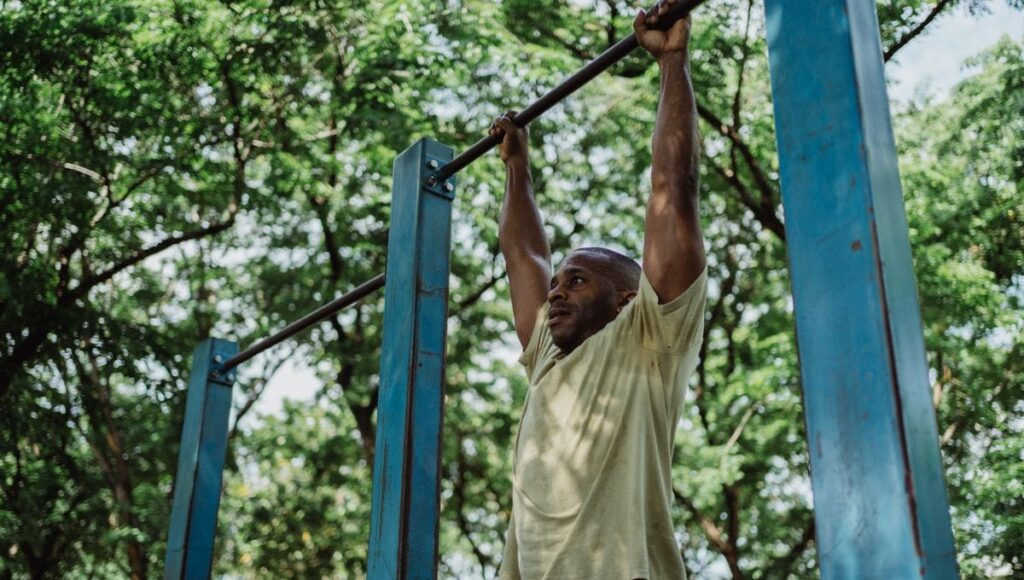
Weeks 1–2: Base Building
Day A – Towel/Rope Session
- Towel Hangs: 3 sets × 20–30 seconds
- Plate Pinch Holds: 2 sets per hand × 20 seconds
Day B – Fat-Grip Session
- Fat-Grip Dumbbell Holds: 3 sets × 15–25 seconds
- Wrist Roller: 2 controlled rounds
Day C – Pinch/Control Session
- Towel Pull-Ups: 3 sets × max reps
- Finger-Press Isometrics: 2 sets × 15 seconds
Weeks 3–4: Intensity Phase
Increase one of the following each week:
- Hang time by 5–10 seconds
- Plate-pinch weight by 1–2 kg
- Fat-grip load by 5–10%
- Towel-pull-up reps by 1–2
- Wrist-roller volume by one extra round
By the end of four weeks, you should notice measurable improvements in endurance, strength, and forearm conditioning.
Long-Term Importance of Grip Strength
Grip strength has been recognized as a marker of vitality across the lifespan. Research spanning millions of adults shows that normative grip-strength values decline steadily with age, but targeted strength programs can increase grip strength even in older adults. Studies show improvements in functional independence, reduced fall risk, and better mobility after structured grip training.
By training grip strength early and consistently, you improve not only your lifting capacity now but your functional capacity decades from now. Grip training is one of the simplest, most accessible, and most effective long-term health investments you can make.
Conclusion
If you want to Level Up Your Grip Strength, it’s time to go beyond wrist curls and hand grippers. Grip is multidimensional, and training all aspects—support, crush, pinch, and wrist stability—requires a broader range of exercises.
Towel or rope hangs, fat-grip training, and pinch/finger-strength drills collectively provide a complete grip-training stimulus. They build functional strength, improve lifting performance, enhance wrist stability, and contribute to long-term health and independence.
Include these unusual exercises in your weekly routine, follow a smart program, and your grip strength will grow steadily. Your lifts will feel more secure, your everyday tasks will feel easier, and your long-term hand health will be stronger.
Key Takeaways
| Key Takeaway | Why It Matters |
|---|---|
| Grip strength is multifaceted | It includes support, crush, pinch, and wrist stability—each contributing to performance and health |
| Towel or rope hangs build real-world grip | The unstable surface recruits more hand and forearm muscles than a standard bar |
| Fat-grip training increases muscle recruitment | Thicker handles force greater activation of finger flexors and intrinsic hand muscles |
| Pinch and finger drills train precision and thumb strength | These muscles are often undertrained but essential for comprehensive grip strength |
| A balanced routine produces the best results | Consistency, variation, and progressive overload help you Level Up Your Grip Strength safely |
Bibliography
- Applied Sciences (2024). ‘Handgrip strength as an indicator of overall strength and functional performance’.
- Journal of Sport and Health Science (2024). ‘International norms for handgrip strength across the adult lifespan’.
- The Sport Journal (2025). ‘Efficacy of a 12-week handgrip strength training program amongst older adults’.
- Goislard de Monsabert, B., Caumes, M., Berton, E. & Vigouroux, L. (2023). ‘Influence of force-length relationship and task-specific constraints on finger force-generating capacities’. Journal of Biomechanics.
- Schoenfeld, B. et al. (2025). ‘Evidence-based guide to grip-strength training and forearm muscle development’. Strength and Conditioning Research Review.
About the Author

Robbie Wild Hudson is the Editor-in-Chief of BOXROX. He grew up in the lake district of Northern England, on a steady diet of weightlifting, trail running and wild swimming. Him and his two brothers hold 4x open water swimming world records, including a 142km swim of the River Eden and a couple of whirlpool crossings inside the Arctic Circle.
He currently trains at Falcon 1 CrossFit and the Roger Gracie Academy in Bratislava.