Building strong, mobile, and resilient glutes doesn’t require complex equipment or heavy weights. A simple resistance band—one of the most inexpensive and portable tools available—can help activate the glute muscles more effectively than many traditional exercises.
In fact, research consistently shows that band-based movements can increase muscle activation, improve hip stability, and enhance mobility across daily and athletic movements.


This article breaks down the 3 best banded glute exercises for strength and mobility, explains why they work so well, and shows how you can integrate them into your routine for optimal results. Everything is backed by scientific evidence, and the explanations are straightforward and clear—even if you’re new to resistance training.
Why Banded Glute Exercises Work So Well
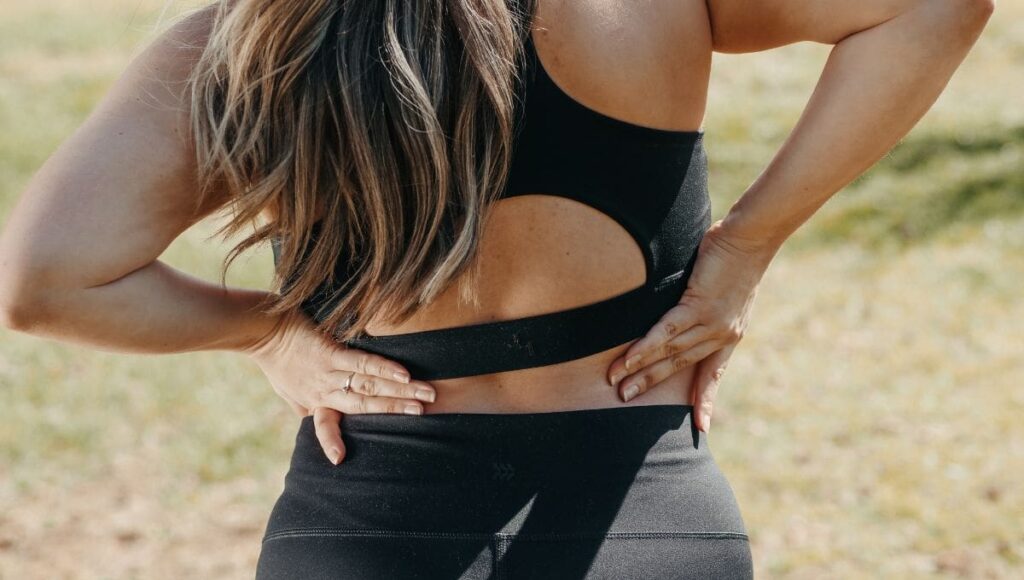
The glutes—gluteus maximus, gluteus medius, and gluteus minimus—are responsible for hip extension, rotation, and stabilization. They influence posture, gait, lifting mechanics, and athletic performance. When these muscles are weak or underactive, the body compensates with surrounding structures, often leading to back pain, knee problems, or poor movement patterns.
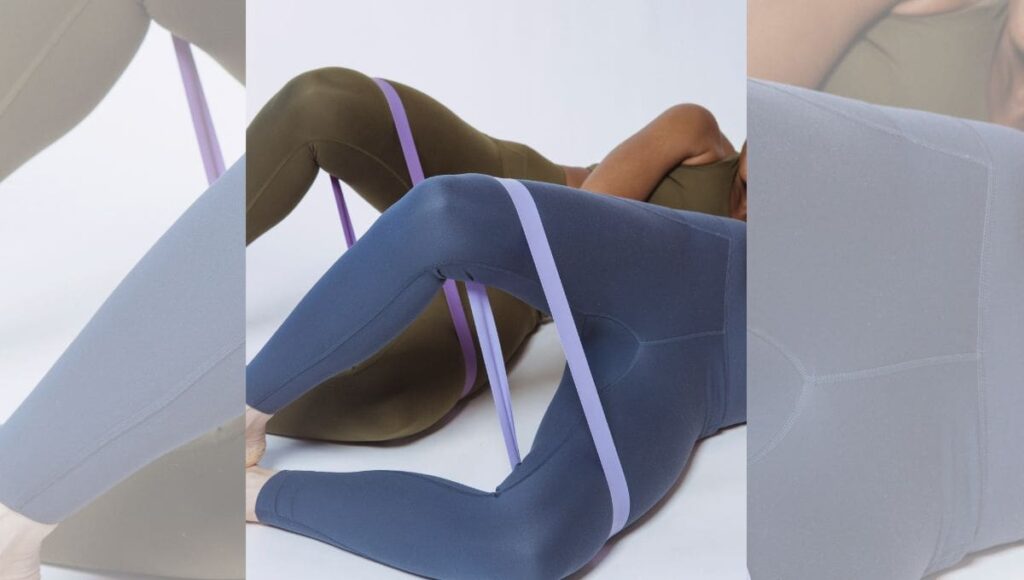
Resistance bands offer unique benefits for training the glutes that free weights or machines don’t always provide. Understanding why these exercises are effective helps you get more from every rep.
Constant Tension Improves Muscle Activation
Unlike free weights, which lose tension at certain angles, bands create constant elastic resistance through the entire range of motion. Studies show that using elastic bands significantly increases neuromuscular activity, especially in the hip musculature (Andersen et al., 2010). This makes banded glute exercises ideal for warming up, activating the glutes before heavy lifting, or performing high-volume work for hypertrophy.
Bret Contreras and colleagues have demonstrated that targeted band work, especially movements emphasizing hip abduction and external rotation, produces high gluteus medius and upper glute activation (Contreras et al., 2015). These muscles are critical for hip stability.
Bands Improve Hip Mobility and Control
Banded resistance challenges the lateral stabilizers of the hip in ways that barbells and machines cannot. The added tension encourages dynamic stability and joint centering—a concept supported by research showing that hip abductor strengthening improves functional movement patterns and reduces injury risk (Distefano et al., 2009).
Because bands allow movement in multiple planes—forward, backward, lateral, and rotational—they help strengthen the glutes while simultaneously improving mobility.
Low Joint Stress, High Muscle Stimulus
Elastic resistance has been shown to produce comparable strength adaptations to free-weight training, but with lower joint stress (Page & Ellenbecker, 2011). This makes banded glute exercises excellent for:
• Beginners
• Athletes recovering from injuries
• Older adults
• Anyone seeking to reduce wear and tear
By providing progressive resistance without compressive loading, bands make it easier to maintain full range of motion—a key factor in improving mobility.
How Glute Strength Supports Performance and Mobility
Before diving into the exercises, it helps to understand why strong glutes matter so much. Every major movement—walking, running, squatting, lunging, jumping, and twisting—requires the glutes to produce or control force.

Better Hip Stability and Reduced Injury Risk
Weak or poorly activated glutes can contribute to:
• Knee valgus (knee collapsing inward)
• Lower-back pain
• Hip drop during running or walking
• Poor squat mechanics
• Compensatory quad dominance
Strengthening the glutes with banded exercises has been shown to reduce dynamic knee valgus, improve hip stability, and decrease injury risk in athletes (Hollman et al., 2009).
Improved Athletic Performance
The gluteus maximus is one of the strongest muscles in the body. It powers sprinting, jumping, and explosive hip extension. Studies highlight the role of glute strength in improving speed, power output, and overall athletic capability (Willy & Davis, 2011).
Enhanced Mobility and Movement Efficiency
Glute strength and hip mobility are closely linked. When the glutes can stabilize the pelvis, the hips are free to move through fuller ranges without compensation. Banded glute exercises challenge the stabilizers, improving both mobility and control.
The 3 Best Banded Glute Exercises for Strength and Mobility
These three exercises were chosen based on muscle activation research, functional performance benefits, and their ability to improve both strength and mobility. Together, they cover hip extension, abduction, external rotation, and dynamic stabilization.
1. Banded Lateral Walks
Banded lateral walks—also called “monster walks” or “side steps”—are one of the most effective banded glute exercises for activating the gluteus medius. This muscle plays a central role in stabilizing the pelvis, controlling knee alignment, and supporting hip mobility.
Why This Exercise Works
Electromyographic (EMG) studies show that lateral stepping with elastic resistance produces very high activation of the gluteus medius compared to many traditional exercises (Distefano et al., 2009). Strengthening this muscle has been linked to improved knee tracking, better squat form, and reduced pain in the hip and lower back.
Banded lateral walks also improve frontal-plane hip strength—something traditional forward-backward exercises don’t always target.
How to Perform Banded Lateral Walks
- Place a small loop band around your legs, just above the knees for moderate difficulty or around the ankles for increased challenge.
- Stand tall with your feet hip-width apart and create outward tension in the band.
- Slightly hinge at the hips and bend the knees.
- Step sideways with your lead foot while maintaining band tension.
- Follow with the trailing foot, keeping constant resistance.
- Take 10–15 steps in each direction.
Common Mistakes to Avoid
• Letting the knees cave inward
• Allowing the trailing foot to drag
• Standing too upright without core engagement
Why It Improves Mobility
By strengthening the gluteus medius, you help stabilize the pelvis, freeing the hip joint to move through a larger, more controlled range of motion. This improves mobility in squats, lunges, lateral movements, and daily activities.
2. Banded Glute Bridge with External Rotation
The banded glute bridge is a staple glute exercise that becomes significantly more powerful with added lateral tension. The external rotation component forces the glutes—especially the gluteus maximus and upper glute fibers—to work harder.
Why This Exercise Works
Research shows that adding a band during glute bridges increases gluteus maximus activation by increasing the demand for hip external rotation and abduction (Lynn & Costigan, 2009). This combination of extension plus rotation mimics real-world movements more closely than simple hip thrusting alone.
The band also helps counteract quad dominance by ensuring the glutes initiate and maintain the movement.
How to Perform Banded Glute Bridges with External Rotation
- Lie on your back with knees bent and feet hip-width apart.
- Place a loop band just above your knees.
- Push your knees outward to create light band tension.
- Drive through your heels to lift the hips off the floor.
- At the top of the bridge, push your knees slightly outward, squeezing the glutes.
- Lower slowly and repeat for 12–20 reps.
Common Mistakes to Avoid
• Overarching the lower back
• Letting the knees fall inward
• Relying too much on the quads or hamstrings
Why It Improves Mobility
By strengthening the muscles responsible for hip extension and rotation, this movement supports better posture, reduces hip flexor tightness, and improves movement mechanics during squats, hinges, and lunges.
3. Banded Quadruped Kickbacks (Donkey Kicks)
Quadruped kickbacks target the gluteus maximus while encouraging hip control, pelvic stability, and core engagement. Adding a band increases resistance at full extension, where the glutes generate the most force.
Why This Exercise Works
EMG analysis shows that hip extension from a quadruped position produces high activation of the gluteus maximus, especially when resistance is applied (Boren et al., 2011). This makes banded kickbacks one of the most effective isolated glute exercises.
Kickbacks also emphasize working the glutes without compensatory momentum—a common problem with standing or cable variations.
How to Perform Banded Quadruped Kickbacks
- Get into a tabletop position on hands and knees.
- Place a loop band around your thighs, just above the knees.
- Keep your spine neutral and core lightly braced.
- Extend one leg straight back and slightly upward.
- Squeeze the glute at the top; avoid arching the back.
- Lower with control and complete 12–15 reps per side.
Common Mistakes to Avoid
• Rotating the hips outward
• Arching the lower back to gain height
• Losing band tension at the bottom
Why It Improves Mobility
This exercise teaches the body to extend the hip independently of the spine. Better dissociation between hip and lumbar motion improves mobility for running, jumping, squatting, and hinging.
Programming the 3 Best Banded Glute Exercises for Strength and Mobility

To build both strength and mobility, consistency matters more than intensity. Because bands are low-impact, these exercises can be performed frequently.
Example Weekly Routine
Warm-up Days (2–4x per week):
• Banded lateral walks: 2 sets of 12 steps each direction
• Banded glute bridges with external rotation: 2 sets of 15 reps
• Banded quadruped kickbacks: 1–2 sets of 12 reps per leg
Strength Days (2–3x per week):
• Banded lateral walks: 3 sets of 15–20 steps
• Banded glute bridges with external rotation: 3–4 sets of 12–20 reps
• Banded quadruped kickbacks: 3 sets of 15 reps per side
Progressions
• Move the band lower on the legs to increase resistance
• Use a thicker band
• Increase reps or volume
• Add tempo (slow three-second lowering phase)
• Combine movements into circuits
How These Banded Glute Exercises Support Whole-Body Function
These exercises do more than build aesthetic glutes; they enhance full-body movement patterns.
Better Knee Alignment
Improved glute medius strength reduces knee valgus and enhances stability during running, landing, and lifting.
Improved Pelvic Position
Strengthened glutes counterbalance tight hip flexors and anterior pelvic tilt, improving posture and decreasing lower-back strain.
Enhanced Hip Mobility Through Stability
A stable joint can move more freely. When the glutes support the pelvis, the hip joint achieves a fuller, safer range of motion.
Reduced Injury Risk
Research demonstrates that improving hip strength reduces risk of patellofemoral pain, IT band issues, and lower-back injuries (Ferber et al., 2011).
How to Get the Most Out of Banded Glute Exercises
Maintain Tension Throughout Every Rep
Constant band tension increases mechanical loading on the glutes. Avoid letting the band slack at the bottom.
Control the Movement
Slow, deliberate movement boosts muscle activation and prevents compensatory patterns.
Pair Band Work With Full-Range Strength Training
Band exercises are excellent for activation and targeted strengthening. Combining them with squats, hinges, lunges, and loaded glute work produces the best long-term results.
Use Bands That Allow Full Range of Motion
Too-tight bands force compensation and reduce mobility benefits. Choose a band that creates challenge but still allows smooth movement.
Final Thoughts
The best banded glute exercises are simple, highly effective, and backed by solid scientific research. Banded lateral walks, banded glute bridges with external rotation, and banded quadruped kickbacks improve strength, stability, and mobility—all without expensive equipment.
Whether you’re an athlete, a beginner, or someone looking to improve daily movement, incorporating these three exercises will help you build stronger, more functional glutes that support everything you do.
Bibliography
• Andersen, L.L., Andersen, C.H., Mortensen, O.S., Poulsen, O.M. and Kjær, M. (2010) ‘Muscle activation and perceived loading during rehabilitation exercises: comparison of elastic resistance and machine exercises’, Journal of Strength and Conditioning Research, 24(6), pp. 1704–1712.
• Boren, K., Conrey, C., Le Coguic, J., Paprocki, L., Voight, M. and Robinson, T.K. (2011) ‘Electromyographic analysis of gluteus medius and gluteus maximus during rehabilitation exercises’, International Journal of Sports Physical Therapy, 6(3), pp. 206–223.
• Contreras, B., Vigotsky, A., Schoenfeld, B., Beardsley, C. and Cronin, J. (2015) ‘A comparison of gluteus maximus, biceps femoris, and vastus lateralis EMG amplitude during various gluteal exercises’, Journal of Applied Biomechanics, 31(6), pp. 452–458.
• Distefano, L.J., Blackburn, J.T., Marshall, S.W. and Padua, D.A. (2009) ‘Gluteal muscle activation during common therapeutic exercises’, Journal of Orthopaedic & Sports Physical Therapy, 39(7), pp. 532–540.
• Ferber, R., Kendall, K.D. and McElroy, L. (2011) ‘Effect of hip-abductor strengthening on pain and function in subjects with patellofemoral pain syndrome’, Journal of Sport Rehabilitation, 20(2), pp. 182–190.
About the Author

Robbie Wild Hudson is the Editor-in-Chief of BOXROX. He grew up in the lake district of Northern England, on a steady diet of weightlifting, trail running and wild swimming. Him and his two brothers hold 4x open water swimming world records, including a 142km swim of the River Eden and a couple of whirlpool crossings inside the Arctic Circle.
He currently trains at Falcon 1 CrossFit and the Roger Gracie Academy in Bratislava.