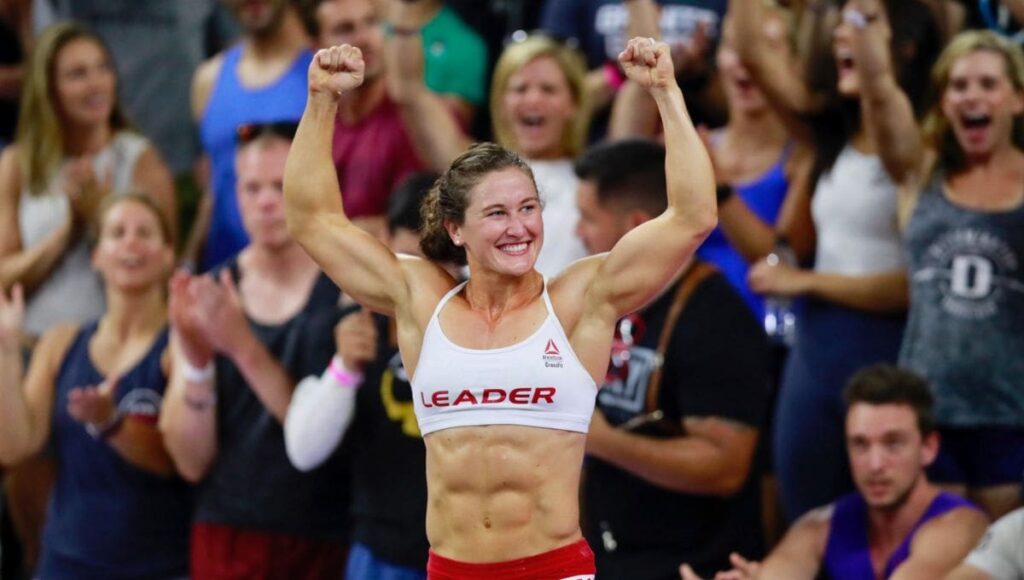
Developing stronger abdominal muscles isn’t about doing endless sit-ups. It’s about training smart, targeting not just the superficial “six-pack” muscles but the deep core, using progressive overload, maintaining consistency and recovering properly — all supported by scientific evidence.
Here are five science-backed strategies to build stronger abs faster, written in clear, no-fluff language.


Tip 1: Use Progressive Overload — don’t just repeat the same crunches
What research shows
Muscle growth and strength improvements depend on gradually increasing the workload over time (progressive overload). This principle applies to abdominal muscles too. Studies using EMG (electromyography) show that adding resistance — for example via weighted crunches or cable crunches — significantly increases abdominal muscle activation compared with bodyweight crunches alone (Hibbs et al. 2008). Without incremental challenge, muscles adapt and stop growing stronger.

Moreover, adding resistance or changing leverage forces your abs to work harder. Research on strength training demonstrates that resistance training improves not only muscle size but also endurance and neural efficiency — leading to stronger contractions and better endurance (Kibler, Press & Sciascia 2006).
How to apply it
Start with basic core exercises and gradually intensify them. For example:
- Begin with bodyweight exercises like crunches, leg raises, or planks.
- After 2–4 weeks, add load (e.g., hold a weight plate on your chest during crunches, or use a cable machine for resistance).
- Slowly increase load, reps, or duration over time.
- Track your workouts so that each session is just a bit more challenging than the last.
Don’t rush. Progressive overload means incremental increases. Big jumps can lead to poor form or injury.
Tip 2: Train the entire “core unit,” not just the front abs
Why holistic core strength matters
Many people think of abs as only the rectus abdominis — the visible “six-pack” muscle. In reality, core strength involves a group of muscles working together: the transverse abdominis (deep stabilizer), internal and external obliques (sides), spinal erectors (back), and even hip muscles like glutes and hip flexors. True core strength supports your spine, improves posture, enhances athletic performance, and reduces risk of injury (Kibler, Press & Sciascia 2006).
Focusing solely on crunches neglects important stabilizing muscles. Research shows that exercises targeting deep core muscles (like planks, dead bugs, bird dogs) engage the transverse abdominis and obliques without overloading the spine, building functional stability (Willardson 2007).
How to build a balanced core
In each workout include:
- A front-plane exercise (e.g., crunches, leg raises) for rectus abdominis.
- A transverse abdominis / stabilization exercise (e.g., plank, dead bug).
- A rotational / lateral exercise (e.g., side plank, Russian twists, anti-rotation holds).
- A posterior chain or hip-related movement (e.g., glute bridges, bird dogs) to support spine and pelvis alignment.
Rotate through these categories so you’re not just sculpting a six-pack — you’re building strength, stability, and functional core power.
Tip 3: Use Compound Movements — full-body lifts can supercharge core strength
Why big lifts matter for your abs
Compound lifts like squats, deadlifts, overhead presses, and carries (e.g., farmer’s walk) aren’t marketed as “ab exercises,” but they engage the core intensely. To perform these lifts properly and stabilize the spine, your abs, obliques and lower back must brace hard — often harder than traditional ab movements (Schoenfeld 2010).
Because compound lifts challenge the entire core while heavy loads are involved, they stimulate deep stabilization, increase overall strength and build real-world functional core capacity.
Additionally, compound training improves hormonal responses, overall muscle recruitment, and metabolic rate. That helps both with core strength and fat loss — which can make abs more visible (Kibler, Press & Sciascia 2006).
How to incorporate compound lifts
If you’re not already, include 2–3 compound lifts per week in your program:
- Squats (back or front)
- Deadlifts (traditional or Romanian)
- Overhead Press or Push Press
- Farmers’ Carries, Suitcase Carries, or Weighted Carries

When doing these exercises focus on bracing your core correctly: inhale, tighten abs and glutes, maintain neutral spine, and move with control. You don’t need to lift maximum load — moderate weight with perfect form is enough to stimulate core activation.
Tip 4: Be Consistent and Allow Recovery — abs need rest just like any muscle
Why consistency and recovery matter
You won’t get stronger abs from a handful of workouts and hoping for the best. Muscle adaptation requires repeated stimulus over time. According to widely accepted strength training guidelines, training a muscle 2–3 times per week with proper recovery leads to optimal gains (American College of Sports Medicine 2009). Although this guideline often refers to larger muscle groups, it applies to core muscles as well.
Overtraining — working abs every day — can be counterproductive. Ab muscles, like any muscles, need time to repair microtears, rebuild and come back stronger. Failing to allow recovery increases risk of fatigue and injury.
How to plan your schedule
- Train your core 2–4 times per week.
- Vary intensity: mix high-intensity sessions (weighted or long-duration holds) with lighter sessions (bodyweight or stability work).
- Give at least 48 hours rest between intensive core sessions.
- Pay attention to overall recovery: get enough sleep, manage stress, and avoid overloading your lower back with repeated heavy or high-volume core work.
Tip 5: Combine Core Training with Smart Nutrition and Fat Management — strong abs are hidden by fat
Why training alone isn’t enough
You can build strong abs, but if they’re covered by a layer of fat they will remain invisible. Abs strength and abs visibility are two related but distinct goals. Scientific studies on exercise and fat reduction show that spot reduction doesn’t work — you can’t lose fat only from your belly by doing endless crunches (Vispute et al. 2011). Instead, fat loss requires a whole-body approach with calorie deficit, proper diet composition and resistance training.
Additionally, maintaining or increasing lean mass while losing fat is key — which reduces metabolic slowdown common with diet-induced weight loss (Ross et al. 2004). A combination of resistance training (compound lifts and core work) plus controlled caloric intake preserves muscle mass and reduces fat, helping abdominal muscles show through.
How to eat and manage body fat for better abs
- Maintain a modest calorie deficit (e.g., 10–20% below maintenance), not an extreme cut that sacrifices muscle.
- Eat sufficient protein (about 1.6–2.2 grams per kg bodyweight daily) to support muscle retention during fat loss.
- Pair core and compound training with moderate cardio or high-intensity interval training (HIIT) if calorie burn is insufficient.
- Prioritize overall body fat reduction — don’t chase belly fat specifically.
Putting It All Together — Sample 4-Week Plan
Here’s how you might structure a one-month program to build stronger abs, combining all five tips.
Week 1:
- Day 1: Core stability (plank, dead bug, side plank) + light compound lift (e.g., goblet squat)
- Day 2: Rest or light activity (walk, mobility)
- Day 3: Weighted core exercises (weighted crunch, Russian twist) + compound lift (deadlift)
- Day 4: Rest
- Day 5: Core stability + compound lift (overhead press)
- Days 6–7: Active recovery, mobility, stretching
Weeks 2–4: gradually increase either load (weight), reps, or duration on core exercises and compound lifts. Keep nutrition steady: moderate calorie deficit if you aim for fat loss, and enough protein.
By the end of Week 4 you should feel stronger core muscles, better spinal stability, improved compound lift performance — and, if you combine these efforts with fat loss, more visible abs.
Why These Tips Work — The Science Behind Core Strength

Training for abs shouldn’t be about vanity only. A strong core offers real functional benefits: better posture, reduced back pain risk, improved performance in sports and everyday tasks, and stronger movement transfer between lower and upper body (Kibler, Press & Sciascia 2006).
- Progressive overload — debated mostly in bodybuilding contexts — works equally for core muscles because they are skeletal muscles that adapt to load as other muscles do (Hibbs et al. 2008).
- A holistic core approach ensures stability across all planes of movement. The deep stabilizers like transverse abdominis, obliques and spinal muscles coordinate to support the spine under load (Willardson 2007).
- Compound lifts simulate real-world demands — lifting, carrying, twisting — requiring coordinated core engagement. EMG studies show significant oblique and erector activation during squats and deadlifts (Schoenfeld 2010).
- Controlled nutrition combined with resistance training helps preserve lean muscle while reducing fat. Loss of body fat — not endless crunches — reveals the abdominal muscles beneath (Ross et al. 2004; Vispute et al. 2011).
When you combine these elements — smart resistance programming, full-core training, compound movements, consistency, recovery, and good nutrition — you’re building lasting core strength, not just chasing a six-pack.
Common Mistakes to Avoid
- Only doing crunches. A few hundred crunches a week won’t build a functional core or significantly change your physique unless you are also training other core muscles and managing fat.
- Training abs every single day. Overuse can lead to fatigue and even lower-back strain. Abs need recovery just like quads or arms.
- Ignoring form during compound lifts. Poor posture or letting lower back collapse eliminates core engagement and increases injury risk.
- Expecting “abs to show” without fat loss. Even strong abs stay hidden under a layer of fat. Strength training helps, but so does nutrition and body-fat reduction.
- Neglecting hip, glute, and back muscles. The core connects to other muscle groups; weak hips or glutes undermine core stability.
Final Thoughts
Strong abs are about more than just appearance. They support your spine, improve posture, enhance athletic capacity and daily functional strength. Building them requires intelligent training, consistency, full-body integration, and proper nutrition. By following these five evidence-based strategies — progressive overload, whole-core training, compound lifts, consistency with recovery, and smart nutrition — you’ll build real, functional core strength that lasts.
Stop wasting time on endless crunches. Train thoughtfully. Build your core — and unlock strength, stability, and performance.
Key Takeaways
| Tip | Why it matters | Quick action |
|---|---|---|
| Progressive overload | Abs are muscles too — they strengthen when challenged progressively | Add resistance or vary volume over time (e.g., weighted crunches, cable work) |
| Whole-core training | Real-world strength depends on all core muscles working together | Include front-plane, stabilizing, rotational, and posterior-chain or hip exercises |
| Compound lifts | Everyday strength and power come from full-body lifts that heavily engage core | Do squats, deadlifts, presses or carries 2–3 times per week with proper bracing |
| Consistency + recovery | Muscles need repeated stimulus and rest to adapt and grow | Train core 2–4x/week; alternate intensity; allow rest days and recovery |
| Nutrition + fat management | Visible abs depend on low body fat; training alone won’t cut fat selectively | Use moderate calorie deficit; eat sufficient protein; combine with resistance training |
Bibliography
- Hibbs AE, Thompson KG, French D, Wrigley A, Spears I. 2008. Optimizing performance by improving core stability and core strength. Strength & Conditioning Journal, 30(4):32–39.
- Kibler WB, Press J, Sciascia A. 2006. The role of core stability in athletic function. Sports Medicine, 36(3):189–198.
- Willardson JM. 2007. Core stability training: applications to sports conditioning programs. Journal of Strength & Conditioning Research, 21(3):979–985.
- Schoenfeld BJ. 2010. Squatting kinematics and kinetics and their application to exercise performance. Journal of Strength & Conditioning Research, 24(12):3497–3506.
- Ross R, Janssen I, Dawson J, Kungl A, Kuk JL, Wong SL, Nguyen-Duy T, Ross S, Hudson R. 2004. Exercise-induced reduction in obesity and insulin resistance in women: a randomized controlled trial. Obesity Research, 12(5):789–798.
- Vispute SA, Frey JD, Carballo CB, Butler DL, Mueller MJ. 2011. Does abdominal exercise reduce abdominal subcutaneous fat? Journal of Strength & Conditioning Research, 25(10):2866–2872.